Home » Broadband Speed » Recent Articles:

Providers Big and Small Can Deliver 1Gbps Broadband At a Fair Price – Why Can’t Yours?

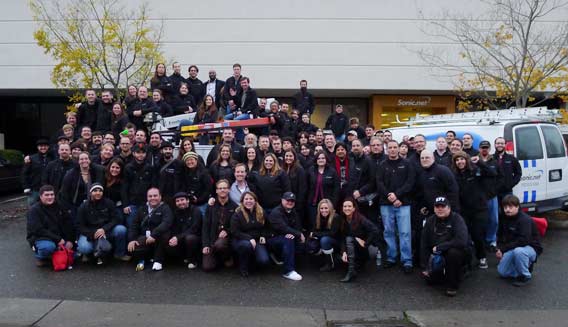
The employees of Sonic.net, a California ISP that threatens to expose the chasm between the cost of providing broadband and the profits reaped from it.

It doesn’t take trillions of dollars to offer world class broadband service in America.  Companies large and small are building gigabit broadband networks to reach customers at prices your local phone or cable company would charge at least $1,000 a month or more to receive, if you consider many charge around $100 a month for 100Mbps.  Now, 700 families in California are going to be offered 1,000Mbps service for just $69.99 per month — including a phone line.

Sonic.net has been in the ISP business for more than 15 years, selling DSL service to California customers at prices that offer value for money.  Most recently, Sonic has been pitching bonded DSL service offering speeds upwards of 40Mbps for the same price it plans to sell its new Fusion gigabit fiber broadband.  For customers who don’t need that much speed, Sonic recently reduced the price for its 20Mbps service to $39.95 per month (including phone line.)

For those in the Sebastopol area lucky enough to qualify for fiber service, Sonic promises unlimited access and an exceptional online experience.

Sonic’s qualifications to run the project are not in question, considering Google selected the company to operate and support the trial fiber-to-the-home network the search giant is building at Stanford University.

Google itself is building an extensive fiber to the home network to serve Kansas City residents and businesses, and promises service at a profitable, but reasonable price.  So has Sonic.net CEO Dane Jasper, whose written views on the state of American broadband explains his personal drive to make Internet access better and faster, without ripping people off with Internet Overcharging schemes or unjustified high monthly prices.

Jasper recognizes much of North America is trapped in a broadband duopoly that delivers all of the benefits to investors, while leaving the continent saddled with slow and overpriced service.  Nine months ago Jasper explained the business model to Benoit Felten, a Yankee Group broadband analyst:

During the construction of this network we have given a lot of thought… to the business model in the US, and how we could do things in a different and more interesting way. The natural model when you have a simple duopoly capturing the majority of the market is segmentation: maximize ARPU [average revenue per user] by artificially limiting service in order to drive additional monthly spending. But fundamentally this is the wrong model for a service provider like us, and we have looked to Europe for inspiration. The model pioneered by Iliad under the Free brand is a better fit, both for us and for our customers.

As the marginal cost of providing more bandwidth or less, and providing [phone service] or not are both minimal, we have adopted a simple flat rate model instead of the more typical US model of “$5 more goes faster”… I believe that removing the artificial limits on speed, and including home phone with the product are both very exciting.

It’s exciting to customers as well, most who give the company nearly five star reviews for excellence, without five-star pricing.  An added bonus: Jasper occasionally responds to customer service inquiries himself.

Reviewing Sonic.net’s blogs and website shows off a company that loves the business it’s in.  If a switch 100 miles away has a problem that interferes with Sonic’s service, you will promptly read about it on the company’s technical blog.
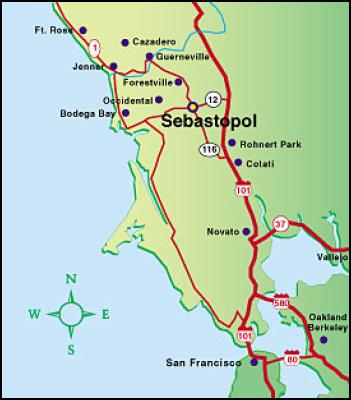
There are houses for sale in Sebastopol, Calif., if you want affordable gigabit broadband.

Jasper’s frustration with the enormous corporate-owned ISPs that dominate the country (and Washington) was on full display in a blog entry in March, answering a question about why American broadband is lagging behind:

[…] In 2003 and 2004, the then Republican led FCC reversed course [on policies guaranteeing a level playing field for broadband], removing shared access to essential fiber infrastructure for competitive carriers and codifying instead a policy of exclusive use and “multi-modal competition”.

This concreted our unique US duopoly: cable versus telco, the two broadband choices that most Americans have today.

In exchange for a truly competitive market, the US received promises of widespread deployment. And, to some degree this has worked. Unfettered by significant competition or price pressure, broadband in at least in its most basic form can now be delivered to most homes in America, albeit at a comparatively high cost to the consumer.

What was given up in exchange for this far-reaching but mediocre pablum was true competition and innovation.

Elsewhere in the world, regulatory bodies followed the lead of the US Congress and separated essential copper and fiber infrastructure from the services and providers who used them, and the result has been amazing. In Asia and Europe, Gigabit services are becoming common, and the price paid by consumers per megabit is a tiny fraction of what we pay here at home.

I won’t deny the innovation that has occurred in the telco/cable duopoly. They’ve got TV, Internet and telephone bundles designed to serve up prime time network shows in over-saturated HD glory, with comparatively middling Internet speeds, all offered with teaser rates and terms that would baffle an economics professor. The clear value of the bundle is to baffle, and pity the consumer who wants to shed a component. At least during the intro periods, it’s often cheaper to take the whole package than just a component or two.

For cable companies, the entrenched interest in the television entertainment portion creates a clear conflict: why should they offer an uncapped broadband connection that can deliver enough video entertainment to allow consumers to cut the TV cord? And if you do drop the TV, up goes the price for even this slow and capped Internet connection, so you pay more either way. And now that telcos have gotten into the television business too, their interest in slowing the pace of increasing broadband speed is aligned as well.

This has yielded a competitive truce in America.

In a slow tide, back and forth, cable delivers a slightly better product, then telco slightly better again, all at the highest possible cost. It is iterative, not innovative, and Americans deserve more. After all, we invented the Internet, right?

Among the giant phone and cable companies providing broadband today are a growing number of innovation outliers — companies challenging the prevailing views that Americans don’t need or want fiber-fast speeds (not at the prices some providers charge), that there is no economic justification for the capital spending required to construct fiber networks when incremental upgrades can suffice (the Wall Street view), or that the best way to drive increased revenue from a maturing broadband market is to throw away today’s flat rate pricing model and establish a guaranteed growth fund collecting tolls on Internet traffic that is sure to rise in the days ahead (Time Warner Cable’s CEO).

Google cannot understand why 1Gbps broadband “doesn’t work” in the United States and intends to construct its own network to prove otherwise.  EPB, a municipal utility in Chattanooga, Tenn. sells gigabit broadband, in their words, because they can.  The concept of a provider offering the fruits of their innovation, even if they aren’t certain how to price or sell the service, is a remarkable and refreshing change from the usual obsession with nickle-and-dime “extras” for add-on features or not selling service that your marketing department does not understand or find useful.

It also exposes the indefensible gap between the cost of providing the service and the price paid to receive it.

Thanks to Stop the Cap! reader Mark for sharing news about Sonic.net’s fiber network.

Cable Industry Showcases DOCSIS 3 To Argue It Remains Relevant in 21st Century Broadband

Phillip Dampier June 13, 2011 Broadband Speed, Competition Comments Off on Cable Industry Showcases DOCSIS 3 To Argue It Remains Relevant in 21st Century Broadband

Arris' C4 CMTS

In the broadband speed race, no technology can deliver consistently fast upload and download speeds and offer ease-of-upgrades like fiber optics, but most of us won’t have direct access to the technology for years to come.  This week, the cable industry will attempt to suggest fiber upgrades may be unnecessary as it shows off some of the latest broadband technology at the industry’s trade show in Chicago.

Arris, a cable broadband equipment manufacturer, plans to demonstrate just how many “cable channels” it can bond together to build an enormous broadband pipeline, which the company claims will achieve “proof of concept” speeds as high as 4.5Gbps downstream and 575Mbps upstream.

Such a demonstration is impractical for actual use with today’s cable systems, because they lack enough free channel space to construct a pipe that large.  But the cable industry is betting heavily on DOCSIS 3 technology to keep them in the game as other technology threatens to win future online speed races.

At the heart of Arris’ cable broadband platform is its C4 Cable Modem Termination System (CMTS). The latest iteration, called Release 7.4, increases support for bonded channels, allows cable operators to manage the IP video demands of their subscribers, and also includes additional “intelligent network” enhancements to manage different types of broadband traffic.

Cable modem broadband technology is based on a “shared network,” meaning every customer connected to an individual CMTS is sharing the same individual broadband pipeline.  Before DOCSIS 3 technology, the maximum “raw bitrate” of that pipe was generally fixed at around 40Mbps — speed/bandwidth shared with every customer wired into that equipment.  If just a handful of customers used their broadband connection at the same time, speeds were consistently fast and reliable.  But during peak usage, too many customers could place demands on that pipe it could not sustain, and speeds for everyone began to drop.

Since most customers didn’t come close to saturating their broadband connection, hundreds of families safely shared the same pipe without noticeable speed declines.  But as high bandwidth applications like online video and file sharing grew, network engineers had to plan on fewer customers sharing the same connection or regularly split some customers off an overworked CMTS.

DOCSIS 3 technology solves many of these problems by letting cable operators “bond” multiple cable channels together to create a much larger, although-still-shared, pipe.  Arris says design improvements in its latest c4 CMTS also help manage the traffic that crosses it in the most efficient way possible to maintain a consistent user experience.

Because fiber optic competitors routinely win the broadband speed race, cable operators have to counter aggressive marketing strategies they themselves have used against dial-up and DSL service from the telephone company.  Demonstrating high speed results, even when completely impractical to deploy, still helps the industry’s marketing efforts against the competition, and delivers fodder for industry lobbyists used to counter claims by broadband advocates that other countries are deploying more advanced broadband networks that allow North America to fall behind.

American Broadband: A Certified Disaster Area

Vincent, one of our regular Stop the Cap! readers sent along a link to a story about the decrepit state of American broadband: it’s a real mess for those who can’t get it, can’t get enough of it, and compare it against what other people abroad are getting.

Cracked delivers the top five reasons why American broadband sucks.  Be sure and read their take (adult language), but we have some thoughts of our own to share:

#5 Some of Us Just Plain Can’t Get It

Large sections of the prairie states, the mountain states, and the desert states can’t get broadband no matter how much they want it.  That’s because they are a hundred miles or more from the nearest cable system and depend on the phone companies — especially AT&T, Frontier, CenturyLink, and Windstream to deliver basic DSL.  AT&T is trying as hard as possible to win the right to abandon rural America altogether with the elimination of their basic service obligation.  Verizon has sold off some of their most rural territories, including the entire states of Hawaii, New Hampshire, Maine, Vermont, and West Virginia.  CenturyLink has absorbed Qwest in the least populated part of America — the mountain and desert west.

Frontier and Windstream are betting their business models on rural DSL, and while some are grateful to have anything resembling broadband, neither company earns spectacular customer ratings.

So long as rural broadband is not an instant profit winner for the phone companies selling it, rural America will remain dependent on dial-up or [shudder] satellite fraudband.

#4 Often There are No Real Options for Service (and No Competition)

Cracked has discovered the wonderfully inaccurate world of broadband mapping, where the map shows you have plentiful broadband all around, but phone calls to the providers on the list bring nothing but gales of laughter.  As if you are getting service at your house.  Ever.  Stop the Cap! hears regularly from the broadband-deprived, some who have had to be more innovative than the local phone company ever was looking for ways to get service.  Some have paid to bury their own phone cable to get DSL the phone company was reluctant to install, others have created super-powered Wi-Fi networks to share a neighbor’s connection.  The rest live with broadband envy, watching for any glimpse of phone trucks running new wires up and down the road.

Competition is a concept foreign to most Americans confronted with one cable company and one phone company charging around the same price for service.  The most aggressive competition comes when a community broadband provider throws a monkey wrench into the duopoly.  Magically, rate hikes are few and fleeting and speeds are suddenly much better.  Hmmm.

#3 Those Who Have Access Still Lag Behind the Rest of the World

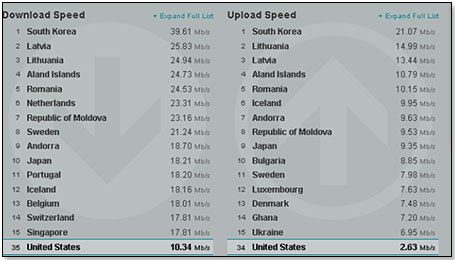
We're #35!

This is an unnerving problem, especially when countries like Lithuania are now kicking the United States into the broadband corner.  You wouldn’t believe we’re that bad off listening to providers, who talk about the innovative and robust broadband economy — the one that is independent of their lousy service.  In fact, the biggest impediment to more innovation may be those same providers.  Some have an insatiable appetite for money — money from you, money from content producers, money from taxpayers, more money from you, and by the way there better be a big fat check from Netflix in the mail this week for using our pipes!

Where is the real innovation?  Community providers like Greenlight, Fibrant, and EPB that deliver their respective communities kick-butt broadband — service other providers would like to shut down at all costs.  Not every commercial provider is an innovation vacuum.  Verizon FiOS and Google’s new Gigabit fiber network in Kansas City represent innovation through investment.  Unfortunately Wall Street doesn’t approve.

Still not convinced?  Visit Japan or Korea and then tell us how American broadband resembles NetZero or AOL dial-up in comparison.

#2 Bad Internet = Shi**y Economy

The demagoguery of corporate-financed dollar-a-holler groups like “FreedomWorks” and “Americans for Prosperity” is without bounds.  Whether it was attacking broadband stimulus funding, community broadband endeavors, or Net Neutrality, these provider shills turned broadband expansion into something as worthwhile as a welfare benefit for Cadillac drivers.  Why are we spending precious tax dollars on Internet access so people can steal movies and download porn they asked.  Why are we letting communities solve their own broadband problems building their own networks when it should be commercial providers being the final arbiter of who deserves access and who does not?  Net Neutrality?  Why that’s a socialist government takeover, it surely is.

It’s like watching railroad robber barons finance protest movements against public road construction.  We can’t have free roads paved by the government unfairly competing with monopoly railway companies, can we?  That’s anti-American!

The cost of inadequate broadband in an economy that has jettisoned manufacturing jobs to Mexico and the Far East is greater than we realize.  Will America sacrifice its leadership in the Internet economy to China the same way we did with our textile, electronics, appliances, furniture, and housewares industries?  China, Japan and Korea are building fiber optic broadband networks for their citizens and businesses.  We’re still trying to figure out how to wire West Virginia for 3Mbps DSL.

#1 At This Point, Internet Access is Kind of a Necessity

The United Nations this week declared the Internet to be a basic human right.  Conservatives scoffed at that, ridiculing the declaration for a variety of reasons ranging from disgust over any body that admits Hugo Chavez, to the lack of a similar declaration for gun ownership, and the usual interpretation of broadband as a high tech play-toy.  Some folks probably thought the same way about the telephone and electricity around 1911.

Yes, the Internet can be frivolous, but then so can a phone call.  Cursed by the U.S. Post Office for destroying their first class mail business, by telephone directory publishers, and those bill payment envelope manufacturers, the Internet does have its detractors.  But should we go back to picking out commemorative stamps at the post office?  Your local phone and cable company sure doesn’t think so.  We don’t either.

Toronto Waterfront Getting 10Gbps Broadband: 100/100Mbps Service for $60 a Month, No Caps

An artist rendering of Don River Park, part of the mixed-use spaces that hallmark the Toronto Waterfront revitalization project.

About seven years ago, Rochester’s Fast Ferry offered daily service between Rochester, N.Y. and Toronto’s Waterfront.  Tens of millions of dollars later, the Rochester Ferry Company discovered that nobody in southern Ontario was that interested in a shortcut to Rochester, many locals found driving to Canada’s largest city faster, more convenient, and cheaper, and the point of arrival on the Canadian side was hardly a draw — situated in a rundown, seedy industrial wasteland.

By the end of 2006, the ferry was sold and sent on its way to Morocco, the CBC got a barely used International Marine Passenger Terminal (built for the Rochester ferry) to use as a set location for its TV crime drama The Border, and the rundown waterfront was well-embarked on a major reconstruction effort.

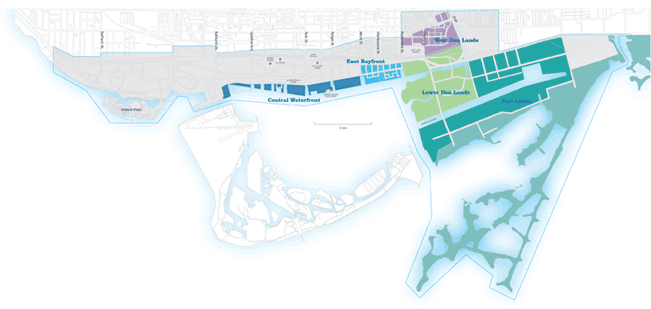
This week, Toronto’s Waterfront learned it was getting a broadband makeover as well, with the forthcoming launch of insanely fast 10/10Gbps fiber broadband for business and 100/100Mbps for condo dwellers along the East Bayfront and West Don Lands.

Best of all, Beanfield Metroconnect, the parent company responsible for constructing the network, promises no Internet Overcharging schemes for residents and businesses… forever.  No usage caps, no throttled broadband speeds, no overlimit fees.  Pricing is more than attractive — it’s downright cheap for Toronto:  $60 a month for unlimited 100/100Mbps broadband, $30 a month for television service, and as low as $14.95 for phone service.  Bundle all three and knock another 15 percent off the price.  The provider is even throwing in free Wi-Fi, which promises to be ubiquitous across the Waterfront.

The project will leapfrog this Toronto neighborhood into one of the fastest broadband communities in the world.

Toronto Waterfront Fiber Broadband Coverage Map

“Having this sort of capacity available to residents will allow for a whole new world of applications we haven’t even conceived of yet,” said chief executive Dan Armstrong.

The rest of Toronto, in comparison, will be stuck in a broadband swamp courtesy of Rogers Cable and Bell, where average speeds hover around 5Mbps, with nasty usage caps and overlimit fee schemes from both providers.  DSL service in the city is notoriously slow and expensive, as Bell milks decades-old copper wire infrastructure long in need of replacement.

The public-private broadband project is a welcome addition for an urban renewal effort that has been criticized at times for overspending. Created in 2001, Waterfront Toronto has a 25-year mandate to transform 800 hectares (2,000 acres) of brownfield lands on the waterfront into a combination of business and residential mixed-use communities and public spaces.  At least $30 billion in taxpayer funds have been earmarked for the renewal project, although project managers say no taxpayer dollars will be spent on the broadband project.

Waterfront Toronto’s efforts have been recognized as bringing Toronto’s first “Intelligent Community” to the city with the construction of the open access fiber network.

Still, the public corporation has its critics.  Earlier this spring Toronto city councilman Doug Ford called the urban renewal project a boondoggle.  Other conflicts rage with the Toronto Transit Commission and the mayor’s office over other redevelopment projects.  But the revitalization project’s broadband initiative has significant support, especially among knowledge workers that could eventually become residents… and paying customers.

The 21st century broadband project is also likely to bring broadband envy across the entire GTA, who will wonder why service from the cable and phone companies is so much slower and more expensive.

For broadband enthusiasts, Toronto’s broadband future looks much brighter than yesterday’s failed ferry service, which proves once again that regardless of the technology — slow, expensive, and inconvenient service will never attract much interest from the value-conscious public.

[flv width=”640″ height=”380″]http://www.phillipdampier.com/video/TVO The Need for High Speed 5-2010.flv[/flv]

Canada’s digital networks are some of the slowest in the world, running between one hundred to a thousand times slower than other countries in the developed world. In this episode of “Our Digital Future – The Need for High-Speed,” Bill Hutchison, Executive Director of Intelligent Communities for Waterfront Toronto describes the sorry state of Canada’s digital infrastructure, stressing the need for major investments in advanced broadband networks.  (4 minutes)

Time Warner Cable Launches Fiber Project for Bangor Businesses

Phillip Dampier June 7, 2011 Broadband Speed, Public Policy & Gov't, Video 1 Comment

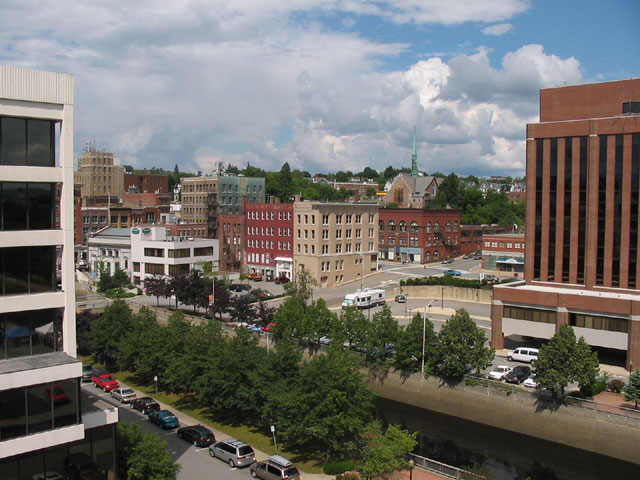
Downtown Bangor, Maine

Broadband will be considerably faster in downtown Bangor, Maine — if you are a business doing business with Time Warner Cable.

The cable operator is working with the city of Bangor to ease the construction of a four-mile long fiber stretching across the downtown business district, with completion expected this October.

The Bangor city government is helping ease the paperwork and permits required to efficiently complete the project as quickly as possible to minimize disruptions to traffic and ongoing business.

Our readers tell us Maine has been a problem area for Time Warner Cable, with congestion problems in several areas because of lack of periodic upgrades.  Oversold broadband symptoms typically include peak usage slowdowns for downstream speeds, even as upstream speeds remain close to their advertised levels.

Businesses in Bangor report existing speeds to be a headache when trying to conduct business or assist customers.

The upgrade is expected to primarily serve business customers, although the cable company is progressing on DOCSIS 3 upgrades across their Maine service areas.

[flv width=”640″ height=”450″]http://www.phillipdampier.com/video/WCSH Portland High speed Internet coming soon for downtown Bangor businesses 6-3-11.flv[/flv]

WCSH-TV in Portland covered the potential impact a fiber upgrade will have for downtown Bangor businesses.  (2 minutes)

Search This Site:

Contributions:

Recent Comments:

Your Account:

Stop the Cap!