Home » Broadband Speed » Recent Articles:

UPDATED: Comcast Wants Some Broadband Customers to Rent Comcast-Issued Cable Modems

Phillip Dampier March 25, 2014 Broadband Speed, Comcast/Xfinity, Consumer News 13 Comments
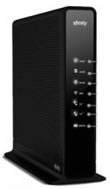
Comcast's gateway

Comcast’s gateway

Some customers are angry and frustrated to learn Comcast has stopped “officially” allowing the use of customer-owned cable modems for its 105Mbps “Extreme” service, insisting subscribers rent a company-supplied gateway for $8 a month.

“Only Comcast issued equipment ensures that the specifications are always met and are not altered intentionally or unintentionally,” reads a technical bulletin issued by the cable company issued Feb. 26.

The new policy was discovered by a Comcast customer in Virginia having trouble with his broadband service. He was using his customer-owned Zoom 5341J — equipment on Comcast’s approved modem list.

“[A Comcast executive customer service representative] insisted that list is incorrect and I must rent a modem from them to receive the correct speeds on [the] Extreme 105 package,” writes ExoticFish on the Broadband Reports’ Comcast forum.

The bulletin, identified as ID TLK1043 and intended for the use of Comcast employees, explains:

Document ID TLK1043; Published February 26, 2014

Overview

Extreme 105 is the latest Comcast DOCSIS 3.0 XFINITY speed product, which provides extreme and unbelievable Internet speeds for customers. The product provides:

  • 105Mbps download speed
  • 20Mbps upload speed

Affected Areas

National.

Some of the Talking Points are not applicable for the Central Division.

Comcast-LogoImpact to Comcast

The Premium Installation fee for Extreme 105 is $249. Extreme 105 is installed by 105Mbps trained technicians. The Comcast Technician will:

  • Conduct an in-depth analysis of the customer network.
  • Ensure that the customer’s home and equipment are prepared to support the speeds included in the Extreme 105 service.
  • Perform a node health check on the day of installation and also on a daily basis after installation.

Impact to Customer

Extreme 105 targets:

  • Hard-core gamers
  • Users with several computers in their house
  • Users who upload and share multimedia files

Media Inquiries

Any media inquiries should be directed to the local market media team.

Q&A

Some of the Frequently Asked Questions and their responses are as below:

Why do I need to use Comcast issued equipment?
Only certified Comcast equipment delivers the ensured service speed attached to the customer’s account.

Comcast allows customers to use their own equipment for all your other Internet packages, why not Extreme 105?
Generally customers can use their own equipment and configure it as they see fit. But for Extreme 105, the configuration must be done and maintained at certain specifications. Only Comcast issued equipment ensures that the specifications are always met and are not altered intentionally or unintentionally.

But I have a DOCSIS 3.0 Modem and N Router, why do I need your versions?
Comcast installs equipment which have gone through extensive network certification process of Comcast and which have been proven in both laboratory and live network tests. This ensures that the equipment performs consistently and delivers the subscribed speed and services.

Does the $249 installation fee include installation of a wireless router?
Yes, the installation fee includes the installation of Comcast owned wireless router.

Why is there a premium installation fee for Extreme 105?
Extreme 105 is a premier Internet product by Comcast and the premium installation fee guarantees a speed of 105Mbps. A Comcast Certified Installation Technician performs additional tests which are not performed during installation of other premier internet service.

Is the premium installation fee refundable if I disconnect the service in 30, 60, 90 days?
The installation fee is non-refundable.

With Comcast reportedly preparing to boost speeds for its customers in the near future, those signed up for Comcast’s 50Mbps “Blast” tier could soon see speed upgrades to 105Mbps. That might expose those customers to the same mandatory rental charge.

The Virginia customer never realized Comcast changed its policies until he had service problems. It was then that a senior representative insisted the customer switch to Comcast’s rented gateway device if he wanted his service fixed. Other customers still using customer-owned equipment and subscribed to 105Mbps service may continue to fly under the radar for some time and there does not seem to be any national effort to contact customers about their equipment.

Some speculate Comcast’s new policy might also relate to the company’s intention to expand its Wi-Fi network relying on Comcast customers with gateway devices to serve as hotspots. That would likely require the use of Comcast’s own gateway to be successful.

Updated: 3/26/14 — 12:17pm ET — Karl Bode at Broadband Reports got an answer back to his inquiry about this issue and a Comcast rep tells him the service tech handing out the above-referenced memo is not correct:

The painful spelling and grammar errors in the last bit of the supposed company memo seemed a little off, so I reached out to Comcast for comment. The long and short of it is: no, this is not official company policy.

“We’re going to have someone try to reach out to the forum poster to follow up, but the short of it is there is no policy change,” Comcast spokesman Charlie Douglas tells me. “Customers can buy or rent modems. Here is our approved devices list.”

Karl adds: “I’m still trying to ferret out why exactly this install technician was trying to push strange and unofficial company policy, and how and why he was using an incorrect and grammatically mangled memo to justify the behavior.”
Cable Industry Has Charts to Prove Your Broadband is Screaming Fast

Phillip Dampier March 24, 2014 Broadband Speed, Competition, Consumer News, Data Caps, Editorial & Site News Comments Off on Cable Industry Has Charts to Prove Your Broadband is Screaming Fast

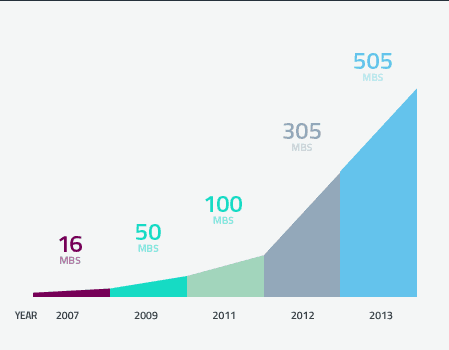
Tracking Cable’s Top Internet Speeds
NCTA-Charts_2_tracking broadband speeds

The National Cable & Telecommunications Association (NCTA) offers this infographic to suggest the deregulated cable broadband industry works well without any interference from meddling politicians.

Their claim: “Ongoing investments have enabled cable providers to continue boosting broadband speeds with top tiers increasing 50% every year.”

The reality: Cable’s broadband speed comes at a very high cost. The majority of Americans cannot buy 505Mbps residential broadband service from Comcast and even if you could, the price tag hovers around $300 a month, with a nearly-$1,000 early contract termination penalty, a $250 installation and $250 activation fee. Customers at other cable providers often find their maximum speed is just 50Mbps and/or their Internet usage is limited by a usage cap.

Google Fiber and some other gigabit fiber to the home providers are offering unlimited 1,000Mbps service for $70 a month with no installation or activation fee if a customer agrees to stick around.

Verdict: The cable industry could do better for much less.

Denial of Service Attack on One Mass. Customer Brings Verizon FiOS to Its Knees for Many

Phillip Dampier March 24, 2014 Broadband Speed, Consumer News, Verizon 3 Comments
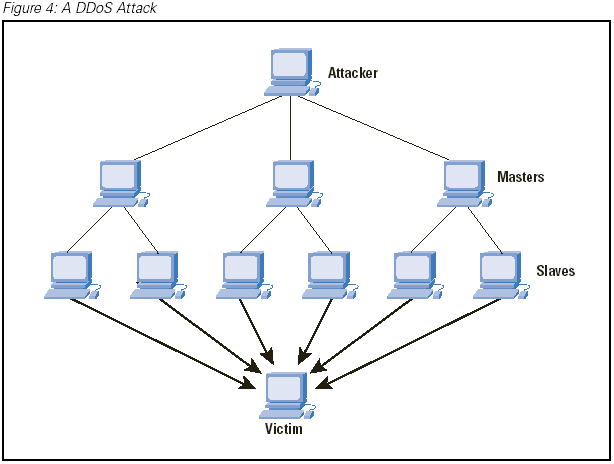
A denial of service attack often directs compromised computers to join in the attack, bringing an enormous amount of simultaneous traffic to a single, targeted user. The result is usually very slow or no Internet service.

A denial of service attack often directs compromised computers to join in the attack, bringing an enormous amount of simultaneous traffic to a single, targeted user. The result is usually very slow or no Internet service. (Image courtesy: Cisco)

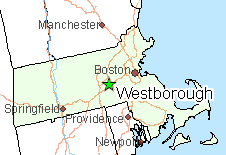
For nearly a month, Verizon FiOS customers in Westborough and Northborough, Mass. have experienced frequent slowdowns and outages of their Internet and telephone service that Verizon now admits have been traced to a denial-of-service attack on a single residential customer in Westborough.

“Someone deliberately flooded that customer with an overwhelming amount of traffic that rendered their Internet service inoperable,” Verizon spokesman Philip G. Santoro told The Telegram. “When that happened, it caused Internet service to periodically slow down for other customers in Westborough,” he wrote. “We are working to restore service to normal as soon as possible. DOS attacks are all too common today among customers of all Internet providers. It’s important to remind Internet users to keep their firewalls operating and to keep their security software current.”

When the newspaper first reached Santoro for comment, he claimed there wwere no widespread outages reported, but angry customers disagreed on the community’s Facebook page and six filed complaints with the state’s Office of Consumer Affairs and Business Regulation.

The outages have been a problem as far back as Feb. 26, growing more frequent in number since March 3. Business customers were also affected.

“It happened around 3 o’clock, every day,” said Allen Falcon, chief executive officer for Cumulus Global, a cloud computing company in Westborough. “Sometimes it was a few minutes, sometimes 45 minutes to an hour.” A few times, the interruptions occurred in the morning, just after 9 a.m., he said.

westboroughWhen the attacks began, they not only affected the company’s Internet connection, but also its business phone service.


Verizon’s first solution was to replace FiOS routers, which proved ineffective.

Customer Steve Winer from Westborough told the newspaper sending Verizon crews out with new equipment was a waste of time and money.

“I am just wondering how much time and money was wasted on this,” he wrote the newspaper in an email. “I know I spent at least a couple of hours on the phone, and others shared similar stories. But, if you add up all the shipped routers and unnecessary service calls, along with the time both of us customers and (Verizon) personnel, I am sure it really adds up, and could have been avoided if someone had simply put two and two together and posted a chronic outage which began in February.”

Verizon's wired success story

Last week, Verizon finally identified the specific customer targeted by the cyber-attack and terminated his FiOS account, which also put an end to the service-disrupting attacks.

Some customers are wondering whether Verizon has an effective plan to deal with future cyber attacks.

“It seems FiOS is very vulnerable to these attacks, which not only affects the target’s service, but that of everyone else in town,” wrote Stop the Cap! reader Steve Read, a Northborough resident. “They need a way to quickly isolate these kinds of attacks and keep them from affecting other customers’ service.”

Customers affected by the outages can contact Verizon FiOS customer service and request credit for the outages.

Cable Customer Service Improvements: Fool Me Once, Shame on You; Fool Me Twice, Shame on Me

Phillip "More empty promises from the cable industry" Dampier

Phillip “More empty promises from the cable industry” Dampier

Listening to Time Warner Cable’s “Here today and gone much richer tomorrow” CEO-in-passing Rob Marcus prattle on endlessly about improving “the customer experience” on analyst conference calls, the cable company’s blog, and in various press statements always makes me pinch myself to be certain I am not dreaming.

Time Warner’s Rob Marcus:

I’m focused on ensuring we establish a customer-centric, performance-oriented, values-driven culture defined by four basic tenets:

  • We put our customers first,
  • We are empowered and accountable,
  • We do the right thing, and
  • We are passionate about winning

What does that mean for customers? If we expect customers to trust us to connect them to what matters most, we must put them at the center of everything we do.

How is that working out for you?

Based on consumer surveys, many of Marcus’ customers may have a different sentiment:

  • Time Warner puts what is best for Time Warner first,
  • Time Warner is empowered to raise rates for no clear reason and as a deregulated entity is accountable to no one,
  • Time Warner does the right thing for Time Warner executives and shareholders,
  • Charlie Sheen was also passionate about “winning.”


So much for Comcast's customer service improvement project promised back in 2007.

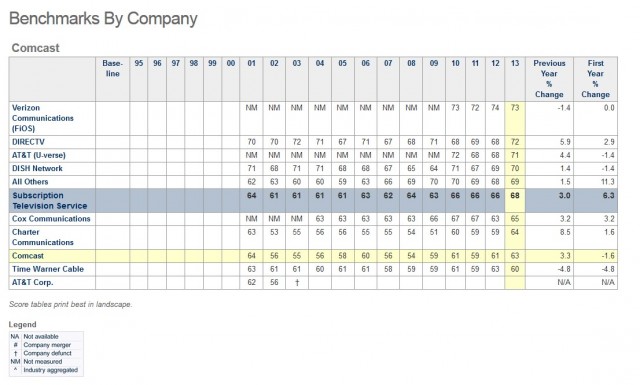
So much for Comcast’s customer service improvement project promised back in 2007. (Source: ACSI)

There is nowhere to go but up when it comes to improving the abusive relationship most Americans have with the local cable or phone company. CNN asked the question, “do you hate your Internet provider,” and within hours more than 600 customers sang “yes!”

Marcus

Marcus

This is hardly a new problem. Karl Bode at Broadband Reports reminds us that Comcast broke its promises for major improvements in customer service more than five years ago. CEO Brian Roberts at the time blamed the troubles on Comcast’s enormity — taking 250 million calls a year handling orders, customer complaints, etc., is a lot for one company to handle.

“With that many calls, you are going to have failures,” Roberts admitted.

With more than 10 million Time Warner Cable customers waiting to move in at Comcast, if what Roberts says is true, things are about to get much worse. In fact, even before the merger was announced Comcast was just as despised as ever, thanks to rate hikes, usage caps, and poor service often delivered from their notorious sub-contractors that appear on the news for falling asleep, murder, digging in the wrong yard or blowing up laptops, dishwashers or homes.

Judging from the enormous negative reaction customers of both Time Warner Cable and Comcast had to the news the two were combining, it’s clear this merger isn’t the exciting opportunity Marcus and Roberts would have you believe.

‘If you despise Comcast today, your hate will know no bounds tomorrow as Comcast spends the next two years distracted with digesting Time Warner Cable,’ suggested one customer.

Another asked whether Americans have resigned themselves to a trap of low expectations, seeking out one abusive telecom company relationship after another.

highlights“After twenty years of Time Warner’s broken promises, service you can’t count on, and price hikes you can, I made the fatal mistake of running away from one bad relationship into the arms of another with the Bernie Madoff of broadband: AT&T,” wrote another. “Slower service, an unnecessary allowance on broadband usage, and one rate increase too many is hardly the improvement we were promised in the shiny brochure. But we have nowhere else to go.”

Being stuck with an independent phone company with no cable provider nearby can mean even worse service.

“I live in Seattle, and the only option in my neighborhood is CenturyLink DSL,” wrote Jen Wilson.

CenturyLink’s top speed in Wilson’s neighborhood? 1Mbps. At night, speeds drop to 122kbps — just twice the speed of dial-up Internet.

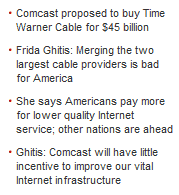
CNN’s Frida Ghitis observed the current state of broadband in the United States is alarmingly bad, and allowing Comcast and Time Warner Cable to merge won’t fix it:

Americans are divided on many issues, but resentment against these telecom giants is so pervasive that it may just be the most heartwarming symbol of national unity. And that’s as it should be. Except that the resentment should extend to politicians who have made this disastrous system possible and allow political contributions to prevent them from fixing it. The problem is not just one of dismal customer service. Instead, it is a growing threat to the country’s economic and strategic position.

If you travel overseas, you will quickly notice that Web access in much of the developed world is light years ahead of America’s. You may also be irritated to discover that far better Internet is much, much cheaper in other countries.

Time Warner's notorious modem rental fee was just a hidden rate hike, according to the ex-CEO.

Time Warner’s notorious modem rental fee was just a hidden rate hike, according to the ex-CEO.

Thus far, Time Warner’s remedy to improve service is yet another rate increase. Broadband prices are rising an average of $3 a month — $36 a year, with no speed enhancements on the horizon except in New York, Los Angeles, and cities where Google Fiber is threatening to kick the cable company in the pants. That means Time Warner’s 11.1 million broadband customers will deliver as much as $33.3 million more in revenue each month for broadband service alone. What will you get in return? In most cases, nothing.

Television customers will be pick-pocketed for the newly-“enhanced” on-screen guide many still loathe, which carries a new surcharge applied to the cost of set-top boxes and DVRs. This “enhancement” alone will cost most customers with two boxes an extra $30 a year. It will provide Time Warner with more than $170 million each year in revenue enhancement.

The cable company that fought a battle with CBS last summer “on behalf of customers” faced with paying extortionist pricing for CBS-owned cable networks and local stations will instead send their extortion payment direct to Time Warner, thanks to a new $2.25/mo “Broadcast TV Fee” imposed this spring by the cable company.

But Time Warner is unlikely to hang on to that money for long.

If it wanted to discourage programmers from demanding double-digit percentage rate increases, the plan is likely to backfire once the networks smell the money — more than $25 million a month, $300 million a year — Time Warner claims to be collecting on their behalf.

New Jersey’s Fiber Ripoff: Verizon Walks Away from Fiber Upgrades Customers Already Paid For

Bait and switch broadband

Bait and switch broadband

Since 1991, Verizon telephone customers in New Jersey have paid at least $15 billion in surcharges for a promised high-speed broadband network that would reach every home in the state by 2010. But now critics charge Verizon diverted much of that money to shareholder dividend payouts and building infrastructure for its highly profitable wireless network, leaving almost half the state with slow speed DSL or no broadband at all.

In the early 1990s, Verizon’s predecessor — Bell Atlantic — launched “Opportunity New Jersey,” a plan promising the state it would have the first 100% fiber telecommunications network in the country. In return, the company enjoyed more than two decades of generous tax breaks and collected various surcharges from customers to finance network construction. But a review of Verizon’s promises vs. reality suggest the company has reneged on the deal it signed with the state back when Bill Clinton was beginning his first term as president.

Verizon promised at least 75 percent of New Jersey would have a fiber service by 1996 offering 384 television channels and 45/45Mbps broadband service for $40 a month. The network would be open to competitors and be deployed without regard to income or its potential customer base.

The state suspected trouble as far back as 1997, when the Division of the Ratepayer Advocate with the New Jersey Board of Regulatory Commissioners blasted the company’s progress five years into the project:

Bell Atlantic-New Jersey (BA-NJ) has over-earned, underspent and inequitably deployed advanced telecommunications technology to business customers, while largely neglecting schools and libraries, low-income and residential ratepayers and consumers in Urban Enterprise Zones as well as urban and rural areas.

Verizon's wired success story

By 2006, New Jersey was being introduced to FiOS, which some believed was part of Verizon’s commitment to the state. But a decade after Verizon’s target dates, customers were still waiting for FiOS video service, the maximum broadband speeds offered at that point were 30/5Mbps and the cost of the package ranged from $180-200 a month. Most of Verizon’s FiOS deployments were in the northern half of the state, leaving southern New Jersey with few, if any service improvements.

Despite Verizon’s repeated failures to meet its target dates, that same year New Jersey made life even easier for the phone company by passing a statewide video franchise law allowing Verizon to bypass negotiating with each town and city regarding its video services and instead run FiOS TV as it pleases anywhere in the state. The company argued a statewide video franchise would allow for more rapid deployment of Verizon’s fiber network. In reality, the company was falling further and further behind. By 2013, when Verizon sought renewal of its statewide franchise, Verizon only offered FiOS TV to 352 of the 526 communities hoping for service. At least 174 communities still waiting for FiOS are likely never going to get the fiber service, despite paying Verizon’s surcharges for more than 20 years. Verizon suspended its FiOS expansion project more than two years ago.

Bait and Switch Broadband

From promises of a cutting edge fiber future to good-enough DSL....

From promises of a cutting edge fiber future to good-enough DSL.

Despite early commitments of providing New Jersey with advanced fiber broadband speeds unheard of elsewhere in the country in the 1990s, Verizon changed its tune when it became clear the company wanted to prioritize investment in its more lucrative wireless network. Instead of a commitment of 45/45Mbps, providing basic DSL broadband at any speed was now seen as adequate. Verizon spokesman Lee Gierczynski told both Newsweek and the Inquirer the company never promised a statewide deployment of FiOS.

“Nobody knew what FiOS was 20 years ago,” Gierczynski said. “It wasn’t until 2004 when FiOS came on the scene.”

Forget about that commitment for 45/45Mbps speed as well.

“It didn’t say a minimum of 45mbps,” Gierczynski said, “it just says ‘up to’.”

That means DSL service will be a part of southern New Jersey for the near future. Customers unimpressed with the 5Mbps DSL service they get from Verizon can always pay substantially more for access to Verizon Wireless’ usage capped LTE 4G network that Gierczynski believes can be used to download movies.

In effect, ratepayers that wrote checks to pay artificially higher phone bills to help subsidize a promised 100% fiber optic future have instead funneled working capital to Verizon Wireless’ network expansion and helped enrich shareholders with generous dividend payouts.

Opportunity New Jersey Verizon: Christie Administration Proposes Letting Verizon Off the Hook Permanently

Gov. Christie

Gov. Christie

Most victims of costly bait and switch schemes get angry and demand justice. In New Jersey, the Christie Administration believes Verizon is the victim of unreasonable expectations and has proposed a sweetheart deal to both let the company off the hook and keep the surcharges it collected from New Jersey ratepayers for the last 21 years.

While the rest of the country clamors for better broadband, Governor Christie’s State Commission, his Attorney General’s Office and the state Consumer Rate Counsel believe that basic DSL is good enough, and making life difficult for Verizon by insisting it live up to its part of a mutual agreement just isn’t very nice.

All eyes were on incoming president of the Board of Public Utilities Dianne Solomon, wife of close Christie associate Lee Solomon. The BPU has direct authority over Verizon’s compliance with its promises to the state. But Dianne’s only apparent experience is as an official with the United States Tennis Association. Critics immediately pounced on the odd nomination, accusing the governor of using the BPU as a lucrative parking lot for political patronage. Three of the four current commissioners are all politically connected and their experience navigating telecommunications law is questionable.

Instead of demanding that Verizon be held to its commitment to the state, government officials are bending over backwards to let Verizon walk away from its promises forever.

A stipulation proposal would allow the company to shred its commitment to upgrade New Jersey with fiber optics. Instead, Verizon gets permission to discontinue service if you have any other option for service — including cable or wireless. Not only would this stipulation eliminate any hope bypassed communities have to eventually get Verizon FiOS, it would also let Verizon scrap its rural landline network and kill DSL, forcing customers to its lucrative wireless broadband product instead.

Solomon

Solomon

The agreement also eliminates any commitment Verizon had to deliver fiber-fast speeds. Instead, Verizon will be considered in good standing if it matches the slowest speed on offer from Verizon DSL.

“Broadband is defined as delivering any technology including Verizon’s 4G wireless, fiber, copper or cable, data transmission service at speeds no less than the minimum speed of Verizon New Jersey’s Digital Subscriber line (DSL) that is provided by Verizon New Jersey today.”

New Jersey customers can file comments about the proposed agreement until March 24, 2014 with the Board of Public Utilities.

We have found a good sample letter you should edit to make your own. You can e-mail the secretary directly and/or send your message to the general e-mail address: [email protected] (be sure to include “Verizon New Jersey, Docket No. TO12020155” on the Subject line):

New Jersey Board of Public Utilities
Kristi Izzo, Secretary
44 South Clinton Avenue, 9th Floor
P.O. Box 350 Trenton, NJ 08625-0350

Email: [email protected]

Re: In the Matter of Verizon New Jersey, Inc. Docket# TO 12020155

Dear Secretary Izzo:

I want to alert you to an urgent matter pending before the New Jersey Board of Public Utilities. Pursuant to a 1993 law called Opportunity New Jersey, Verizon NJ was obligated to upgrade New Jersey’s “copper wire” network by 2010. To fund the Opportunity New Jersey expansion, Verizon NJ was permitted to collect excess charges from their customers and received lucrative tax breaks from the State. These charges and tax breaks began in the 1990s and are still being collected today.

Verizon failed to meet its timeframe requirements under the Opportunity New Jersey agreement to New Jersey residents. As a result of Verizon’s failures, on March 12, 2012, the New Jersey Board of Public Utilities initiated a legal action against Verizon NJ. The Board and Verizon NJ have now entered into a proposed settlement agreement which I believe is inadequate and not in the best interests of myself and other New Jersey residents who have paid for this service that was not fully delivered.

I oppose the Board’s proposed settlement agreement and demand that The Board of Public Utilities hold Verizon to the original Opportunity New Jersey agreement which requires Verizon to expand broadband services to every customer in the State. The proposed settlement has the potential of costing myself and other residents even more money than I have already paid for the last 21 years. The Board of Public Utilities should not allow Verizon to flagrantly disregard the stipulations which are the framework for the charges and tax breaks that Verizon has enjoyed for 21 years.

I am asking the Board of Public Utilities to be my advocate and investigate where our dollars were spent and to require Verizon to give me what I was originally promised under Opportunity New Jersey agreement of 1993.

Sincerely,

[Your Name, Address, Phone Number]

Search This Site:

Contributions:

Recent Comments:

Your Account:

Stop the Cap!