Home » Broadband Speed » Recent Articles:

Sprint Will Shut Down Clear/4G WiMAX Network by 2015; TD-LTE Upgrade for Most Cell Sites

wimaxSprint has begun decommissioning its increasingly obsolete 4G WiMAX network with definitive plans to shut off the service completely by the end of 2015.

While most Sprint customers with smartphones have long since moved away from WiMAX, Sprint has resold access to the 2.5GHz network for some prepaid Boost, Sprint, and Virgin Mobile customers as well as third parties including FreedomPop and Earthlink.

WiMAX was the first 4G network in the United States, launching first in Baltimore in the fall of 2008. Sprint customers were offered the HTC Evo 4G smartphone to access WiMAX’s faster speeds. Separately, Clearwire marketed access to WiMAX as a wireless home and business broadband solution. WiMAX was often promoted as a longer distance alternative to Wi-Fi, and was initially capable of 30-40Mbps speeds.
clear-logoIn practice, WiMAX in the United States never achieved great success. Sprint and Clearwire’s network was never built out sufficiently to provide nationwide coverage, and because it relied on very high frequencies, even customers inside claimed service areas often dealt with reception problems, especially indoors. Clearwire’s home broadband replacement often required reception equipment be placed near a window, preferably one without a thermal coating that could block or degrade the signal.

As soon as Sprint and Clearwire added a significant number of customers to the network, speeds deteriorated. Neither company invested enough in upgrades to keep up with demand. Instead, Clearwire’s home broadband customers, originally promised unlimited service, were routinely speed throttled for “excessive use.”

The same year WiMAX was introduced in Baltimore, Network World was already warning the technology was in trouble. By 2011, the magazine had officially declared WiMAX dead.

“There was way too much hype surrounding WiMAX (like the White Spaces today, it was marketed as ‘Wi-Fi on steroids’ and a replacement for Wi-Fi; such was, of course, complete nonsense)”, the magazine wrote.

Other American wireless carriers showed little interest in WiMAX, particularly as competing 4G technologies including HSPA+ and LTE were nearing deployment.

SprintDespite the promise of greatly enhanced data speeds with the next generation of WiMAX, dubbed WiMAX 2, many of the world’s largest wireless carriers were already preparing to move on. In particular, China Mobile (and its 600 million customers) became the decisive factor that turned WiMAX 2 into a bad bet. China Mobile decided the better choice was TD-LTE, a variant of LTE technology. With China Mobile providing service to 10 percent of the world’s mobile users all by itself, support for TD-LTE grew and attracted equipment manufacturers that saw the earnings potential from selling tens of millions of base stations.

TD-LTE is an excellent upgrade choice for WiMAX operators because it was designed to work best at high frequencies ranging from 1850-3800MHz — the same frequency bands that WiMAX already uses.

Sprint expects to decommission at least 6,000 of its 17,000 WiMAX cell sites. Another 5,000 of those sites have already gotten TD-LTE technology, a part of Sprint’s broader LTE network upgrade. Sprint will combine its FDD-LTE network in its 800MHz and 1.9GHz spectrum with a TD-LTE network in its 2.5GHz spectrum. Sprint Spark customers are being offered tri-band equipment that can access either technology. Sprint can use its massive expanse of 2.5GHz spectrum to offload data usage from its lower frequency spectrum, especially in large cities.

Another 5,000 legacy Clearwire cell sites will be upgraded to TD-LTE between now and the end of next year. Sprint expects to deploy TD-LTE more widely than WiMAX, potentially serving 100 cities and 100 million base stations by 2016.

Sprint has protected much of its postpaid customer base from the transition by repeatedly encouraging customers to upgrade to LTE service, now being rolled out as part of its Network Vision plan. But firms like FreedomPop and others that now lease access to the WiMAX network will leave their customers with a shorter upgrade path when WiMAX equipment stops working, requiring users to upgrade to LTE equipment.

[flv]http://www.phillipdampier.com/video/Sprint Spark – Today is already the future 10-30-13.mp4[/flv]

Sprint hypes its new tri-band Sprint Spark network, which combines two different LTE networks to deliver faster data speeds. (1:18)

Non-Profit Supporters of N.J.-Verizon Broadband Settlement Have a Relationship With Verizon

TeleTruthVerizon has been upset with the tone and accuracy of many New Jersey residents who have written the state’s Board of Public Utilities urging them to reject a settlement offer than would allow Verizon to walk away from its commitment to deliver high-speed broadband to 100% of the state.


While calling many of its opponents misinformed about the company’s original commitments, a Verizon spokesperson targeted a particularly nasty response to one of its strongest critics — Teletruth’s Bruce Kushnick, who has accused Verizon of breaking its promises in New Jersey and substituting outdated DSL and expensive, usage-capped 4G wireless broadband as a broadband equivalent.

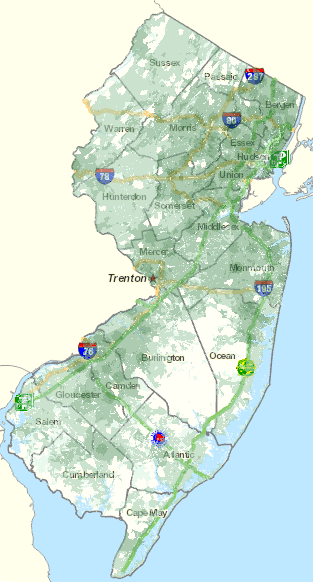
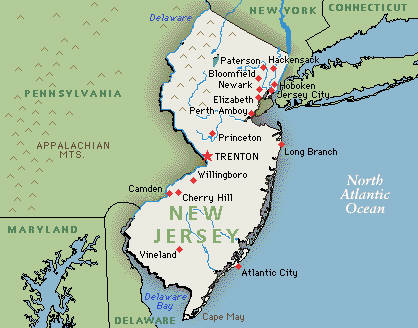
Northwest, central and southern New Jersey all lack solid broadband coverage. (Map: Connecting NJ)

Northwest, central and southern New Jersey all lack solid broadband coverage. (Map: Connecting NJ)

Kushnick has argued that Verizon has cooked the books, diverting funds that should have been spent on FiOS expansion into its more profitable wireless subsidiary Verizon Wireless instead. He wants New Jersey to conduct a thorough investigation of Verizon’s financial reporting and learn why the company has reneged on a broadband commitment that originally promised a minimum of 45/45Mbps high-speed broadband for 100% of the state by 2010 in return for rate deregulation and tax breaks. Verizon got the deregulation and tax breaks but much of the state is still waiting for the faster broadband it was promised.

Now Verizon wants the state to approve a settlement that will redefine its commitment from 45/45Mbps to 4Mbps DSL or wireless 4G broadband.

Verizon spokesman Lee Gierczynski said criticisms about the company’s performance in New Jersey are “way off base.” He said there never was any commitment to deploy FiOS across all of New Jersey because FiOS did not exist at the time of the original agreement.

“Nobody knew what FiOS was 20 years ago,” Gierczynski said. “It wasn’t until 2004 when FiOS came on the scene.”

What about the 45/45Mbps speed commitment?

“[The agreement] didn’t say a minimum of 45Mbps,” Gierczynski said, “it just says ‘up to’.”

Gierczynski particularly bristled over Kushnick’s ongoing criticisms of Verizon.

“For nearly two decades, he has made the same, tired baseless allegations over and over again about Verizon and its predecessor companies — not only in New Jersey but in other states as well,” Gierczynski told The Record in an email. “His specious arguments are devoid of fact, relying on misinformation and myths to prop up his claims. This filing is no different.”

With more than 1,000 comments on file with the BPU, Verizon invited the regulator to dismiss critics that demanded Verizon live up to its original commitments:

“The vast majority of comments opposing the Stipulation that have been posted by the Board to date were submitted via a standard form letter generated by the New Jersey State AFLCIO with the subject line “Tell Verizon to Live Up to the Opportunity New Jersey Agreement.”

“Other comments opposing the Stipulation offer inaccurate claims about what was contemplated by Opportunity New Jersey or what is in the Stipulation.”

AFL-CIO Letters:  These letters opposing the Stipulation appear less convincing when the locations of senders are examined— More than 25 are from people located outside of New Jersey and some appear to be from municipalities not in Verizon’s service territory. “

Verizon did not bother to mention the circulation of a pro-Verizon form letter that was submitted by hundreds of people, many Verizon employees and retirees, as reported last week by Stop the Cap!

Two of those letters were signed by Paul A. Sullivan, Verizon’s regional president of consumer and mass business markets in New Jersey and Tracy Reed, a Verizon manager… in Atlanta. Neither identified themselves as Verizon management.

Further concerns were raised by Kushnick when he found that the people and businesses Verizon touts as supporting Verizon’s position all have some relationship with Verizon:

  • New Jersey Technology Council — Board member,  Douglas Schoenberger, VP, Public Policy, Verizon NJ, Inc
  • The Meadowlands Chamber of Commerce — Donnett Barnett Verley, Director of Public Policy and Corporate Responsibility, for Verizon New Jersey.  “I am responsible for Verizon’s philanthropic and community outreach efforts throughout the state. I serve as an active board member of …the Meadowlands Chamber of Commerce.”
  • Greater Paterson Chamber of Commerce — “Hi. I’m Rick Ricca, Director – External Affairs. I am responsible for the company’s relationship and interaction with municipal and county governments… I also serve on… Greater Paterson Chamber of Commerce.”
  • The Commerce and Industry Association of New Jersey (“CIANJ”), Member of the Board, Sam Delgado V.P. Community & Stakeholder Affairs Verizon
  • Greater Elizabeth Chamber of Commerce — “Verizon, a telecommunication company received the Member-to-Member Award for its important contribution to Elizabeth’s business.”
  •  Cooper’s Ferry Partnership —Verizon is on the Board of Directors. “The organization’s operational budget is currently divided into three main categories: board membership… investments from these valued partners that has allowed CFP to grow its mission and expand throughout the city of Camden.”
  • Puerto Rican Association for Human Development —“Verizon Presents $20,000 to PRAHD”
  • Latino Institute  — Our Partners and Funders, Verizon
  • Gudino, David Joseph — Associate General Counsel, Verizon Wireless
  • NJ SHARES —“Verizon New Jersey partners with NJ SHARES for Communications Lifeline outreach and enrollment efforts.”

“In fact, it’s hard to identify any legitimate group that supports the Verizon stipulation and is not funded by Verizon,” said Kushnick.

Telecom Italia Seeks Advice from AT&T on How to Grab More €uros from Customers

Phillip Dampier April 7, 2014 AT&T, Broadband Speed, Competition, Data Caps, Online Video, Public Policy & Gov't, Wireless Broadband Comments Off on Telecom Italia Seeks Advice from AT&T on How to Grab More €uros from Customers

Telecom Italia wants to learn from the master of higher priced phone service: AT&T

Telecom Italia (TI) has a big problem. While AT&T charges the average American $66 a month for mobile service, competition in Italy has forced wireless prices down to $18 a month for comparable service.

TI chief executive officer Marco Patuano wants the price cutting to end and traveled to the United States to learn from AT&T how it was able to raise prices and increase customer spending with usage-capped Internet, phone and television service. His self-described “innovation trip” brought him straight to the office of AT&T CEO Randall Stephenson.

TI is trying to end years of losses and sales declines precipitated by falling prices and a growing disinterest in traditional landline service. AT&T accomplished that by boosting investment in mobile services. AT&T charged high prices for unlimited data plans until demand for data grew to the point the company could earn much more metering Internet usage. As a result, AT&T has earned a staggering $100 billion over the past decade from boosted phone bills.

Patuano

Patuano

Patuano wants to find a way to follow in AT&T’s footsteps as TI’s share price has fallen more than 70 percent over the last six years. Fierce competition from Vodafone and VimpelCom have forced prices down across Italy. With prices so low, investors have shown little interest in providing funding for wholesale upgrades to 4G wireless service. In turn, that has kept Telecom Italia from offering faster data speeds which would allow them to raise prices for service.

In North America, high wireless prices and the relative lack of competition have brought considerably better financial returns for investors. That high rate of return has attracted investment allowing providers like AT&T and Verizon Wireless to spend billions on network upgrades that have, in turn, further increased revenue at both companies. Customers benefit from the faster speeds, but also pay for the privilege with some of the highest wireless prices in the world.

It’s a formula Patuano wants to bring to the Italian market, but he needs more investment to stabilize TI’s finances. TI was the government-owned phone company until it was privatized in 1997. Despite having a massive customer base, nimble wireless competitors have outflanked the phone company and the results have been falling sales, disconnected customers, and its $37 billion in debt reduced to junk status by investor rating services. The company sold its headquarters in Milan and got rid of its Argentine subsidiary, along with suspending shareholder dividends.

att_logo“The first target now for a phone carrier is upgrading networks and transform it to a platform for high-value services,” Patuano said. “This is exactly what AT&T did and what we are calling for.”

Patuano has seen AT&T defend its turf in the wireline business by scrapping its traditional landline/DSL-only service in larger markets in favor of a hybrid fiber-copper network dubbed U-verse. Patuano is now pondering whether TI could deliver a package of phone, broadband and television service over a broadband platform. The average AT&T U-verse customer spends $170 a month on U-verse, an amount much better than $18 a month. TI could do even better than AT&T because Italy lacks many cable television providers — Italians depend on satellite television for multichannel pay television.

AT&T and TI are no strangers to one another. In 2007, AT&T attempted to buy a stake in the Italian phone company but met with a storm of objections from Italian politicians. AT&T dropped the idea soon after.

Verizon’s Curious Allies, Employees Urge N.J. Regulators to Forget About FiOS Fiber Expansion

Verizon's FiOS expansion is still dead.

Verizon’s FiOS expansion is still dead.

New Jersey’s Board of Public Utilities has heard from hundreds of New Jersey residents about a settlement proposal that would let Verizon off the hook for failing to keep a commitment to provide high-speed broadband service statewide no later than 2010.

Curiously, hundreds of those comments were identical e-mails originating from AOL, Hotmail, MSN and Yahoo mail accounts urging the state to show lenience to Verizon — to forgive and forget the company’s broken promises. No mailing addresses were included. But the attached names and e-mail addresses were enough for Stop the Cap! to discover many of those submitting comments used non-working e-mail addresses or claimed their names were submitted without their knowledge or permission. Many others were actually employed by Verizon or were retirees.

“The proposed stipulation is fair and balanced and under your guidance, will build on the success that the Board and Verizon have achieved in making the Garden State one of the most wired broadband states in the country,” writes David Gudino, who doesn’t disclose in his correspondence with the BPU that his name is included in a list of attorneys working for Verizon Wireless.

“I would like to declare my support for the proposed stipulation between your Board Staff and Verizon as it relates to Opportunity New Jersey,” says another on behalf of an organization getting contributions from Verizon. “The stipulation will help ensure continued deployment of advanced communications services. Access to these services will not only benefit New Jersey’s businesses and nonprofits, but consumers of all ages as well.”

new-jerseyBy “advanced communications services,” the letter’s signers should know very well that means more 4G LTE wireless broadband with stingy usage caps and high prices, not more FiOS fiber to the home service.
What proved especially surprising was finding so many customers claiming to be happy with Verizon’s broadband performance in New Jersey who are still relying on AOL dial-up accounts. Stop the Cap! contacted a random 150 signers of the identical letters by using their attached e-mail addresses, which are part of the public record. We asked the writers to expand on their views about Verizon’s performance in New Jersey, whether they were satisfied with their current Internet provider, whether they have broadband service, and where they learned about this issue.

Remarkably, 35 of the e-mail addresses turned out to be invalid, so we contacted an extra 35 and 12 of those e-mail addresses were invalid as well. We found this unsettling because the only identifying information attached to the pro-Verizon correspondence was a name and e-mail address. We couldn’t be sure the authors were New Jersey residents much less real people.

We received 18 replies. Several were Verizon retirees asked to sign letters of support for Verizon. Another five had no idea what we were talking about and denied they submitted any views, pro or con, about Verizon. Three of those were Comcast customers that said goodbye to Verizon more than a decade earlier. Many others were associated with groups that happen to receive financial support from Verizon. Several  had no broadband access and were using dial-up.

Stop the Cap! did not receive a single reply from any person ready to articulate informed views about the terms of the settlement offer. They were simply asked to lend their names and e-mail addresses to Verizon’s campaign and had never seen the settlement proposal or heard much about it.

bpuJudith Stoma’s family has worked for Verizon/NJ Bell since 1958. She’s 71 years old today and she supports Verizon, at least in its efforts to “lead the way with N.J. at the forefront of technology.” Abdicating on FiOS expansion in favor of the same old DSL service Verizon proposes in its settlement seems to run contrary to that goal.


In several other instances, some of Verizon’s “supporters” actually used a space provided in the form letter to vent their frustration with Verizon!

Michael DeNude was irritated he never got FiOS: “We live in Riverdale and have not benefited by any upgrade.”

Paula Thomas was annoyed that Verizon outsources its workforce: “Verizon already outsources their telephone [operator] service. They should also guarantee that U.S. Citizens are given preference in the ‘job growth’ they ensure will happen.”

William Barlen thinks it’s a shame the current state of broadband in the U.S. is lacking: “It is sad that we have dropped behind over 50 countries on broadband speed and deployment. If you do not support this work exactly what are you doing?”

Paul Minenna is concerned that without FiOS broadband, speedier Internet access is not forthcoming: “Please make sure that you keep NJ moving forward with top-notch technology access. This is not the time to slow down Internet access.”

John Zilg’s letter is the same as nearly every other in support of Verizon, until he was given the opportunity to include his own remarks, which are completely contrary to everything else in the letter: “It is critical to continue supporting what has already been put into place. I urge you to not change direction.”

It is easily apparent that among the letters in support of Verizon, more than a few were not at all informed about what they were signing, and in many cases actually held completely different views when someone took the time to inquire in more detail. We are also very concerned about the number of invalid e-mail addresses attached to letters that carried no mailing address. On an issue of this importance, it is disturbing to not be certain those communications represent the legitimate views of actual New Jersey residents.

These factors must be taken into consideration as the Board of Public Utilities ponders the public input.

Math Problem: The Telecom Industry’s Bias Against Fiber-to-the-Home Service

Phillip "Spending $6k per cable customer is obviously a much better deal than paying half that to build a fiber to the home network" Dampier

Phillip “Spending $6k per cable customer is obviously a much better deal than paying half that to build a fiber to the home network” Dampier

Math was never my strong subject, but even I can calculate the groupthink of American cable and telephone companies and their friends on Wall Street just doesn’t add up.

This week, we learned that cable companies like Bright House Networks, Suddenlink, and Charter Communications are already lining up for a chance to acquire three million cable customers Comcast intends to sell if it wins approval of its merger with Time Warner Cable. Wall Street has already predicted Comcast will fetch as much as $18 billion for those customers and pegged the value of each at approximately $6,000.

But for less than half that price any company could build a brand new fiber to the home system capable of delivering 1,000Mbps broadband and state-of-the-art phone and television service and start banking profits long before paying off the debt from buying an inferior coaxial cable system. Yet we are told time and time again that the economics of fiber to the home service simply don’t make any sense and deploying the technology is a waste of money.

Let’s review:

Google Fiber was called a boondoggle by many of its competitors. The folks at Bernstein Research, routinely friendly to the cable business model, seemed appalled at the economics of Google’s fiber project in Kansas City. Bernstein’s Carlos Kirjner and Ram Parameswaran said Google would throw $84 million into the first phase of its fiber network, connecting 149,000 homes at a cost between $500-674 per home. The Wall Street analyst firm warned investors of the costs Google would incur reaching 20 million customers nationwide — $11 billion.

“We remain skeptical that Google will find a scalable and economically feasible model to extend its build out to a large portion of the U.S., as costs would be substantial, regulatory and competitive barriers material, and in the end the effort would have limited impact on the global trajectory of the business,” Bernstein wrote to its investor clients.

dealSo Google spending $11 billion to reach 20 million new homes is business malpractice while spending $18 billion for three million Time Warner Cable customers is confirmation of the cable industry’s robust health and valuation?
Bernstein’s firm never thought highly of Verizon FiOS either.

“If I were an auto dealer and I wanted to give people a Maserati for the price of a Volkswagen, I’d have some seriously happy customers,” Craig Moffett from Bernstein said back in 2008. “My problem would be whether I could earn a decent return doing it.”

Back then, Moffett estimated the average cost to Verizon per FiOS home passed was $3,897, a figure based on wiring up every neighborhood, but not getting every homeowner to buy the service. Costs for fiber have dropped dramatically since 2008. Dave Burstein from DSL Prime reported by the summer of 2012 Verizon told shareholders costs fell below $700/home passed and headed to $600. The total cost of running fiber, installing it in a customer’s home and providing equipment meant Verizon had to spend about $1,500 per customer when all was said and done.

Moffett concluded Verizon was throwing money away spending that much on improving service. He wasn’t impressed by AT&T U-verse either, which only ran fiber into the neighborhood, not to each home. Moffett predicted AT&T was spending $2,200 per home on U-verse back in 2008, although those costs have dropped dramatically as well.

Moffett

Moffett

Moffett’s solution for both Verizon and AT&T? Do nothing to upgrade, because the price wasn’t worth the amount of revenue returns either company could expect in the short-term.

It was a much different story if Comcast wanted to spend $45 billion to acquire Time Warner Cable however, a deal Moffett called “transformational.”

“What we’re talking about is an industry that is becoming more capital intensive,” Todd Mitchell, an analyst at Brean Capital LLC in New York told Bloomberg News. “What happens to mature, capital-intensive companies — they consolidate. So, yes, I think the cable industry is ripe for consolidation.”

Other investors agreed.

“This is definitely a bet on a positive future for high-speed access, cable and other services in an economic recovery,” said Bill Smead, chief investment officer at Smead Capital Management, whose fund owns Comcast shares.

ftth councilBut Forbes’ Peter Cohan called Google’s much less investment into fiber broadband a colossal waste of money.
“Larry Page should nip this bad idea in the bud,” Cohan wrote.

Cohan warned investors should throw water on the enthusiasm for fiber before serious money got spent.

“FTTH authority, Neal Lachman, wrote in SeekingAlpha, that it would cost as much as $500 billion and could take a decade to connect all the houses and commercial buildings in the U.S. to fiber,” Cohan added.

Cohan was concerned Google’s initial investment would take much too long to be recovered, which apparently is not an issue for buyers willing to spend $18 billion for three million disaffected Time Warner Cable customers desperately seeking alternatives.

An investment for the future, not for short term profits.

An investment for the future, not short term profits.

Municipal broadband providers have often chosen to deploy fiber to the home service because the technology offers plenty of capacity, ongoing maintenance costs are low and the networks can be upgraded at little cost indefinitely. But such broadband efforts, especially when they are owned by local government, represent a threat for cable and phone companies relying on a business model that sells less for more.

The American Legislative Exchange Council (ALEC), funded by Comcast, Time Warner, AT&T, Verizon, and other large telecom companies is at the forefront of helping friendly state legislators ban community fiber networks. Their excuse is that the fiber networks cost too much and, inexplicably, can reduce competition.

“A growing number of municipalities are […] building their own networks and offering broadband services to their citizens,” ALEC writes on its website. “ALEC disagrees with their answer due to the negative impacts it has on free markets and limited government.  In addition, such projects could erode consumer choice by making markets less attractive to competition because of the government’s expanded role as a service provider.”

The Fiber-to-the-Home Council obviously disagrees.

“Believe it or not, there are already more than a thousand telecom network operators and service providers across North America that have upgraded to fiber to the home,” says the Council. “The vast majority of these are local incumbent telephone companies that are looking to transform themselves from voice and DSL providers into 21st century broadband companies that can deliver ultra high-speed Internet and robust video services, as well as be able to deliver other high-bandwidth digital applications and services to homes and businesses in the years ahead.”

Stephenson

Stephenson

In fact, a good many of those efforts are undertaken by member-owned co-ops and municipally owned providers that answer to local residents, not to shareholders looking for quick returns.

The only time large companies like AT&T move towards fiber to the home service is when a competitor threatens to do it themselves. That is precisely what happened in Austin. The day Google announced it was launching fiber service in Austin, AT&T suddenly announced its intention to do the same.

“In Austin we’re deploying fiber very aggressively,” said AT&T CEO Randall Stephenson. “The cost dynamics of deploying fiber have dramatically changed. The interfaces at the homes, the wiring requirements, how you get a wiring drop to a pole, and the way you splice it has totally changed the cost dynamics of deploying fiber.”

Prior to that announcement, AT&T justified its decision not to deploy fiber all the way to the home by saying it was unnecessary and too costly. With Google headed to town, that talking point is no longer operative.

Search This Site:

Contributions:

Recent Comments:

Your Account:

Stop the Cap!