Home » Broadband Speed » Recent Articles:

Frontier Boosts Internet Speeds for its FiOS Customers in Oregon, Washington; But You Have to Ask for Them

Phillip Dampier April 6, 2015 Broadband Speed, Competition, Consumer News, Frontier Comments Off on Frontier Boosts Internet Speeds for its FiOS Customers in Oregon, Washington; But You Have to Ask for Them

frontier fiosFrontier Communications customers lucky enough to have access to fiber to the home service will find broadband speeds have been increased to offer identical upload and download rates.

In FiOS areas of Washington and Oregon, symmetrical broadband speeds of 30/30, 50/50, 75/75, 100/100, and 150/150Mbps are now available.

Both the 75 and 150Mbps tiers are new to customers.

Existing customers will not be upgraded to the new speed tiers until they call Frontier and request them.

“Customers have been demanding faster upload speeds for access to the cloud, gaming and streaming applications, and Frontier is committed to fulfilling those needs,” said Vicky Oxley, Frontier vice president and Washington general manager. “This is something our competitors don’t offer.”

The majority of Frontier’s customers receive DSL service at speeds averaging 6Mbps.

UK Regulator: Don’t Call Your Wireless Service Unlimited and Then Throttle Heavy Users to Death

virgin-media-union-logo“Unlimited data” must mean exactly that in the United Kingdom if you hope to survive a challenge with British regulators over advertising and tariff claims.

Virgin Media thought itself clever offering “VIP” mobile customers two choices for service: £15 for a package that included 3GB of mobile data or £20 for “unlimited” data. Unlimited sounds like a great deal. For just $7.41 more, a customer could turn their stingy 3GB plan into unlimited data paradise. Or so one would think until navigating a nearly impenetrable thicket of fine print that suggested “you should expect speeds delivered up to 384kbps (3G). Actual speeds experienced may be higher or lower and will vary by device and location.”

Seven complainants discovered something interesting about their “unlimited data plan.” It sped along at an average speed of 6Mbps until they hit 3.5GB of usage during any billing cycle. After that, speeds were consistently reduced to 384kbps. They quickly learned Virgin had a secret throttling plan in place for their unlimited customers, couched in vague and misleading fine print that suggested customers should treat anything over 384kbps as a veritable gift from the mobile gods.

Why hide the fact Virgin has a “fair use policy” similar to many other wireless carriers that promise unlimited data only to throttle speeds after customers reach a certain amount of usage? Look again at Virgin’s pricing.

A customer could choose a £15 plan that included 3GB of usage or spend an extra £5 for what actually turns out to be just 500MB of regular speed data. If customers realized that, they would likely keep the £5 in their wallet. Instead, it went straight into Virgin’s bank account.

Virgin’s response is familiar to any customer who thought they bought an unlimited plan only to discover it cannot reasonably be used once an arbitrary limit is reached. The Advertising Standards Authority (ASA) summarized Virgin’s reply:

They said within all of their advertising, whenever they referred to “unlimited data” in connection with their mobile tariffs, they included an explanation within the small print that customers should expect speeds of up to 384kbit/s.  They said the restriction imposed on customers was moderate in respect of the service being advertised.

They noted that the body copy of the ad did not make any reference to internet speeds, and said that Virgin Mobile customers were never prevented from accessing the internet, no matter how much data they used.  They therefore maintained that access to data for any customer was entirely unlimited.  They said, where a customer exceeded 3.5GB in any 30-day period, they would still be able to use the internet on their device at 3G speeds.  They said that 2% of Virgin Media customers ever reached the limit in a 30-day period, which they considered was a tiny minority. They said that the customers using more than 3.5GB of data each month would be those customers who would be more aware of the advertised expected speed, and that the average consumer would therefore not have been misled.

asaThat last sentence in particular did not amuse the regulators. In the United Kingdom, making a claim of “unlimited service” means that any limitations imposed on that service affecting speed or usability must be at most moderate and clearly disclosed. Virgin failed on both.

Average 3G speeds in Britain are now 6.1Mbps and that speed does not vary much between providers. The ASA ruled that slashing speeds to a fraction of 6Mbps went way beyond the rules.

“Given the speeds we understood consumers were likely to achieve before the [throttle], we considered that they were likely to notice the drop in speeds once the restriction was applied, as had a number of the complainants,” wrote the ASA. “We considered that a reduction in speed from an average we understood to be approximately 6 Mbit/s to 384 kbit/s once the limit was reached, was more than a moderate reduction. Because we considered the limitation imposed on speeds to be more than moderate, we concluded that the claim ‘unlimited data’ was misleading.”

As a result, Virgin Media was told not to claim that a service was ‘unlimited’ if the limitations that affected the speed or usage of the service were more than moderate.

Stop the Cap! Calls on Comcast to End Its Usage Caps/Usage Billing Trials, Restore Unlimited Service

Phillip "Comcast lost its case for usage caps" Dampier

Phillip “Comcast lost its case for usage caps” Dampier

With today’s announcement Comcast intends to bring unlimited 2Gbps broadband to as many as 18 million homes across its service area, one thing is clear — if Comcast is not worried about the impact of that many potential customers consuming 2Gbps of bandwidth, there is absolutely no justification to impose usage caps and allowances on any Comcast customer.

A frequent justification for usage caps and usage billing is to guarantee fair access for all customers on a shared, congested network. Another is to help defray the cost of broadband expansion. But Comcast’s new super-speed tier will have no usage cap and customers are invited to use it as much as they like for a fixed price. Clearly, a customer maxing out a 2Gbps connection to upload and download enormous amounts of content, say on a peer-to-peer network, will have a far greater impact on Comcast’s infrastructure than a user with a basic 25Mbps Internet connection. Yet today in Atlanta, Comcast is asking its 25Mbps customers to stay within a 300GB usage allowance, if they want to avoid an overlimit penalty of $10 for each 50GB block of additional usage.

Comcast does not like Stop the Cap! calling Comcast’s “data usage trials” what we believe them to be: “usage caps.”

In response to our testimony before the New York Public Service Commission last year regarding its application to acquire Time Warner Cable, Comcast objected to our claim it was placing usage allowances or limits on its broadband customers.

“Comcast does not have ‘data caps’ today,” Comcast told the PSC in its filing. “Comcast announced almost two years ago that it was suspending enforcement of its prior 250GB excessive usage cap and that it would instead be trialing different pricing and packaging options to evaluate options for subscribers—options that reflect evolving Internet usage and that are based on the desire to provide flexible consumption plans, including a plan that enables customers who want to use more data the option to pay more to do so as well as a plan for those who use less data the option to save some money.”

Yet Comcast’s desire to offer “flexible” usage plans becomes very inflexible when customers ask for unlimited service. Comcast has refused to offer such an option in several trial markets where usage caps are once again being tested.
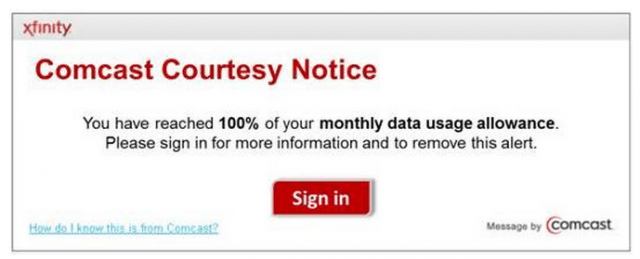
courtesy-notice-640x259Last May, Comcast vice president David Cohen emphatically stated usage caps and usage-based billing were all about “fairness,” telling investors: “People who use more should pay more, and people who use less should pay less.”

Those signing up for 2Gbps service will be in a position to use far more bandwidth and data than any other Comcast customer subscribing to a lower speed broadband tier, yet will not be asked to pay more for using more or pay less for using less. They will be signing up for a simple to understand unlimited usage plan most Comcast customers want that will carry no billing surprises. At the moment, that is the only unlimited tier residential plan a Comcast customer in Atlanta will be able to buy.

Also turned on its head is the idea that customers who use the most bandwidth or cost Comcast the most should be contributing more to help Comcast pay for network upgrades, but once again this will not be the case for 2Gbps customers in Atlanta. They will cost Comcast a fortune as the company rips out its existing HFC (coaxial cable) infrastructure and replaces it with fiber to the home service. Yet the 25Mbps customer still using decades-old coaxial cable is effectively being asked to limit their Internet usage to avoid additional charges while the 2Gbps modern fiber customer is not.

It clearly makes no sense, but will rake in dollars for Comcast as usage continues to grow.

If Comcast’s network can sustain up to 18 million 2Gbps users with no usage cap, it has more than enough capacity to take the limits off every Comcast broadband customer. Comcast must shelve its usage billing trials immediately and remove all usage allowances from residential broadband customers in various test markets where they have been in place for more than a year. Google, Verizon, Time Warner Cable, Cablevision, Charter, and many other broadband providers have found no defensible reason to slap usage limits on their broadband customers. If they can provide comparable speeds and service without a cap, so can Comcast.

Comcast should clearly state it is in the business of providing the best possible customer experience using 21st century infrastructure more than robust enough to sustain usage demands, and compulsory usage caps and consumption billing are incompatible with the company’s goal to provide top-quality, worry-free Internet access.

If Comcast wants to test voluntary discount programs for light users, we have no objection. But customers should always have access to an affordable unlimited option without having to watch usage meters or worry about bill shock.

Comcast needs to do the right thing today and end all compulsory data usage trials across the country and commit to providing unlimited, allowance-free broadband service.


Comcast Announces 2Gbps Fiber Service for Atlanta; Up to 18 Million Homes Nationwide May Eventually Qualify

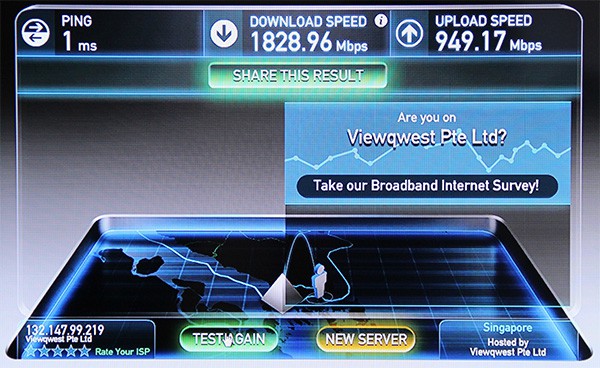
Could a speedtest like this be in your future?

Could a speed test like this be in your future?

Comcast is entering the gigabit broadband business and is guaranteeing customers willing to pay for the experience will not be subjected to a usage cap.

Comcast’s Gigabit Pro will arrive next month in select Atlanta neighborhoods located within one-third of a mile of Comcast’s fiber backbone network in the city. Promising 2,000/2,000Mbps unlimited fiber-to-the-home service (at a yet to be disclosed price), Comcast hopes to upstage Google Fiber and AT&T U-verse with GigaPower which are both working to upgrade Atlanta to 1,000Mbps service.

“We’ll first offer this service in Atlanta and roll it out in additional cities soon with the goal to have it available across the country and available to about 18 million homes by the end of the year,” said Marcien Jenckes, executive vice president of consumer services for Comcast. “Gigabit Pro is a professional-grade residential fiber-to-the-home solution that leverages our fiber network to deliver 2Gbps upload and download speeds. We’ve spent a decade building a national fiber backbone across 145,000 route miles of fiber. This new service will be available to customers that are within close proximity to our fiber network.”

Comcast says it will price Gigabit Pro below the cost of its current Extreme 505 (505/100Mbps) service, which costs $399.95 a month, not including the $250 technology activation fee, $250 installation fee, and three-year contract with up to a $1,000 early cancellation penalty. It seems unlikely Comcast’s price for 2Gbps will hover near Google and AT&T’s usual $70 fee for 1Gbps service. Comcast has to bring fiber from its nearest fiber node to a customer’s home and install commercial-grade equipment capable of handling 2Gbps. Existing Extreme 505 customers will be upgraded to 2Gbps for no additional charge.

Comcast-LogoComcast officials have repeatedly stressed its 2Gbps tier will be exempt from usage caps, which makes it the only unlimited residential broadband offering available to Comcast customers in Atlanta. Other residential customers are now subjected to a 300GB usage cap with $10/50GB overlimit fee.

Marketing Comcast’s 2Gbps offering may prove tricky because potential customers must live close to pre-existing Comcast fiber. If you don’t qualify, Comcast won’t pay to bring fiber infrastructure your way. Those outside of the fiber service area will continue to be serviced by standard coaxial cable. Comcast will wait for DOCSIS 3.1 to be officially available before deploying more speed upgrades in 2016. It promises to boost speeds up to at least 1Gbps if demand warrants.

The sudden announcement Comcast was willing to ditch part of its HFC coax network in favor of fiber, almost unprecedented for a major cable operator, and boost speeds beyond a gigabit may also be used to boost its chances of winning approval of its merger deal with Time Warner Cable. TWC Maxx, Time Warner’s own speed upgrade effort, only raises Internet speeds to a maximum of 300Mbps. Comcast had promised to upgrade Time Warner Cable customers’ speeds as part of the merger, but TWC Maxx offered most customers better speeds than what Comcast offered most of its residential customers.

Article was updated to correct the upload speed for the 505Mbps Comcast tier. It is now evidently 100Mbps, up from 65Mbps.

AT&T Gigabit Price Gouging in Cupertino, Calif.: $110/Mo (It’s $40 Less in Cities Where Google Fiber Competes)

Phillip Dampier April 2, 2015 AT&T, Broadband Speed, Competition, Consumer News Comments Off on AT&T Gigabit Price Gouging in Cupertino, Calif.: $110/Mo (It’s $40 Less in Cities Where Google Fiber Competes)

uverse gigapowerAT&T is rolling out its gigabit fiber service in Cupertino, Calif., but if you want it you will pay $40 a month more than those who live in cities where Google Fiber offers competition.
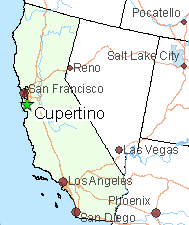
AT&T U-verse with GigaPower launched Monday in “select areas,” which traditionally means it won’t be immediately available to most customers. The San Jose Mercury News reports AT&T admitted the service will be available only to a few thousand homes for now in the city and refused to give a percentage of how many of Cupertino’s 20,000 homes would ultimately be able to get the service. AT&T is under no obligation to provide the service and can cherry-pick neighborhoods and skip past government buildings, schools, and hospitals. AT&T won’t give any commitments to the city on its gigabit service.

The company justifies charging $110 a month for the same service it charges $70 for in Austin, Kansas City and North Carolina because it can afford to test higher price points where competitors won’t steal their business.

“We are trying to understand how different markets respond,” Eric Boyer, senior vice president of AT&T U-verse told the Wall Street Journal.

AT&T doesn’t treat the home town of their corporate headquarters much better. In Dallas, Gigapower costs $110, down $10 from its initial price. As Time Warner Cable and Google ponder their own broadband upgrades in North Carolina, AT&T suddenly cut the price of GigaPower on Mar. 17 from $120 to $70 in Winston-Salem and Raleigh-Durham.

cupertinoAT&T customers who do not want the company to monitor their browsing activities have to pay $29 more for privacy protection, which opts them out of AT&T’s tracking systems. Despite the high-speed and price, AT&T still insists on usage caps for its most premium broadband offering. Customers can use up to 1TB per month, after which AT&T slaps overlimit fees of $10 for each 50GB customers use over their limit. Its primary competitors, including Google, Time Warner Cable, Verizon and Charter do not have usage caps. Boyer says he knows of no customer that has exceeded the 1,000GB usage cap. But that also brings the question if no customer has exceeded the cap, why have one?

More importantly, Boyer added the company isn’t yet offering services that would be exempt from the cap but might do so in the future. “We are open to a whole host of options,” he said. Critics would likely call that an end run around Net Neutrality.

Competition is the significant driver pushing AT&T and other providers to accelerate broadband upgrades and lower prices for higher speed tiers. In markets where cable operators face DSL competition from the phone companies, speeds are lower and prices are higher. Where an incumbent announces major upgrades like GigaPower or Time Warner Cable Maxx, competitors are forced to respond with upgrades of their own.

That leaves cities served by independent telephone companies like Frontier, CenturyLink, and Windstream at a distinct disadvantage because none of those companies have announced sweeping broadband speed increases and have relied instead on acquired fiber networks (Frontier FiOS and U-verse), limited fiber rollouts (CenturyLink) and incremental speed increases using VDSL and bonded DSL (all three). Frontier claims its customers are not interested in faster broadband speeds.

The northeastern United States has seen only one major market disruptor — Verizon FiOS, and it has shelved future expansion. Dominant cable provider Time Warner Cable has not seen its market share hurt much by limited DSL speeds offered in many areas by Verizon, Frontier, and FairPoint Communications. It continues to offer a maximum of 50/5Mbps broadband in upstate New York, Maine, and Massachusetts.

Search This Site:

Contributions:

Recent Comments:

Your Account:

Stop the Cap!