

 Subscribe
 Frontier Communications, just hours after passing its first hurdle — from the Federal Trade Commission — to go ahead with its proposed $10.54 billion acquisition of Verizon’s wireline assets in California, Florida and Texas, is already being discussed as the most likely buyer of FairPoint Communications, which serves former Verizon customers in the northern New England states of Vermont, New Hampshire and Maine.
Wall Street is turning up the pressure on FairPoint to sell its money-losing operation to a larger company that could use economy of scale to rescue a business that has already declared bankruptcy once and lost over $136 million last year. FairPoint also recently settled an ongoing dispute with its unionized workforce which makes the company a more likely takeover target.
FairPoint CEO Paul Sunu put out the for-sale sign during last week’s first quarter earnings conference call, admitting to investors FairPoint is considering mergers and acquisitions as a seller or buyer as part of the company’s overall strategy.
Barry Sine, a telecom analyst with Drexel Hamilton, said the company’s 18,000 mile fiber optic network across the three states it serves is the crown jewel of FairPoint and would be a valuable addition to a larger phone company’s portfolio. FairPoint continues to rapidly lose residential customers as they switch to cellular phones, cable company phone service, or broadband-powered Voice over IP services like Ooma. But FairPoint is picking up customers in the commercial sector, including wireless carriers seeking cell tower backhaul connections, hospitals, and other institutions using FairPoint’s fiber network.
Frontier, headquartered in Stamford, Conn., already has substantial assets in the northeast, including AT&T’s former service area in Connecticut. Picking up northern New England would not be much of a challenge for a company already serving 28 states with more than 17,000 employees and could soon pick up millions of new customers in the south.
Vermont Public Radio reports troubled FairPoint Communications, which serves customers in northern New England originally serviced by Verizon, is likely up for sale and could be acquired by a company like Frontier Communications by 2017. (2:54)
You must remain on this page to hear the clip, or you can download the clip and listen later.
 With Frontier’s attention currently occupied by its latest Verizon transaction, analysts do not expect to see a deal with FairPoint struck before 2017. That could allow Frontier’s rivals — CenturyLink and Windstream to approach FairPoint first. But neither of those two companies have recently been active acquiring new landline service areas.
Many of FairPoint’s largest shareholders purchased defaulted bonds when FairPoint went bankrupt, and hope to rack up a substantial return when FairPoint is sold to a larger company.
Frontier has a better record of working well with unionized workers than FairPoint, so it was no surprise the unions representing FairPoint workers are not upset with the news the company could be sold.
A spokesman for the International Brotherhood of Electrical Workers in Vermont told Vermont Public Radio the union is aware of speculation about a future sale of the company and would welcome the opportunity to be a partner with “a more successful business” than FairPoint.

 The would-be CEO picked to head the illegitimate child of the Comcast/Time Warner Cable merger wants your sympathy and understanding over the loss of bulging signing bonuses, pay packages, and benefits with the demise of the cable company that never was: GreatLand Connections.
 A well-placed source in Washington, D.C. with knowledge of the matter tells Stop the Cap! the Federal Communications Commission is prepared to take a hard look at the issue of Internet data caps and usage-based billing if a major cable operator like Comcast imposes usage allowances on its broadband customers nationwide.
 “I’ve reviewed [the] account to see and can confirm the charges are valid,” responded a Comcast representative who defended the company’s usage cap trials. “Please understand that we are not here to take advantage of customers. We are here to provide a great customer service experience. After researching [the] account, at this time no matter what level of service you obtain, the Internet usage [allowance] will remain the same.”
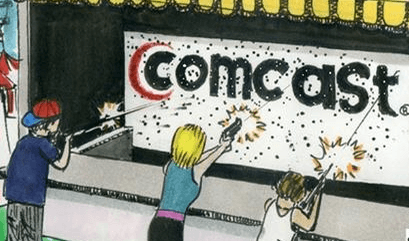 The community of Hampton Falls, N.H., was first settled in the year 1638 but many of the 2,200 residents of the New England town are settling for Comcast no more.
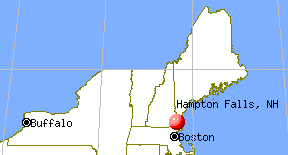 Comcast representative Jay Somers took heat throughout the meeting for missed service calls, poor equipment, poor Internet service, and lousy customer service.