

No More Online Video for You, Unless You’re a Cable Subscriber…

Phillip Dampier May 1, 2009 Comcast/Xfinity 15 Comments

We knew it was always come down to the question of what to do about online video.  Although the overwhelming majority of broadband customers still take some sort of video package (or simply don’t care enough about television to get one in the first place), there is a small, but growing number of people who are dispensing with video packages from cable and relying entirely on broadband video services to watch network and cable programming.

Hulu and Joost, along with limited fare from the major American networks, as well as video offerings from the CBC and BBC exclusive to residents of those countries, create the potential for a major problem for cable operators — what happens if people stop buying video packages.
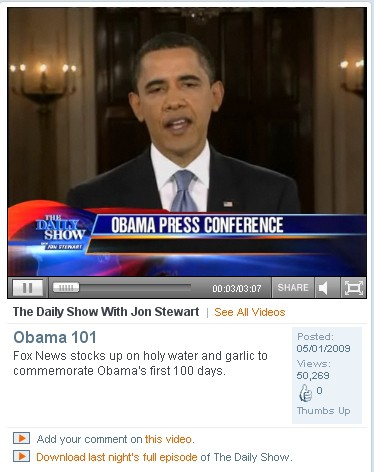
Comedy Central's Video Streaming - Will it be available to non-cable subscribers for long?

Comedy Central's Video Streaming - Will it be available to non-cable subscribers for long?

Comcast and Time Warner, the nation’s largest cable operators, have plans to put a stop to the erosion in video subscribers before it gets serious — by seeing to it that they don’t get to watch free online video any longer.

Comcast’s On Demand Online and Time Warner’s TV Everywhere services are either in operation or will begin trials later this year.  Both seek arrangements with cable programmers (coincidentally many of which they also have an ownership interest in) to create a new authentication system to block non-video subscribers from accessing video content aired on those channels.  Cable subscribers who do take a video package will get in for free.

The video programming would still exist on various cable network websites.  Comedy Central would still have clips on comedycentral.com and CNN would still have their news clips at cnn.com.  But under the cable operators’ proposals, those clips would no longer be available to individuals who cannot prove they have a video subscription.

Currently, some 90% of Time Warner’s broadband customers also take a video package, and Time Warner can easily authenticate those subscribers with a type of “authorization key” which an online video player would seek for permission to play the programming.  Time Warner is also contemplating whether live streams of cable channels would also be a good idea.  Currently, cable operators routinely insist on prohibiting live streaming of the cable networks they carry.

Of course, the problem will come down to those who subscribe via satellite dish services or a smaller cable operator or telephone company video package.  Does this enforcement only occur on Time Warner and Comcast’s own broadband networks, or would it be widespread?

Multichannel News covered the Time Warner TV Everywhere trial:

Time Warner Cable is working with two major programming partners on its “TV Everywhere” initiative to make sure the Internet-video service is easy to use and scalable, said Peter Stern, the operator’s executive vice president and chief strategy officer.

Stern, speaking on a panel here at the Cable Show ’09, said the MSO is already working closely with two programmers — Turner Broadcasting System and another he did not identify — that will involve authenticating consumers “in a very straightforward way so they can get access to content.”

“To be honest, we’re still working it out in terms of the user experience,” Stern said.

The concept, which is being Comcast and Cox Communications, is to reinforce the cable TV subscription model, by providing that programming to paying customers over their Internet devices.

Stern pointed out that 90% of Time Warner Cable’s broadband customers are already paying for multichannel video.

“Those people are already entitled to watch this programming,” he said. “The big risk we have is, if we don’t offer this programming to them the way they want it, they’ll turn to piracy.”

Alternatively, if that programming is provided to them for free over the Internet, the risk is they’ll cancel their subscription service – with such “cord cutters” obtaining their media online.

Some basic principles Time Warner Cable is following in developing TV Everywhere are that consumers should “have choice in terms of the sites they can have access on,” he said. “That will be dictated by programmers, not the cable operators.”

Stern continued, “Not to say we’ll not have content on the [Time Warner Cable] RoadRunner site, but we’d be kidding ourselves if we thought we were the only site consumers should be able to access.”

Cable operators have always been concerned about “leakage” of valued cable programming to online streaming or piracy.  Cable programming currently charge subscription fees to cable operators for carriage on those systems.  Some, like C-SPAN or Current, amount to pennies per month per subscriber.  But others, particularly for sports programming, Fox News, basic movie channels, and other high-rated channels command enormous fees amounting to several dollars a subscriber per month each, whether the subscriber wants to watch the programming or not.  These costs are continually increasing.  Fox News, for example, leveraged very strong price increases for its news channel, as well as forcing a number of cable systems to pick up the low rated Fox Business Channel to receive discounts.  Viacom also routinely demands cable operators take additional networks they may not want to carry in return for discounts on the networks those operators do want.

It all gets passed on to cable subscribers in the form of rate increases every year.  With the increasing number of channels on a cable lineup, when a bunch demand rate increases, rates can spike significantly from year to year.  Nearly all have carriage contracts that forbid the cable operator from selling their network(s) on an a-la-carte basis.

With cable video pricing increasing, many subscribers downgrade their subscriptions to save money.  If a cable programming is giving away their content online, that creates a greater incentive for viewers to stop paying for video packages, and rely on their Internet connections instead.

Earlier this week, Time Warner CEO Glenn Britt reiterated that although the erosion of video subscribers isn’t a problem today, it could easily become one tomorrow.  He cautioned programmers who give their shows away for free online that a day of reckoning may be coming, when a cable operator is no longer willing to pay for networks that give everything away online.

Rupert Murdoch, chairman of News Corporation, which owns Fox News, supports the concept, according to Multichannel News:

News Corp. chairman Rupert Murdoch said that cable networks have to find a way to monetize the Web, before consumers begin to expect to get their content for free.

“The fact is with free content, people are used to it being free on the Internet,” Murdoch said. “Nobody is making any real money from the Web except search. We have to monetize it.”

The other controversy involves cable operators trying to limit video viewing by imposing usage caps or tiered pricing on consumers, limiting the amount of video they can consume online.  At the lower end of the caps proposed by Time Warner, viewing Hulu or Joost programming would be akin to “pay per view,” with fees of 50 cents or more per show in broadband costs, once one’s usage allowance expires.


WROC Rochester – Protests Against Time Warner in Rochester

Phillip Dampier May 1, 2009 Video 2 Comments

The protest against Time Warner in Rochester on April 18th attracted approximately 30 people, which was significant for an event many people assumed was canceled after Time Warner shelved their cap program temporarily 48 hours earlier.  But the point needed to be made that many people in our community don’t believe Time Warner has actually scrapped anything.  They’ll be back with the same kind of tiering program by the fall, trying to convince people that paying a lot more for the same thing is a good idea.

Unrated.  I’m in it.  WROC spent the most time following the protest story.  It led the news that evening, April 18th.

Friday Late Morning Update

Phillip Dampier May 1, 2009 Editorial & Site News Comments Off on Friday Late Morning Update

We finally will get completely caught up on the Time Warner news video later this afternoon.

North Carolina! There will be some significant activity forthcoming early next week. I need everyone from that state visiting here regularly for important updates and action you will want to take. If you have some time next Wednesday, have I got a road trip idea for you! More details coming….

If all goes according to plan, we’ll have an all-new look by Monday which should make navigation here, and finding things, extraordinarily easier.

I am on the phone and on the road for a lot of today. If you are looking for something to do, be sure and check out the exaflood article from yesterday, and the comments thread, where you can debate a Nemertes representative on their latest Internet “brownout” findings. I welcome the back and forth.

WFMY Triad – Time Warner Faces Protest at Greensboro Headquarters

Phillip Dampier May 1, 2009 Video Comments Off on WFMY Triad – Time Warner Faces Protest at Greensboro Headquarters

The Triad protestors were smaller in number, but still effectively made the news on several stations in the area.

Time Warner’s latest statement indicated the “company was actively working on [pricing] that would meet everyone’s needs.”  Of course, they already have a range of packages which meet the overwhelming majority of customers’ needs.  The problem is, light users aren’t being sold Road Runner Lite, which is available and less expensive than standard Road Runner service.  Another safe bet is asking people to pay triple the price they pay now for their existing service is not meeting anyone’s needs, except the bean counters at Time Warner headquarters.

thumbs-up12Amusing in some of the informality, such as when the anchor asked people to call her up and explain what a “gigabyte was.”  Many customers are in the same position, not having a clue.  The sad part of this, of course, is that Time Warner wants to force them to learn, and had punitive tiers with substantial overlimit fees to spank those who didn’t learn enough.  It’s a plan designed to make you fear how much you are using, with the hope that you will use substantially less to avoid going over your “ration” for the month. April 18, 2009

Exaflood 2: Electronic Bugaboo – Again With the Internet Brownout Theory

StoptheCap! reader Tim wrote this morning to alert us that Fox News had picked up a story from the Sunday Times of London warning of the great Internet brownout about to afflict us all.  It turns out our old friends at Nemertes Research have trotted out another sensationalist study (right on cue after a month of nonsense about it from Time Warner Cable) predicting our online demise from too many users.

But is it any good?

astroturf1The original article sure wasn’t.  John Harlow, who needed reporting assistance from Adam Lewitt, couldn’t be bothered.  Lazy reporters who reprint sensationalistic theories as fact without ever bothering to ask any questions about the source or challenging the theories, is a hallmark of sloppy, never break a sweat journalism.  Even Ted Ritter, quoted in the story, called the journalism sensationalistic and said the reporter “took great liberty with my quotes,” and he’s the guy pushing the theory!

I keep asking, “where’s the media” on so many issues that deserve more than a slapdash reprint of the cheat sheet on the study, toss in a few quotes and call it a day.  But then I realized in this day and age, we are the media.

So I plodded my way through the report.  It’s the same alarmist stuff as the last one, and the one before that.

They said it in 2007 and the only scurrying that came after it was from Nemertes’ clients running to Kinkos to make copies and get them into the hands of legislators to justify whatever political agenda they were selling that season (no to net neutrality, yes to bandwidth caps, yes to government funding or tax credits for private broadband, etc.)

And that is exactly the problem.

Nemertes’ findings are like magic sprinkles on top of a Baskin-Robbins ice cream cone.  They work with every flavor to justify whatever you want.

On all such matters, the only fact you have to remember is to “follow the money.”  Who pays for this research?

Ted Ritter from Nemertes answers:

Our research is funded by our clients: Vendors, service providers and fortune 500 enterprise.

And the results of this research are celebrated by all of the above:   Equipment suppliers love it because they can trumpet the scary findings on their “upgrade now” brochures. ISPs love it because they can claim they have to cap and tier customers in order to buy equipment to combat the “exaflood.” Proponents of government funding for the Internet love it because it hints major funding to subdue the crisis might be needed.

Without those supporters, this study would never have been done in the first place.  Additionally, Nemertes appears to have an additional revenue stream from licensing the results of the study to interested clients, who wouldn’t bother unless they had a vested interest in trumpeting the findings.

In other words, this is a classic case of “conflict of interest.”  But if you order in the next 20 minutes, you also get these extra benefits:

Since we all know the results are made public, and media availabilities are prominently mentioned on the website, a paying client has the bonus of a seemingly independent third party who will be available to discuss the findings and results.  That’s a quick path to media coverage, the more sensational the better.

Since it’s Nemertes saying it, that keeps the clients’ hands clean when they license a purportedly independent report and mention it prominently when delving into public policy lobbying, public relations, and marketing strategies.

It’s also unsurprising that Nemertes stays out of specific public policy recommendations, because that is exactly what clients want. They’ll provide their own spin as they see fit, just as happened in 2007 and will no doubt happen again.  Why pay for a study that makes a public policy conclusion you oppose?

It’s all very neat and tidy, especially when Mr. Ritter complains that the media was sensationalizing the results.  I’m sure his clients think exactly the opposite.  But then sensationalism and spin follows Nemertes’ report wherever it appears. It drew panic headlines in 2007, was dredged up again by a few marketing people to justify broadband usage caps in 2008, and largely the exact same panicky coverage is appearing now, coincidentally in the same month Time Warner used Nemertes’ theories to justify their Internet rationing effort.

One local Rochester television newscast even suggested a router failure responsible for a Time Warner service outage this past weekend might have been the result of an Internet “brownout.”  That was Baskin-Robbins Flavor #7, “Very Berry Strawberry.”  See, it does work for everything!

The Sunday Times doesn’t have time to check the facts with anyone else, and there are many others who have a different view on this.  Andrew Odlyzko is a professor of Mathematics at the University of Minnesota, and has been tracking Internet growth since 2001:

Nemertes Research has an updated version of their study from last year, and continues to predict a collision between demand and supply, unless dramatic increases in investment are made. The basic, and highly debatable, assumption behind their work, though, is that traffic is growing at 100% per year or more, and will continue to do so for the next half a dozen years. So far there is little evidence of that, though.

Nemertes waves away Odlyzko by claiming that their discrepancy in data with his comes from the ‘secret Internet’ private backbones. Of course, that data Odlyzko can’t get from them is the same data Nemertes cannot get from them either. So we are left with an assertion without raw data.

The creepy part of all of this is, I could use Nemertes’ study to help the cause on StoptheCap! Nemertes says nothing about the need for usage caps and limits — it instead suggests that insufficient infrastructure spending will cause the Internet to brown out causing loss of innovation, jobs, and all the rest.  So I could use Nemertes to justify why cable companies have a basic responsibility to stop cutting infrastructure spending and start increasing it, instead of capping people to ration the net.

But I won’t, because I have integrity.  I realize that no report is worth mentioning as factual and accurate without the underlying assurance of its independence and lack of bias.  As I wrote Mr. Ritter:

If you want to do reports for clients who subscribe to your service, then send them the results and don’t make them public. Let the clients make the report public, because they are effectively paying for it. It prevents the accusation you are astroturfing on their behalf by insulating their involvement and investment in the findings.

Otherwise, a list of all supporting clients by name, in addition to whether they have been licensed to use the material, absolutely must be added to the bottom of your findings, or those findings are rightfully dismissed out of hand as bought and paid for.

Alternatively, if you are doing this in the public interest, do not accept funding from those with a vested interest in the findings, and do not license their use by anyone. Let people read them on your site, in full and in context, not after some marketing group has massaged the relevant points for their latest strategy.

Ultimately, I think Nemertes basic conclusion that the Internet is growing, and fast, is borne out by reality — just not at the panic stricken pace they suggest.  I also think that just like every other technological challenge we have faced, innovation will bring solutions to problems we fear and panic about today, but aren’t that big of a deal tomorrow.

The short answer continues to be, upgrade the network.  The bad answers include another effort by some of those that we’re likely to discover paying for Nemertes’ studies to advocate supersizing profits through reduction in competition, installing artificial usage limits to retard the growth curve, and trying to legislate protectionism for incumbent providers.

Search This Site:

Contributions:

Recent Comments:

Your Account:

Stop the Cap!
