

 Subscribe
 YouTube will earn as much as $6 billion this year from the increasing number of ads that accompany videos on the world’s busiest website. It could earn even more charging consumers a subscription fee to get rid of them.
As online video advertising loads increase, online viewers are growing increasingly intolerant watching 30 second ads just to view a two-minute video. YouTube has at least allowed most of the its ads to be manually skipped by the user after a five second waiting period, but as more and more videos are subjected to the “pre-roll” ad treatment, a growing number of YouTube fans seem prepared to pay a nominal fee never to be bothered with ads again.
YouTube CEO Susan Wojcicki believes there is room for both free, ad-supported videos and a paid subscription, ad-free model and it is contemplating letting YouTube viewers choose between the two.
“We’re early in that process, but if you look at media over time, most of them have both ads and subscription services,” Wojcicki said at the Code/Mobile conference. “YouTube right now is ad-supported, which is great because it has enabled us to scale to a billion users, but there’s going to be a point where people don’t want to see the ads.”
 YouTube rival Hulu may have already reached that point. It charges $7.99 a month for Hulu+, its enhanced service, but its online programming still carries a very heavy ad load, now approaching what viewers would see watching their favorite shows over broadcast TV. That advertising has cost Hulu+ a significant number of subscribers unwilling to pay a premium price for online videos littered with commercials.
Hulu showed users an average of 82.3 ads a month, compared with YouTube and other Google-owned sites, which showed an average of 32.3 ads per viewer, according to comScore data from December 2013.
A number of advertising agencies are welcoming a reduction in online advertising. With saturation advertising, viewers have a tendency to tune out the ads or go back to pirating video content. A small number of ads tend to hold viewers’ attention better and most won’t bother trying to skip or ignore a single 15 or 30 second ad.
“After Facebook went public, they had in-stream video and it suffocated the users and they pulled back,” Steve Minichini, chief digital officer at ad agency Assembly, told The Post. “If what we’re hearing is correct — that Hulu is pulling back — I would welcome that.”
 American Airlines left passengers stewing for more than three hours on board a flight from LAX to London before finally returning to the gate. The reason? A passenger reported a functioning Wi-Fi hotspot labeled “Al Quida Free Terror Nettwork” and complained to a flight attendant.
 The Federal Communications Commission announced Friday it will
 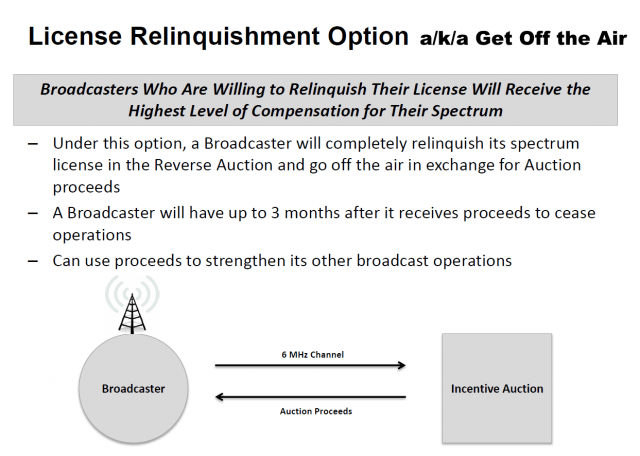 There is so much money to be made buying and selling the public airwaves — at least twice as much as broadcasters originally anticipated– spectrum speculators have also jumped on board, snapping up low power television station construction permits and existing stations with hopes of selling them off the air in return for millions in compensation. Wireless customers are effectively footing the bill for the auction as wireless companies bid for the additional spectrum. Television stations will receive 85% of the proceeds, the FCC will keep 15%.
 Major network-affiliated or owned stations in major cities are unlikely to take the deal. But in medium and smaller-sized markets where conglomerates own and operate most television stations, there is a greater chance some will be closed down, moved to a lower channel, or transferred to a digital sub-channel of a co-owned-and-operated station in the same city. The most likely targets for shutdown will be independent, CW and MyNetworkTV affiliates. In smaller cities, multiple network affiliates owned by one company could be combined, relinquishing one or more channels in return for tens of millions in cash compensation.
 Rogers Communications will acquire Hamilton, Ont.-area independent Source Cable in a quiet $160-million deal.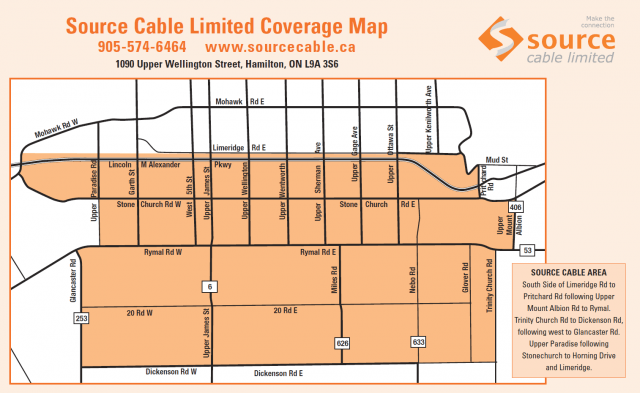
 One of the largest grocery chains in the United Kingdom is giving away free unlimited 16Mbps broadband for a year, including a free wireless router, as long as customers cover the usual monthly line rental fees.