Editorial: Stop the Cap!’s View About the “Stop Online Piracy Act”

Phillip Dampier January 17, 2012 Consumer News, Editorial & Site News, Public Policy & Gov't, Video Comments Off on Editorial: Stop the Cap!’s View About the “Stop Online Piracy Act”

We have received several inquiries about where Stop the Cap! stands on the “Stop Online Piracy Act” — legislation currently in Congress designed to combat online piracy.  We’ve remained silent on this legislation for only one reason: we just haven’t have the time to cover it.  But I wanted to take a moment to answer the ongoing inquiries from readers about where we stand on this legislation.

In short, we oppose it.

As with virtually all legislation bought and paid for by large corporate interests, this attempt to thwart online piracy is yet another example of special interest overreach with a bountiful basket of unintentional consequences corporate lobbyists are not paid to consider when pushing the agenda of giant media and entertainment conglomerates.

As of yesterday, the Obama Administration seems to have recognized the growing opposition to the legislation from just about everyone apart from the corporate interests spending millions to promote and lobby it.  Some media reports seem to indicate SOPA is on the verge of being shelved, at least temporarily.  But you can be certain that like all monied legislation, it will be back.

Instead of a lengthy explanation about SOPA, we’d prefer to point you to some excellent pieces explaining why the proposed bill is a really, really bad idea.  Free Press has an organized campaign to stop the legislation in its current form, one that you should consider supporting, even if the bill is now languishing in Washington.  Also check out the Electronic Freedom Foundation’s web form to contact your legislators to oppose SOPA.

Stop the Cap! will participate in the Stop SOPA censorship campaign scheduled for tomorrow.  Visitors will first land on an information page explaining why this site “has been blocked.”  But that page includes a link to continue your journey back here, where regular coverage will continue.

Be sure to watch these two videos:

[flv width=”596″ height=”356″]http://www.phillipdampier.com/video/MSNBC Chris Hayes SOPA and Antipiracy Debated 1-15-12.flv[/flv]

Chris Hayes’ courageous in-depth debate about SOPA appeared on MSNBC, a network owned by Comcast-NBC, which ardently supports the legislation to the point of distributing pro-SOPA coffee mugs to employees. (18 minutes)

[flv width=”512″ height=”308″]http://www.phillipdampier.com/video/SOPA Marvin Ammori.flv[/flv]

Marvin Ammori’s assessment of the legislation appeared on Al-Jazeera English, one of the few news networks willing to discuss the proposed legislation on-air.  (4 minutes)

Netflix Investors Sue Movie Rental Firm for Not Sharing the News Content Will Cost More

Phillip Dampier January 17, 2012 Online Video Comments Off on Netflix Investors Sue Movie Rental Firm for Not Sharing the News Content Will Cost More

Angry Netflix investors upset that they did not receive advance warning the online and DVD rental movie service was facing the expiration of several important content contracts and would have to pay substantially more to renew them have launched a class action lawsuit against the company.

The City of Royal Oak Retirement System, which holds a substantial number of shares in the company, hired Robbins, Geller, Rudman & Dowd LLP, who filed the suit in U.S. District Court Friday on behalf of the pension fund and similarly situated investors.

The suit claims Netflix management misled investors with plans to grow the business while the company was actually preparing to significantly increase prices to cope with the increased licensing costs to stream content.

Netflix management in July announced it was effectively separating its streaming and DVD-by-mail businesses by charging individual subscription rates for each, resulting in a 60 percent rate hike for some subscribers.  Then it suggested it would spinoff its DVD rental business to its own division, to be called Qwikster.  Neither plan impressed customers, and led many to downgrade or discontinue service.  It did nothing for Netflix’s stock price either.  The stock tumbled from a July price of $291.27 to $94.79 last week.

The suit charges:

“At the beginning of the class period, Netflix was facing increasing competition for streaming business, and content providers were exploring new ways to distribute their content and/or maximize their licensing fees. Rather than fully disclose the devastating cost increases which were then threatening Netflix’s entire business, the defendants talked about [their] ability to grow.”

Several Netflix executives’ personal portfolios have grown as a result of selling their personal shares in the company, netting more than $90 million before the rate increase was announced, a fact the lawsuit also prominently mentions.

Tippecanoe and Fiber to the Home Too: Indiana Community Says Yes to Fiber Broadband

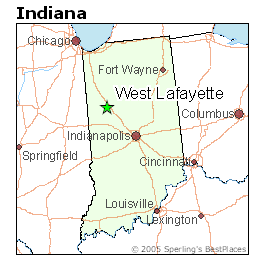
A western Indiana fiber-to-the-home project first envisioned more than five years ago is finally moving forward as it wins unanimous approval at the Tippecanoe County Redevelopment Commission.

Lafayette and West Lafayette, Ind., home to prestigious Purdue University, has a broadband problem.  Broadband advocates claim current providers Comcast and Frontier Communications underserve Tippecanoe County.  The former has put western Indiana on the “long list” waiting for service upgrades, and Frontier Communications offers little more than slow speed DSL in the region.  While Purdue arranges for its own Internet connectivity, off-campus students and area residents have had to make due with what the local cable and phone company offers, which isn’t much according to the locals.

“Comcast service has recently improved, but there is a big difference between Comcast service in a city like Chicago and what they deliver this part of Indiana,” shares Stop the Cap! reader Nick Jefferson, who tipped us to the recent developments.  “Frontier is a complete waste of time, and they have alienated customers across Indiana after taking over from Verizon Communications.”

In 2005, Tippecanoe County officials met with Verizon to encourage construction of its FiOS fiber-to-the-home network in western Indiana, as it had planned for the eastern Indiana city of Fort Wayne.  But Verizon sold off its Indiana landline operations to Frontier Communications, which has since shown little interest in expanding the fiber to the home network it inherited.  Now the county is considering financing a fiber network itself, to be ultimately run and administered by Cinergy MetroNet, which already provides service in the Indiana communities of Connersville, Greencastle, Huntington, Madison, New Castle, North Manchester, North Vernon, Seymour, Vincennes, and Wabash.

[flv width=”480″ height=”290″]http://www.phillipdampier.com/video/WLFI Lafayette Ultra-high-speed net may be headed here 3-21-11.flv[/flv]

WLFI-TV explained the basics of the new fiber-to-the-home network and how it will be paid for in this report from March, 2011.  (2 minutes)

The $40-50 million project would not come out of taxpayer funds directly.  Instead, a novel financing approach would cover construction costs over a 15-20 year period using a combination of MetroNet investor funds and a “tax increment financing” district, which would provide a temporary tax abatement during the period the network is being paid off.  Taxpayer dollars would not be exposed — the financial risks would be to MetroNet and its investors alone.

A fiber to the home service would provide a network capable of gigabit broadband speeds, but historically Cinergy has offered lower speeds to their other Indiana customers, albeit at highly competitive pricing, along with packages of video and phone service.

Larry Oates, head of the West Lafayette redevelopment commission for the project, says the fiber network delivers more than just the promise of better broadband service

“This project could be a great economic development tool,” Oates told The Exponent. “It is up to the businesses and residents who live here to decide what to do with it. We are just facilitating their potential.”

The County Commissioners will decide later whether to give the project a final approval.

[flv width=”480″ height=”290″]http://www.phillipdampier.com/video/WLFI Lafayette Tippecanoe County moves forward with plans for Fiber to Home 1-9-12.mp4[/flv]

WLFI in Lafayette reports Tippecanoe’s fiber to the home network has gotten unanimous approval from the country redevelopment commission.  (2 minutes)

West Virginia Contractor Says Frontier Owes $1.6 Million, Forced to Lay Off 50+ Workers

Phillip Dampier January 16, 2012 Consumer News, Frontier 4 Comments

An Oak Hill, W.V. contractor has said Frontier Communications’ unwillingness to pay a $1.6 million dollar balance is behind a layoff of more than 50 employees who handled cable work and phone installations on behalf of West Virginia’s largest phone company.

S&N Communications laid off the workers indefinitely Jan. 9, telling them the phone company had not paid the contractor.

Frontier Communications issued a statement indicating the “contractual relationship between Frontier Communications and S&N Communications has ended.  Both parties consider such contractual arrangements to be confidential.”  It had no comment about S&N’s claim Frontier had an outstanding balance.

Frontier has experienced several challenges providing phone and broadband service in West Virginia.  A plague of copper thefts, poor service, and a broadband service interruption last Thursday affecting 9,000 residents have all presented problems for Frontier’s customers. On Sunday, a squirrel chewed through a fiber line that disrupted service for hundreds of customers in Brooke and Ohio counties, also knocking out service for Brooke County’s 911 center and sheriff’s office.

[flv width=”480″ height=”380″]http://www.phillipdampier.com/video/WVNS Ghent Telecommunications Company in Fayette County Lays Off Workers 1-11-12.mp4[/flv]

WVNS in Ghent, W.V. reports on the layoffs at S&N Communications.  (1 minute)

Rogers Hiking Prices on Broadband by $2/Month; Blames Service “Enhancements”

Phillip Dampier January 16, 2012 Canada, Competition, Data Caps, Rogers 1 Comment

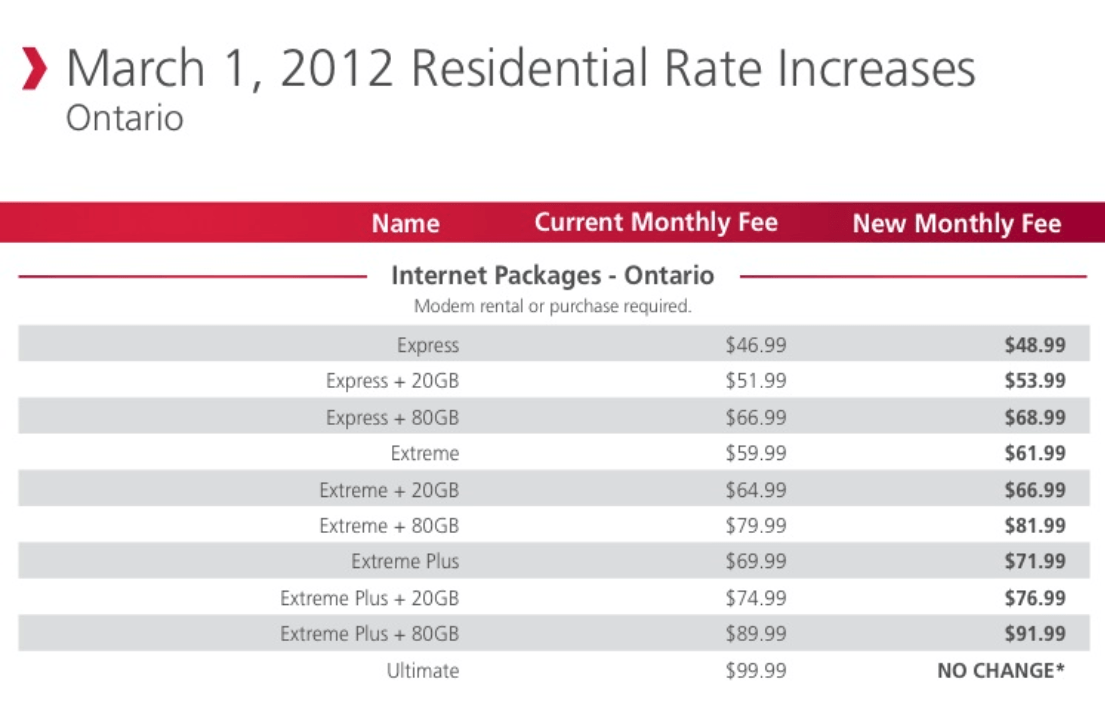
Citing “the many enhancements they have launched” in the past year, Rogers Cable has announced an across-the-board broadband rate increase that will cost subscribers an additional $2 a month for Internet service effective March 1, 2012.

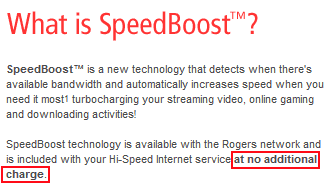
Rogers claims the rate increases come as a result of investments in their broadband network and the introduction of SpeedBoost, which delivers a temporary speed increase during the first few seconds of file transfers.

Rogers also claims they have increased monthly usage allowances and download speeds on many of the company’s broadband packages.

The rate increase is not going over well with subscribers, however.

Stop the Cap! reader Nick in Markham, Ontario is one of them.

"No additional charge," except for the $2 rate increase Rogers suggests comes after the addition of "service enhancements" like SpeedBoost.

“Rogers introduced ‘SpeedBoost’ as a ‘free’ feature which we are now apparently/effectively going to pay more for,” Nick writes. “I am really unimpressed with Rogers’ ‘generosity,’ especially respecting bitcaps, considering they are totally arbitrary.”

Nick notes customers in Quebec and western Canada have more generous usage allowances, and often lower bills.

“Shaw customers are getting a much better deal than Rogers’ customers these days,” Nick says. “If Rogers increased prices by $2 and took the caps completely off, I’d gladly pay a little more just to end years of headaches over watching my Internet usage.”

“I am so tired of feeling like my Internet connection is being rationed, and considering my choices have been Bell or Rogers, I think I’ll sacrifice some of the higher speeds and just consider switching to TekSavvy DSL, because it costs less and doesn’t come with Rogers’ stingy caps.”

A Montreal Gazette piece on the Canadian telecommunications industry says stockholders and company executives are doing much better, enjoying major boosts in telecom industry dividends.  The industry enjoyed a 25% boost in stock price + dividend yield over other Canadian stocks over the past 12 months.  The industry also enjoys the benefits a barely-competitive marketplace that offers opportunities for unfettered rate increases:

Canada remains a heavily protected market in telecommunications, which is one reason why consumers don’t get the kind of deals available in other countries.

But in the absence of such [competitive] changes, there’s a strong case to be made that telecom and cable companies will post solid profit growth this year and next.

Search This Site:

Contributions:

Recent Comments:

Your Account:

Stop the Cap!