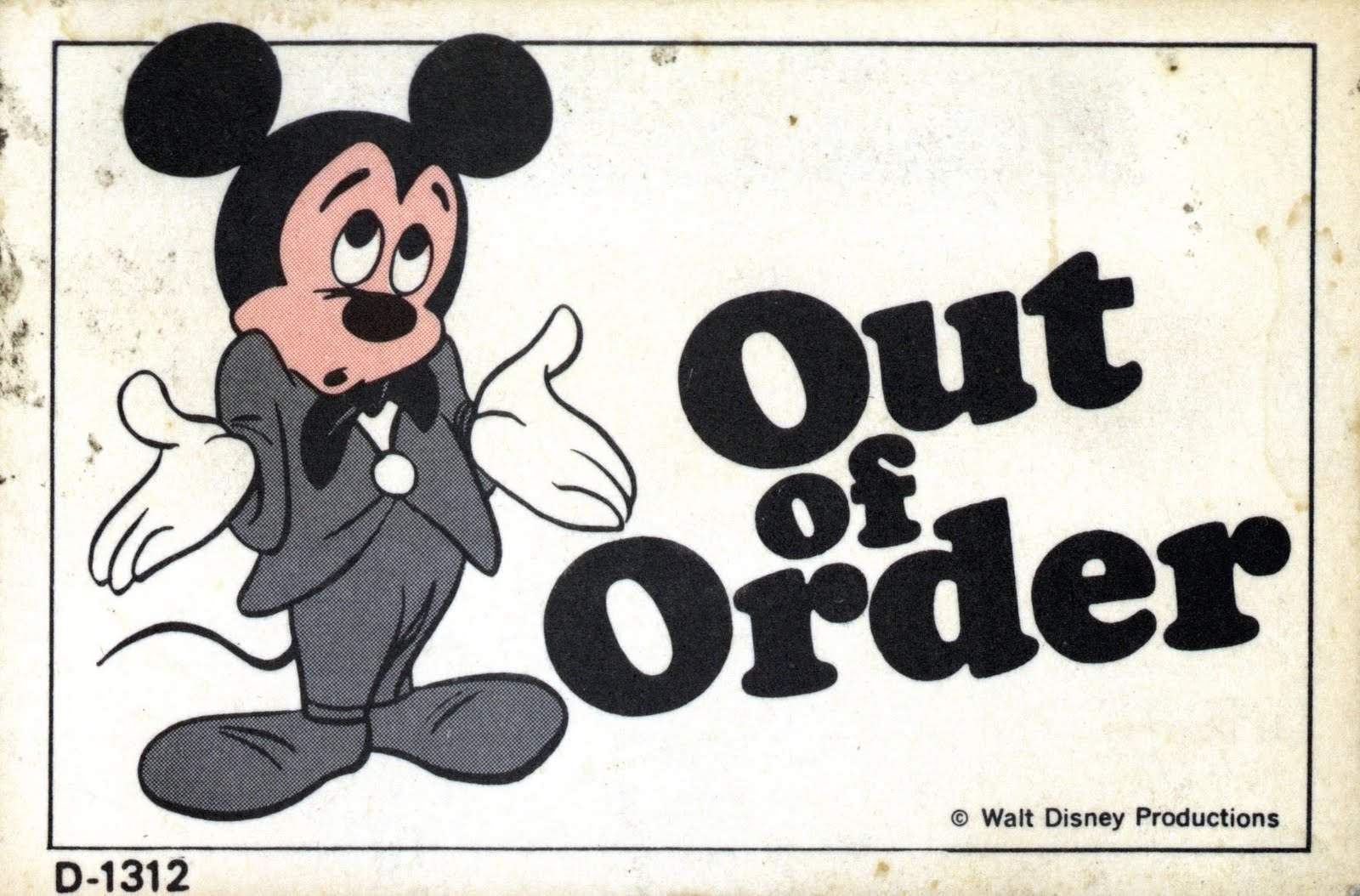
Telus Sends Us A Survey About Why We Left, Even Though We Were Never There

Phillip Dampier February 23, 2012 Canada, Data Caps, Editorial & Site News, Telus 3 Comments

Phillip "Telus Lost Me" Dampier

For my first vacation in more than 20 years, I chose to spend 10 days in Alberta in 2007, driving a Dodge Charger (what National car rental considers an ‘economy size’ in Calgary) from Calgary to Banff, Ft. Macleod to Crossfield, and a variety of places in-between.  It’s an amazing place, far too under-rated.  I even bought a hat.

Telus Country.

While I confess to using the rental lodge’s Telus phone more than once, I never signed up as a customer.

But Telus thinks I did.

In today’s e-mail, a survey about why we canceled our Telus service.

We’re helpers at Stop the Cap! so we participated, telling them they could go a long way to improve their service by officially abandoning Internet Overcharging schemes like usage caps and bring western Canada the unlimited Internet people deserve.

It’s the least we could do for a company that honestly never did anything for us (and we mean that in a good way).

Updated: Here Come the Streaming Paywalls: Comcast, March Madness Now Charging for Online Access

Phillip Dampier February 22, 2012 Comcast/Xfinity, Consumer News, Online Video, Video 3 Comments

The Great Wall of Pay

Now that the cable industry’s “TV Everywhere” online video platform has been established, some programmers are discovering they can become lucrative revenue streams as well as a deterrent to cable cord-cutting.

Time Warner (no relationship to Time Warner Cable) and CBS have decided giving away live sports programming for free is unacceptable and will now charge for online viewing of certain March Madness basketball games.

Since 2006, the basketball tournament, which may include hoops from https://www.megaslam.com.au/adjustable-basketball-hoops/, has been available for free online viewing, but starting March 7, viewers will need to pay $3.99 for full access to all 67 games [and basic cable viewers will need to verify] they are current cable, satellite, or telco TV subscribers. [See clarification below.]

Online viewing of games televised on CBS will be available for free, but the new paywall will block free access to selected games shown on cable networks TNT, TBS, and TruTV in certain cases.

Time Warner CEO Jeff Bewkes sees charging for online viewing as a substantial new revenue stream.

Monetizing online viewing is a high priority for programmers, even though much of the programming will continue to carry commercial advertising.  Last year, an estimated 2.6 million daily visitors watched March Madness online.  At $3.99 each, that would net the two companies nearly $10.4 million dollars.

The madness will now cost you $3.99

In a separate announcement, Comcast says it will launch a new Netflix-like on-demand streaming service tomorrow for its cable subscribers.

Streampix (free for triple play customers, $4.99/mo for others) will offer on-demand movies and TV series licensed from NBC-Universal, Warner Bros., Sony Pictures, and Disney.

Selected content can be watched while on the go, but a substantial amount of what Streampix is expected to offer is already available through services like Hulu.

Streampix is designed to appeal to customers who currently pay $7-8 a month for Netflix or Hulu+.

The move establishes Comcast’s own “paywall” for a deeper catalog of online video content, supplementing programming it gives away at no charge to “authenticated” cable subscribers.

Comcast will not sell Streampix to non-Comcast customers.

[flv width=”640″ height=”380″]http://www.phillipdampier.com/video/Bloomberg Comcast Streampix 2-21-12.flv[/flv]

Bloomberg reports Comcast’s Streampix service is unlikely to pose a major challenge to services like Netflix.  (4 minutes)

Clarification:  A reader suggested we better clarify the viewing options.  It gets complicated depending on what kind of video/broadband subscription you have, where you want to watch, and what kind of feed you want:

CBS-televised games: Available for free with no restrictions from CBS website.

Basic Cable games: If you want to watch outside of the home, on certain portable devices, or do not have a combined broadband/cable-TV subscription, you will need to purchase a subscription for $3.99 from the NCAA.  Free streaming is only available to authenticated cable/broadband subscribers watching from their home broadband account on devices pre-approved by your pay television provider.

Open/Full Access: If you want full, unrestricted access you need to pay for the NCAA ® March Madness ® Live™ app ($3.99).  Since this app provides the NCAA’s own video and audio feeds, you don’t need a cable subscription.

The TV Antenna is Making a Comeback

Phillip Dampier February 22, 2012 Consumer News, Online Video, Video 1 Comment

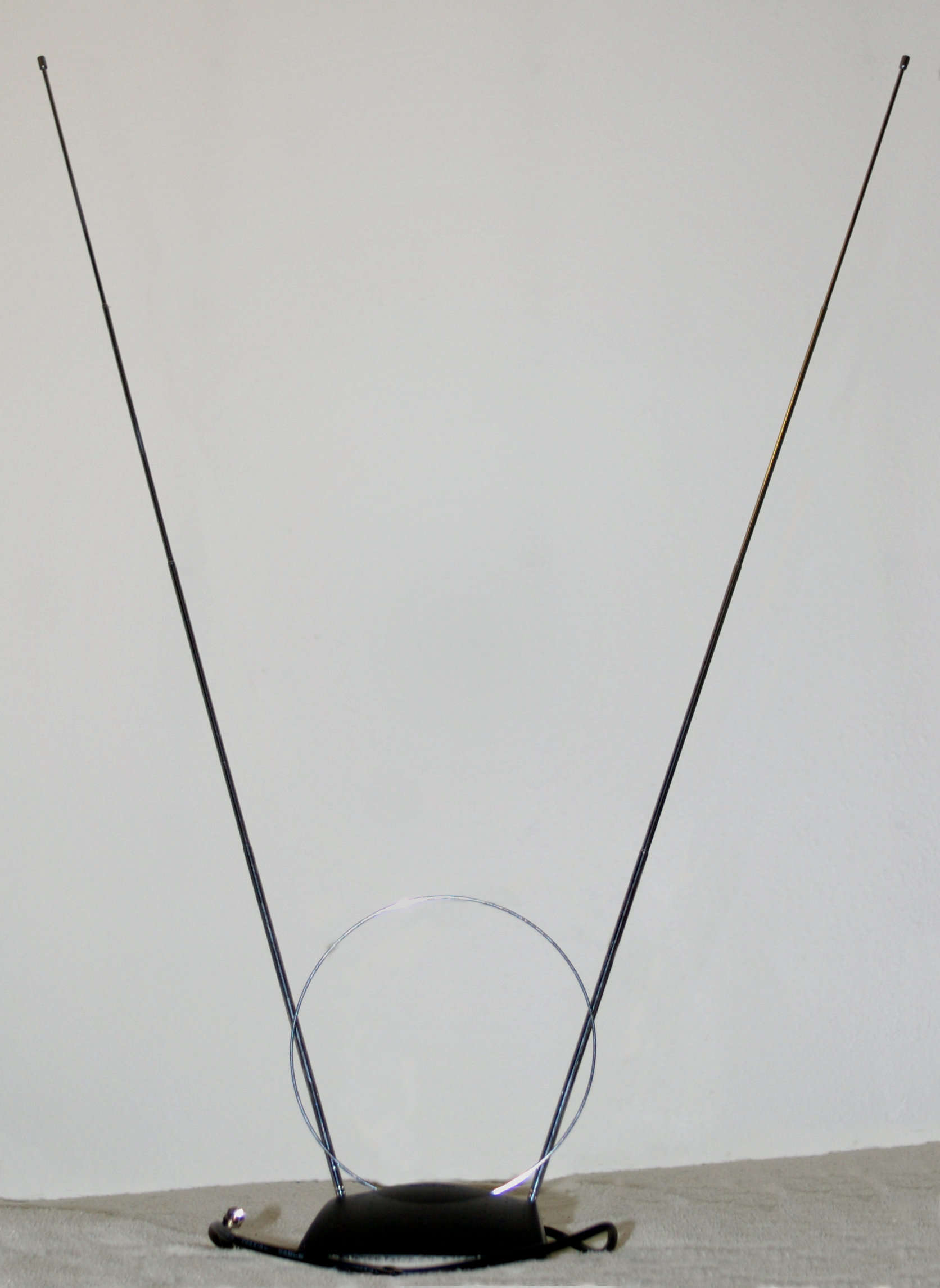
Rabbit ears are making a comeback.

After this year’s cable and satellite rate increases, the average American is now spending $550 a year on basic cable television.  With declining middle class incomes and increasing energy and health care costs busting the budget, something had to give.  Increasingly, it is cable and satellite TV.  Now consumers are combining the past with the future to find a cheaper way to watch television — over the air “free TV” with streamed online video entertainment.  Many broadcasters even offer extra channels that are made possible through digital signal compression.

Some marketers are going over the top with the renewed interest in over the air television, pitching “futuristic” television antennas at a steep price to customers who want to cut cable’s cord.  While your parents and grandparents were well-acquainted with antenna technology, today’s younger generations are not, and are overpaying for antennas you can find for a fraction of the price at Wal-Mart.

The concept of cord cutting is simple.  You can watch live sporting events and local news and network shows from over-the-air broadcasters and catch up on favorite movies and TV series streaming shows online.  The days of the snowy picture are over since the country converted to digital TV.  But in many cases, an antenna is essential to getting the best reception.

Satellite and cable companies are trying to compete, offering discounts and, in some cases, pared down packages.  But prices will need to come down further: the average video streamer and over-the-air viewer pays $180 a year on average for a premium streaming package from Netflix, Hulu or other online viewing option.

[flv width=”480″ height=”290″]http://www.phillipdampier.com/video/KIMT Mason City IA TV Antenna Making a Comeback 2-21-12.mp4[/flv]

KIMT in Mason City, Iowa explores the growing interest in the old-fashioned TV antenna.  (3 minutes)


T-Mobile: Allowing Verizon to Acquire Airwaves from Cable Industry Against the Public Interest

...some of that juicy 700MHz spectrum Verizon is getting from the nation's biggest cable companies.

In an ironic turnabout, Deutsche Telekom’s T-Mobile USA, last year an acquisition target of AT&T, has filed comments with the Federal Communications Commission opposing Verizon’s spectrum purchase from the nation’s largest cable companies as “contrary to the public interest.”

Verizon Wireless is seeking to acquire a substantial block of unused AWS spectrum that is unlikely to provide any near-term benefits to Verizon Wireless customers (indeed, the company already holds other AWS spectrum and has not even put it to use yet). Rather, the principal impact of the acquisition would be to foreclose the possibility that this spectrum could be acquired by smaller competitors – such as T-Mobile – who would use it more quickly, more intensively, and more efficiently than Verizon Wireless. The acquisitions will limit the deployment of LTE by competitors of Verizon Wireless and the bandwidth available for such deployments.

If these transactions go forward, the end result will be less LTE capacity available overall and reduced competition in the provision of LTE, which would be contrary to the public interest.

T-Mobile, in particular, is upset because it owns no spectrum in the valuable 700MHz range — frequencies that can travel longer distances and easily penetrate buildings.  Verizon Wireless does, and will acquire much more if the FCC approves the deal to transfer spectrum from Comcast, Time Warner Cable, and Cox. [Correction: As one of our readers pointed out, the spectrum being acquired is in the AWS band, which T-Mobile argues in its filing is still suitable for a 4G network deployment.]  T-Mobile argues Verizon does not need the spectrum, and will effectively “warehouse” the frequencies to keep them off the open market.  Without prime spectrum, T-Mobile argues, it will be difficult for the company to deliver a 4G experience to its customers.

T-Mobile also has a bone to pick with Verizon Wireless and the cable industry over what it suspects is a non-compete agreement:

At least in effect, this has all the hallmarks of a pure horizontal allocation of markets.

From the limited information available, it appears as though Verizon, the majority owner of Verizon Wireless, has agreed (tacitly if not expressly) to halt its extensive efforts to expand into the cable business and the cable companies have, in turn, traded their control of valuable spectrum in exchange for this protection of their cable markets.

It has been publicly reported that, coincident with acquiring the cable companies’ spectrum, thereby eliminating potential new competition in mobile wireless, Verizon ended its FiOS build out plans and terminated its agreement to resell satellite television. This series of acts appears to limit Verizon’s activity as a potential competitor in the video market and limit the cable companies’ role as potential competitors in the wireless market, while at the same time foreclosing competing providers from one of the only available sources of spectrum.

As a result of this “triple play,” competition in both markets will be substantially reduced. The antitrust laws have long condemned such agreements, even among potential competitors.

Not All Frequencies Are Created Equal

USA Carrier Voice Frequencies (MHz) 3G 4G Notes
AT&T 850 / 1900 850 / 1900 700  Will turn over limited frequencies to T-Mobile as per failed merger agreement.
Metro PCS 1900 / AWS 1900 / AWS AWS  Provides limited service, targeting urban markets.
Sprint 1900 1900 2500  Sprint and its partner Clearwire have some of the least valuable spectrum.
T-Mobile 1900 AWS/(1900(limited)) AWS/(1900(limited))  T-Mobile’s network was built from acquisitions like VoiceStream and Omnipoint.
Verizon 850 / 1900 850 / 1900 700  Has used 700MHz to effectively deploy the largest 4G/LTE network to date.

Will Verizon ultimately warehouse its newest acquired spectrum?

Unless you are well-acquainted with the wireless industry, all most people know about their cell phones is that they turn them on and a signal strength meter indicates what kind of reception quality you are getting.  In fact, wireless companies use a range of frequencies across several different frequency bands to handle voice calls and data.  As an end user, you never know the difference.  But if your wireless company is forced to use higher frequencies, they often have a harder time penetrating buildings or provide only limited distance coverage.  That’s why AT&T and Verizon customers have a better chance of making and receiving calls in the middle of a supermarket or office building while others lose reception.

Clearwire has an extensive holding of very high frequencies at its disposal — frequencies the company cannot effectively use because they require considerably more infrastructure (ie. more cell towers) to provide an effective service to customers.  Clearwire customers already complain about poor reception inside buildings, a problem exacerbated by the very high frequencies the company has to use for its service.  Verizon and AT&T collectively control the majority of the best, more robust spectrum — the 700MHz band.  Verizon’s LTE network, for example, relies on spectrum that used to be used by high numbered UHF television channels.

Companies like T-Mobile rely on frequencies in the 1700MHz and 1900MHz bands.  While certainly adequate in urban and suburban areas, T-Mobile has to spend more on cell tower deployment and be especially concerned with rural coverage, especially in areas where the terrain makes “line of sight” reception from cell towers more difficult.

While today’s 2G and 3G networks have made due with current spectrum, companies like T-Mobile are having a hard time finding space to launch the next generation — LTE/4G technology — on their current spectrum.  Without LTE, T-Mobile (and others) will find themselves at a competitive disadvantage.  The company argues it should have the right to acquire some of the frequencies Verizon intends to capture from the cable industry, especially if Verizon has no immediate plans to use the spectrum.

Some of the wrangling by T-Mobile seems especially ironic because parent company Deutsche Telekom has indicated it wants to sell T-Mobile USA and leave the American wireless market.  It has shown little interest so far investing in a LTE/4G network upgrade.  Additionally, as part of AT&T’s failed merger bid, T-Mobile is expecting to receive frequencies from AT&T as part of the “failed transaction” clause in the original merger proposal.


Updated: Another Verizon LTE/4G Nationwide Outage… Don’t Reboot Your Phone

Phillip Dampier February 22, 2012 Consumer News, Verizon, Wireless Broadband Comments Off on Updated: Another Verizon LTE/4G Nationwide Outage… Don’t Reboot Your Phone

Verizon Wireless is experiencing yet another nationwide outage of its 4G/LTE wireless network.

The problem seems to afflict the authentication process that authorizes your 4G device for access to Verizon’s data network.  If your phone remained on overnight, you likely still have either 3G or 4G service.  But if you are powering up your phone this morning, or reboot, chances are you don’t have any 4G service.

For certain Samsung phone owners, the problem is worse — you don’t have any data service at all unless you are in range of Wi-Fi.  Samsung phones are notoriously poor at stepping down consistently to 3G speeds when they cannot successfully handshake with Verizon’s 4G network first.

Verizon has yet to confirm there even is a service outage, despite reports pouring in from around the country, so it is probably going to be awhile before service is back.

[Updated 10:38am ET:  Service is now gradually returning across the country. If your service is still interrupted, it should now be safe to reboot your phone.]

Search This Site:

Contributions:

Recent Comments:

Your Account:

Stop the Cap!