Harrisburg, Buffalo and Beyond to Verizon: Your Customer Service Sucks!

Phillip Dampier April 3, 2012 Consumer News, Verizon, Video 1 Comment

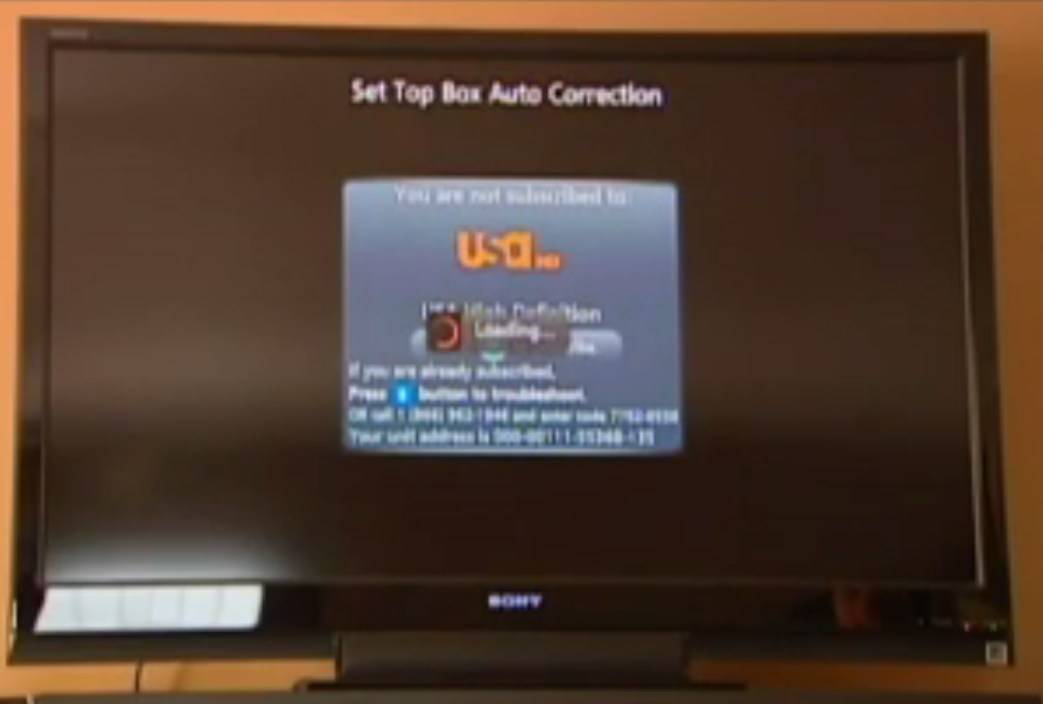
"You are not subscribed... to any channels."

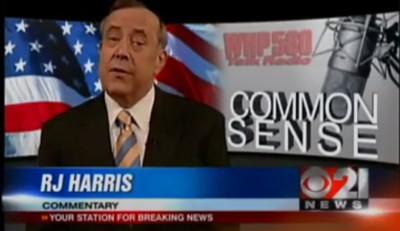
An angry commentator on WHP-TV in Harrisburg summed up his recent misadventures with Verizon’s customer service on the 6pm nightly news:

“Verizon Service Sucks!”

R.J. Harris was just one of thousands of Verizon FiOS customers across the northeast who found themselves without FiOS television service March 23rd, forcing many to miss NCAA basketball tournament games and the season premiere of “Mad Men.”

Because of a software glitch, Verizon’s media hubs in Buffalo and Harrisburg, Pa., shut off cable networks in FiOS cities across the northeast.  Viewers were told they were “not authorized” to receive cable networks, which brought many to the phones to call Verizon for help.

Harris joined enormous call queues that extended one, two, even three hours before most gave up.  Even worse: Verizon’s automated customer service agent provided voice synthesized non-answers regarding the FiOS outage.

“Lots of ‘press one,’ ‘press three,’ blah blah blah and then a talking computer,” Harris recounts. “One day later I tried to use Verizon’s ‘in home agent’ on my PC to get help.  Verizon took almost two hours to update my software before I could use the agent.”

Harris finally ended up in a chat session with “Sandeep,” half a world away.  But Harris found the offshore customer service agent was the first person to actually explain the problem.

“I told Sandeep I wanted management to know how I felt about my customer service experience,” Harris said. “He obliged by getting his boss Muhammad to join the chat. Muhammad — the manager — added one word to the chat: ‘OK.’ That’s it.”

“If you are starting a new company in America and you want the worst customer service policy you could possibly have, model your company after Verizon.”

[flv width=”360″ height=”290″]http://www.phillipdampier.com/video/WHP Harrisburg Common Sense 3-29-12.mp4[/flv]

WHP-TV commentator R.J. Harris is furious at Verizon for its FiOS and customer service failures.  (3 minutes)

Customers around the northeast shared one thing in common: they couldn’t talk to anybody at Verizon about the mishap.

Barbara Adams in Latham, near Albany, found that to be the case.  Adams called the local newspaper for help instead, which they gave her.  A Verizon FiOS customer near Buffalo ended up getting technical support from a friend’s Facebook page.

Harris

Verizon’s technical glitch required customers to follow a fairly complex set of instructions to fix the problem:

  1. With the TV and set-top box on, press Menu on the remote.
  2. On the TV screen scroll to Customer Support, selecting In-Home Agent.
  3. Select STB Auto Correct and follow any directions after that.
  4. The process should take several minutes.

Last week, Verizon began rebooting its home set top boxes remotely to reset them to working order without customer intervention.

But many customers were left without service all weekend long, unable to reach anyone at Verizon to understand why.

The company would not make a definitive statement about providing affected customers with service credits, but if you were affected, we recommend you call or write and ask for yours.

[flv width=”360″ height=”290″]http://www.phillipdampier.com/video/WNLO Buffalo Verizon FiOS Problems 3-27-12.mp4[/flv]

WIVB in Buffalo talked to a local Verizon FiOS customer who found a solution to Verizon’s technical snafu, from a friend on Facebook.  (2 minutes)

AT&T, Colorado Lawmakers Target Landline Subsidy; Collateral Damage: CenturyLink, Public Broadband

Phillip Dampier April 3, 2012 AT&T, Broadband Speed, CenturyLink, Community Networks, Competition, Consumer News, Editorial & Site News, Public Policy & Gov't, Rural Broadband, Wireless Broadband Comments Off on AT&T, Colorado Lawmakers Target Landline Subsidy; Collateral Damage: CenturyLink, Public Broadband

AT&T’s ongoing efforts to win deregulation and an end to universal landline service have now reached Colorado, where state lawmakers are reacting favorably to an AT&T-sponsored bill that would strip away rural landline subsidies and deregulate basic phone rates, much to the consternation of incumbent provider CenturyLink.

The long-winded bill,  SB 157 – Concerning the Regulation of Telecommunications Service and, in Connection Therewith, Enacting the “Telecommunications Modernization Act of 2012,” is just the latest in a series of deregulation measures co-authored by AT&T that would let phone companies off the hook for guaranteeing affordable, universal landline service to every American.  Instead, AT&T is happy to sell rural consumers pricey mobile phone service.

Ironically, AT&T’s bill would deliver the worst blows to fellow landline provider CenturyLink, the largest phone company in the state. Consumers pay 2.9 percent of their phone bill toward a rural landline subsidy fund, or 87 cents for a $30 bill. It is no surprise CenturyLink is adamantly opposed to the measure, declaring the loss of rural phone service subsidies a guarantee of future rate hikes and discriminatory pricing, if not the end of basic telephone service in rural Colorado.  The company also receives more than 90 percent of the annual proceeds collected from Colorado ratepayers.

“The bill continues to legislate discrimination of one very large group of consumers. It allows a consumer living on one side of the street in rural Colorado to continue to receive High Cost Fund support while his neighbor on the other side of the street will not, simply because of the logo at the top of their telephone bills” said Jim Campbell, CenturyLink regional vice president for regulatory and legislative affairs. “We continue to be baffled that lawmakers voting in favor of this bill feel it is good public policy to write consumer discrimination into Colorado law.”

As with other AT&T-written deregulation bills, the “sufficient competition” test to prove consumers have plenty of choices for phone service is notoriously easy to meet.  SB 157 defines a market competitive when 90 percent of customers in a geographic area have a choice of at least five providers.  While that sounds like competition, in fact the bill defines just about anything resembling a phone company as “competition.”  That includes traditional landline service, mobile phones, satellite telephony, Voice Over IP providers like Skype, and cable company phone service.

Back for More....

A provider declaring service to any particular geographic area on a coverage map is sufficient evidence that competition exists, even if that provider does not deliver a consistently suitable signal, charges extraordinarily high prices, or only markets service in selected areas or in a package that includes other services.  In rural Colorado, wireless companies maintaining roaming agreements with other providers would count as multiple competitors, even though they rely on the same infrastructure to handle calls.  Poor reception? That’s your problem.

The bill also allows phone companies to charge whatever they like for traditional phone service, and only requires one day’s notice of pricing changes.  The bill would also strip away the right of regulators to demand justification for the inevitable rate increases and takes away their right to reject, modify or suspend rate hikes they deem unacceptably unfair.

That could force CenturyLink prices way up in rural Colorado, perhaps to a level that makes AT&T cell phone pricing not that bad after all.
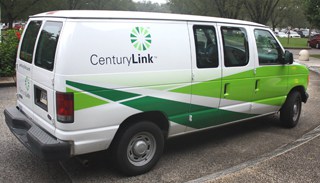
CenturyLink: Victim of Friendly Fire from AT&T?

That suits AT&T’s Colorado president William Soards just fine, as AT&T is willing to sell rural Colorado lots of wireless phones.

“There’s plenty of competition out there that will be very excited to take their business, and AT&T will be one of them,” Soards told the Denver Post.

Colorado’s Rural Broadband Fund: The Fix Is In

One of the boldest provisions of SB 157 is the establishment of a rural broadband fund that delivers up to $25 million of ratepayer money to a select group of telecommunications companies to underwrite the costs of building  non-competitive broadband networks in the most distant, unwired corners of the state.  They wrote the rules, so it comes as no surprise they are, by definition, the intended recipients — often the very same companies that have refused to provide service in rural communities in the past.  Among those they’ve made certain are prohibited from accessing the broadband fund:

  • Broadcasters experimenting with sub-channel broadband data service;
  • Government agencies;
  • Local municipalities;
  • Public-private partnerships;
  • Any organization, including non-profits, controlled in whole or part by a public entity;
  • Electric utilities;
  • Electric co-ops;
  • Non-profit electric companies or associations;
  • Every other supplier of electrical energy.

Who can access the broadband fund?  Why, the backers of the bill of course, especially AT&T:

  • Wireless companies like AT&T;
  • Telephone companies;
  • Cable operators;
  • Wireless ISPs (meeting certain conditions).

Padgett: Let local communities solve their broadband challenges themselves.

The bill is written to require a minimum level of 4/1Mbps service, which may lock out many rural telephone companies unable to deliver those speeds over traditional DSL as well as congestion and distance-sensitive wireless ISPs.  Cable operators are unlikely to provide any service in the most rural areas qualified to receive broadband funding. CenturyLink’s ongoing opposition to the bill suggests they don’t see much broadband funding in their immediate future either. That leaves just one technology most suitable to receive ratepayer funding: heavily capped and expensive wireless 4G broadband from companies like AT&T.

That may leave rural (but potentially not rural enough) Ouray County up the broadband creek without a paddle.

CenturyLink has shown minimal interest in providing ubiquitous broadband across the area dubbed the “Switzerland of America” for its rugged mountainous topography.  With just 4,450 residents, Ouray County is not the phone company’s highest priority.  But the company serves just enough of the county that it might fail the “unserved area” test — a ludicrous notion for broadband-starved Colona, Eldredge, Dallas, Ridgway, Ouray, Thistledown and Camp Bird.

Long-term residents have been through something like this before.  Some remember having to fight for basic electric service as well.  The San Miguel Power Association, a non-profit, member-owned rural electric cooperative established back in 1938, finally brought electric service to the San Miguel Basin area after residents were denied service for years by Western Colorado Power.  The region ultimately had to fend for itself, and did so successfully.

That same electric co-op may just have the best broadband solution for Ouray County — fiber infrastructure already in place, but prohibited from being funded to completion by AT&T’s corporate welfare bill.

Many rural legislators understand the rural broadband problem and see community-owned co-ops as their best chance of getting broadband service in rural Colorado.  They want to amend the bill to strip out the anti-competitive, anti-public broadband language.

Ouray County Commissioner Lynn Padgett is convinced her county’s broadband problems will never be solved by the Colorado Legislature or AT&T.

“Fundamentally, I believe that we need to let those closest to the areas with the rural broadband challenges, and those most accountable, help their communities,” Padgett said.


ISP’s, Entertainment Industry Launch Copyright Clearinghouse, Sidestepping Judicial Process

The entertainment industry, in cooperation with the nation’s largest Internet Service Providers, joined forces to open a new copyright enforcement center that critics charge sidesteps judicial process, leaving consumers forced to prove they are innocent after they’ve been accused of being guilty.

On Monday, the Center for Copyright Infringement named its executive director and board, and intends to gradually begin serving as a clearinghouse for copyright infringement complaints brought by the nation’s music and movie companies.

CCI has representatives from the Motion Picture Association of America (MPAA), the Recording Industry Association of America (RIAA), AT&T, Cablevision, Comcast, Time Warner Cable, and Verizon Communications collectively working to streamline enforcement of copyright law and control Internet piracy.

Often known as the “Six Strikes Plan,” CCI participants will coordinate piracy notification warnings for suspected illicit downloads of copyrighted content from peer-to-peer file sharing networks.  Hollywood studios and recording labels will identify those they suspect are involved in illegal file swapping and participating ISPs will notify customers tied to the infringing IP addresses up to six times before reducing a customer’s Internet speed, temporarily disabling the account, or terminating service.

The CCI hopes to bypass the court system and adopt a self-regulation, “in-house” approach to Internet piracy.  Some courts have proven increasingly-reluctant to hand over identifying information to copyright holders based on the sometimes-flimsy evidence of illegal downloading included in supporting affidavits.  Judges in some courts have also become leery of a cottage industry of “settlement specialists” that threaten expensive litigation for alleged copyright infringement that can be resolved with a quick cash settlement.

Judge James F. Holderman of the Northern District of Illinois ruled against one litigant who demanded ISPs divulge the identities of every participant exchanging bits and pieces of a copyrighted work in a so-called “BitTorrent swarm,” because they were involved in a conspiracy.  Holderman dismissed that argument.

Such tactics have allowed some settlement specialists to demand settlement payments from a larger group, substantially boosting revenue at little cost to them.

CCI’s executive director Jill Lesser says laws no longer favor copyright holders.

“While laws that protect intellectual property remain strong and enforcement efforts continue, technology has tipped the balance away from the interests of most creators and artists,” Lesser said. “The ease of distribution of copyrighted content has helped create a generation of people who believe that all content should be free.”

CCI’s so-called “Copyright Control System” will bypass the courts entirely, as entertainment companies coordinate directly with major ISPs agreeing to enforce copyright compliance.

Lesser says consumers will still have a fair process to challenge notices of alleged infringement.  But it will cost at least $35 for consumers to argue their case.  Additionally, as a self-regulated, industry-controlled body, consumers’ rights of appeal are undetermined.  The arbitration process will be administered through the American Arbitration Association.

Why would ISPs want to become involved in a copyright control regime?  To reduce their own expenses and legal risks.  Copyright holders and their agents have peppered service providers with compliance and identification demands for years, creating full time positions processing the paperwork.  By adopting a clearinghouse and developing a streamlined process to handle complaints, service providers can cut costs and avoid possible litigation against themselves.

Still, both the entertainment industry and ISPs seem to be open to listening to consumer advocates.  Lesser was formerly involved with People for the American Way, a group sensitive to privacy rights.  Serving on the advisory board are Gigi Sohn from Public Knowledge and Jerry Berman, founder of the Center for Democracy and Technology.  Neither have direct authority over the group’s enforcement efforts, but Sohn told Ars Technica she hoped her involvement would give a voice to consumer interests and maintain transparency in the enforcement process.

Clear-Cast HDTV Antenna Subject of Better Business Bureau Review; Ad Confuses Consumers

Phillip Dampier April 2, 2012 Consumer News, Editorial & Site News, Video 78 Comments

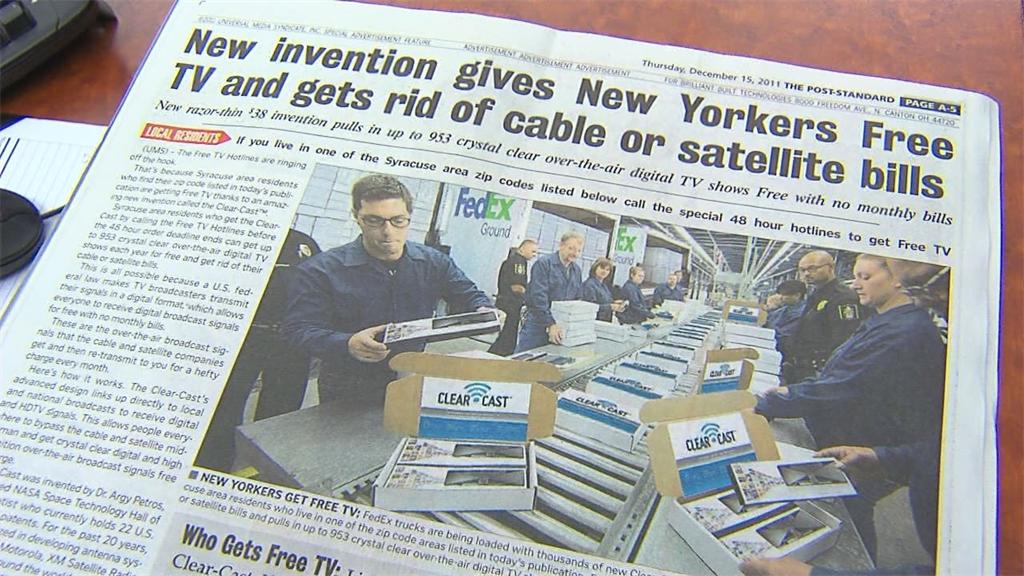
An ad in the Syracuse Post-Standard announces a new invention -- a bow tie antenna design originally designed in the 1950s.

Back in December, Stop the Cap! alerted readers about the “revolutionary razor thin” HDTV antenna Clear-Cast that promised salvation from high cable and satellite TV bills forever.  No article published here has attracted as much attention as that one, drawing more than 40,000 new readers to find out whether the product is truly a scientific breakthrough, or razor thin hype.

Readers have overwhelmingly agreed with our review of the product — it did no better than a $1.49 antenna we bought years earlier from Radio Shack.  But plenty of readers also shared their disappointment with the company advertising Clear-Cast: Canton, Ohio-based Universal Media Syndicate, Inc.

The Canton Regional and Greater West Virginia Better Business Bureau reports it has received “numerous” complaints about Clear-Cast’s marketing practices, refund policies, and advertising claims.  Indeed, we’ve heard from hundreds of readers who assumed we sold the product, and a lot of choice words were included in the angergram e-mails mistakenly sent our way.  Among the claims many found deceptive — Clear-Cast’s marketing stretch that users can receive up to 953 shows (not channels).

Our story has been linked from a number of other websites, so many in fact our review of the product often appears higher in Google’s search rankings than the company selling the product itself.

Clear-Cast’s advertising, designed to look like an authentic newspaper article, has appeared in dozens of newspapers around the country.  Many readers report the price has increased as well, now selling for as much as $50, not including the high-pressure sales tactics to throw in “warranty protection” ($5 buys you two years) and shipping and handling (add another $10).  We found readers who spent $110 for two bow-tie antennas that used to be included with televisions until the 1980s for free.

Our findings: Clear-Cast is an antenna capable of receiving local broadcast channels, but no better or worse than other basic antennas we have tested that sell for $4-9.

Returning the product for a refund also proved nightmarish.  We received a working antenna from one of our readers if we’d agree to return to it the company when we were finished.  It was returned by Priority Mail in late January and was received by them in two business days.  Our reader reports a credit for the return finally posted to his credit card statement this morning — nearly four months later.

The BBB received such a substantial number of complaints, they met with the company in January to discuss their product and how it is sold:

The BBB found that the product does provide channels without cable or satellite. However BBB inquiries indicate that because the headline states that you can get rid of cable or satellite bills, consumers are under the impression that they will receive the same type of channeling as they would with their current provider.

Additionally, there seems to be some confusion as to what is actually being given away for free. In the company ad it states in the headline “Free TV” and “gets rid of cable or satellite bills.” Some inquiries indicate that consumers are under the impression that they will be receiving a free television. Also there seems to be confusion as to how many possible channels a consumer may get when using the ClearCast Digital HDTV. The company ad has indicated that consumers can receive up to 953 “Shows” and up to 53 “channels” depending on where you live.

The company has added disclosures that outline and explain what the consumers are actually getting, however the overall impression of the ad seems to imply differently.

The basic principles of the BBB code of advertisement states that an advertisement as a whole may be misleading although every sentence separately considered is literally true. Consumers are encouraged to read the ad in its entirety and despite deadlines and restrictions, to make sure the company and product is researched prior to purchase in order to make an educated buying decision.

We were not surprised to learn readers were still complaining about Clear-Cast as late as this weekend.

Universal Media Syndicate, which is responsible for its marketing, also pitches:

  • the so-called “Amish-Made” Heat Surge Fireplace (all parts from China, with only the wood frame made by “Amish” employees);
  • “three hundred ninety-eight dollars and shipping”-portable air conditioner ArcticPro;
  • coin peddler World Reserve Monetary Exchange;
  • PatentHEALTH, a Canton-based provider of something called “nutraceuticals” that include an FDA warning suggesting their products are “not intended to diagnose, treat, cure or prevent disease.”

Variation on the traditional bow-tie UHF antenna

Our advice for cord cutters remains the same:

Antenna design really has not changed much in 50 years. Here is a good and credible site to explore: http://www.antennaweb.org/Info/AntennaInfo.aspx

Start out with something basic. The best antennas allow you to orient them in different directions towards the signal you want. For UHF, try a set top loop-style antenna that can be rotated (Wal-Mart probably has one). You might also find playing around with some aluminum foil attached behind the antenna or even to it can make some difference. Experiment… a lot, until you find the ideal position for your antenna. If you are thinking of spending $38 on Clear Cast, remember it will probably cost you at least $5 to mail it back if you find it not worth keeping.

For the absolute best results, seriously consider a traditional outdoor or attic antenna. Channel Master and Winegard are quality manufacturers with a long history. They sell online and UPS can deliver it straight to your home already assembled in many cases.

But always hire a professional installer if you are absolutely not certain of your rooftop skills.  A frequent cause of rooftop falls and other accidents used to be attributed to do-it-yourself antenna installers who didn’t appreciate the risks.

[flv width=”360″ height=”290″]http://www.phillipdampier.com/video/WTVQ Lexington Clear-Cast HDTV Antenna 3-28-12.mp4[/flv]

WTVQ in Lexington, Kentucky investigated viewer complaints about Clear-Cast and talked with the Better Business Bureau about the company and its marketing tactics.  (3 minutes)

Comcast Changes Language Over Xbox-Usage Cap Spat: Same Story, Different Words

Comcast has changed its explanation why the company’s XFINITY TV service, streamed over Xbox 360 has been made exempt from the company’s 250GB usage cap.

Last week, the company claimed the service traveled over the company’s “private IP” network, exempting it from usage restrictions.  That created a small furor among public interest groups and Net Neutrality supporters because of the apparent discrimination against streamed video content not partnered with the country’s biggest cable operator.

Stop the Cap! argued what we’ve always argued — usage caps and speed throttles are simply an end run around Net Neutrality — getting one-up on your competition without appearing to openly discriminate.

Now Comcast hopes to make its own end run around the topic by changing the language in its FAQ:

Before:

After:

Although the words have changed, the story stays the same.

The key principle to remember:

Data = Data

Comcast suggests its Xbox XFINITY TV service turns your game console into a set top box, receiving the same type of video stream its conventional cable boxes receive.  The cable company is attempting to conflate traditional video one would watch from an on-demand movie channel as equivalent to XFINITY TV over the Xbox.  Since the video is stored on Comcast’s own IP network, the company originally argued, it creates less of a strain on Comcast’s cable system.

AT&T's U-verse is an example of an IP-based distribution network.

But the cable industry’s inevitable march to IP-based delivery of all of their content may also bring a convenient excuse to proclaim that data does not always equal data.  They have the phone companies to thank for it.

Take AT&T’s U-verse or Bell’s Fibe.  Both use a more advanced form of DSL to deliver a single digital data pipeline to their respective customers.  Although both companies try to make these “advanced networks” sound sexy, in fact they are both just dumb data pipes, divided into segments to support different services.  The largest segment of that pipe is reserved for video cable TV channels, which take up the most bandwidth. A smaller slice is reserved for broadband, and a much smaller segment is set aside for telephone service.

AT&T and Bell’s pipes don’t know the difference between video, audio, or web content because they are all digital data delivered to customers on an IP-based network.  Yet both AT&T and Bell only slap usage caps on their broadband service, claiming it somehow eases congestion, even though video content always uses the most bandwidth. (They have not yet figured out a way to limit your television viewing to “maintain a good experience for all of their customers,” but we wouldn’t put it past them to try one day.)

What last mile congestion problem?

Comcast’s argument for usage limiting one type of data while exempting other data falls into the same logical black hole.  Comcast’s basic argument for usage caps has always been it protects a shared network experience for customers.  Since cable broadband resources are shared within a neighborhood, the company argues, it must impose limits on “heavy users” who might slow down service for others.

We've heard this all before. Former AT&T CEO Dan Somers: "AT&T didn’t spend $56 billion to get into the cable business to have the blood sucked out of (its) veins."

But in a world where DOCSIS 3 technology and a march to digital video distribution is well underway or near completion at many of the nation’s cable operators, the “last mile” bandwidth shortage problem of the early 2000s has largely disappeared.  In fact, Comcast itself recognized that, throwing the usage door wide open distributing bandwidth heavy XFINITY TV over the Xbox console cap-free.

As broadband advocates and industry insiders continue the debate about whether this constitutes a Net Neutrality violation or not, a greater truth should be considered.  Stop the Cap! believes providers have more than one way to exercise their control over broadband.

Naked discrimination against web content from the competition is a messy, ham-handed way to deal with pesky competitors.  Putting up a content wall around Netflix or Amazon is a concept easy to grasp (and get upset about), even by those who may not understand all of the issues.

Internet Overcharging schemes like usage caps and speed throttles can win providers the same level of control without the political backlash.  Careful modification of consumer behavior can draw customers to company-owned or partnered content without using a heavy hammer.

Simply slap a usage limit on customers, but exempt partnered content from the limit.  Now customers have a choice: use up their precious usage allowance with Netflix or watch some of the same content on the cable company’s own unlimited-use service.

Nobody is “blocking” Netflix, but the end result will likely be the same:

  • Comcast wins all the advantages for itself and its “preferred partners”;
  • Customers find themselves avoiding the competition to save their usage allowance;
  • Competitors struggle selling to consumers squeezed by inflexible usage caps.

It is all a matter of control, and that is nothing new for large telecom companies.

Back in 1999, AT&T Broadband owned a substantial amount of what is today Comcast Cable.  Then-CEO Dan Somers made it clear AT&T’s investment would be protected.

“AT&T didn’t spend $56 billion to get into the cable business to have the blood sucked out of [its] veins,” Somers said, referring to streamed video.

Obviously Comcast agrees.

Search This Site:

Contributions:

Recent Comments:

Your Account:

Stop the Cap!