Home » Wi-Fi » Recent Articles:

The Magic of Broadband Competition: Sparklight Without Competition vs. Sparklight With Competition

Phillip Dampier June 29, 2021 Broadband Speed, Cable One, Competition, Consumer News, Data Caps, TDS Telecom Comments Off on The Magic of Broadband Competition: Sparklight Without Competition vs. Sparklight With Competition

America’s most costly large cable internet service provider is Sparklight, formerly known as Cable One. Its internet plans are usually data-capped and it barely offers new customers a pricing break before high regular prices apply. Sparklight primarily services small cities and towns, many income-challenged, in the middle of the country. Customers do not have much to rave about, because Sparklight puts its own profits far ahead of its customers. The cable operator was among the first to slap on data caps and was the nation’s most aggressive at getting rid of costly cable television channels.

About the only thing that does move Sparklight’s pricing is the presence of a formidable competitor. In Meridian and Garden City, Ida., TDS Fiber (formerly TDS Telecom) has been bringing gigabit fiber to the home service to area residents at prices low enough to motivate Sparklight customers to abandon the cable company. That motivated Sparklight to improve their plans and lower prices.

First, let’s examine the internet rate card for ordinary Sparklight customers typically stuck choosing either the cable company or DSL from Frontier, AT&T, or Windstream:
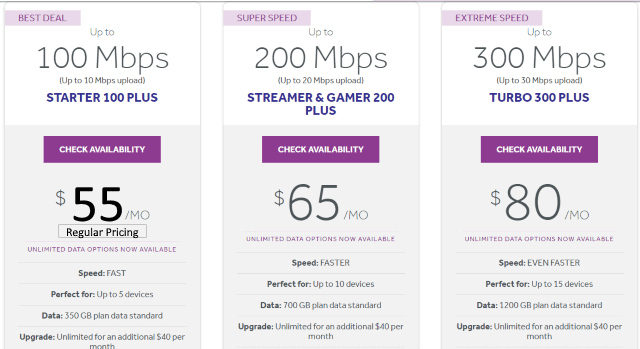
Sparklight regular pricing nationwide

Notice the entry-level internet plan (100/10 Mbps) costs $55 a month, does not mention the $10.50/mo modem rental fee (required if you choose the company’s Wi-Fi service), an internet service surcharge of $2.75/mo (not charged in all areas), and a stingy data cap of just 350 GB, which is at least 100 GB less than what the average U.S. broadband household now consumes each month. Internet overlimit fees are $10 for each additional block of 100GB of data in excess of your allowance, up to a maximum of $50 a month. Unlimited service costs an extra $40 a month.

When you add it all up: for an unlimited (100/10 Mbps) internet service plan with in-home Wi-Fi, Sparklight charges $108.25 a month.

If you happen to live in a competitive service area, such as Meridian and Garden City, Ida., speeds are faster, prices are lower, and data caps are nowhere to be found:
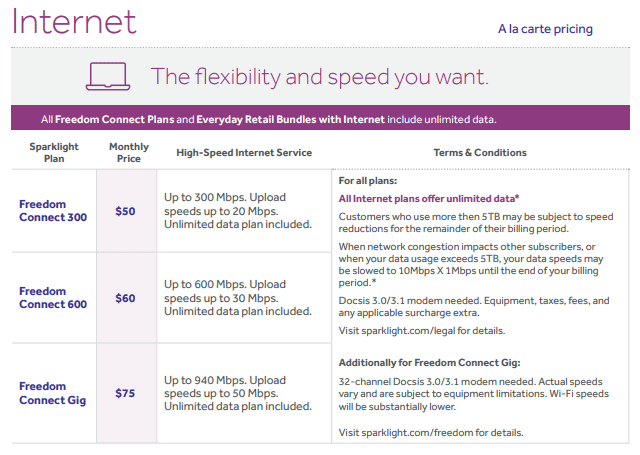
Pricing for Sparklight in Meridian and Garden City, Ida.

Customers still face a $10.50/mo charge to lease a cable modem, and that $2.75/mo internet surcharge fee might also apply.

The prospect of competition could cut dramatically into company profits, which is one reason telecom companies are fiercely lobbying the Biden Administration not to fund municipal broadband projects or supply funds to a new competitor as part of the 2021 Infrastructure Plan.
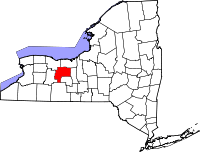

Ontario County, NY: We Need Fiber So Badly, We Just Did It Ourselves

Ontario County, N.Y.

Ontario County, just south and east of Rochester, N.Y., is unleashing the power of fiber optics after private providers turned their noses up at the rapidly-growing Finger Lakes region.

“We just said we need this so badly, we just did it ourselves,” says Ed Hemminger, president and CEO of Axcess Ontario, a non-profit corporation created by the county government to run the $7.5 million dollar project.  Hemminger appeared on this afternoon’s edition of CNBC’s Power Lunch.

The 180-mile fiber optic network now two-thirds complete is expected to be finished by year’s end.  Hospitals and schools are already leasing capacity on the fiber ring.

Axcess Ontario doesn’t actually provide broadband service to businesses and consumers itself.  Instead it leases capacity to all-comers, inviting them to use the fiber ring to enhance their broadband infrastructure.  The company doesn’t provide residential service, for example, but it could enhance another provider’s ability to deliver service.  Right now, the county is contemplating a wireless Internet service for consumers, if they can find a provider.  Frontier Communications could be a likely contender, considering it already provides a Wi-Fi service in downtown Rochester and in portions of suburban towns like Brighton, Pittsford, and Greece.

Hemminger

Hemminger

Ontario County is one of the bright spots in western and central New York’s difficult economy.  Both residential and business growth continues, despite the recession, particularly in communities like Canandaigua, Victor and Geneva.  Having a state-of-the-art fiber ring enhances the area’s ability to attract new businesses and jobs to the Finger Lakes region, often better known for tourism.  At least that is the plan.

“Honestly every company is an Internet company because they all have to use the Internet,” Hemminger claims.

Having the county build the network was the only prospect for getting it done.

“We can have a Return on Investment of 25 years, while the private sector has to recoup its costs in three to four years,” Hemminger says.

Thanks to Stop the Cap! reader Jeff for sending word.

[flv]http://www.phillipdampier.com/video/CNBC Making Broadband Accessible 6-10.10.flv[/flv]

Ed Hemminger discusses the Axcess Ontario fiber ring project in Ontario County, N.Y., on today’s edition of Power Lunch on CNBC.  (2 minutes)

AT&T Tries to Solve Wireless Congestion in NYC By Giving Away Free Wi-Fi

Phillip Dampier May 26, 2010 AT&T, Broadband Speed, Consumer News Comments Off on AT&T Tries to Solve Wireless Congestion in NYC By Giving Away Free Wi-Fi

AT&T is having trouble meeting the wireless needs of its customers in major cities like New York and San Francisco, so it is experimenting with free Wi-Fi connections in particularly crowded parts of its service area.

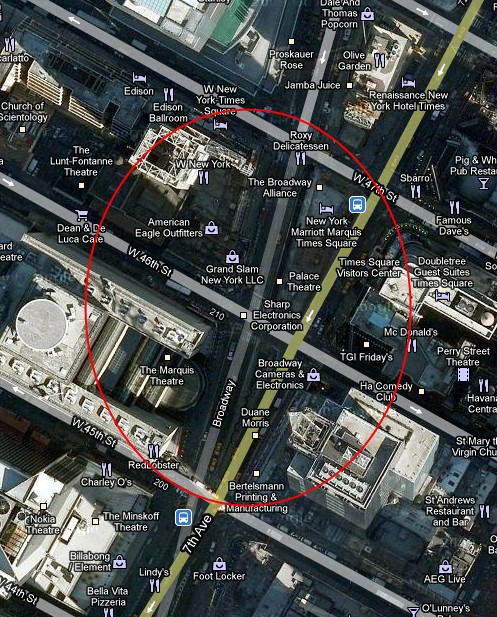
AT&T’s Wi-Fi “hotzone” launched Tuesday in Times Square.  The service has been installed near 7th Avenue between 45th and 47th street, and is designed for outdoor users.  Any AT&T customer can connect to the service with any Wi-Fi capable device.

AT&T has been promoting free use of its indoor Wi-Fi connections for customers for well over a year because it helps reduce demand on its 3G mobile broadband network.  Developing outdoor hotzones in densely populated cities like New York could offload considerably more traffic from congested 3G cell sites.

The company hopes that free Wi-Fi will prove more attractive to customers than 3G because it can deliver faster speed connections and won’t suffer from slowdowns that have become all too common on the company’s 3G network.

If the experiment proves successful, AT&T will consider expanding it to other cities where the company faces congestion issues.

AT&T's Hotzone in Times Square covers a narrow outdoor area bordering W. 45th Street and W. 47th Street near 7th Avenue.

Eastern Ontario Gets Windfall for Broadband Expansion

Paul-Andre Dechêne August 6, 2009 Canada, Community Networks, Public Policy & Gov't, Rural Broadband Comments Off on Eastern Ontario Gets Windfall for Broadband Expansion
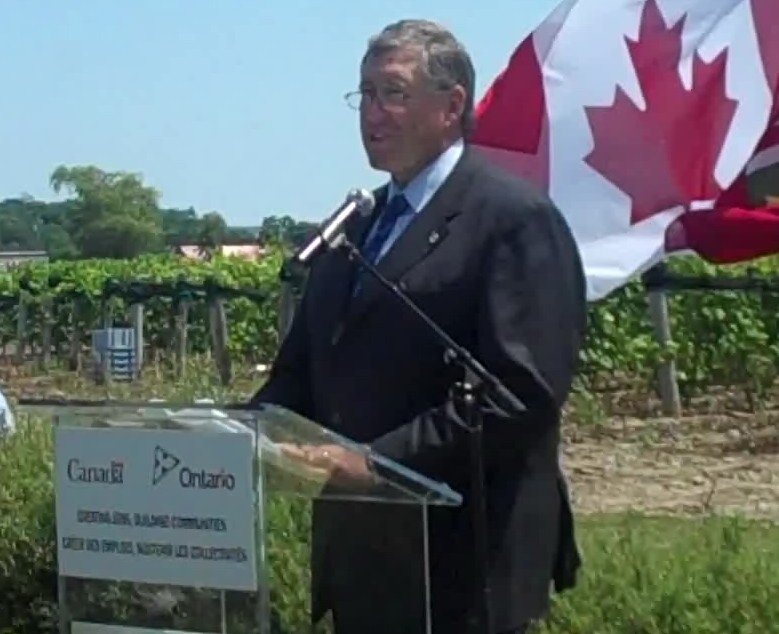
Daryl Kramp, MP for Prince Edward-Hastings, Announcing Broadband Initiative in eastern Ontario

Daryl Kramp, MP for Prince Edward-Hastings, announcing broadband initiative in eastern Ontario

Daryl Kramp, Member of Parliament for Prince Edward-Hastings, on behalf of John Baird, Canada’s Transport and Infrastructure Minister, and the Honourable Leona Dombrowsky, Minister of Agriculture, Food and Rural Affairs for Ontario, announced that the construction of a 21st century broadband network is a step closer in Eastern Ontario. The Government of Canada and the Province of Ontario have together set aside up to $110 million for the project.

“Our Government is delivering on investments that help create jobs and build sustainable communities,” said MP Kramp. “The construction of a broadband network in Eastern Ontario will help to expand and improve local businesses and their services, and significantly boost our regional economy.”

“Delivering broadband to Eastern Ontario is a critical infrastructure investment that will bring more industry to the region and create the jobs that will help our towns and rural communities prosper,” said Leona Dombrowsky, Ontario Minister of Agriculture, Food and Rural Affairs.

“Today’s announcement marks a major step forward in helping to secure the future prosperity of Eastern Ontario. Having a high-speed, high-capacity broadband network is one of the most important assets that we can utilize to assist us in unlocking the ingenuity and creativity of our people and businesses. We are extremely grateful to both the federal and provincial governments for their tremendous financial support for this project,” said Ron Emond, Chair of the Eastern Ontario Wardens’ Caucus.

The governments of Canada and Ontario will each set aside up to one-third of total eligible costs of the project, to a maximum contribution of $55 million. Eastern Ontario Wardens’ Caucus (EOWC) Incorporated and private sector partners will provide the remaining funding, with EOWC Inc. contributing up to $10 million. The total eligible costs of this project are estimated to be $170 million.

Once completed, the network will provide broadband service to the residents and businesses in many of the counties of Eastern Ontario (Hastings, Peterborough, Renfrew, Northumberland, Haliburton, Frontenac, Lanark, Prince Edward, Lennox & Addington, the United Counties of Stormont, Dundas & Glengarry, the United Counties of Prescott & Russell and the United Counties of Leeds & Grenville) as well as the City of Kawartha Lakes.

Many of these areas already have rudimentary broadband service in the form of DSL and limited cable television penetration, but many DSL accounts are speed limited to 1-3Mbps, which the EOWC has determined to be woefully inadequate for broadband applications of the near future.

Canada’s broadband initiatives outside of the most rural communities are starting to define the bare minimum network speed at 10Mbps for downloading if the network is to sustain viability in the future.  With a goal of reaching up to 95% of eastern Ontario with broadband service in the next four years, a variety of technologies are likely to be considered depending on the population being reached.  Those living in the most rural areas are likely to find wireless service the most viable option, delivered with a form of WiMax.  Rural enclaves or neighborhoods outside of community centers may continue to be served by DSL service for some time.  But those in suburban and more urban community centers should have access to advanced forms of DSL, fiber optics, or high speed wireless service.

Many public Wi-Fi “hotspots” will be established at community gathering points, accessible to visitors at no charge.

The Government of Canada’s 2009 Economic Action Plan is accelerating and expanding the existing federal investment of $33 billion in infrastructure across Canada with almost $12 billion in new infrastructure stimulus funding over the next two years.

Through the 2009 Ontario Budget – Confronting the Challenge: Building Our Economic Future – the province is investing $32.5 billion in infrastructure for the province of Ontario over the next two years, including a $5 billion contribution from the federal government that will support more than 300,000 jobs and strengthen Ontario’s economy.

[flv width=”640″ height=”360″]http://www.phillipdampier.com/video/Eastern Ontario Broadband 8-2009.flv[/flv]
Eastern Ontario residents speak about the importance of broadband

When Competition Isn’t: Comcast<->Clearwire<->Time Warner Cable

Phillip Dampier July 2, 2009 Comcast/Xfinity 1 Comment

ClearwireCable operators have been looking for a way to expand their broadband service to outside the home, and Comcast, Bright House, and Time Warner Cable have found their answer: WiMax technology from Clearwire.  They’ve joined Intel and Google as minority investors, collectively owning 25% of Clearwire, after investing more than $3 billion dollars in the wireless broadband service.  What do they get for the buy-in?  The chance to market Clearwire services to their cable broadband customers for “on-the-go” broadband.

Comcast High-Speed 2go Metro service launched Tuesday in Portland, Oregon providing consumers with portable speed up to 4Mbps in Clearwire’s own 4G network service area.  Comcast customers can sign up for a promotion for $49.95 a month for one year, which includes their wired cable modem service, a Wi-Fi router, and Clearwire wireless service (regular price after the promotion is $72.95 monthly).  Customers can access the service in any Clearwire 4G service area nationwide.  Where Clearwire doesn’t offer service, customers can “roam” on Sprint’s 3G data network nationwide for an additional $20 a month more.  There are no known usage limits at this time.  Existing Comcast broadband customers in Portland can add the Clearwire-based service starting at $30 a month.

The service will work for laptops, but not mobile data devices.  Comcast’s investment in Clearwire made such a venture possible, and is expected to compete with mobile phone broadband data plans, which typically offer 5GB of service for $50 a month.

Comcast will sell service in Atlanta, Chicago and Philadelphia by the end of 2009.

While the service will be useful for Comcast customers who travel or who want more reliable, fast wireless data access, Clearwire’s ability to serve as a true competitor to Comcast, Time Warner Cable, and Bright House may be compromised by those partnerships.

Could Clearwire effectively create promotions and plans that could lead to customers cutting the cord on their cable broadband provider?  Should cable companies increase their investments and ownership interest in Clearwire, would it ultimately matter to them where you obtained service?

Search This Site:

Contributions:

Recent Comments:

Your Account:

Stop the Cap!