Home » TWC » Recent Articles:

Time Warner CEO Earned a Cool $17.4 Million in 2012; Other Execs Also Got Pay Hikes

Phillip Dampier April 9, 2013 Consumer News, Time Warner Cable No Comments
Another happy year for most TWC executives.

Another happy year for most TWC executives.

Time Warner Cable handed CEO Glenn Britt an effective $1 million raise in 2o12, compensating Britt with $17.4 million, up from $16.4 million paid a year earlier. The disclosure came in a statement filed with the Securities and Exchange Commission.

Britt, who is reportedly considering leaving Time Warner at the end of the year, also had his employment contract extended to Dec. 31, 2013.

Some other Time Warner Cable executives also walked home with substantial pay increases this year:

  • Chief operating officer Robert Marcus made $10.1 million, up from $8.4 million last year;
  • Chief technology officer Michael LaJoie took home $2.7 million, up from $2.6 million;
  • General counsel Marc Lawrence-Apfelbaum cashed in $3.3 million in earnings, up from $2.8 million.

Only chief financial officer Irene Esteves saw a pay decrease. She earned $5.5 million this year, down $400,000 from a year earlier.

Share

Cable Companies Under Fire: Guerrilla Campaigns and Viral Videos

enjoy worseJust how bad is your cable company?

Apparently pretty bad, considering the number of viral videos and guerrilla campaigns being launched against the industry these days, and Time Warner Cable in particular.

Time Warner Cable Customer Service” is a group that has already heard from Time Warner Cable’s legal team about the cable operator’s trademarks and the potential for apparent “customer confusion.” The parodists might be at risk of losing their domain name, have already had their YouTube and Twitter accounts suspended, and have been told they are not allowed to record any phone calls with Time Warner Cable employees (although the company is allowed to record them… and you.)

What has the cable operator so upset? This:

what can we do worse

http://www.phillipdampier.com/video/Time Warner Cable What Can We Do Worse 4-13.flv

Members of “Time Warner Cable Customer Service” take to the streets of Manhattan asking passersby what can the cable company do worse. Then they invade a Time Warner Cable store…. (Warning: Adult Language – NSFW) (3 minutes)

http://www.phillipdampier.com/video/Honest Cable Company 4-13.flv

Another group decided a more general parody was in order. The “First Honest Cable Company” provides full disclosure about your cable service and what they really think of you. (Warning: Adult Language – NSFW) (2 minutes)

Share

Time Warner Renaming Local News Channels “Time Warner Cable News”

Phillip Dampier March 19, 2013 Competition, Consumer News, Time Warner Cable No Comments

ynnIn a rebranding effort some Time Warner Cable employees and viewers are fuming about, all 17 of the cable company’s local news operations including YNN (Upstate NY), NY1 (NYC), and News 14 (the Carolinas) will be renamed “Time Warner Cable News” by the end of this year.

The new look will include a studio makeover, new theme music, and a more uniform presentation across all the news broadcasts.

The experiment in creating the cable company’s local news channel began in Rochester, N.Y. in 1990, even before Time Warner Cable as a brand existed. WGRC-TV was launched by Greater Rochester Cablevision that year with a handful of daily newscasts interspersed with off-network syndicated programming. In 1992, WGRC-TV left channel 5 for channel 9 and was rebranded “GRC9News.” When the newly named Time Warner Cable arrived in town, the channel was rebranded yet again as “R News.”

In August 2009, Time Warner changed the name to YNN (Your News Now) Rochester, just one of several YNN channels operating upstate in Buffalo, Rochester, Syracuse, and Albany.

For YNN viewers, it is just one more name change for a news channel that has increasingly shed its veneer of independence from the cable company that lives under the same roof.

Ny1header-img

NY1 fans are far less sanguine about the change.

“It’s a boneheaded move that will punish a unique, standalone brand like NY1 — by reminding viewers just how corporate TV news has become,” wrote Don Kaplan, the New York Daily News television editor.

“This might be the stupidest media rebranding scheme I’ve ever heard of,” Seth Fletcher, a science writer who lives in Brooklyn, wrote in a Twitter post.

“Time Warner — rebranding NY1 into TWC News might be your dumbest move since merging with AOL,” wrote the band They Might Be Giants.

Time Warner said the change is intended to give the news operation a higher profile and more closely identify it as a cable-only service not available on their biggest competitors, Verizon FiOS and AT&T U-verse.

timewarner twcBut critics of the change note most of Time Warner’s local news channels have relentlessly pounded home the channel is only available on Time Warner Cable — never on FiOS, satellite, or U-verse — for years.

At least one observer privately noted the rebranding could be another attempt to cut costs by allowing the news channels to share anchors, reporters, and news content without viewers catching on it isn’t always produced locally. YNN’s network of news channels in upstate New York have already proved this, with certain content produced in Buffalo for viewers in Rochester, Syracuse, and Albany.

Time Warner Cable is also in the process of rebranding its various local and regional sports channels under their new name: Time Warner Cable Sports.

Share

Time Warner Cable Wins Exclusive Marketing Deal With N.Y. Apartment Complexes

Phillip Dampier March 18, 2013 Competition, Consumer News, Time Warner Cable 4 Comments

twcGreenTime Warner Cable has signed exclusive marketing deals with two apartment complexes on Staten Island that will give the cable company the sole right to pitch television, Internet, and phone services to residents.

Markham Gardens on the borough’s northern shore near Port Richmond and Park Lane at Seaview, a senior living community located in the Emerson Hill neighborhood, represent the first ever exclusive marketing deals the cable company has signed on Staten Island, and will probably not be the last.

markhamThe deal will not prevent Verizon’s FiOS fiber-to-the-home network from being available to residents in the future, but such marketing agreements can discourage residents from signing up with a competitor.

A growing number of apartment complexes in the country are signing exclusive marketing arrangements with cable operators in return for financial incentives. The agreements often bundle the cost of a renter’s cable service into the monthly rent or include it as a mandatory amenities fee. When a cable customer understands they are paying for cable service whether they want it or not, it makes it difficult for competitors to convince renters to pay for both cable service and services from the phone or satellite company.

Other types of marketing deals allow the cable operator to promote itself on an apartment complex website or through exclusive door-hangers or other marketing opportunities denied to competitors.

Share

Time Warner Owes Upstate NY Customers $2.2 Million in Refunds; Average: $119 Each

timewarner twcMore than 18,000 Time Warner Cable customers in upstate New York will receive average refunds of $119 each from the cable company that overcharged them for service since 2007.

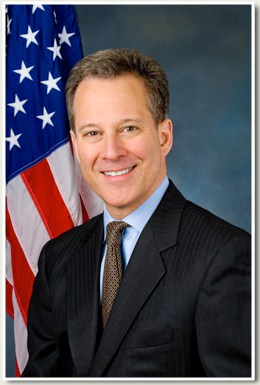
New York Attorney General Eric Schneiderman announced a settlement with Time Warner Cable after a two-year investigation found that the company overcharged former Cablevision subscribers in 10 Upstate towns and villages. The settlement requires Time Warner Cable to pay $2.2 million in refunds to 18,437 customers and stop charging subscribers’ fees that exceed the amounts permitted under their municipalities’ Franchise Agreements. As part of the agreement, Time Warner Cable also agreed to pay$200,000 in fees and costs to the State of New York.

The settlement requires Time Warner Cable to refund overcharges collected since March 2007, with interest, to current subscribers in the Towns of Glenville, Livonia, Stafford, Oakfield, Geneva, Thompson, Lima, Batavia and the Villages of Waterloo and Ellenville.

Former customers and those that have moved away from these communities seem to be out of luck.

Schneiderman

Schneiderman

“For too long, Time Warner Cable has been overcharging fees to its customers in direct violation of their local franchise contracts. This agreement brings millions of dollars in refunds to upstate consumers who overpaid their bills,” said Schneiderman. “Many New York families operate on a tight budget and every dollar counts. My office will not tolerate cable companies that ignore their contractual obligations and overcharge New York subscribers.”

Time Warner Cable’s billing practices were brought to the Attorney General’s attention by the Town of Glenville in January 2011. The Attorney General began a two year investigation which found that Time Warner Cable had in fact been overcharging Glenville residents for many years, and that Time Warner Cable had been improperly charging consumers in other Upstate communities with Franchise Agreements that Time Warner Cable had acquired from Cablevision Industries in 1995. Although Time Warner Cable stopped overcharging franchise fees to consumers and voluntarily made $1.4 million in refunds to subscribers in eight towns in 2007 and 2010, it continued to overcharge consumers in the ten towns and villages covered by this agreement.

A Franchise Agreement is a contract that local governments negotiate with cable companies granting the right to offer services and use public facilities. Some of the Franchise Agreements at issue limited the fee Time Warner Cable paid the town to 3% of gross revenues, and prohibited the cable company from billing subscribers any part of this cost. Other Franchise Agreements required Time Warner Cable to pay a 5% franchise fee and permitted Time Warner Cable to pass-through two-fifths of this fee to subscribers.  The municipalities also had the option to voluntarily allocate two-fifths of the fee to a fund subsidizing the cost of expanding the cable network in their communities, in which case none of the fee was permitted to be passed-through to consumers. The Attorney General’s investigation found that Time Warner Cable violated both types of Franchise Fee restrictions.

As a result of the settlement, Time Warner customers will receive credits on their bill within 90 days, with the amount proportional to their monthly subscription charges. Individual overcharges vary by customer and town, but average $119 with accumulated interest. As part of the Attorney General’s investigation, Time Warner Cable reviewed its records of all its New York Franchise Agreements purchased from Cablevision and identified no other towns where similar overcharges had taken place during the period from 2007 to 2013.

Share

Time Warner Cable’s $5.26 Million Grant from NY Taxpayers Ruins Their Rhetoric

corporate-welfare-piggy-bank

Time Warner Cable objects to publicly-owned broadband networks because they represent “unfair” publicly-funded “competition,” despite the fact TWC is also on the public dole.

The next time a cable operator or phone company claims community-owned broadband providers deliver unfair competition because they are government-funded, remind them that quite often that phone or cable company also happens to be on the public dole.

Take Time Warner Cable, which this week won a $5,266,979 grant courtesy of New York State taxpayers to extend their cable system to 4,114 homes in rural parts of upstate New York just outside of the cable company’s current service areas. That equals $1,280.26 in state tax dollars per household. For that public investment, Time Warner will reap private profits for shareholders from selling broadband, cable-TV, phone, and home security services to its newest customers indefinitely.

Now unlike some of my conservative friends, I am not opposed to the state spending money to wire rural New York. It is obvious cable and phone companies will simply never wire these areas on their own so long as Return on Investment conditions fail in these places. What does annoy me are the endless arguments we hear in opposition to public broadband from these same companies, claiming with a straight face that community-owned networks represent “unfair competition” because they are publicly funded. Time Warner Cable is no stranger to public taxpayer benefits itself, having won millions in tax abatements and credits in North Carolina, Ohio and a cool $5 million courtesy of Mr. and Mrs. N.Y. Taxpayer.

Many of the nation’s private telecommunications companies have plenty of love for federal, state, and local officials who have passed favorable tax laws and policies at their behest:

So let us end the silly rhetoric about public vs. private broadband being a question of fairness. This is really a question about who controls your broadband future,  your community or big telecom corporations.

In states like Georgia, elected politicians like Rep. Mark Hamilton want those decisions made by Comcast (Pennsylvania), Windstream (Arkansas) and AT&T (Texas). His bill would make it next to impossible for a local community to do anything but beg and plead the phone company to deliver something, anything that resembles broadband service. For a good part of rural Georgia (and elsewhere), the answer has always been a resounding “no,” at least until the federal government steps up and kicks in your money to help defray the costs of extending Windstream or AT&T’s sub par DSL service that slows to a crawl once the kids are out of school.

Windstream waited for the federal government to kick in $7.28 million in taxpayer dollars before it would agree to extend its DSL service to customers in its own home state of Arkansas.

Windstream waited for the federal government to kick in $7.28 million in taxpayer dollars before it would agree to extend its DSL service to rural customers in its own home state of Arkansas.

You have to wonder about the Republicans in Georgia these days who used to fight for local and state control over almost everything. It should be instinctive for any conservative to want out-of-state pointyheads out of their business, but Rep. Mark Hamilton, himself a business owner, seems content forfeiting those rights to companies headquartered hundreds of miles away. If it was the federal government telling Georgia what kind of broadband service it deserves, do you think Mr. Hamilton would be so amenable? Unfortunately, should Hamilton have his way, for the foreseeable future, residents and business owners in Gray, Sparta, or Eatonton to count just a few will have broadband just the way the state’s phone companies want it — super slow DSL, dial-up or satellite fraudband.

Share

Time Warner Cable Support Site Defaced by Hacktivists Who Uncovered Password

Phillip Dampier March 7, 2013 Consumer News, Time Warner Cable 1 Comment
NullCrew defaced some of Time Warner Cable's support pages with a picture of a gorilla and a long list of usernames.

NullCrew’s gorilla

A portion of Time Warner Cable’s website was replaced by hacktivists who defaced the support section with a picture of a gorilla accompanied by a message exposing key passwords and a list of employees authorized to get access to make changes to the website.

Hackers from the NullCrew Collective took credit for the breach, upset that Time Warner Cable, in conjunction with the entertainment industry, is participating in the controversial anti-piracy “six strikes” program, which will give broadband customers up to six warnings when caught downloading copyrighted content. Customers found participating in peer-to-peer file transfers that involve certain software, movies and music may have their Internet access suspended until they agree to a conversation with the cable operator about illicit downloading.

The hacktivist group’s breach did not affect all of Time Warner’s website, but was enough to attract attention. The group also publicized that Time Warner’s web administrators never bothered to change certain default login information, including a core password still listed as: changeme. The attack also exposed one of the system’s SSL-key passwords.

“LOL FAIL, learn to change default passwords,” came an admonishment from the group.

NullCrew was founded in 2012 and has been credited with several high-profile computer attacks that target corporations and government agencies it deems corrupt.

[Thanks to Stop the Cap! reader Paul for sharing details.]

Share

TWCAlex (Dudley) Takes Job With Charter Cable; Helped Front for TWC’s 2009 Cap Experiment

dudleyAlex Dudley, a specialist in corporate crisis communications, has left Time Warner Cable after serving as the cable company’s group vice president of public relations, to take an executive position at Charter Communications.

Our readers will recall Dudley represented Time Warner during its 2009 experiment with usage caps and consumption billing. He tweeted company talking points from his @TWCAlex account. In the summer of 2010, more than a year after the experiment was shelved after customer protests, Dudley was still defending the need for broadband usage limits:

“As Internet use increases, TWC techs, engineers, and executives need to make adjustments such as DOCSIS upgrades at the cable company headend or “node splits” that divide a shared cable loop in two when bandwidth use hits certain metrics. Paying all of these people costs money, and those costs increase as the network is more heavily used.”

Unfortunately for him, Time Warner Cable’s own financial reports belied his claims. The DOCSIS 3 upgrade, now complete at Time Warner Cable, had no material impact on the company’s pre-planned capital expenses, and was undertaken at the same time the cable operator began increasing prices on broadband service.

Dudley will assume the role of senior vice president of communications at Charter on March 18. His high-profile status at Charter was reflected by a statement from Charter CEO Tom Rutledge welcoming him to the company:

“These appointments reflect a commitment to our customers, shareholders and employees to support and sustain the positive changes taking place at Charter,” Rutledge said. “Alex is a proven leader who brings with him a wealth of expertise in developing and managing compelling messaging and executing high-impact, strategic communications. He will be a valuable contributor to our organization.”

Share

TWC Admits Capital Spending on Residential HSI Dropped, Despite 40-50% Usage Growth

Esteves

Esteves

Time Warner Cable is spending less to maintain and improve services for residential customers even as broadband usage grew 40-50 percent, redirecting spending on its business services division instead.

Irene Esteves, chief financial officer of Time Warner Cable, told attendees at Morgan Stanley’s Technology, Media & Telecom Conference that the growth in the company’s capital spending is associated with serving business, not residential customers.

Esteves reported that spending on residential services was actually down slightly in the last year. The business services division used its increased capital to wire 100,000 office buildings and provisioned 1,900 cell towers with backhaul service last year.

But despite decreasing costs, Time Warner Cable expects to continue increasing broadband prices, primarily because it can.

“What we have found is [...] as customers use it more, value it more, we can then price it more,” said Esteves. “And we think that’s a terrific dynamic for the market for quite a bit of time.”

Powering usage growth more than anything else is online video.

“If we look at peak volume, which is really what drives our capacity planning, 66% of that increase comes from streaming video,” notes Esteves. “Again, the more they use it, the more they love it, the more important we become to them as a service provider. So we’re continuing to watch that usage pattern and cheering them on.”

For traditional television viewing, Time Warner’s march to digital will also carry on, but it will happen slowly.

timewarner twcTime Warner Cable has chosen a gradual transition to IP video for cable television service. Subscribers can expect about a dozen channels per year to be removed from analog service until the cable system offers a completely digital television package. In Maine and New York City, that digital transition is already complete.

“We’re taking a more measured approach over a 5-year time period,” said Esteves. “We’re taking [away] analog channels in the 10 to 12 per year kind of measure, which is less disruptive to our customers and less capital-intensive.”

That kind of transition, coupled with annual rate increases, could potentially alienate customers, but Time Warner has retrained its retention specialists to assuage customers headed for the door.

“With the increasing promotional activity in the marketplace, we have more and more of our customers on promotion and it’s imperative that when the [promotion expires], we’re being very thoughtful about who rolls off to what, when,” said Esteves. “We’re training specialists to talk to customers, listen to them, find out the reasons for potentially leaving and recapturing those.”

But the industry is also under pressure from Wall Street to cut promotional activity and stop discounting service excessively, because it gets customers used to a lower price.

“If you think about the promotional prices in the marketplace, that really drives people to price shop and that just increases the transactions and the turmoil in the industry, which increases everyone’s cost and reduces everyone’s profitability,” Esteves said. “So the real conundrum for the entire industry is how do we each build on our retention rather than build on the promotional side in order to keep our customers and become more profitable.”

Share

Time Warner Cable, Verizon Insist You Don’t Want or Need Gigabit Broadband

timewarner twcBoth Time Warner Cable and Verizon don’t think you want or need gigabit fiber broadband — the kind of service now available in Kansas City from Google Fiber.

Time Warner Cable’s chief financial officer Irene Esteves says the cable company is content delivering most of the country no more than 50/5Mbps broadband (for at least $10 more than Google charges for 1,000/1,000Mbps service).

“We’re in the business of delivering what consumers want, and to stay a little ahead of what we think they will want,” she told an audience of Wall Street investors at the Morgan Stanley Technology Conference. “We just don’t see the need of delivering [gigabit speeds] to consumers.”

Esteves says she is not opposed to supplying gigabit speeds to business customers.

New Yorkers who want fiber optic broadband will need to buy it from Verizon on their FiOS network.

“We’re already delivering 1-10Gbps service to our business customers, so we certainly have the capability of doing it,” she said.

Despite regular quarterly conference calls where Time Warner executives trumpet the growing interest in higher broadband speeds, Esteves downplayed the importance of Time Warner’s top-tier: 50/5Mbps, claiming only a very small fraction of Time Warner customers opt to receive speeds that high.

Fran Shammo, chief financial officer at Verizon agreed with Esteves during the conference, also arguing nobody needs gigabit speeds today.

“FiOS brings a very different perspective to the household with fiber to the home,” Shammo said. “We actually tested a 1Gbps circuit in New York three years ago, so our FiOS product can deliver that but we just don’t see the need yet from a household to have that much of a pipe into their home.”

Time Warner’s “low interest” 50Mbps premium tier is Verizon FiOS’ mainstream sweet spot. Verizon now heavily markets 50/25Mbps Quantum service as their best value option, charging $10 more per month to upgrade from basic 15/5Mbps service.

Share

Search This Site:

Contributions:

Recent Comments:

  • elfonblog: Yeah, I'm getting pretty sick of the word "unlimited" meaning "for any amount of time" rather than "for any amount of activity". Of course, people thi...
  • Paul Houle: Wow, here's an example of a cable company doing the right thing....
  • txpatriot: Thanx I missed Hoyle. Everyone else cited in the article was identified by party affiliation except Hoyle and Black. I was just trying to ensure you...
  • Phillip Dampier: That should be evident from the fact the Dems controlled the legislature for a century until 2011. Hoyle and Harrell were also Democrats....
  • txpatriot: Just for the record, former House Speaker Jim Black was (and maybe still is) a Democrat. You can read about the scandal at: http://en.wikipedia.or...
  • txpatriot: Brian, calm down and take a couple of deep breaths. If you have a complaint, it's with ACSI and how they categorized ISPs for purposes of their s...
  • Phillip Dampier: An Internet Service Provider is defined here (and elsewhere, to be honest) as any company using any technology to deliver Internet access to consumers...
  • Brian: Please tell me who the ISPs are ! In another article I read recently the writer said that the ISPs were VZ, AT&T and Comcast. Can't you get ...
  • txpatriot: Pulling the battery would be the best way to ensure the cell network can't track your movements. But that's kinda inconvenient....
  • Randy: I guess when you go shopping you should turn off your phone....
  • John: I have DirecTV and I have been over to my families homes that have Time Warner connected to a HDTV via a Time Warner STB, The HD channels are all over...
  • Bill: I also have Time Warner cable/internet. I'm sorry your having issues with their support and I can not comment on that. However, there is one really gr...

Your Account: