

Home » HB1252 » Recent Articles:

Attention North Carolina: They’re Baaack… Telecom Special Interests Pushing HB1252 (Again) – In Committee on Monday!

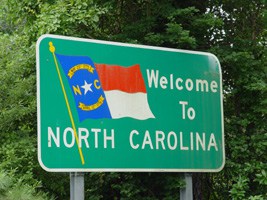
welcomencLast spring, consumers across North Carolina banded together to oppose legislation custom-written by the telecommunications industry to keep municipal broadband networks from competing with cable and telephone companies.  Your efforts made a dramatic impact on state legislators and the bill was set aside.  One representative that helped push it has since resigned after being caught up in a campaign contribution scandal.  But we always knew the industry would be back.  The threat of competition, and a reduction in their fat profits, is too great to ignore.

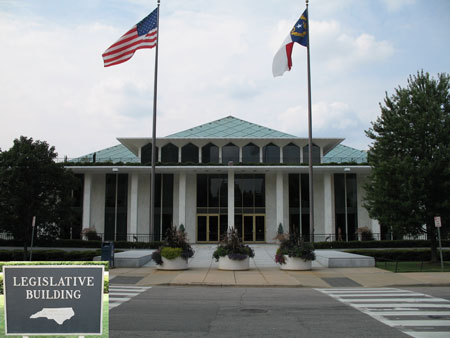
HB1252 – The “Level Playing Field” bill, which is among the most ironically named pieces of state legislation around, will be in the North Carolina House Select Committee on High Speed Internet in Rural and Urban Areas on Monday morning at 10am.  For those of you who might want to attend, the meeting will be held in Room 415 of the Legislative Office Building at the General Assembly in Raleigh.

For those smart enough to recognize a telecom industry power play when they see one, a reality check for our state legislators is imperative.

I have been attempting to be added to the agenda to speak against HB1252 as a consumer.  So far, no call back.

I believe that I have a unique perspective on this issue, as I hail from Greensboro, one of the communities that experienced the attempt by Time Warner Cable to force classic Internet Overcharging schemes like metered billing and data caps on consumers in the Triad region.  These experiments came as a direct result of the large void many of us have in the area of competition.

HB1252 would make it next to impossible for municipalities to have their own city run broadband service to compete.  The city of Wilson made the dream a reality.  What costs a Time Warner Cable customer $180 to bundle cable, telephone, and Internet service together is on offer in Wilson from their municipal system for a mere $99.  That’s nearly half the price.

Wilson’s Greenlight system offers a direct fiber to the home connection to subscribers.  Wilson customers get speeds up to 100Mbps, ten times faster than cable or DSL.  What has Time Warner Cable done in Wilson to compete?  They reportedly cut their prices, particularly for consumers calling to cancel.

HB1252 will help protect Time Warner Cable and other providers in North Carolina from ever having to cut prices and take a profit hit.  By taking away your community’s right to provide service the cable and phone companies refuse to provide, at an affordable price, this piece of legislation assures you of paying more and having less choice.

If you cannot attend Monday’s session, you can still deliver a wakeup call to state legislators by reminding them you are paying close attention to this issue, and know exactly who is behind the push for HB1252.  Tell your representative Time Warner Cable and other telecommunications interests should not be ghost-writing legislation that favors them and protects their monopoly.  Ask your legislators to firmly oppose HB1252 and demand as much competition as the marketplace can stand, be it from phone, cable, wireless, or municipally run fiber to the home.

Here is the list of North Carolina representatives.  We won the first few rounds on behalf of North Carolina consumers.  Time to win one more!
HB1252 Wrap Up

Jay Ovittore August 19, 2009 Community Networks, Public Policy & Gov't Comments Off on HB1252 Wrap Up

nc-leg[Editor’s Note: This past spring, big telecommunications interests in North Carolina tried to pass industry friendly legislation to keep municipal broadband competition out of the marketplace.  For the last several years, this industry has invaded state legislatures with the help of their astroturf front groups to try and pass legislation that puts all of the benefit in their corner and none in yours.  In North Carolina, an industry-written bill to lock out municipal broadband competition was introduced in both houses of the state legislature.  At least one legislator literally handed phone calls off to industry lobbyists when constituents called.

Too often, state politicians end up doing the business of big business, passing bills that hurt communities and people in their own districts, and hope constituents don’t find out what is really going on when anti-consumer legislation gets passed with a wink and a nod. All that’s left to do is cash that generous campaign donation check!

When municipalities in the state are told the duopoly of providers won’t provide a level of service communities need, they dared to build their own. HB1252 would have made that next to impossible. Your direct involvement in calling and writing North Carolina officials to let them know you understood what this anti-consumer legislation represented stopped the special interests in their tracks. You even outmaneuvered astroturf groups like Americans for Prosperity that tried to fool legislators into believing North Carolina citizens supported this terrible bill.

But like in all horror shows, what is left for dead often rises to terrorize the countryside yet again. We’ll be watching and waiting… and we’ll be ready. — Phillip Dampier]

HB1252 has officially been sent to a study committee as part of a huge omnibus study bill, HB945. The North Carolina budget has been passed and signed.

Unfortunately, it will be the Revenue Laws Committee which will control the study, which is run by Senator Hoyle and the rest of the big business boys in the House and Senate. The last version of HB1252 said it would go to study in both the Joint Select Committee on High Speed Internet in Rural Communities and Revenue Law, but it appears that the good ole business boys got their way. Who controls the study often controls the results.

The offensive language in the original bill that would have represented a direct threat to municipal broadband projects will die in study either way, but expect to see it resurface early in the next full session.

Version three of HB1252, A Bill To Be Entitled An Act Authorizing The Joint Select Committee On High Speed Internet In Rural Communities And The Revenue Laws Study Committee To Study Local Government Owned And Operated Services, is available to read here.

Enjoy your summer and prepare for battle in the coming months.

Consumer Victory Achieved in North Carolina: S1004 Gutted In State Senate

Jay Ovittore July 8, 2009 Community Networks, Public Policy & Gov't Comments Off on Consumer Victory Achieved in North Carolina: S1004 Gutted In State Senate

I got word on the heels of tomorrow’s Public Utilities Committee meeting that S1004 has been gutted and changed in the Senate!  So again we can scream Victory!

The low-down on what exactly happened goes something like this:

The North Carolina Senate has a very odd procedural rule that allows it to gut a bill and replace it with a completely different bill.  They can do this as long as the bill number and title remain the same.  In S1004’s case they kept the name and title and are changing the text of the bill to allow Progress Energy to change some of its coal fired plants to natural gas.

Be aware that HB1252 is still the bill we have been fighting and I am tracking it continuously.  We are half way there on defeating big cable’s sleeper hold on competition.  As long as we all keep the fight up, we won’t be saying goodnight to Irene any time soon!

Let’s Play Follow the Money – Part 3

Jay Ovittore June 22, 2009 Community Networks, Public Policy & Gov't 1 Comment

welcomencIn the last two installments I covered the North Carolina legislators that had a hand in HB1252/S1004, legislation that would have severely curtailed municipal broadband projects in this state, and how they were involved in bringing the bills to the floor. I am now going to focus on some powerful, long term state senators, who have a very influential vote on the Senate floor.

R.C. Soles (D-Brunswick, Pender & Columbus Counties) has served for 17 terms. Soles, as he is not a co-sponsor or sponsor, does carry great influence in the Senate and can gather votes. Soles took a lot of money from the cable/telecom industry in 2008, $7500 in total. From Embarq he took $2000, Time Warner $1000, AT&T PAC $4000, and from the Sprint/Nextel PAC he took $500.

Senator Tom Apodaca (R-Buncombe, Henderson and Polk Counties) is a four term senator who also took a bundle of money from the cable/telecom industry in 2008. In total he received $12500 in contributions. Embarq gave $3000, Time Warner $2500, AT&T PAC $4000, Sprint/Nextel PAC $1000, and AT&T Mobility Employees PAC $2000. There was also a suspicious contribution from one “Jasie Barringer.Barringer is listed as a housewife and self employed, but in reality she is more likely the chairman of RH Barringer Beverage Distributors (Anheuser-Busch), which is well known to me as it’s here in Greensboro. They also appear to have used a business address for the contribution, which is illegal in North Carolina. I will be filing a complaint with the State Board of Elections.

Senator Dan Clodfelter (D-Mecklenburg County/City of Charlotte), is the six term senator who sits with with Sen. Hoyle of the Revenue Laws Joint Sub-Committee, where they are trying to direct HB1252/S1004. Clodfelter also took a lot of money from the cable/telecom industry, $10250 in total. Embarq contributed $1500, Time Warner $2250, AT&T $2000, NC Cable PAC $2500, Sprint/Nextel PAC $500, NC Association of Broadcasters $500 and NC Broadcast PAC gave $1000.

There are a few other influential legislators in the House and Senate, but they are a little harder to track because of their positions of power. Speaker of the House, Rep. Joe Hackney and President Pro Tempore of the Senate Marc Basnight hold a considerable amount of power and influence, and receive a lot of money from everyone. This makes it a little harder to track. Basnight received $18500 in contributions from the cable/telecom industry and Speaker Hackney received $21000 in contributions.  While this is a lot of industry money, it’s not out of proportion from what they receive from every industry PAC that contributes to their campaign coffers.

If you have not read the first two installments here at Stop the Cap!, they can be found here and here. I will follow up when the first quarter reports become available for 2009.

It’s important to note that in all three articles, acceptance of political contributions in no way implies criminal activity.  It does imply that money from big donors can create a climate of influence with legislators.  This is the culture of politics, whether it is in North Carolina, Washington, or your local city council. Until we can remove the influence of industry PAC money on elected officials, the lobbies for these industries can continue to have the upper hand on the common citizen and what is good for us, unless we stand up and make our voices heard.

The information gleaned from here in North Carolina underlines this point, and I encourage you to review campaign finance reports to investigate why an elected official would be so insistent on standing against consumer and constituent interests.  Not every legislator that accepts contributions automatically means they will not stand with their constituents.  Many will.  But for those who do not, this can help explain why.  Should you require assistance locating, searching, or investigating the tricks of the campaign finance trade, feel free to contact me.

Search This Site:

Contributions:

Recent Comments:

Your Account:

Stop the Cap!
