Home » dsl service » Recent Articles:

Verizon to Rural America: Voice Link is Coming Soon; Buy a Satellite Dish If You Want Data

fios padlock

Verizon FiOS is off limits to rural customers. Wireless voice and satellite broadband is in your future.

Verizon Communications has big plans for its “miraculous” wireless home phone replacement which will soon find itself in rural homes across Verizon’s service area as part of a larger plan to dismantle rural America’s wired telephone network.

Just as company executives promised more than a year ago, Verizon wants to transition rural customers to fixed wireless phone service that could mean the end of wired broadband for millions of Verizon customers still using DSL.

Verizon senior vice president Tom Maguire told Communications Daily Voice Link is Verizon’s answer for customers it cannot easily transition to fiber optics. He is thrilled about the prospects of getting rid of deteriorating copper networks in favor of an inexpensive wireless alternative.

“I’m super jazzed about this because I think it will be good for everybody,” he said. “I think it’ll change a lot.”

For rural Verizon customers, the changes could be profound, dramatic, and not exactly a win-win scenario:

  • No more wired phone service, which means medical monitoring, many home security systems, and inexpensive dial-up service that all rely on landline technology will be rendered unusable;
  • No more unlimited use DSL service, no business broadband service, no credit card processing or other electronic business transactions that depend on a wired connection;
  • No enforced quality of service standards, rate oversight, or guarantee of access to quality voice service;
  • No prospect of advanced fiber optic FiOS services, including high bandwidth video and broadband.

Verizon is making it clear Fire Island and the New Jersey Barrier Island are just the first steps towards the retirement of copper, either in favor of fiber optics in high profit/low-cost areas or wireless in rural areas not worth upgrading.

Maguire claims Fire Island residents did not want the company to tear up yards or streets to replace its damaged copper wire network with newer technology like fiber. But Fire Island residents and administrators tell Stop the Cap! they were never asked. Instead, residents are being told Voice Link is likely their only option for traditional phone service on the western half of the island, and some customers are unhappy they will never get FiOS broadband upgrades Verizon says are financially untenable to provide.

Verizon has quietly tested Voice Link in Florida, giving customers the option of keeping their wired service or switching to the wireless alternative. But the test may have been stacked in Voice Link’s favor, as the choice was given to voice-only customers having chronic service problems with Verizon’s deteriorating copper wire network.

Going forward, many rural customers may not have a choice. For those who want Internet access, Verizon isn’t promising its wireless network is up to the task. Their suggested alternative?

Verizon's solution for rural broadband.

Verizon’s solution for rural broadband.

Get a satellite dish.

Maguire acknowledged Voice Link customers won’t be able to fax or do certain activities, but he said the telco never pretended they would. Verizon won’t be offering data services with Voice Link, but if Fire Island customers want more options, they can potentially choose satellite, he said.

Maguire believes that customers living with a deteriorating copper landline network will gravitate quickly towards a wireless phone replacement.

Verizon arranged a blind test of Voice Link for 40,000 customers in another company’s territory with unbranded devices. When the copper wire network performed normally, customers preferred the quality of traditional landline service. But after it rained, the poorly maintained network made all the difference.

“The copper sounded like hell, it was noisy and static-y,” Maguire said.

Maguire did not say if Verizon blind tested whether customers preferred traditional landline service, Voice Link, or its fiber optic FiOS network.

Verizon hopes to begin introducing its Voice Link service in other markets as early as June.

Share

Six Months After Sandy, Verizon Abandoning Wired Network in Mantoloking, N.J.

Hurricane-SandySix months after Hurricane Sandy struck the northeastern United States, a significant number of Verizon customers are now learning they will never get their landline service back.

Mantoloking is the first town in New Jersey — but not the last — that will no longer be able to get landline service from the telephone company.

In its place, Verizon offers Voice Link, a home phone replacement that works exclusively over the Verizon Wireless network.

About 30 customers have signed up for the service after being without a home phone for a half a year.

The device looks like a wireless router, with an antenna and several jacks on the back to deliver service over your home’s existing telephone wiring. Instead of connecting with Verizon’s wired network, the unit receives a signal from the nearest Verizon Wireless cell tower to make and receive telephone calls.

Verizon is enticing customers to use this device instead of repairing its damaged network by promising free installation, unlimited nationwide calling and support for 911 and basic phone features like Caller ID and voice mail. For now, the service will not cost any more than a wired landline phone.

For Verizon’s bean counters, Voice Link is an inexpensive alternative to replacing copper wiring with FiOS fiber optic service. Verizon previously announced that maintenance on its aging copper wire network was becoming increasingly expensive.

“It acts just like a regular phone,” Tom Maguire, Verizon’s senior vice president of national operations told the Asbury Park Press. “There’s a dial tone. It has 911 capability, so if you dial 911 the emergency services guys are going to know exactly where you are.”

But members of Verizon’s unions who have had hands-on experience testing Voice Link suggest it isn’t everything Verizon says it is. The International Brotherhood of Electrical Workers’ Local 824 points out Voice Link was not intended to serve just anybody. It will deliver a voice-only service unsuitable for faxing, DSL, or data communications of any kind.

Mantoloking is located on New Jersey's barrier island.

Mantoloking is located on New Jersey’s barrier island.

Stop the Cap! has also heard from Verizon customers directly affected by the forced migration to wireless, and many are unhappy about it.

“This is the death knell for wired broadband in areas bypassed by cable along coastal New Jersey,” shares Dale Smith. “We lost our Verizon landline and DSL service during Sandy and have had nothing but a cell phone for the last six months because Verizon has dragged its feet.”

Smith says a Verizon manager told him the company was “evaluating certain service areas” for an “exciting new wireless product” instead of repairing or replacing the company’s wired network.

“While they were ‘evaluating,’ we were getting no dial tone and huge cell bills from Verizon — good for them, but not for us.”

Smith had a chance to view Voice Link in action and thinks it represents a Verizon wolf in sheep’s clothing.

“It sounds remarkably better than a cell phone, which tells you something about how much effort manufacturers of smartphones spend on voice calling, but that is where the good ends and the problems begin,” Smith said. “The most annoying is no caller ID with name and fairly frequent call delays and failed calls.”

Smith says the Caller ID displays the caller’s number, but not name – a feature he relied on heavily. He found about 30 percent of test calls either took more than 10 seconds to start ringing, or never rang at all.

“Sometimes the calls would time out and other times you would just sit and listen in silence until the phone at the other end finally started ringing,” Smith said.

He also worries about call reliability.

“What happens if you are in a marginal signal area or the cell tower gets overcongested and starts dropping calls, or the power goes out at the cell tower? You can’t use your cell phone either in that case.”

Anne contacted us after complaining to the Federal Communications Commission that Verizon is dumping its reliable landline network for unreliable wireless, and is frustrated the FCC does not seem to understand what is going on in New York and New Jersey.

“The response from the FCC doesn’t even bother to recognize that Verizon isn’t going to fiber service from copper, but is relying on very unreliable wireless,” Anne tells Stop the Cap! “For a vulnerable area such as the barrier island, wireless will likely be useless during a disaster/big emergency, especially where electricity goes out.”

replaceThe FCC’s short response to Anne’s detailed complaint:

If Verizon wishes to replace the copper wiring with fiber it is strictly their business desicion (sic).  – Representative Number : TSR54

“I can’t believe this email is a product of the United States government,” Anne told us. “Why does the FCC exist at all?  It is a complete waste of taxpayer money.”

In addition to filing a complaint with the FCC, Anne has tried to help her elderly mother get her home phone back on the barrier island that was damaged by Hurricane Sandy. As of a week ago, every utility, except Verizon phone service, has been restored.

“Trying to get a straight story from Verizon has been impossible,” Anne said. “What a nightmare.”

The landline network is dead.

The landline network is dead.

Jim Mudd also takes care of his parents who are headed back to the New Jersey coast in an area that still lacks Verizon phone service after Sandy washed away utility infrastructure. New poles have been placed and the power is back, but Verizon is nowhere to be found.

“Our local town officials tell us Verizon was hinting we might end up with Voice Link as well, although nothing formal has been announced,” Mudd writes. “This would be a major problem for us, because Voice Link will not work with our home alarm system or my parents’ medical monitoring service.”

Mudd says Verizon confirmed to him that data services of any kind, including faxing or credit card processing is not possible with the first version of the service, although Verizon said it was exploring better options in the future.

“After waiting a half a year for Verizon to restore my home phone, I hope they pardon me for not waiting around for them,” Mudd said. “We signed up with Comcast the moment they got service back, but they know they have a working monopoly here now, especially with Verizon signaling it wants to pull out of anything that is not wireless.”

“What annoys me is Verizon wanted rate increases back in the 1990s and on to pay for upgrading their network and replace it with fiber,” Mudd adds. “We paid those surcharges or higher rates like everyone else and we are going to get nothing to show for it. Don’t replace the copper, but don’t abandon us with wireless either. We paid for something better: fiber.”

http://www.phillipdampier.com/video/Asbury Press Following-Sandy-destruction-Verizon-switches-all-wireless-service 5-2-13.flv

Verizon’s Tom Maguire demonstrates the company’s Voice Link landline replacement, courtesy of the Asbury Park Press.  (1 minute)

Share

Verizon’s Long Term Plan to Abandon Wired Landlines/Broadband in Non-FiOS Areas Begins

Verizon CEO telegraphed his plans to dump rural landline service last summer.

Verizon CEO Lowell McAdam telegraphed his plans to dump rural landline service last summer.

You should believe Verizon Communications CEO Lowell McAdam when he says he intends to end wired telephone and broadband service for areas that are simply not economically feasible for fiber upgrades. McAdam’s grand plan is now coming true for customers in parts of Florida and on Fire Island, N.Y.

Last summer, Stop the Cap! covered McAdam’s comments to Wall Street investors (that are always the first to know) at the Guggenheim Securities Symposium:

“In [...] areas that are more rural and more sparsely populated, we have got [a wireless 4G] LTE build that will handle all of those services and so we are going to cut the copper off there,” McAdam said. “We are going to do it over wireless. So I am going to be really shrinking the amount of copper we have out there and then I can focus the investment on that to improve the performance of it.”

The writing is already on the wall:

  1. Verizon has been penalized and criticized in several states by public utility commissions for the ongoing degradation of its copper network. Verizon sees further investment in copper technology as throwing good money after bad, but spending millions on additional fiber upgrades isn’t appealing either. The result is deteriorating service. From downtown Manhattan to New Jersey to Maryland, D.C. and Virginia, Verizon’s service failures have left customers frustrated and sometimes waiting weeks or months for repair crews to turn up to restore basic phone service. Even more dangerous, Verizon was to blame for significant 911 network failures near the nation’s capital. Post Sandy, there are still sections of lower Manhattan without phone service nearly five months after the storm struck. Five months.
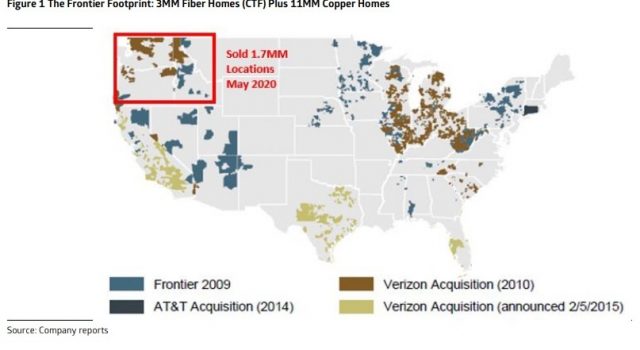
  2. Verizon sold off telephone service in northern New England several years ago to FairPoint Communications, knowing full well Verizon never had an interest in upgrading any part of Vermont, New Hampshire or Maine to fiber service. In many smaller former GTE telephone areas too small to successfully argue a case for return on investment, Verizon decided selling those territories off was the best option. Hawaiian Telcom and Frontier Communications now own many of those former-Verizon territories.
  3. Verizon has decreased marketing its wired DSL service and stopped selling it altogether to customers who want broadband-only service. That seems counter-intuitive for a company that recognizes future revenue possibilities come primarily from broadband and data services.

Traditionally, customers reporting trouble on a phone line get a visit from Verizon technicians who track the problem down and repair it. But Verizon no longer wants to spend money fixing copper wire-related problems. Customers reporting chronic phone static or outages are now being asked to abandon their traditional landline service instead:

The end of an era.

The end of an era.

Customers who live in Florida currently have a choice. During the trial, they can switch to Voice Link or keep their current landline service. On Fire Island, just south of Long Island, customers will not have that choice. Verizon is testing the will of New York regulators asked to allow the company to gradually abandon landline and wired Internet facilities on the island. Customers previously knocked out by Hurricane Sandy have no alternative — switch to a wireless option like Voice Link or lose  telephone service. As the network degrades further on the island, it is a safe bet more Fire Island residents will find themselves confronted with a wireless future courtesy of Voice Link.

Verizon is careful to note its Voice Link service comes at no additional cost to customers — their phone bills will remain the same, at least for now. But the transition includes several important caveats:

  1. Voice Link is not subject to state or federal oversight or quality of service consumer protection laws that apply to traditional landline service;
  2. The customer is responsible for providing an indoor space to mount the equipment (hardly unobtrusive, the receiver is eight inches tall) and provide electric power and AA batteries for battery backup;
  3. Voice Link does not work with any data services including broadband or dial-up Internet, faxing, medical monitoring, alarm systems, etc. You will be pitched an expensive Verizon Wireless data plan if you want Internet access;
  4. During recent severe storms, copper landline networks often continued to work but cell phone service failed over wide areas because of call congestion and  long-term power outages. Similar failures will leave Voice Link non-operational;
  5. Voice Link customers lose DSL service and may have little chance of getting it back once they switch.

Verizon’s solution for Fire Island represents the long-term vision of McAdam coming to fruition. Complaining customers have not been able to persuade the company to abandon its plan, but New York State regulators might, if the issue gets enough attention.

In states with less aggressive regulators, Verizon could implement its Fire Island strategy nearly at-will, especially in rural service areas. Verizon’s plan differs little from that of AT&T, another major service provider seeking permission from regulators to abandon rural landline networks. AT&T is betting the Federal Communications Commission will approve AT&T’s “network transition plan” for all of its rural customers. Verizon is starting smaller, gradually implementing its transition under the radar of many state and federal officials.

AT&T wants to wind down its own rural landline network.

AT&T wants to wind down its own rural landline network.

So why adopt Voice Link — a wireless solution, when copper wire network repairs remain a viable option?

The reasons are simple:

  1. Voice Link is cheaper to run and maintain as a wireless service and uses existing Verizon Wireless cell towers;
  2. Verizon can further cut their unionized workforce that maintains the company’s landline network;
  3. Wireless products escape regulatory oversight;
  4. The company can push customers to wireless data products that cost far more than wired DSL broadband service;
  5. Verizon doesn’t have to upgrade the rest of their network to fiber.

Customers in Verizon service areas should appeal to regulators and their elected officials to stop the abandonment of wired infrastructure. Verizon argues maintaining its network doesn’t make sense when customers are fleeing their landlines. But rural customers are not disconnecting broadband service that travels across the same network. Even basic DSL is coveted in rural Verizon territories where Internet access remains unavailable. Just about everyone wants the option of FiOS fiber, perhaps the most coveted network upgrade around until Google announced its gigabit fiber project in Kansas City.

Nobody wants Verizon or AT&T to keep up its copper wire facilities indefinitely. But a better solution would be a regulatory mandate that requires Verizon and AT&T to gradually replace antiquated and failing copper infrastructure with fiber wherever possible. It is more than possible to do this on Fire Island. Verizon’s service area in Florida is hardly rural either. Verizon Florida (formerly GTE Telephone) serves Tampa-St. Petersburg east to Lake Wales, a major metropolitan region in central Florida.

What is best for shareholders should not be the final determining factor for an important utility service. If customers prefer the option of Voice Link for home phone service, there is nothing wrong with that. But wireless service as the only option customers have for broadband service? Not at Verizon Wireless’ prices.

Share

AT&T Savings: 30GB Wireless Data – Old Price $30, New Price $300 (A 900% Increase)

walletAT&T has new wireless data plans you can’t afford.

Saving money takes a back seat to AT&T’s newest supersized Mobile Share data packages reported by The Verge. AT&T’s goal of monetizing data usage for their most ravenous wireless data users means a 900 percent price hike from the days of the company’s $30 unlimited data plan. Here are the newest plans:

  • 30GB data usage = $300 a month
  • 40GB data usage = $400 a month
  • 50GB data usage = $500 a month

Unlimited texting and talking are included in these prices, but the individual device fees for each smartphone, tablet, or wireless modem are not.

AT&T’s pricing is relevant to rural customers who face an imminent threat of losing landline phone and broadband service should the phone company win the right to abandon its copper wire network in favor of wireless-only service. A family watching Netflix consuming 45GB of usage on AT&T’s DSL service pay as little as $15 a month for broadband. With AT&T’s wireless Internet service, that same family will spend a prohibitive $500 a month.

Share

He’s Back: Dr. John Malone’s Liberty Media Buying 27.3% of Charter Cable

Phillip Dampier March 19, 2013 Charter, Competition, Consumer News, Rural Broadband No Comments

charter-communicationsDr. John Malone’s Liberty Media will buy a 27.3 percent interest in Charter Communications with a $2.62 billion investment in America’s fourth largest cable operator.

Liberty will buy the stake from investment firms Apollo Management, Crestview Partners, and Oaktree Capital Management.

“We are pleased with Charter’s market position and growth opportunities and believe that the company’s investments in its high-capacity digital network which provides digital HD and on demand television, high-speed data and voice, will benefit its customers and shareholders alike,” Malone said in a statement.

Malone is no stranger to the cable industry, having been at the helm of Tele-Communications, Inc. (TCI), the largest cable operator in the country in the 1980s and 1990s. TCI systems were sold to AT&T in 1999, which eventually spun them off to Comcast and Charter Communications, which still run them today.

Dr. John Malone

Dr. John Malone

Since Malone’s exit at TCI, he has been in charge of Liberty Global, which owns cable systems overseas and controls several U.S. cable programming interests through his Liberty Media operation. The investment in Charter represents Malone’s return to an American cable industry he helped pioneer.

The agreement requires Liberty to acquire no more than 35 percent of Charter until January 2016, at which point Liberty’s maximum allowable controlling interest rises to 39.99 percent. Liberty also wins four seats on Charter’s board of directors. But many industry analysts predict Malone will not be satisfied with anything less than eventual full control.

Malone often takes an initial minority interest in the companies he later intends to acquire outright. Macquarie analyst Amy Yong told Reuters he employed a similar tactic to gain control of SiriusXM, the satellite radio company.

“He’s probably going to have a pretty big say in the company’s future over the next few years. This will accelerate capital returns and take advantage of Charter’s tax assets to consolidate the cable industry some more,” Yong said.

Malone is attracted to investment opportunities in companies with high marketplace leverage opportunities and exploiting potential revenue from captive customers in the rural, less-competitive markets Charter has traditionally favored.

Here today, gone tomorrow.

Here today, gone tomorrow: Bresnan Communications that was Optimum is now Charter Cable.

Malone also has a strong philosophy towards marketplace consolidation, something ongoing in the cable industry, particularly among smaller cable operators serving less-populated areas.

Under the leadership of ex-Cablevision executive Thomas Rutledge, Charter Communications recently acquired the interests of Cablevision West — former Bresnan Cable systems in the mountain west. Malone sees considerable opportunities expanding operations in smaller communities that have either received substandard cable service, or none at all.

Malone has recently been stockpiling available cash for investments, spinning off his former cable programming properties Starz, a premium cable channel, Discovery Communications, which runs the Discovery Networks, and Liberty Interactive, which owns the lucrative home shopping channel QVC.

Charter Communications has had a difficult history. Microsoft co-founder Paul Allen bought a controlling interest in the cable operator in the late 1990s, primarily because he saw cable broadband as a natural fit for his vision of a future wired America. Allen’s weighty investment was used to jump into a cable industry consolidation frenzy still underway more than a decade ago. Cable operators claimed consolidation was necessary to increase efficiency by building up regional clusters of cable systems. Before consolidation, it was not unusual for two or three different cable operators to serve customers in separate parts of a metropolitan area. Often one operator would serve the city with one or two other cable companies offering service in suburban and exurban communities nearby.

In 1999 alone, under Allen’s leadership, Charter Cable acquired 10 cable companies.

bankruptBy 2005, Charter Cable had amassed millions of new subscribers, but not as many as company executives claimed when they artificially inflated subscriber numbers to protect the value of the company’s stock. Four executives were indicted that year for criminal accounting fraud. By 2009, with $22 billion in debt, the company declared bankruptcy, eventually wiping out shareholders.

The court’s decision to forgive 40 percent of the company’s debt angered creditors but opened an opportunity for private equity firm Apollo Capital Management to gain control by ending up with the majority of shares in the restructured company.

For years, the company has continued to receive some of the worst customer satisfaction ratings in the industry, usually ranking at or near the bottom. But many Charter customers stay because there is little competition from other players, especially telephone companies. AT&T’s U-verse is the most likely triple-play competitor, but AT&T has avoided introducing U-verse in many of Charter’s service areas because they are deemed too small.

Malone sees Charter’s future revenue potential grow as a broadband provider, considered both a money-maker and must-have service. Analysts say that Charter is well-positioned to poach more customers from phone companies, which typically only offer slow DSL service in much of Charter’s rural footprint.

Gore: Malone is the Darth Vader of cable.

Gore: Malone is the Darth Vader of cable.

But customers may find with Malone’s involvement, that service may come at a price. Malone was criticized heavily in the 1980s and 1990s for leading the charge for customer rate increases. TCI’s captive customers in Tennessee found their cable bills increased between 71-116 percent in just three years during the 1980s.

Former Sen. Al Gore, Jr., at the time called Malone the head of a “Cable Cosa Nostra” and the Darth Vader of big cable. The cable executive was a frequent target of lawmakers flooded with constituent complaints about poor cable service and accelerating prices.

In 1999, The Guardian noted Malone was an admirer of telecom oligopolies:

He is scathing about regulatory attempts to prevent monopolies and mergers. Governments, he says, are “antediluvian” in their approach to the emerging new world economic order. Instead of trying to prevent mergers and collusion between media and communications companies, Malone says governments should actually promote the creation of “super-corporations” (such as his own) with enough capital to exploit the potential of new technology.

That attitude may soon be back in play with the cable industry’s increasing focus on expanding broadband service as their new primary revenue generator.

Share

The National Farmers Union Gets Snookered by AT&T’s Lobbying Crew

United to grow AT&T's revenue at the expense of rural America.

United to grow AT&T’s revenue at the expense of rural America.

The National Farmers Union has a long tradition of protecting rural farmers and defending the rural economy, but has been completely taken in by AT&T’s proposal to abandon rural wired service.

In addition to AT&T appearing in fine print as a sponsor of the National Farmers Union’s 111th Anniversary Convention, the phone company won prominent placement at the group’s annual convention to deliver a speech about AT&T’s lobbying agenda on rural broadband courtesy of Ramona Carlow, AT&T’s vice president of public policy.

AT&T sends its lobbying forces to rural agriculture events with scare stories about impending wireless shortages and doom if the Federal Communications Commission does not hand over more spectrum. In an interview with Beth Canuteson, AT&T regional vice president of external affairs, she tells Brownfield – Ag News for America AT&T will run out of spectrum in seven years. (June 26, 2012) (6 minutes)
You must remain on this page to hear the clip, or you can download the clip and listen later.

The National Farmers Union joined several other rural farm groups in comments (never mentioned on the organization’s website) to the Federal Communications Commission applauding AT&T’s plan to abandon its rural “TDM” landline network:

The United States is poised for a historic transition in communications. Completing the transformation from legacy TDM-based network technology designed in the 20th century to the all-IP networks of the 21st century will allow every computer, laptop, smartphone, machine and tablet to communicate with each another and work seamlessly around the clock. These devices, connected with each other and with a host of other machines ranging from cars to thermostats via these IP-enabled networks, are changing almost every aspect of our lives in areas well beyond traditional communications. If the FCC grants AT&T’s Petition, the full build out of 21st century IP-based networks can being to spur growth, create jobs, and stimulate new opportunity across America, but especially in rural communities that are often handicapped by distance and other opportunity-limiting barriers.

chart_momentum

AT&T has the money to upgrade its rural wireline networks.

Unfortunately for the rural farm members of the National Farmers Union, the future proposed by AT&T isn’t as rosy as the NFU would have you believe:

  1. AT&T has neglected its rural landline network for years. Whether the technology is wired or wireless, the bean counters at AT&T are clear: there is no Return on Investment formula that works for the company at the current low prices charged for traditional rural landline and DSL service. AT&T has poured billions into a half-measure upgrade, a fiber-copper wire compromise called U-verse, but only in urban areas where it can justify that  investment to hungry shareholders. AT&T has no plans to deploy U-verse in rural areas. Instead, Wall Street’s economic expectation is that fixed wireless is the best solution for rural areas, because it delivers dramatically higher prices that accelerate return on investment and future enhanced earnings;
  2. AT&T continues to be America’s lowest-rated wireless carrier — worst for dropped calls and worst for customer service. If you live in a rural area, you already know what AT&T wireless cell service is like. Do you want to depend on that network for all of your telecommunications needs, including emergency calls to 911?
  3. AT&T’s DSL service starts at $15 a month on commonly available pricing promotions and has a barely enforced usage cap of 150GB a month. AT&T’s wireless smartphone plans start at $20 a month with a usage cap of 200MB a month. A 5GB plan costs $50 a month. On AT&T’s heavily marketed Family Share plan, 1GB of usage costs $40 a month. A typical broadband customer using between 15-20GB a month, now considered the national average, would pay $15 a month for AT&T’s DSL or $200 a month on AT&T’s wireless network, based on a plan designed to avoid overlimit fees;¹
  4. AT&T’s plan also includes fringe benefits for itself: a transition to technology not subject to consumer protection and oversight laws, rate regulation, quality of service guarantees, and “carrier of last resort” obligations. In short, it means AT&T is not responsible if your wireless reception is unsuitable for voice or data use.
chart_cash_generation

AT&T’s cash on hand. Q.: Where will they spend it, on their networks or on their shareholders? A.: ”AT&T generated best-ever cash from operations and free cash flow in 2012, which let us return a record $23 billion in cash to shareholders, including dividends and share buybacks.” — AT&T 2012 Annual Report.

The National Farmers Union needs to consider whether AT&T’s proposal meets the terms the organization lays out in its own policy statement on rural telecommunications:

We support:

a) Efforts to ensure competitively priced, high-speed broadband access to the Internet for rural America, which should remain free of censorship and not interfere with other frequencies;

b) Collaborative efforts and public/private initiatives that leverage internet-based technology and use the internet to improve communications, reduce costs, increase access and grow farm business for producers and their cooperatives; and

c) Legislative action and efforts by the administration to encourage robust broadband and wireless deployment in rural America to drive economic development, better serve farmers and ranchers and to prevent a digital divide between rural and urban citizens.

The answer to the previous question.

Strong earnings growth.

Let’s consider how AT&T will manage with these tests:

  • Wireless competition in rural America exists even less than in urban America. For most, there are one or two choices, typically AT&T and Verizon Wireless, which charge nearly identical, expensive prices;
  • AT&T and its various front groups like the American Legislative Exchange Council (ALEC) lobby state lawmakers to prohibit public initiatives that would enhance rural broadband, particularly community-owned broadband networks. Advocating for AT&T’s imposed rural solution is a far cry from the NFU’s past. In 1934, President Franklin D. Roosevelt requested the group lead the charge for rural utilities cooperatives, owned and operated by the communities they served. In 2013, the group seems satisfied with whatever scraps AT&T is willing to throw the way of rural America;
  • A digital divide can exist in many ways. The NFU proposes to cut the digital divide by introducing a pricing divide. Can most rural Americans afford $200 a month for AT&T’s wireless service, assuming they can get a good signal? AT&T returned $23 billion in excess cash to shareholders in 2o12². Imagine what half of that would offer rural America if the company chose to upgrade its existing landline network for the same 21st century service it proposes to offer urban customers.

¹-AT&T’s Mobile Share with Unlimited Talk & Text 20GB package, not including a $30 additional device fee for each smartphone on the account.

²- AT&T Annual Report 2012.

Share

Call to Action Continues in Georgia: Here’s a Sample E-Mail You Can Use

georgiaStop the Cap! has developed a sample e-mail message Georgia residents can use to petition the state legislature to vote NO on H.B. 282, the latest Big Telecom corporate welfare bill to kill competition from publicly-owned broadband networks. With thanks to Mark Creekmore, one of many rural Georgians suffering with DSL “service” from Windstream Communications, we have jointly created this letter to illustrate the folly of this bad bill. We may need to send this to members of the state Senate as well.

We realize many of you are served by AT&T, Comcast, or other rural providers, so this letter should be tailored to include the horror stories that you have experienced with your own provider. Make sure you change the relevant sections, including references to your local town’s provider (things that should be changed in your letter are highlighted in blue below) before sending your e-mail to House members today:

Dear Rep. -or- Sen.  [insert name]

I am writing to tell you that I do not support H.B. 282 — the Broadband Municipalities Act, and neither should you.

This proposed legislation is a solution in search of a problem. No community I know of gets interested in entering the broadband business on a whim. But when you live in a rural area served by a single provider that delivers poor service, as I do, it becomes understandable why some communities seek a public broadband solution as a last resort.

At its core, this is a bill designed to protect the broadband status quo at the cost of Georgia’s economic development and its citizens’ need for quality broadband service.

[Share several sentences here detailing the problems you have with your provider.]

Georgia has a long way to go to meet the broadband speeds available in cities like Chattanooga, Tenn. That city’s municipal power company offers 1,000Mbps service to residents that cannot buy those speeds from any other provider. That has attracted companies in this state to move to get the kind of service they just cannot get from our providers. Comcast and AT&T are hardly going out of business in Chattanooga and actually claim to welcome the competition. But things are much worse here in rural Georgia, where just getting 12Mbps service is a real challenge. That is because the local phone company has oversold its network and is too crowded, slowing speeds to a crawl. I’d welcome competition even more, but there just isn’t any.

Consider this: While Dawsonville suffers with Windstream’s oversubscribed DSL service as our only practical option, Thomasville residents can get 22Mbps of service over a fiber to the home network owned by the local community. Rose.net is hardly a financial failure either. It has been so successful, the city eliminated the local property tax. If you pass H.B. 282, Dawsonville will never have a chance, because no other provider is interested in serving us and the local community will never be able to because Windstream arguably already does.

If you believe H.B. 282 will stimulate rural broadband investment, you need to read Windstream CEO Jeff Gardner’s own statements during a February 2013 conference call to investors. He noted Windstream plans to cut capital expenses and investments this year and even more the next, including those made right here in Georgia. Gardner noted that Windstream’s rural customers are largely captive with no competitive alternatives, making extra investment unnecessary. That means we have to live with the service we are lucky enough to get at the high prices we are forced to pay. In effect, we are told to live with what we have or go without. This is an embarrassment to our state which boasts of its high-tech communications capability and is home to several major data centers.

The bill’s logic is also lacking. Private telecom companies enjoy the benefits of state taxpayer dollars in several ways, ranging from access to public rights of way to receiving federal stimulus dollars to incentivize rural broadband expansion. To date, Windstream’s only help for Georgia seems to be wiring 250 homes in Blue Ridge. If local communities decide they need a better broadband solution, allowing out-of-state corporations like Windstream to tie their hands and dictate terms is an outrage. We have been here before in the last century when giant electric utilities refused to provide adequate service in rural Georgia, so those communities managed it themselves with municipal utilities.

It is clear to me, despite a few inadequate revisions to the bill since its introduction, H.B. 282 is a disaster for Georgia’s telecommunications future. It is little more than protectionism for incumbent providers who will continue to treat rural Georgians like second class citizens, delivering service that falls far below what was advertised, yet costing the same as big city folks pay. If my community decides it is essential for our future to do better than what Windstream is willing to offer, making the town work through an expensive qualification process analyzing census blocks is nothing more than a deterrent to keep them from even trying.

With all the problems we face in Georgia today, spending time protecting Windstream from competition is not on my list and it certainly should not be on yours.

I respectfully ask you reject H.B. 282 in full, regardless of current or future revisions. The next time a telecommunications company comes by your office to lobby you on bills like this, let them know the best way they can protect themselves from municipal broadband is to deliver the good service Georgians deserve at a fair price. If they manage that, there would be no demand to build these alternative networks in the first place.

I look forward to hearing your views on this critical matter to me.

Respectfully,

// signature

Share

Time Warner Cable’s $5.26 Million Grant from NY Taxpayers Ruins Their Rhetoric

corporate-welfare-piggy-bank

Time Warner Cable objects to publicly-owned broadband networks because they represent “unfair” publicly-funded “competition,” despite the fact TWC is also on the public dole.

The next time a cable operator or phone company claims community-owned broadband providers deliver unfair competition because they are government-funded, remind them that quite often that phone or cable company also happens to be on the public dole.

Take Time Warner Cable, which this week won a $5,266,979 grant courtesy of New York State taxpayers to extend their cable system to 4,114 homes in rural parts of upstate New York just outside of the cable company’s current service areas. That equals $1,280.26 in state tax dollars per household. For that public investment, Time Warner will reap private profits for shareholders from selling broadband, cable-TV, phone, and home security services to its newest customers indefinitely.

Now unlike some of my conservative friends, I am not opposed to the state spending money to wire rural New York. It is obvious cable and phone companies will simply never wire these areas on their own so long as Return on Investment conditions fail in these places. What does annoy me are the endless arguments we hear in opposition to public broadband from these same companies, claiming with a straight face that community-owned networks represent “unfair competition” because they are publicly funded. Time Warner Cable is no stranger to public taxpayer benefits itself, having won millions in tax abatements and credits in North Carolina, Ohio and a cool $5 million courtesy of Mr. and Mrs. N.Y. Taxpayer.

Many of the nation’s private telecommunications companies have plenty of love for federal, state, and local officials who have passed favorable tax laws and policies at their behest:

So let us end the silly rhetoric about public vs. private broadband being a question of fairness. This is really a question about who controls your broadband future,  your community or big telecom corporations.

In states like Georgia, elected politicians like Rep. Mark Hamilton want those decisions made by Comcast (Pennsylvania), Windstream (Arkansas) and AT&T (Texas). His bill would make it next to impossible for a local community to do anything but beg and plead the phone company to deliver something, anything that resembles broadband service. For a good part of rural Georgia (and elsewhere), the answer has always been a resounding “no,” at least until the federal government steps up and kicks in your money to help defray the costs of extending Windstream or AT&T’s sub par DSL service that slows to a crawl once the kids are out of school.

Windstream waited for the federal government to kick in $7.28 million in taxpayer dollars before it would agree to extend its DSL service to customers in its own home state of Arkansas.

Windstream waited for the federal government to kick in $7.28 million in taxpayer dollars before it would agree to extend its DSL service to rural customers in its own home state of Arkansas.

You have to wonder about the Republicans in Georgia these days who used to fight for local and state control over almost everything. It should be instinctive for any conservative to want out-of-state pointyheads out of their business, but Rep. Mark Hamilton, himself a business owner, seems content forfeiting those rights to companies headquartered hundreds of miles away. If it was the federal government telling Georgia what kind of broadband service it deserves, do you think Mr. Hamilton would be so amenable? Unfortunately, should Hamilton have his way, for the foreseeable future, residents and business owners in Gray, Sparta, or Eatonton to count just a few will have broadband just the way the state’s phone companies want it — super slow DSL, dial-up or satellite fraudband.

Share

New York Grants $25 Million for Broadband Expansion, Mostly for Last-Mile Projects

nysbroadbandofficeNew York Governor Andrew M. Cuomo announced this week New York State will award $25 million in funding to expand high-speed Internet access in rural upstate and underserved urban areas of New York through the Connect NY Broadband Grant Program. This award brings the total amount of funding awarded for broadband projects during Governor Cuomo’s administration to more than $56 million, the largest statewide broadband funding commitment in the nation.

Unlike many broadband grant programs, New York is primarily targeting last-mile projects that make all the difference for New Yorkers that cannot get broadband service at any price. The federal government and some states have focused instead on funding institutional or “middle-mile” networks that ordinary consumers and businesses cannot access. The Connect NY Broadband Project specifically sought projects that will get residents broadband service as quickly as possible.

Pat Pryor is chair of the Tompkins County Legislature’s Special Committee on Broadband, which is fighting for better service in the Southern Tier of New York. Pryor says the grant will make a real difference because Verizon and Time Warner Cable have refused to expand service where they consider it unprofitable. She told the Innovation Trail the funding will help a wireless ISP in her county that specializes in serving rural areas bypassed by cable and DSL.  (1 minute)
You must remain on this page to hear the clip, or you can download the clip and listen later.

“Through the Connect NY program, we are bringing high-speed Internet access to all corners of New York State,” Cuomo said. “The projects receiving these grants represent the very best proposals with the most potential to benefit statewide economic and community development efforts. These funds will strengthen New York’s broadband capacity and encourage sustainable adoption of broadband service in unserved and underserved communities, counties and regions across the state.”

Cuomo

Cuomo

Altogether, about 6,000 square miles of new infrastructure will offer high-speed Internet service to 153,000 New York households, 8,000 businesses, and 400 community anchor institutions – many without any means to access the Internet. The projects will also create 1,400 new jobs.

The funding comes as a relief to New York residents who have gone without service for years, denied access to earlier grants in part because incumbent providers inaccurately claimed, through national broadband maps, they already offered full broadband coverage in many New York counties that actually don’t have service.

Tompkins County is a case in point. Verizon and Time Warner Cable, the dominant providers, volunteered incorrectly that almost the entire county was well-served with broadband. That proved frustrating to county legislator Pat Pryor.

“It matters, because a lot of times [the maps are] what grant funding is predicated on,” Pryor told the Innovation Trail. “[Funders say] If you don’t have any unserved areas, why would you need a grant? We’re almost 100 percent covered, why would we need any money?”

Claire Perez has spent more than a year fighting for broadband for her neighborhood in West Dryden, which is just over 1/2-mile from the nearest Time Warner Cable customer. She talked with the Innovation Trail last March about her plight. Despite endless rounds of petitioning the cable operator to extend service, the company would only quote “go-away” prices ranging from $23,000-54,000 to wire her neighborhood and home. Perez, and others like her, may be among the biggest beneficiaries of the broadband expansion program if they are near a Time Warner Cable service area. (3 minutes)
You must remain on this page to hear the clip, or you can download the clip and listen later.

The specifics:

$24,010 The Smithville Project
This project with Haefele TV Inc. will serve the Southern Tier region. The Smithville project will build fiber optic cable utilizing existing infrastructure. The network will pass 350 homes and provide broadband service with speeds of 7 Mbps download and 1.5 Mbps upload to approximately 100 new subscribers.

$114,015 Ovid and Romulus Broadband Project
This project with Trumansburg Telephone Company will serve the Finger Lakes region. The Ovid and Romulus Broadband Project will provide broadband to unserved areas in company territory in the towns of Ovid and Romulus. This project will enable 110 customers in this area that have no availability to any type of broadband services to obtain high-speed Internet service. The project will also offer discounts on subscription fees, free training and email addresses.

$200,000 Connect Thurman White Space Project
This project with Warren County Economic Development Corporation will serve the Capital District region. Through a public/private partnership, the Thurman White Space project will provide broadband access to 89 households in the northeast area of the Town of Thurman. The Town of Thurman will also offer economically disadvantaged residents access to public computers and enhanced digital literacy training.

$557,000 Essex County Broadband Service Expansion
This project will serve the North Country region. The Essex County Broadband Service Expansion project will provide high-speed broadband service to households that do not have access within the Towns of Jay and Wilmington, passing 1,900 households. The project will also provide digital video services and potentially a competitive telephone service.

$558,940 Otsego County Wireless Network
This project with the County of Otsego IDA will serve the Mohawk Valley region. The Otsego County Wireless Network will partner with a last-mile provider to leverage a county-wide, open access fiber backbone to deploy last-mile, wireless broadband to 24 towns, 9 villages and 1 city in Otsego County, serving approximately 28,000 households, 4,500 businesses and 300 community anchor institution locations. The wireless network will also be made available to any viable organization or service provider that wishes to use it.

$572,000 Hamilton and Herkimer Counties Broadband
The Broadband 1 project with Newport Telephone Company is a multi-region project serving the North Country and Mohawk Valley regions. The project will leverage existing infrastructure to provide broadband service to 230 residents, businesses and community anchor institutions in Hamilton and Herkimer Counties. The project will also enhance emergency services for both counties.

$672,452 Southern Tier Broadband
This project with the Southern Tier West Development Foundation will serve the Western region. The project will expand access to broadband service and increase broadband speeds through a WiMAX (Worldwide Interoperability for Microwave Access) system to towns and villages in the counties of Chautauqua, Allegany, Cattaraugus, and Erie County, passing more than 41,000 households. The project will also partner with local medical clinics to enhance electronic medical records and upgrade hardware and software at libraries in Chautauqua, Cattaraugus, Allegany, Steuben, and Chemung Counties.

$800,000 Allegany County Broadband
This project with Allegany County will serve the Western New York region. The Allegany County Broadband project will create a county-wide platform for providing access to an existing network, delivering broadband to 28 local communities and 17,440 households in Allegany County that are currently without broadband service.

$976,426 Lyon Mountain Broadband
This project with Slic Network Solutions will serve the North Country region. The Lyon Mountain Broadband Project will provide high-speed, low-cost broadband service in the Community of Lyon Mountain to 527 households, utilizing fiber-to-the-home technology. In addition this network will also deliver telephone service, IPTV service, and advance business services over the fiber.

$1,012,366 Bellmont North Next Generation Broadband
This project with Slic Network Solutions will serve the North Country region. The Bellmont North Next Generation Broadband project will provide high-speed, low-cost broadband service in the Adirondack Park to the northern end of the Town of Bellmont. This service will be delivered utilizing 25.3 miles of fiber to the home and wireless technology to connect 124 households. The network will also allow for the delivery of telephone service, IPTV service, and advance business services over the fiber.

$1,636,346 Connect NYC
This project with the New York City Economic Development Corporation will serve the New York City region. By conducting a competition to fund fiber build out to small and medium businesses and in collaboration with private sector Internet Service Providers, the Connect NYC Project will be used to extend the fiber infrastructure available to commercial and industrial businesses in New York City.

$1,800,000 MTC Broadband Buildout
The MARK Project Inc. will serve municipalities in the Capital District, Mohawk Valley and the Southern Tier. The project will deliver telecommunications services, including broadband, voice and video services, to 900 residents, businesses, and anchor institutions within the unserved areas of the towns of Conesville, Gilboa, Halcott, Middletown, and Roxbury. The project will also offer broadband connectivity to community anchor institutions within the service area free of charge.

$1,999,584 Parish Broadband
This project with New Visions Communications will serve the Central New York region. The project will utilize existing infrastructure to provide high-speed internet, VoIP and cable television to the Town of Parish, where 72% of the population does not have access to broadband, VoIP or landline cable television. The project will also create 20 construction jobs and 6 permanent jobs.

$2,042,177 Connecting the Capital Region
Hudson Valley Wireless will provide high-speed fixed wireless broadband access to nearly 40,000 households and 2,000 businesses that currently do not have access in Washington and Rensselaer Counties. In addition, the network will enhance public safety operations in the region by enabling redundancy of public safety communications and by allowing municipalities to use a portion of the bandwidth at no cost.

$2,162,656 Schroon Lake Next Generation Broadband
This project with Slic Network Solutions will serve the North Country region. Slic Networks Solutions will provide high-speed, low-cost broadband service to 457 households in the unserved areas of the Town of Schroon and the Town of North Hudson. This service will be delivered utilizing fiber to the home technology. Slic will also provide wireless hot spots for frequently visited public locations including the public beach in Schroon Lake.

$2,216,000 Tompkins and Cayuga Counties Last Mile Coverage
This project with Clarity Connect Inc. is a multi-region project serving the Central New York and Southern Tier regions. This project leverages existing tower infrastructure to provide broadband services to the unserved portions of the Towns of Ulysses, Enfield, Newfield, Danby, Groton, Lansing, Ledyard, Genoa, Venice, Scipio, Niles, Sempronius, and Summerhill in Cayuga and Tompkins County. The project will also upgrade DSL services increasing existing speeds.

$2,407,049 Yates County Open Access Fiber Network
This project with Yates County will serve the Finger Lakes region. The Open Access Fiber Network will build and operate a fiber-optic ring with spurs to remote areas within the County of Yates. This network will serve as a backbone foundation for the development of community-based broadband initiatives. The open access fiber network will be 68 miles long, passing 10,400 households and available for use within each town it routes through.

$5,266,979 Statewide Broadband Expansion
The Statewide Broadband Expansion Project is a statewide project serving 9 regions. Time Warner Cable will deploy robust high-speed Internet service to 4,114 households in the Capital, Central, Finger Lakes, Mid-Hudson, Mohawk Valley, NYC, North Country, Southern Tier and Western regions of New York State. The project will also provide residents with access to digital TV, telephone services and security services.

Share

Tech Companies, Consumers, Communities Push Back Against Georgia Anti-Broadband Bill

Mayor Guest

Mayor Guest

Despite protests from major technology companies, consumers, and local communities across Georgia, the House Energy, Utilities and Telecommunications Committee passed a slightly-revised HB 282, a bill that would largely ban communities from building their own networks to deliver 21st century broadband service. The bill has been moved out of the Rules Committee and will be debated on the House floor Thursday. Readers can find and contact their state representative (preferably leaving a phone message opposing HB 282) through this website. Do it this afternoon!

Last Thursday, community leaders appeared in Atlanta to oppose the corporate welfare protectionism that HB 282 represents.

“Let’s talk about economic development,” said Elberton Mayor Larry Guest. “Georgia should be promoting a pro-business, inclusive approach to broadband deployment, especially in rural areas of the state,” he said. “Competition ensures market-based pricing and faster delivery of state-of-the-art services. We have to do everything we can to attract jobs. If we don’t do that, business will not select rural Georgia. High speed access is essential to us.”

Mark Creekmore depends on his Internet connection in his Dawsonville home as part of his job and Windstream has let him down for at least three years. He pays for 12Mbps service and regularly receives around 600kbps service after 3pm because Windstream has hopelessly oversold its DSL service.

“No one should have to pay for Internet speeds they are not receiving and be told that because they live in a rural area, getting them fixed is just not a priority,” Creekmore complains. “That’s like saying: ‘Because you live in the sticks, you do not deserve what the city folks deserve despite the fact that you pay the same money for service that they do.’”

http://www.phillipdampier.com/video/WGCL Atlanta New Bill Hinders Broadband 2-26-13.mp4

WGCL, the CBS station in Atlanta, is asking tough questions about HB 282 and exactly who it will benefit. Some suspect the bill will protect Windstream from having to upgrade its broadband services, something essential to Dawsonville resident Mark Creekmore, who has to turn customers away because Windstream’s DSL service is so poor in his area.  (3 minutes)

Creekmore is incensed Windstream is behind a push to pass HB 282, which bill supporters claim will “stimulate investment in rural broadband,” at the same time the phone company leaves him and others with substandard speeds and service.

windstream performance“I do not think it is ethical for companies like Windstream, already benefiting from taxpayer dollars, to back a bill that will keep municipalities from offering their residents something better,” said Creekmore.

Creekmore opposes government waste, but is not opposed to local communities stepping up when telecommunications companies have let their customers down.

Despite claims HB 282 will promote rural broadband expansion, Windstream’s CEO Jeff Gardner told investors the opposite Feb. 19 in a conference call.

“We will finish most of our broadband stimulus initiatives which expands our addressability to roughly 75,000 new households,” said Gardner. “As we exit 2013, we will see capital spending related to these projects decrease substantially.”

Windstream’s broadband problems are not limited to rural Georgia. In rural Missouri, Windstream’s DSL service has performed so poorly in certain communities local businesses have had to shut down operations for the day when kids are out on “snow days” because service deteriorates to the point it becomes unusable.

Thomasville, Ga., public fiber to the home network delivers the speeds it advertises.

Thomasville, Ga., runs a public fiber to the home network that delivers the speeds it advertises.

“Windstream has made it clear that they have no plans to invest in areas where they don’t feel they can be profitable,” said Piedmont Area Chamber of Commerce president Scott Combs.

Because rural broadband problems remain so pervasive, a group of technology companies including Google and Alcatel-Lucent sent a letter to the chairman of the Georgia House Energy, Utilities and Telecommunications Committee protesting the bill:

The private sector alone cannot enable the United States to take full advantage of the opportunities that advanced communications networks can create in virtually every area of life. As a result, federal and state efforts are taking place across the Nation, including Georgia, to deploy both private and public broadband infrastructure to stimulate and support economic development and job creation, especially in economically distressed areas. HB 282 would prevent public broadband providers from building the sorely needed advanced broadband infrastructure that will stimulate local businesses development, foster work force retraining, and boost employment in economically underachieving areas.

Thus far, the only response has been to slightly ease the language in the bill, now defining suitable broadband at 3Mbps service, up from 1.5Mbps. Communities with municipally owned utilities would also be exempt from the prohibition on selling telecom services. But that is hardly enough.

“Three megabits is not adequate to do functions in a modern telecommunications world,” said Thomasville mayor Max Beverly.

Thomasville has its own public broadband network and the difference between it and providers like Windstream are quickly apparent.

While Windstream sells rural Georgians service at 12Mbps but actually delivers less than 1Mbps, Thomasville residents are excited about forthcoming upgrades to 20Mbps service that actually means 20Mbps service. Thomasville’s fiber network has proved so financially successful, the community eliminated its local property tax. If HB 282 passes, other communities will find constructing such networks nearly impossible.

Democracy Now! featured Chris Mitchell and Catharine Rice on March 4, who talked about how large telecom companies are lobbying to ban community-owned broadband networks, including those in Georgia. AT&T, Comcast, Time Warner Cable and others are having success in the southeastern United States with the help of Republican state lawmakers and conservative groups with ties to the Koch Brothers. (10 minutes)

Share

Search This Site:

Contributions:

Recent Comments:

  • Danny Lampley: "As we’ve reported before, Tom Wheeler has said almost nothing on his blog about consumer interests . . . ." Expecting a bit much aren't we? After ...
  • Phillip Dampier: I received information from our friends in North Carolina: AT&T has already won the right to redline customers in states like N.C. where they have a s...
  • elfonblog: And I certainly have a problem with that. AT&T is suggesting that they *deserve* the same deal. And they don't. Always playing the victim. Poor, p...
  • txpatriot: The NY PSC partially approved the VZ Tariff filing; you can find the Order and press release on this page: http://documents.dps.ny.gov/public/Matte...
  • txpatriot: AT&T is saying that if google is allowed to redline, then AT&T s/b allowed to redline....
  • Damaeus: Joshua Taylor says: >>> [SNIP]--- Get rid of your internet, save your money and READ. Who cares about AT&T and the Internet? ---[SNIP]...
  • Scott: Get 1GB of metered data transfer free with every $100.00 spent!!...
  • Tim: The fact that Erie, PA was chosen as an example is quite intriguing because Erie unlike Buffalo or Pittsburgh is a totally Fios-less market. Of course...
  • Ralph: The tv ads featuring "Frank " have been running quite a bit lately. I think Frontier chose an animal as their spokesman because no human being wanted...
  • elfonblog: Right right. AT&T wants us to think that it's diligently elbowing into municipalities that Google has bullied into relaxing their regulations. ...
  • Scott: Our internet and the majority of those lines were built with hundreds of millions of taxpayer dollars, the majority of it being ripped off via creativ...
  • Jim Donahue: In the long term fiber is less expensive than the old copper network. The problem is that it doesn't provide enough of a margin versus wireless wh...

Your Account: