Home » AT&T » Recent Articles:

Verizon Wireless Is Selling Your Location, Travel History, and Browsing Habits

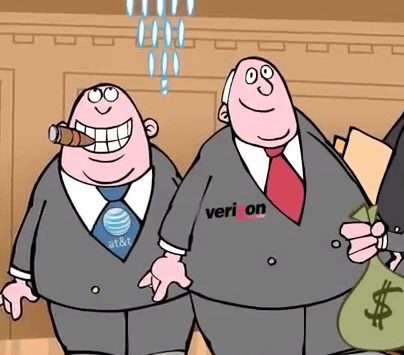
Verizon Wireless: You are being watched.

Verizon Wireless: You are being watched.

Would it bother you if the advertiser on that big billboard you just drove past could find out if you later visited that business in response? Should a store like Best Buy or Sears be able to know if you are only using their showrooms to see a product you will eventually buy online? Should your phone company be able to store your complete travel history for years and then create new products and services to pitch aggregated travel observations to anyone willing to pay?

Verizon Wireless does not think you will have a problem with any of this, because it has quietly begun selling this information through its Precision Market Insights (PMI) service.

AT&T is likely not too far behind with a similar service of its own, potentially earning millions from a comprehensive data trove tracking customer locations, travel history, and web browsing habits for an undetermined length of time.

The Wall Street Journal reports shareholder demand for higher profits is pushing cell phone companies to find new revenue streams, even at the potential risk of alienating customers and privacy advocates.

PMI clients may find out more about you than you realize, even though phone companies promise they will not sell personally identifiable information about their customers.

The Phoenix Suns are PMI clients, and by tracking game attendees, Verizon Wireless was able to tell the sports team:

  • 22% of game attendees are from out-of-town;
  • Most spectators had children at home, ranged in age from 25-54 and earned more than $50,000 a year;
  • 13% of baseball spring training attendees in the Phoenix area also went to Suns games;
  • Area fast food restaurants running Suns promotions saw an 8.4% uptick in business from Verizon Wireless customers.

Such information can let the sports team target advertisers and offer evidence-based statistics that any campaign will increase sales, and by how much. Malls can use PMI to find certain types of customers that have a history of lingering in mall stores. Billboard owners can see if their ad messages resulted in higher in-store visits.

Customers using a phone under a commercial or government account are exempt from the tracking program. All residential customers are automatically opted in to take part, unless they specifically opt out.

Privacy advocates are concerned carriers are storing personal customer usage data for an undetermined amount of time, and in a form that could be personally identifiable, even if the provider decides not to sell data with that granularity to third parties. That could make cell phone companies prime targets for government/law enforcement subpoenas.

Last year, Verizon sent a notice to customers opting them in to the program unless they specifically opted out. Stop the Cap! covered the story back then, helping customers wishing to opt out.

http://www.phillipdampier.com/video/WSJ Cell Companies Track Customers 5-22-13.flv

The Wall Street Journal reports wireless carriers were at first slow to sell data on their customers’ usage habits, but not anymore. Shareholders want new sources of revenue, and wireless companies are packaging and selling customer information to get it.  (2 minutes)

Share

Earth-Shattering News: You Still Hate Your Cable Company

Despite efforts to improve their reputation, cable companies are hated so much the industry now scores lower than any other according to the American Customer Satisfaction Index (ACSI).

The only reason the industry’s average score or 68 out of 100 ticked higher are some new competitors, especially Verizon’s FiOS fiber optic network, which scores higher than any other provider.

acsi tv

The cable companies you grew up with still stink, ACSI reports, with Comcast (63) and Time Warner Cable (60) near the bottom of the barrel.

At fault for the dreadful ratings are constant rate increases and poor customer service. As a whole, consumers reported highest satisfaction with fiber optic providers, closely followed by satellite television services. Cable television scored the worst. Despite the poor ratings, every cable operator measured except Time Warner Cable managed to gain a slight increase in more satisfied customers. Time Warner Cable’s score for television service dropped five percent.

Customers are even less happy with broadband service. Verizon FiOS again scored the highest with a 71% approval rating. Time Warner Cable (63) and Comcast (62) scored the lowest. Customers complained about overpriced service plans, speed and reliability issues. Customers were unhappy with their plan options as well, including the fact many providers now place arbitrary usage limits on their access.

The best word to describe customer feelings about their broadband options: frustration, according to ACSI chair Claes Fornell. “In a market even less competitive than subscription TV, there is little incentive for companies to improve.”

acsi broadband

Share

AT&T to Waive Overlimit Fees for Tornado Victims, But Still Charges Them for Texting

att-logo-221x300AT&T wants everyone in Oklahoma City to stay off the phone and rely on text messaging for communications with family, friends, and loved ones “given high call volumes.”

Although AT&T has announced it is waiving voice, data, and text overage charges through June 30 for customers in the affected areas, it won’t automatically waive your bill for services you cannot use or per message charges incurred if you do not have a texting plan.

“AT&T customer service told me the waived fees only cover overlimit fees, not plan fees,” says Susan Ramos, who received a text message on her AT&T phone advising her of the special tornado victim compensation plan. “When I called them to learn the exact terms, they told me if you don’t have a text plan, for instance, you will still be charged a per message fee.”

Ramos, who is in Moore, Okla., tells Stop the Cap! AT&T is pleading Oklahoma City customers to stay off their cell phones and rely on text messaging. But without a text plan AT&T will charge 20 cents per text message, 30 cents for each picture or video message.

Looking at AT&T’s website, their generous offer doesn’t seem so generous when you notice they are only selling a $20 texting plan that already provides unlimited messages,” Ramos notes. “How about just waiving all text message fees for everyone until June 30?”

AT&T’s remaining unlimited data customers in the area also wonder whether the company’s notorious speed throttle will still kick in after using a few gigabytes.

Ramos doesn’t think AT&T’s offer to waive voice overages means all that much either.

“Does anyone ever exceed their voice allowance anymore?” she asks. “Besides, they don’t want you using your phone for voice calling anyway.”

Share

Cell Phone Service Fails Tornado Victims in Moore, Okla.; Landlines Still Working in Many Areas

Phillip Dampier May 20, 2013 AT&T, Consumer News, Video, Wireless Broadband No Comments
KFOR-TV in Oklahoma City captured this image of the destructive tornado that flattened parts of Moore, Okla.

KFOR-TV in Oklahoma City captured this image of the destructive tornado that flattened parts of Moore, Okla.

Widespread cell phone outages and overcongested wireless networks are hampering efforts to find missing loved ones or call for help in areas hard-hit by this afternoon’s devastating tornado affecting Moore, Okla., a suburb of Oklahoma City. But in many areas escaping the worst of the storm, landline service is performing normally.

“We have no coverage and no signal from any cell phone provider in this part of Moore, despite the fact we escaped the tornado with no damage,” reports Susan Ramos, who was staying in Moore to deal with a family emergency. “We have borrowed a nearby neighbor’s home phone which is still working fine. My relatives back home in Texas have been worried sick not hearing from us that we are okay.”

One of the first victims of the tornado touchdown were communications towers, some damaged by the wind, others now missing a wired connection back to the network provider. Many of those still in service are overloaded with callers. Some cell towers are performing double or triple duty, handling calls from neighborhoods that would have been ordinarily served by other towers no longer functioning. The result is a cell network clogged with calls, making it next to impossible to reach storm-affected areas.

Some residents are traveling by foot or vehicle on debris-cluttered roadways looking for a cell tower that can still handle calls.

Oklahoma City media reports AT&T is asking residents to refrain from making or receiving wireless voice calls. Instead, the company is asking cell customers to only use text messaging until further notice.

Although landline infrastructure was also destroyed in and around the direct path of the tornado, adjacent areas still have service, including areas where cell phone service has failed.

no service

“Finding pay phones in this area is not easy, and I don’t know Moore too well and many businesses closed down early after the storm, so we are grateful to a nearby neighbor we don’t even know who kept their phone service and let us use it.” Ramos added. “Now we know canceling our own wired home phone was probably a mistake after seeing what happens in emergencies.”

Cell phone providers are coordinating to transport portable cell towers into Moore and other affected areas within the next day or so if normal cell service cannot be quickly restored. But for residents desperate to communicate, the failure of the local cell phone network, either because of storm damage or insufficient capacity, has proved frustrating.

http://www.phillipdampier.com/video/NBC News Moore Residents Cell Phone Service 5-20-13.flv

NBC News talks with storm survivors frustrated by the lack of cell phone service in Moore, Okla.  (2 minutes)

Share

Incoming Ex-Lobbyist FCC Chairman Tom Wheeler Selling $1 Million in Personal AT&T, Verizon Stock

Phillip "I don't have $1 million in AT&T and Verizon stock" Dampier

Phillip “I don’t have $1 million in AT&T and Verizon stock” Dampier

Before Tom Wheeler, President Obama’s pick to head the Federal Communications Commission, can find his seat at the federal agency overseeing the nation’s telecommunications industry, he will need time to sever the extensive ties he maintains as an ex-lobbyist and investor in the companies he will soon oversee.

To avoid an even bigger appearance of a conflict of interest, Wheeler has agreed to dump at least $1 million in personal stock in AT&T and Verizon, as well as divest himself of holdings in 76 other media and tech companies including Time Warner, Comcast, Google, Sprint, Deutsche Telekom and News Corp.

Wheeler is also submitting his resignation from the board of Earthlink, an Internet Service Provider, and will also sell off his shares in that company. He will also have to step down from Core Capital, a venture capitalist investor firm with extensive holdings in the telecom industry.

In our view, Wheeler has shown he couldn’t be more of a telecom industry insider unless he also served on the board of AT&T. Wheeler’s extensive holdings depict someone who has maintained a direct financial interest in the industry for years, even after ending his leadership at the National Cable Television Association and leading the nation’s biggest wireless industry lobbying group, the CTIA.

These kinds of deep industry ties are a serious concern for the average consumer. As we’ve reported before, Tom Wheeler has said almost nothing on his blog about consumer interests, writing views from the perspective of an industry lobbyist and investor. Watching him disgorge well over a million dollars in direct investments in AT&T and Verizon — companies he’d oversee in his new role — does not ease our concern he remains a consummate insider. He is well-positioned to move back through the D.C. revolving door at the end of the Obama Administration to reinvest in the companies his tenure at the FCC could potentially make or break.

Wheeler’s appointment represents another broken promise from the Obama Administration:

“No political appointees in an Obama-Biden administration will be permitted to work on regulations or contracts directly and substantially related to their prior employer for two years. And no political appointee will be able to lobby the executive branch after leaving government service during the remainder of the administration.”

Not allowing Wheeler to oversee regulations or contracts with the companies who helped pay his salary and earn him a fortune from his investments would leave the new FCC chairman little to do beyond opening the mail. But of course, that campaign promise from the Obama-Biden campaign has long since been broken and forgotten by most.

Despite the clear conflicts of interest, President Obama remains fully behind his new FCC chairman pick.

“Tom knows this stuff inside and out,” Obama said.

No doubt.

http://www.phillipdampier.com/video/Real News Obama Nominates Cable Industry Lobbyist and Campaign Bundler New Head of FCC 5-12-13.mp4

Former FCC commissioner Nicholas Johnson blasts the nomination of Tom Wheeler, an ex-industry lobbyist and insider, for the role of new chairman of the FCC. (From: TheRealNews) (16 minutes)

Share

AT&T Will Follow Google’s Lead: Faster Speed Networks Only in High Demand Areas

att_logoAT&T says government regulations have hampered the company’s plans to roll out faster broadband networks to areas where consumers and businesses want faster speeds.

Now that Google has gotten permission to roll out its gigabit fiber network only to neighborhoods that show an interest in the service, AT&T says it should be allowed to operate the same way.

CEO Randall Stephenson told investors at a J.P. Morgan investor conference in Boston that AT&T would like to build fiber networks, but government requirements that it offer the service universally across the communities it serves has made such networks financially unprofitable. Eliminating those rules would create a new incentive for fiber upgrades in areas that want them.

“I think you are going to see that begin to manifest itself around the United States, and in not just AT&T and Google,” Stephenson said. “You will see others doing this because the demand for really high-speed broadband via gigabit-type fiber-based solutions on a targeted basis is going to be very, very high.”

AT&T says Google has already changed how future broadband networks are deployed — only to areas where there is enough demand for the service. Google’s entry into Kansas City came with a pre-registration procedure that allowed the company to gauge demand for its fiber network. The neighborhoods expressing the most interest were given priority during the network buildout. Google also won the right to entirely bypass neighborhoods where an insufficient number of residents expressed interest in the service.

Stephenson

Stephenson

Traditionally, cable and phone companies constructing networks like FiOS, U-verse, and similar fiber deployments are required to offer service throughout each community. The only general exception relates to sparsely populated or very high cost areas that have an insufficient number of potential customers, making return on investment difficult. Google can bypass even the most densely populated sections of downtown Kansas City if there is insufficient demand for its service. Cable and phone providers who attempted this in the past would have been accused of “redlining” — singling out only the most lucrative, affluent service areas while bypassing low-income neighborhoods.

Now AT&T hopes Google has established a precedent it can use to cherry-pick network upgrades of its own.

“The key is being able to do it in places where you know there is going to be high demand and people willing to pay the premium for those type services,” Stephenson said, predicting in some parts of Austin, AT&T could achieve a 35 percent market share for its promised fiber network.

Stephenson also suggested an unlikely new source of money to finance fiber upgrades — content producers and applications developers who need faster networks to support sales of their online products and services. That would shift the economics of faster broadband to an entire new model — broadband providers may decide their current networks are fast enough and might avoid upgrading them without some financial compensation from the websites and content producers customers visit.

Share

The Phony Wireless Bandwidth Crisis: Two-Faced Data Flood Warnings

two faced wireless

Wireless Industry: We’re running out of spectrum!
Wireless Industry: We’ve got plenty to room for unlimited ESPN!

America is on the verge of a wireless traffic data jam so bad, it could bring America to its knees.

Or not.

Stop the Cap! notices with some interest that while wireless carriers continue to sound the alarm about a spectrum crisis so serious it necessitates further compressing the UHF television dial and forces other spectrum users to become closer neighbors, the same giant phone companies warning of impending doom are negotiating with online video producers to offer customers “toll-free,” all-you-cat-eat streaming video of major sports events that won’t count against your usage allowance.

ESPN is in talks with at least one major carrier (AT&T or Verizon Wireless) to subsidize some of the costs of its streamed video content so that customers can watch as much as they want without running into a provider’s usage limit. Both Verizon and AT&T have signaled their interest in allowing content producers to pay for subscribers’ data usage. In fact, they don’t seem to care who pays for the enormous bandwidth consumed by streaming video, so long as someone does.

At a recent investment bank conference Verizon Wireless chief executive Dan Mead explained the next chapter in monetizing data usage will allow the company to rake in more revenue from third parties instead of customers already struggling with high wireless bills.

“We are actively exploring those opportunities and looking at every way to bring value to our customers,” said Mead.

Content producers are increasingly frustrated with the stingy caps on offer at AT&T and Verizon Wireless because customers stop accessing that content once they near their monthly usage limit. One large provider admitted to ESPN that “significant numbers” of customers are already reaching their cap before the end of their billing cycle, after which their online usage plummets to limit the sting of overlimit charges.

Offering “toll-free” data could dramatically increase the use of high bandwidth applications and increase profits at wireless providers based on new fees they could collect from content producers. Customers would still be subject to usage limits for all non-preferred content, a clear violation of Net Neutrality principles.

The buffet is open.

The buffet is open.

But in case you forgot, wireless carriers won exemption from Net Neutrality, arguing their networks lack the capacity to sustain a Net Neutral Internet experience. These same companies claim without more frequencies to handle the massive, potentially unsustainable amount of wireless traffic, the wireless data apocalypse could be at hand in just a few years. It was also the most-cited reason AT&T and Verizon discontinued their unlimited use data plans.

But unlimiting ESPN video? No problem.

In January 2010, Verizon Wireless was singing a very different tune to the FCC about the need to control and manage high bandwidth applications like the “toll-free” streaming video service ESPN proposes (underlining ours):

Wireless broadband services face technological and operational constraints arising from the need to manage spectrum sharing by a dynamically varying number of mobile users at any time. Thus, unlike, for example, cable broadband networks, where a known and relatively fixed number of subscribers share capacity in a given area, the capacity demand at any given cell site is much more variable as the number and mix of subscribers constantly change in sometimes highly unpredictable ways.

Are wireless carriers now part of the problem?

Are wireless carriers now part of the problem?

For example, as a subscriber using a high-bandwidth application such as streaming video moves from range of one cell site to another, the network must immediately provide the needed capacity for that subscriber, while not disrupting other subscribers using that same cell site. Of course, the problem is magnified many times over as multiple subscribers can be moving in and out of range of a cell site at any given moment. Moreover, the available bandwidth can fluctuate due to variations in radio frequency signal strength and quality, which can be affected by changing factors such as weather, traffic, speed, and the nearby presence of interfering devices (e.g., wireless microphones).

These problems compound those resulting from limited spectrum. As the Commission has repeatedly recognized in proclaiming an upcoming spectrum crisis, “as wireless is increasingly used as a platform for broadband communications services, the demand for spectrum bandwidth will likely continue to increase significantly, and spectrum availability may become critical to ensuring further innovation.”

A wireless carrier cannot readily increase capacity once it has exhausted its spectrum capacity. Thus, wireless broadband providers are left to acquire additional spectrum (to the extent available) or take measures that use their existing spectrum as efficiently as possible, which they do through a combination of investing in additional cell sites and network management practices that optimize network usage and address congestion so as to provide consumers with the quality of service they expect.

Regulators need to ask why wireless companies are telling the FCC there is a bandwidth crisis of epic proportions that requires the Commission to exempt them from important Net Neutrality principles while telling investment banks, shareholders and content producers the more traffic the merrier, as long as someone pays. Customers also might ask why their unlimited use data plans were discontinued while carriers seek deals to allow unlimited viewing with their preferred content partners.

What is the real motivation? The Wall Street Journal suggests one:

“Creating a second revenue stream for mobile broadband is the holy grail for wireless operators but collecting fees from content companies would probably make the FCC take a close look into the policy implications,” said Paul Gallant, managing director at Guggenheim Securities. An FCC spokesman declined to comment.

http://www.phillipdampier.com/video/WSJ ESPN Toll Free Data 5-9-13.flv

The Wall Street Journal takes a closer look at a plan to manage an end run around Net Neutrality by allowing preferred content partners to offer streaming video services exempt from your usage cap. (4 minutes)

Share

AT&T Cancels $5 Refund Check Without Warning, Customer Incurs $20 Bounced Check Fee

Phillip Dampier May 6, 2013 AT&T, Consumer News, Video No Comments

att refundAT&T has a habit of quickly stopping payment on refund checks issued to customers moving to a new address and canceling landline service, costing customers not only the money AT&T owes them, but also bounced check fees of $20 or more.

David Willis was an AT&T customer for years, but when he moved he decided to leave his AT&T landline behind. AT&T eventually mailed him a refund check of $5.67 to his old address in Jacksonville that the post office forwarded to his new home in Yulee.

When Willis deposited AT&T’s check, it bounced, despite the fact it was supposed to be good for at least 180 days. His bank promptly charged him $20 for AT&T’s no-good check, losing Willis a total of $25.67.

AT&T claims it stops payment on checks when it learned from the post office a customer has moved to a new address, despite the fact Willis previously provided AT&T with that new address. The company chose to mail the dud check to his old home. A replacement refund check of $5.67 arrived in Yulee several days later, but now Willis is afraid to deposit it, fearing that check might be no good either.

att_logoAT&T initially refused to refund Willis the $20 bank fee.

“When you call them they immediately go into, ‘well you changed your address and that caused a series of events which meant stopping the check and therefore it is your responsibility,’” said Willis. ”They never at any time told me to not deposit the check.”

Willis told First Coast News, ”I want the twenty plus what they owed me all in one certified check.”

With the story all over the local evening news, he got his wish.

http://www.phillipdampier.com/video/First Coast News ATT refund check confusion causes bank fee 5-1-13.flv

First Coast News consumer reporter Ken Amaro: “Everyday I receive a number of complaints, some of them are legitimate, some non-legitimate, some very insidious and downright outrageous.” Hello, AT&T. (2 minutes)

Share

Reviews Are In: Big Telecom Gushes Love for New FCC Chairman Tom Wheeler

Giant telecommunications companies and their lobbyist friends are gushing their approval for President Obama’s latest pick — Tom Wheeler — to head the Federal Communications Commission. What do they know that consumers don’t?

AT&T

att-logo-221x300I’ve known Tom Wheeler for many years, and he is an inspired pick to lead the FCC.  Mr. Wheeler’s combination of high intelligence, broad experience, and in-depth knowledge of the industry may, in fact, make him one of the most qualified people ever named to run the agency.

Mr. Wheeler will face daunting challenges at the FCC.  Already the pace of technological change is clashing with outdated laws, antiquated rules, and approaches more rooted in the past than the present.  The dedicated career staff at the FCC are grappling with these challenges now.  If the pace of change is to continue, along with the investment and job creation that fuel it, the mission of the FCC in the 21st Century must be re-examined, and its rules and methods modernized.  In this situation, I can think of no nominee more talented or whose leadership skills are more needed. Moreover, Mr. Wheeler will be joining a complement of fellow commissioners who are equally formidable and well suited for this important moment in the FCC’s history.

On behalf of AT&T, I’d like to congratulate Tom Wheeler on his nomination. We look forward to working with him once he is confirmed by the Senate. I also want to congratulate Mignon Clyburn, who will take over as interim-chair of the FCC. She’s an experienced and independent policymaker, passionate about public service, who will lead the agency over the coming months with a steady hand.

– Jim Cicconi, Senior Executive Vice President

The NCTA is the cable industry's biggest lobbying group.

National Cable & Telecommunications Association (NCTA) — America’s largest cable industry lobbyist

We congratulate Tom Wheeler on his nomination as Chairman of the Federal Communications Commission. With his significant experience in both the private and public sector, Tom is an exceptional choice to lead the Commission during a time when the telecommunications marketplace is experiencing significant innovation and incredible change. We welcome the appointment of Mignon Clyburn as interim chairman as she is a distinguished and able public servant. We will continue working closely with the entire Commission as they tackle important issues facing America’s dynamic media, technology and telecommunications landscape.

– Michael Powell, NCTA President & CEO and Former FCC Chairman

Comcast/NBC

Comcast-LogoWe congratulate Tom Wheeler on his nomination as Chairman of the Federal Communications Commission.  His vast knowledge of the communications industry, as well as his proven leadership, will be invaluable as the Commission sets its course for our nation’s digital future.  We applaud President Obama’s nomination and we look forward to working with the Commission under Tom’s leadership.

Further, we commend the President’s appointment of Mignon Clyburn as Acting Chair of the FCC.  She has distinguished herself in her service as a Commissioner over the past three and a half years, and has demonstrated that she is well-suited to lead the agency.  She works passionately and tirelessly to ensure that the best interests of all Americans are given serious consideration in each matter before her.  We congratulate Chairwoman Clyburn on her well-deserved appointment as the first female chair of the FCC and look forward to continuing to work with the FCC under her leadership.

As current FCC Chairman Genachowski departs, we wish him the best and thank him for his very successful Chairmanship that has ensured the US remains the leader in the global communications marketplace.

– Comcast CEO Brian Roberts

tiaTelecommunications Industry Association

He has the proven ability to transcend a broad range of industry perspectives to reach balanced outcomes.

– Grant Seiffert, president

CTIA – The Wireless Association — America’s top wireless industry lobbyist

The CTIA is the wireless industry's lobbying group

Tom has a deep understanding of communications issues, a passion for hard work and creative thinking, a diverse background that spans the realm of the Internet world and a keen understanding of how mobile wireless broadband can drive our economy and innovation.

I can attest to Tom’s commitment to harness the power of communications technology to improve people’s lives, to drive our global competitiveness, and to advance the public interest,” Genachowski said. “The FCC’s role has never been more essential, and with Tom’s deep policy expertise and his first-hand experience as a technology investor, he is a superb choice to advance the FCC’s mission of promoting innovation, investment, competition, and consumer protection.

– CTIA President Steve Largent
Share

AT&T Using ALEC to Win Deregulation in Connecticut Despite Poor Service & Repair Record

alec exposedAT&T is seeking freedom from regulation, oversight and the right to abandon its landline network with the assistance of Connecticut legislators who modeled a state deregulation measure on recommendations from the corporate-funded, AT&T-backed, American Legislative Exchange Council (ALEC).

The legislature’s Energy and Technology Committee voted 20-4 to approve the bill, which would eliminate service and oversight requirements and allow the phone company to raise rates. AT&T has lost most of its landline customers since assuming control of service in Connecticut. Today, only 28 percent of homes in the state choose AT&T for their home phone service. The Office of Consumer Counsel suggests AT&T’s poor performance in the state may have had a lot to do with that, citing the company’s slow job of restoring phone service after a series of storms affected the state.

AT&T wants the power to drop telephone service altogether in areas considered unprofitable to repair or continue to serve. A trio of company-backed bills in the state legislature would hand them that right.

House Bills 6401, 6402 and Senate Bill 888 are all measures that would deregulate the phone company and open public lands for placing cell towers, limit regulator oversight and cut reporting requirements that let regulators track telephone rates.

None of the measures have been introduced on a whim, contend critics. The Connecticut Citizen Action Group released a report showing links between corporate-written model bills produced by ALEC and the current legislation before the Connecticut General Assembly.

att-logo-221x300HB 6401: House Bill 6401 strips the Public Utilities Review Authority (PURA) of their ability to regulate Voice Over Internet Protocol (VoIP) telephone services. An emerging market, this bill creates deregulation for the sake of deregulation.

HB 6402: House Bill 6402 eliminates the right of regulators to oversee AT&T to make sure it has some form of accountability to the public. The section on annual audits has been gutted, making it impossible to protect the public from rate-fixing. More importantly, it includes a provision to allow AT&T to end service to any customer it wants upon 30 days’ written notice.

SB 888: Senate Bill 888 has an ALEC-drafted provision that allows cell phone towers to be built on public lands on a presumption that the will of telecommunications companies is in the interest of the public good.

“If AT&T is allowed to drop service in unprofitable areas at their sole discretion, if they’re allowed to let service outages drag on for weeks with no consequences, if they’re allowed to jack up rates — of course they will,” Daniel Ravizza of Connecticut Citizen Action Group said in a statement. “‘Trust me’ is not a good enough guarantee for Connecticut consumers.”

ALEC and AT&T’s Legislative Chorus

  • Rep. Debra Lee Hovey of Monroe and Newtown and Sen. Kevin Witkos of Simsbury, Avon, and Torrington serve as ALEC’s chair people for the state;
  • Rep. John Piscopo is currently serving as ALEC’s National Chair;
  • Rep. Lonnie Reed (D-Branford), chairwoman of the state legislature’s Energy and Technology Committee defended the measures saying they would give certainty to the telecom industry which would attract more investment in broadband and phone services. But she admitted once consumers learned of the proposed bills, things got heated quickly. “Some of this stuff is radioactive,” she told The Hartford Courant. “It’s hard even if you change the language to convince people otherwise;”
  • “The arguments by opponents of HB 6402 have been shown to be without merit so now they’re resorting to desperate measures and innuendo,” said AT&T spokesman Chuck Coursey. “The fact is modernizing our telecom rules this year will help encourage private investment, job growth and consumer choice at a time when Connecticut needs it most;”
  • John Emra is AT&T’s chief lobbyist in Connecticut. Emra was behind last year’s attempts to advance similar deregulation. Emra serves as the Executive Director of External Affairs for AT&T and as the chair of ALEC Connecticut.

“This is part of a national strategy by ALEC to advance a pro-corporate agenda at the expense of consumers,” James Browning, regional director of state operations for Common Cause, said in a statement. “We’ve seen the destructive impact these measures have had in other states. AT&T should not be allowed to get away with it here in Connecticut.”

The New Haven Register notes Browning said the three bills — SB888, HB6401 and HB6402 — closely resemble model legislation ALEC’s legislative template used in 20 other states where telecommunications regulatory overhaul has occurred. In 17 of those 20 states, telecommunications rates have increase, and in some cases, the cost of service has doubled.

Connecticut consumers can share their feelings about the bills through e-mail with their elected officials.

Share

Search This Site:

Contributions:

Recent Comments:

  • KM: Anyone know a source for third party batteries for these? Comcast's $35 + shipping seems high, especially if you want 2 which the box allows....
  • elfonblog: Yeah, I'm getting pretty sick of the word "unlimited" meaning "for any amount of time" rather than "for any amount of activity". Of course, people thi...
  • Paul Houle: Wow, here's an example of a cable company doing the right thing....
  • txpatriot: Thanx I missed Hoyle. Everyone else cited in the article was identified by party affiliation except Hoyle and Black. I was just trying to ensure you...
  • Phillip Dampier: That should be evident from the fact the Dems controlled the legislature for a century until 2011. Hoyle and Harrell were also Democrats....
  • txpatriot: Just for the record, former House Speaker Jim Black was (and maybe still is) a Democrat. You can read about the scandal at: http://en.wikipedia.or...
  • txpatriot: Brian, calm down and take a couple of deep breaths. If you have a complaint, it's with ACSI and how they categorized ISPs for purposes of their s...
  • Phillip Dampier: An Internet Service Provider is defined here (and elsewhere, to be honest) as any company using any technology to deliver Internet access to consumers...
  • Brian: Please tell me who the ISPs are ! In another article I read recently the writer said that the ISPs were VZ, AT&T and Comcast. Can't you get ...
  • txpatriot: Pulling the battery would be the best way to ensure the cell network can't track your movements. But that's kinda inconvenient....
  • Randy: I guess when you go shopping you should turn off your phone....
  • John: I have DirecTV and I have been over to my families homes that have Time Warner connected to a HDTV via a Time Warner STB, The HD channels are all over...

Your Account: