North Carolina Update: Porn Debate Temporarily Derails Marilyn Avila’s Anti-Broadband Bill

Rep. Marilyn Avila (R-Time Warner Cable)

After passing through the Republican-dominated Finance Committee, Rep. Marilyn Avila’s (R-Time Warner Cable) cable company-written, anti-consumer legislation arrived in the North Carolina Senate this afternoon, where it was promptly, if temporarily, derailed over whether residents have the right to watch adult entertainment on community-owned broadband/cable networks.

That’s right… porn has thrown the state legislature into such silliness, the entire bill had to be pulled from consideration until Monday.

Here’s a quick rundown how things played out today:

♥ — H.129, Avila’s anti-broadband bill, has proved to be the first serious piece of legislation that has divided the normally lock-step Republican-controlled legislature this session.  That is entirely because YOU are putting the pressure on with your calls and e-mails to Senate members.  We have it on good authority the overwhelming amount of response to this bill from constituents has been downright hostile to the idea it should ever pass.  Consumers in North Carolina want more choices for broadband, not less.  They want increased competition, lower prices, and most importantly — better service (or at least s0me service from someone).  H.129 does none of those things.  It doesn’t deliver a single new broadband connection anywhere in the state.

♥ — Several amendments helpful to broadband development managed to win a place in the bill.  The communities of Wilson and Salisbury will get to expand their systems to cover larger areas, including the town of Faith Stop the Cap! covered earlier.  We also won a victory changing the terms of the “mandatory referendum” provision to strip away the loaded, misleading ballot question about whether cities should ‘take on more public debt’ to finance the construction of community broadband, replacing it with a fairer alternative — do you favor your community building its own broadband system. 

↓ — But we also lost a few battles. Yesterday, the industry covertly changed the definition of an unserved area from “an area where 50% don’t receive FCC basic broadband service” to a Census block, where 50% of the households don’t receive 768/200Kbps. That change annihilates the unserved area exemption. As confirmed by the highly credible e-NC authority, the industry provides its broadband data by Census block, not by household, and if a census block has just one home that receives Internet service, the entire census block is labelled as having Internet service.

Today, Senator Atwater (D-Chatham) tried to modify that definition with a much better measurement standard: “homes per square mile.”  The federal government has established that the least dense areas of the country are the most costly to serve, which explains why these areas traditionally lack broadband service or receive low speed DSL.  Atwater’s amendment targeted the 38% of the most rural areas in North Carolina to keep the door open for community broadband, but Senator Tom Apodaca (R-Hendersonville) would have none of it, despite the fact his district covers the rural expanse of the western mountains of North Carolina.  Stop the Cap! readers have shared stories with us about hanging out in parking lots using motel Wi-Fi to pay their bills online or complete homework.  In Apodaca’s world-view, that means those areas have broadband.

Now our readers will understand why we have stressed it is so important to have accurate, in-depth broadband map data.  Instead, industry-connected groups like Connected Nation conjure up maps created by unverified, provider-supplied data.  This map data is a critical part of H.129′s tragic terms and conditions.  If the maps say service exists, industry lobbyists use that to browbeat elected officials into believing there is no broadband problem, and there is no reason to allow communities to build their own broadband services.

Of course, the reality is very different.  We’ve received hundreds of messages from Americans who say these maps show broadband as being widely available in their communities, but in reality is not.  Some legislators in North Carolina have confronted this reality personally. For those that haven’t, it’s easy to accept provider arguments, cash those campaign contribution checks, and throw constituents under the bus.

We Saved the Most Ridiculous Part of Today’s Events for Last

Sen. Apodaca's obsession with adult entertainment derailed a scheduled vote on H.129 this afternoon.

When the city of Fayetteville wanted protection for their investment in fiber optics, at risk from H.129, the aforementioned Sen. Apodaca lost his mind.  Instead of protecting city funds already spent on next generation fiber, he substituted his own new amendment — to strip adult programming off community-owned broadband/cable systems instead.

You read that right. In case you didn’t, here it is again:

Sen. Apodaca would rather be the arbiter of what you can watch in the privacy of your own home than protecting community investments in broadband improvements.

So much for the “level playing field” title of Avila’s original bill.  Apodaca’s anti-porn crusade does not apply to Time Warner Cable or other private providers, so he has no problem at all if you want to pop some popcorn and settle down to some movies like “Suck It Sunrise,” “Boning Black Beauty 8″ (to answer those lingering questions that went unanswered in part 7), or “Dripping Wet Lesbians,” all currently running on TWC’s adult channels.

No matter that Apodaca’s amendment is completely against federal law, which should signal how clueless some legislators are about these issues.  The Cable Act provides settled law on this subject.  Government cannot engage in cable content regulation — particularly the state and federal government.  The cable industry lobbied hard for that protection in the 1980s in part because of controversy over MTV and other “explicit” programming.  Only the local franchising authority can make decisions about the content they carry — and that means local communities get to make those decisions for themselves (47 USC 544(d)(1)).  That means Sen. Apodaca should worry about his own television viewing habits and stay out other peoples’ lives.

We’re helpers here at Stop the Cap!, so we’d point the senator to 47 USC 544(f)(1):

(f) Limitation on regulatory powers of Federal agencies, States, or franchising authorities

(1) Any Federal agency, State, or franchising authority may not impose requirements regarding the provision or content of cable services, except as expressly provided in this subchapter.

Those exceptions, by the way, have to do with changes in federal law, not the individual whims of one state senator.

Sen. Mansfield, who introduced the original amendment to protect Fayetteville, was naturally disturbed to find Apodaca’s non-germane substitute.  That promoted Apodaca to suggest Mansfield allowed his children to watch pornography, and from there the debate spiraled out of control.  After a brief recess, Apodaca returned to apologize to Mansfield, before killing the amendment to protect Fayetteville’s fiber investment for a second time.

Reviewing today’s events provides us with another edition of Legislators Out of Their League.  Apodaca’s naive amendment was not the only telling example (we know more about telecommunications law than he does.)  Yesterday in the Senate Finance Committee, Ms. Avila was utterly lost at sea as discussion ensued on amendments to the bill with her name on it.  Reduced to muttering at times, confused about the discussions dealing with the definition of underserved, her usual reaction was to oppose what she didn’t understand.  None of this is surprising considering the cable industry wrote the majority of her bill she introduced as her own.  She continues to protect their interests while ignoring yours.

This is why we continue to oppose H.129 and you should too.  We have until Monday to continue to drive the message home to state senators.  If you called or wrote before, it’s time to write and call again.  Tell your state senator H.129 is a bill written by and for the cable and phone companies.  It does not deliver any new broadband service to anyone, risks the investments communities across the state have already made, and allows a handful of big telecom companies to control North Carolina’s broadband destiny.  Considering the state achieves dead last ratings in broadband, that is the kind of control they should never be allowed to have.

Senate Representation By County

2011-2012 Session

(click on your member’s name for contact information)

County District: Members
Alamance 24: Rick Gunn;
Alexander 45: Dan Soucek;
Alleghany 30: Don East;
Anson 25: William R. Purcell;
Ashe 45: Dan Soucek;
Avery 47: Ralph Hise;
Beaufort 1: Stan White;
Bertie 4: Ed Jones;
Bladen 19: Wesley Meredith;
Brunswick 8: Bill Rabon;
Buncombe 49: Martin L. Nesbitt, Jr.; 48: Tom Apodaca;
Burke 44: Warren Daniel;
Cabarrus 36: Fletcher L. Hartsell, Jr.;
Caldwell 44: Warren Daniel;
Camden 1: Stan White;
Carteret 2: Jean Preston;
Caswell 24: Rick Gunn;
Catawba 42: Austin M. Allran;
Chatham 18: Bob Atwater;
Cherokee 50: Jim Davis;
Chowan 4: Ed Jones;
Clay 50: Jim Davis;
Cleveland 46: Debbie A. Clary;
Columbus 8: Bill Rabon;
Craven 2: Jean Preston;
Cumberland 19: Wesley Meredith; 21: Eric Mansfield;
Currituck 1: Stan White;
Dare 1: Stan White;
Davidson 33: Stan Bingham;
Davie 34: Andrew C. Brock;
Duplin 10: Brent Jackson;
Durham 20: Floyd B. McKissick, Jr.; 18: Bob Atwater;
Edgecombe 3: Clark Jenkins;
Forsyth 31: Peter S. Brunstetter; 32: Linda Garrou;
Franklin 7: Doug Berger;
Gaston 41: James Forrester; 43: Kathy Harrington;
Gates 4: Ed Jones;
Graham 50: Jim Davis;
Granville 7: Doug Berger;
Greene 5: Louis Pate;
Guilford 33: Stan Bingham; 26: Phil Berger; 27: Don Vaughan; 28: Gladys A. Robinson;
Halifax 4: Ed Jones;
Harnett 22: Harris Blake;
Haywood 50: Jim Davis; 47: Ralph Hise;
Henderson 48: Tom Apodaca;
Hertford 4: Ed Jones;
Hoke 13: Michael P. Walters;
Hyde 1: Stan White;
Iredell 41: James Forrester; 42: Austin M. Allran; 36: Fletcher L. Hartsell, Jr.;
Jackson 50: Jim Davis;
Johnston 12: David Rouzer;
Jones 6: Harry Brown;
Lee 18: Bob Atwater;
Lenoir 10: Brent Jackson;
Lincoln 41: James Forrester;
Macon 50: Jim Davis;
Madison 47: Ralph Hise;
Martin 3: Clark Jenkins;
McDowell 47: Ralph Hise;
Mecklenburg 37: Daniel G. Clodfelter; 38: Charlie Smith Dannelly; 39: Bob Rucho; 40: Malcolm Graham; 35: Tommy Tucker;
Mitchell 47: Ralph Hise;
Montgomery 29: Jerry W. Tillman;
Moore 22: Harris Blake;
Nash 11: E. S. (Buck) Newton;
New Hanover 9: Thom Goolsby;
Northampton 4: Ed Jones;
Onslow 6: Harry Brown;
Orange 23: Eleanor Kinnaird;
Pamlico 2: Jean Preston;
Pasquotank 1: Stan White;
Pender 8: Bill Rabon;
Perquimans 4: Ed Jones;
Person 23: Eleanor Kinnaird;
Pitt 3: Clark Jenkins; 5: Louis Pate;
Polk 48: Tom Apodaca;
Randolph 29: Jerry W. Tillman;
Richmond 25: William R. Purcell;
Robeson 13: Michael P. Walters;
Rockingham 26: Phil Berger;
Rowan 34: Andrew C. Brock;
Rutherford 46: Debbie A. Clary;
Sampson 10: Brent Jackson;
Scotland 25: William R. Purcell;
Stanly 25: William R. Purcell;
Stokes 30: Don East;
Surry 30: Don East;
Swain 50: Jim Davis;
Transylvania 50: Jim Davis;
Tyrrell 1: Stan White;
Union 35: Tommy Tucker;
Vance 7: Doug Berger;
Wake 14: Dan Blue; 15: Neal Hunt; 16: Josh Stein; 17: Richard Stevens;
Warren 7: Doug Berger;
Washington 1: Stan White;
Watauga 45: Dan Soucek;
Wayne 5: Louis Pate; 12: David Rouzer;
Wilkes 45: Dan Soucek;
Wilson 11: E. S. (Buck) Newton;
Yadkin 30: Don East;
Yancey 47: Ralph Hise;
Share

Le Ripoff: Bell Jacks Up Internet Rates Another $3 a Month Just Because They Can

Phillip Dampier April 28, 2011 Bell (Canada), Canada, Internet Overcharging 2 Comments

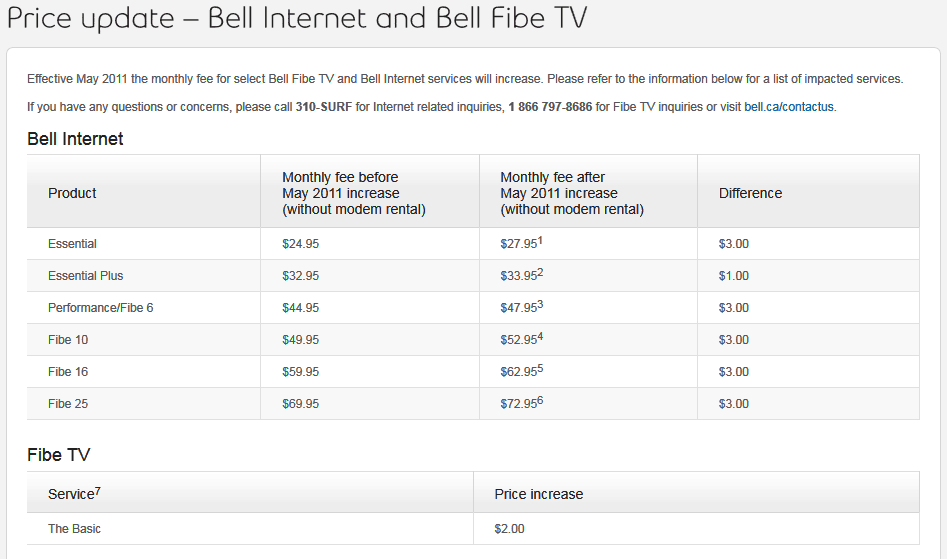
Remember when Bell’s head of government affairs Mirko Bibic told Parliament usage-based billing was necessary because he didn’t think it fair that all Canadians should pay for “heavy users” of the company’s Internet service?  That was a few months ago.  This is April — time for a rate increase that will jack Bell broadband service rates up an additional $3 a month, effective in May.  That’s a rate increase every customer will pay, and comes with Bell’s everyday Internet Overcharging scheme — usage caps and overlimit fees.

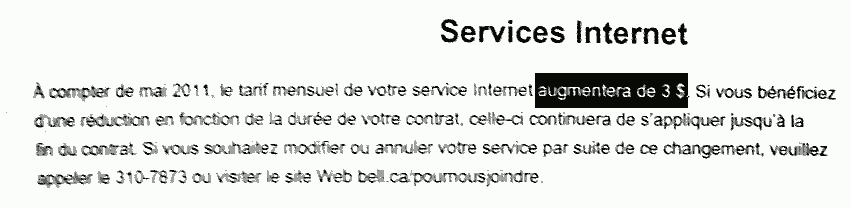
Stop the Cap! reader Alex in Quebec sent a copy of his bill showing Bell’s “Price Update.”  They don’t even want to call it a rate increase.

Bell's notification to customers in Quebec their bills are going up.

“Bell Canada will increase their Internet rates by as much as 15% (for Québec ”Essential” users),” Alex says. “Although $3 may seem like a negligible charge, it especially affects those with budget Internet plans, such as Essential, E Plus, and Performance ‘Fibe’ 6.”

Bell’s website cannot even get the story straight, originally telling customers their overlimit fees would now be rounded to the nearest gigabyte, instead of megabyte.  A Bell spokesperson tells Stop the Cap! that is a typo — they really still mean megabyte.

Bell is one of the few phone companies out there actually increasing their long distance calling rates as well, Alex tells us.  The original announcement came around the same time as the earthquake in Japan, underlining how essential long distance can be during natural disasters.  Many cable companies have waived long distance fees to Japan altogether.  Not Bell.

The rate increases mean customers like ‘Jackorama’ in Hamilton will pay $56.90 for “up to 7Mbps” ‘Performance DSL’ service.  After HST fees, he’ll pay $64.30 just for broadband service, with a 60GB monthly usage limit.  If he exceeds that, he’ll pay even more — $2.50 per gigabyte, or, if he knows he’ll exceed the cap in advance: $5/month for 40 GB, $10/month for 80 GB, or $15/month for 120 GB.

That also assumes Bell can count usage correctly, and there is every indication they cannot.  The company has admitted its usage meter is prone to errors — misreads they are still prepared to bill their customers.

Share

Road Runner Extreme/Wideband Arrives in Greater Rochester; Broadband Price Promotions

Phillip Dampier April 28, 2011 Broadband Speed, Time Warner Cable 10 Comments

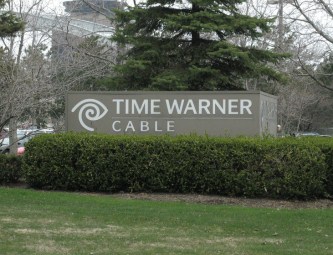
Time Warner Cable's office on Mt. Hope Avenue in Rochester, N.Y.

More than two years after Time Warner Cable unveiled its DOCSIS 3 cable modem upgrade for New York City customers, Time Warner Cable has begun rolling out faster speeds in the metro Rochester area.  Rochester is the last upstate city to get DOCSIS 3, and Time Warner Cable has only soft-launched the upgrade in selected parts of the area — especially on the east side extending into Wayne County.

According to a Time Warner Cable representative we spoke with this afternoon, the service can now be ordered by customers in the following towns:

  • Webster
  • Perinton
  • Sodus
  • Macedon
  • Medina
  • Lima
  • Covington

What do these communities all have in common?  They were all suffering from some congestion problems earlier this year.  Webster, in particular, was one of the worst-impacted areas.  Our readers reported dramatic speed reductions during peak usage times, often slowing to 1Mbps during the evening hours.  The most curious town on the list is Covington — a tiny community of 1,300 in extreme northeast Wyoming County.  Time Warner solved their congestion problems, and those experienced by other towns with DOCSIS 3 upgrades.

The representative we spoke with indicated a service call is required to activate either Road Runner Extreme (30/5Mbps) or Wideband (50/5Mbps).  A modem replacement is necessary.  Rochester area customers do not pay a modem rental fee, so the replacement comes free.  Signature Home customers in these areas should soon see 50/5Mbps speeds, if they have the company’s DOCSIS 3 modem.

Time Warner Cable will slowly expand the service to their other Rochester/Finger Lakes Region customers, with an estimated completion date of early summer.  The representative warned us not every Time Warner Cable representative may have the latest information allowing customers in these areas to order the service, so if you are told it is not available yet, and you live in one of these towns, you may want to try calling again.  Most of the Rochester area operators are briefed on the expanded service, but many in Buffalo are not, we were told, and there is no way to tell where your call will be answered.

Time Warner Cable has also unveiled some new price promotions for western New York.  Time Warner Cable’s website now sells its broadband-only service for a whopping $54.95 a month for Standard 10/1Mbps service.  Turbo runs an additional $10 a month (15/1Mbps service.)  That’s $15 more per month than just a few years ago when service could be had for $39.95 a month.  Broadband-0nly customers pay the highest prices because the company wants to drive its customers into multi-service bundled offerings.  The more services you take from Time Warner, the lower the price for each of them.

But for now, Road Runner Standard can be had by new customers for $33 a month for 12 months.  Turbo costs an extra $5 per month, making the out the door price for both around $38.  After the first year is up, prices go up.  Time Warner Cable in Rochester can be reached at (585) 756-5000.

Share

Cell Tower Politics: AT&T’s Alleged Cozy Connections With Civic Groups Upset Community

Your view

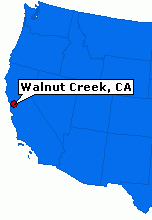
Would you like an AT&T cell tower within 100 feet of your home?  Some residents in Walnut Creek, Calif. are on the verge of finding out if AT&T wins approval to install a cell tower on property belonging to St. Stephen Church, located in the middle of the Buena Vista subdivision, filled with residential homes.

Now, a local neighborhood group is charging AT&T with playing power politics by using their connections with local civic groups to influence local officials to quickly approve the cell site.

Some residents suspect the local government is more than a little cozy with the Walnut Creek Chamber of Commerce.  It’s newly installed chairman of the board just happens to be Ken Mintz, area manager for AT&T.  Although Mintz says his job does not involve choosing or lobbying for cell tower sites, he is responsible for meeting with local officials on an ongoing basis to discuss AT&T business matters important to the company.

Mardi Veiluva, leader of the Walnut Creek Buena Vista Neighborhood Group, considers AT&T too close for comfort with city officials.  The group points to the city planning commission being predisposed to accepting AT&T’s word that the church is the only possible place for the new cell tower, even if it is within throwing distance of nearby homes.

The group also claims the city failed to follow up on what they feel is false information purposely given by AT&T to city officials in order to sell their tower siting arguments.

The group won a city council directive to force AT&T to fund the hiring of an independent consultant to review the facts and get back to the council about possible alternative cell sites, but was disheartened when the city hired the consultant in a closed process, not subject to an open review.

The city hired Los Angeles-based Kramer Firm Inc., a decision immediately questioned by some group members over alleged favoritism to AT&T.  Firm owner Jonathan Kramer has more than two decades experience dealing with utilities, and has hardly been their best friend.  In 2003, Kramer blasted Comcast for improperly grounding their cable lines in Modesto, Calif.  Kramer has no ties to AT&T.

AT&T plans to add at least 55 cell tower sites in greater San Francisco in the near future to address congestion and signal problems.

AT&T claims Mintz is not influencing anyone in his position, city officials deny being lobbied by Mintz, and local residents will probably unsatisfied no matter who agrees to AT&T’s cell tower placement recommendations.

This brings the inevitable conundrum: people want improved cell service in their local communities, so long as cell towers are located far away from their neighborhoods.

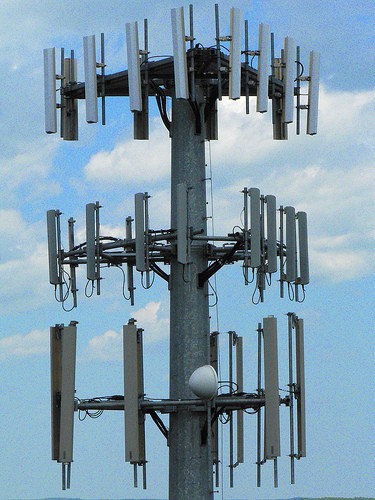
Cell phone companies invariably defend their choices for cell tower sites as the best, if not the only option.  Nearby residents protest, and often local officials have to find a compromise location, or insist on efforts to camouflage the resulting tower (with varying degrees of success.)


Share

Verizon’s 4Gee, It’s Down (Still): Nationwide LTE Outage Extends Into Second Day

Phillip Dampier April 27, 2011 Broadband Speed, Verizon, Wireless Broadband 1 Comment

Verizon 4G users across the country are still without their super-fast wireless service thanks to a major outage that wiped the LTE network out for users of the HTC Thunderbolt, Samsung Charge, and mobile broadband units from Novatel and Samsung.

The network has been down since late Tuesday evening, and Verizon took their sweet time telling customers, only admitting the outage after media outlets began reporting on it.

Verizon Wireless spokesman Jeffrey Nelson says 4G users are temporarily being punished with data sessions that use Verizon’s ancient 1XRTT data connection — largely worthless for most broadband apps:

We are aware of an issue with 4G LTE data connections and our network engineers are working to resolve this quickly. We have determined the cause of our issue and are working with our major vendors to restore connections.

  • 4G LTE Smartphones will still be able to make calls.
  • Customers are temporarily unable to activate any 4G LTE devices.
  • Please note: Customers may experience a 1XRTT data connection during this time.
  • After determining the cause of our 4G LTE network connection issue, we are continuing to work to restore connections.
  • We expect to see the network restored on a market-by-market basis. Timing and additional details will be provided as they become available.

Lucky for Verizon comparatively few customers rely on LTE service.  As of late Wednesday evening, the service remains down.


Share

Western Canada’s Internet Overcharging Two-Step: Shaw and Telus Plan to Gouge You

One of Canada’s largest phone companies is willing to admit it is prepared to launch an Internet Overcharging scheme on its broadband customers now, while western Canada’s largest cable company would prefer to wait until after the next election to spring higher prices on consumers.

When Shaw’s president Peter Bissonnette told investors and the media he believes users who use more should pay more, all that needs to be put in place is exactly how much more Shaw customers will pay for already-expensive Internet access.  With Shaw making noises about usage-based billing, Telus felt it was safe enough to dive right into their own usage cap and overlimit fee pricing scheme.

Shawn Hall, a spokesperson for Telus, told CTV News that the phone company was ready to begin overcharging customers as soon as this summer.

Shawn Hall (CTV BC)

“It’s only fair that people pay for how much Internet capacity they use,” Hall told CTV.

Telus doesn’t seem to be too worried about the fact usage-based billing has become a major issue in the upcoming elections.  A review of the pricing scheme by the Canadian Radio-television and Telecommunications Commission is due within months, but the phone company isn’t going to wait.

Shaw is being more cautious.  After the pretense of a “listening tour,” and with federal officials breathing down their necks, Shaw wants to wait until the elections are over before moving forward on their own price gouging, according to Openmedia.ca.

As Stop the Cap! has told our readers repeatedly, corporate “listening tours” about Internet Overcharging are about as useful as lipstick on a pig.  Providers don’t actually listen to their customers who are completely against these pricing schemes — and every survey done tells us that represents the majority of customers.  Instead, they only hear what they want to hear, cherry-picking a handful of useful statements in order to make it appear they are responsive to customer needs.

Shaw heavily redacted their own meeting minutes on their website, completely ignoring a large number of customers unalterably opposed to usage-based billing of any kind.  Instead, statements that fit their agenda were repeated in detail, especially those that suggested average users don’t want to pay for heavy users.

Shaw executives discuss with investors how they will stick customers with usage-based billing, despite customers telling them they don’t want these schemes. April 13, 2011. (7 minutes)
You must remain on this page to hear the clip, or you can download the clip and listen later.

It’s like arguing marathon runners should pay extra for the oxygen they consume because others don’t breathe as much.  It’s all a lot of hot air.

Broadband traffic costs providers only a small percentage of the amount they charge customers, and that number is dropping.  Yet providers want to raise prices, restrict usage, and charge punitive fees for those who exceed their arbitrary usage limits.

The power of the duopoly in place across most of western Canada has given providers little to fear from overcharging consumers.

Shaw CEO Bradley Shaw told investors they know few customers will switch providers if usage-based billing is imposed.

“We are of the mind that we still have a tremendous upside in terms of pricing power on our Internet services,” Shaw said.

The fact many Shaw customers have no other choice other than Telus does not escape Shaw’s notice either.

Telus’ Hall even had the nerve to call their Internet Overcharging pro-consumer.

Bissonnette

“It’s going to be really customer friendly,” he said. “You’d be forgiven for the first month you go over. You’d get lots of warning, lots of notice that you were going over with options of moving to other plans.”

Except an unlimited one — that is not available.

Openmedia.ca is trying to hold politicians’ feet to the fire on the issue of Internet Overcharging, demanding answers from every major party in Canada about how they will keep providers from imposing these pricing schemes.

Every major party, with one exception — the Conservative Party of Canada, has answered.  That’s the party currently in power.

Liberal Leader Michael Ignatieff has spoken out against usage-based billing, while NDP Leader Jack Layton has promised to ban it outright if elected to power.

Nearly a half-million Canadians have signed a petition opposing usage-based billing, and providers are showing once again they are not open to listening to anyone but their bean counters, intent on extracting as much cash as possible from Canadian customers’ wallets.

http://www.phillipdampier.com/video/CTV British Columbia -- Shaw planning to revive metered internet billing critics 4-25-11.flv

CTV in British Columbia covers Shaw’s plans to revive metered Internet billing later this year.  (2 minutes)


Share

North Carolina Call to Action: Anti-Community Broadband Bill On the Move – Get on the Phone!

Stop the Cap! has learned Rep. Marilyn Avila’s (R-Time Warner Cable) anti-consumer, anti-competition, anti-community broadband bill H.129 is on the move again.  Now it’s up for a final vote in the Senate Finance Committee early Wednesday afternoon.  This is our last chance to derail this nasty piece of legislation before it hits the Senate floor and community networks start considering pulling the plugs on their expansion efforts.

North Carolina is YOUR state.  The state legislature is not Time Warner Cable’s personal playground, where they can order up customized corporate protection bills to protect their monopoly profits and stick you with higher bills.  It’s time to let your state senator know H.129 is totally unacceptable.  North Carolina is suffering from America’s worst broadband, and nothing about H.129 will make it any better.  Instead, companies like Time Warner and CenturyLink will continue to charge more for less service than other states enjoy.

North Carolina needs all of the broadband it can get, and with the defeat of H.129, the towns and communities big providers have bypassed for years can finally address their own needs without enduring years of broken promises for broadband service that never seems to materialize.

Our allies at Free Press have made this as convenient as can be.  Check out their legislator look-up page, which will get you the contact information for your state senator.  Then make the call starting tonight (you can even leave a message on their voicemail):

“Hello, I am calling to ask Senator “x” to oppose H.129, Rep. Avila’s anti-broadband bill now before the state Senate.  H.129 is nothing short of a protection bill for Time Warner Cable’s fat profits and does not bring a single new broadband connection to our state.  If communities want to build better broadband for people like me, I say let them.

North Carolina has the worst broadband in the country and large parts of our state cannot get it even if they wanted it.  We have the power today to hold our local leaders responsible if they stray too far — it’s called an election.

We don’t need Ms. Avila and Time Warner Cable, an out of state corporation, telling us what kind of broadband service we can get.

I absolutely expect you to oppose H.129 and I am carefully watching who votes for and against this legislation as it will be a major determining factor how I vote in the next election.  Please feel free to contact me at (provide name, address, and phone number.)  Thank you for hearing me.”

We need your calls to make the difference!

Share

HissyFitWatch: Time Warner Franchise Negotiation in Troy Turns Into ‘Caught on Tape’ Shoutfest

HissyFitWatch: When contract negotiations with the local cable company get a little too heated for comfort.

The city of Troy, N.Y. has lived with an expired franchise agreement with local cable company Time Warner Cable for more than a decade.  After a shouting match erupted between a city councilman and a city economic development coordinator over its renewal, now we know why.

City officials managed to complete a tentative renewal with the cable company back in March, subject to city council review.  The agreement comes even as Verizon’s FiOS fiber to the home network threatens to provide the cable company with some competition in the region.

As part of the renewal, Time Warner has agreed to provide $80,000 to fund a Digital Technology Lab at the Arts Center of the Capital Region. It will also front $70,000 to help construct a studio for a new government channel that will deliver coverage of city council meetings, which could draw some high ratings if tensions always run this high.

Troy also gets the right to collect the maximum franchise fee allowed by law and receives a $200,000 settlement to cover alleged franchise violations that occurred under the old agreement.

One of Time Warner Cable’s biggest skeptics on the city council is Councilman Bill Dunne, (D-District 4).  He’s heard complaints about Time Warner’s prices and service from his constituents for some time, and told The Record he is “cautiously optimistic” about the potential deal, but stressed it will not be approved by the council until it is thoroughly reviewed.

Dunne suspects the cable company has made a fortune off Troy residents for years, and he wants to closely examine how well the cable company has done in upstate New York before handing them a lengthy contract extension.

Troy, New York

“I would like to see an independent auditor open up the books on Time Warner Cable … to see exactly where the money is going and how much money is being made [from Troy cable subscribers],” he told the Troy newspaper.

Some residents suspect whatever Time Warner Cable “gives” the city as a result of contract negotiations will be quickly made back in future rate increases.

“These negotiations are a sham because Time Warner Cable is negotiating with our money,” Troy resident Bill Thompson tells Stop the Cap! “If they give the city $500,000, they’ll just raise our rates to get that money back.”

Thompson says he applauds Dunne’s skepticism, and believes bringing in competition from Verizon is the only way to keep prices in check.

Christopher, during happier times.

Dunne’s ongoing concerns about Time Warner caused a fracas during last Thursday’s city council meeting, when Dunne won approval to take the Time Warner Cable franchise renewal off the table.  In its place, Dunne’s new substitute resolution forming a working group to study the proposed franchise renewal and more importantly, perform an audit of Time Warner Cable and their supporting documents.

That decision infuriated Economic Development Coordinator Vic Christopher, who had been working with Time Warner Cable and the mayor’s office to push for a speedy approval of what he felt was a well-reviewed franchise renewal agreement. When Christopher objected to the study group, and delaying the agreement in general, Councilman Ken Zalewski (D-District 6) suggested he and the mayor’s office were representing the cable company more than city residents.

That did it.

As the meeting ended, a shouting match ensued between an offended Christopher, Zalewski, and Dunne. Christopher called the city council “obstructionists” and then followed up on his Twitter account accusing the council of talking everything to death. Dunne suggested Christopher should run for office if he didn’t like the way the council represented the interests of Troy residents.

“Christopher’s petulance was an amazing spectacle to watch, especially considering nobody was directly attacking him,” Thompson says.  “He took it as a personal attack and responded in kind, and it only reinforced the notion the mayor’s office was in a hurry to get this agreement signed.”

http://www.phillipdampier.com/video/The Record Spat in Troy Over TWC 4-22-11.mp4

The hissyfit over a Time Warner Cable franchise agreement extension was caught on a cell phone camera, and the resulting video was promptly published online by The Record, Troy’s local newspaper. (1 minute)


TWC Franchise Agmt

Share

Time Warner Cable’s Backdoor Rate Hike in Kansas City

Phillip Dampier April 26, 2011 Consumer News, Time Warner Cable, Video 1 Comment

As Time Warner Cable continues it channel re-alignments in markets across the country, some subscribers are coming up with fewer channels after the changes, but they are still paying the same cable bill — for fewer channels.

“It’s classic cable bait and switch,” shares Stop the Cap! reader Kyle from Kansas City, who spent hours fiddling with his TiVo box after Time Warner re-mapped the area’s channel lineup earlier this month.  “TiVo really underlined it for us, albeit unintentionally, when we discovered several channels no longer available to us unless we paid extra.”

While Time Warner Cable moved Kansas City to its theme-based lineup, which places similar channels together and aligns HD channels with their standard definition counterparts, they also used the occasion to re-tier some of their “free” channels into mini-pay tiers.

Among the channels out of the digital cable standard lineup:

  • Encore MoviePlex — Seven theme-based commercial-free movie channels;
  • IFC — Independent Film Channel
  • Fox Movie Channel
  • Flix
  • RFD-TV
  • Ovation

The movie channels are being re-tiered in a mini-pay package called TWC Movie Pass, which will eventually sell for $4.95 per month after some early promotional discounts.  RFD and Ovation are part of a new “Digital Choice” tier.

“It’s the usual deception from Time Warner, which claims to sell you ‘free HD’ service without also telling you a rented set top box is required, which adds at least $7 a month for the ‘free HD’ channels,” Kyle says.  “Now they don’t even give you that as they start stripping networks away from their HD lineup to sell you for more money.”

Some subscribers are less than happy with the outcome, considering they now have fewer channels and are still paying the same cable rate they were before the channel change.

“It’s a shell game they always win — find the channels, keep your eye on the channels, wait — they are gone.  Pay us anyway.”

Aaron Barnhart, who writes for the Kansas City Star, called it a PR failure.

RFD-TV: Buried in a backwater mini-pay tier few will pay extra to receive.

“Time Warner proved once again to be its own worst enemy, hyping all the good things and leaving it to customers to discover the not-so-good-things on their own,” Barnhart wrote.

Time Warner’s reasons for the channel changes, reported by Barnhart, seemed less than convincing to customers.

Time Warner’s spokesman Matt Derrick pointed out that “in most places, Encore is bundled as a premium package with Starz.” Liberty Media, which owns both Encore and Starz, used to offer Encore to cable operators as a digital-cable value alternative to premium channels. But that has changed, and Time Warner negotiated this 12-month rate with Liberty to encourage customers to go along with the switch.

Derrick explained that Digital Choice was designed as a low-cost alternative to its larger Digital Variety package, where the same channels are also available.

“Wait, that doesn’t even make sense,” Kyle argues.  “Time Warner negotiated with Liberty to turn a free set of channels into a pay tier to encourage us to go along?”

Kyle doesn’t think the reasons for Digital Choice made any sense either.

“How many people are demanding to pay extra for Ovation and RFD, exactly?” Kyle wonders.  “What is missing from all this is why our rates did not decrease to compensate us for the lost channels.”

Kyle says the $4.95 a month rate for TWC Movie Pass may not seem as much as a pay network, but he reminds us Time Warner will continue to collect money from every subscriber for the channels they’ll no longer get.

“So if it costs them $4.95 a month for Encore, we’re all still paying that because our bill isn’t going down; if we actually want those channels, that costs another $4.95 — $9.90 a month.

http://www.phillipdampier.com/video/WLWT Cincinnati Time Warner Channel Realignment 4-18-11.mp4

WLWT-TV in Cincinnati explains to certain Ohio viewers how to accomplish a needed channel “re-scan” that comes along with the channel re-alignments Time Warner Cable is performing across the country.  (2 minutes)

Share

Broadcast Lobby Says ‘Spectrum Crisis’ is Fiction; Wireless Data Tsunami Debunked

(Source: JVC)

The National Association of Broadcasters (NAB), a trade association and lobbying group representing many of the nation’s television stations, says claims by wireless carriers of a nationwide spectrum crisis are troubling and counterfactual.  That conclusion comes in a new report issued by the NAB this morning that wants the FCC to keep its hands off UHF broadcast channel spectrum the agency wants to sell off to improve mobile broadband.

The paper, “Solving the Capacity Crunch: Options for Enhancing Data Capacity on Wireless Networks,” written by a former FCC employee, suggests claims by wireless carriers that they will “run out” of frequencies to serve America’s growing interest in wireless services are simply overblown.

Many wireless companies own spectrum they are not using, the report argues, and other licensed users are holding onto spectrum without using it either, hoping to make a killing selling it off at enormous profits in the future.  Besides, the federal government holds the largest amount of underutilized spectrum around — frequencies that could easily be allocated to wireless use without further reducing the size of the UHF broadcast TV band.

Many of the ideas in the NAB report emphasize the need for carriers to deploy innovative technology solutions to increase the efficiency of the spectrum they are already using.  Those ideas include additional cell towers to split traffic loads into smaller regional areas, and improving on network channel-bonding, caching, and intelligent network protocols.

But the NAB report has some obvious weak spots the wireless industry will likely exploit — notably their recommendations that seek a reduction in wireless traffic — ideas that would suggest there is not enough spectrum to handle every user.  Among those recommendations:

  • Implementing Internet Overcharging schemes like “fair use” policies and consumption-based pricing to discourage use;
  • Migrating voice traffic to Internet Protocol;
  • Migrating data traffic to a prolific network of “femtocells” — mini antennas that provide 3G service inside buildings, but deliver that traffic over home or business wired broadband connections;
  • Offering wider access to Wi-Fi networks in public areas;
  • Encouraging the development of bandwidth sensitive devices and applications.

The National Broadband Plan’s conclusion of a spectrum shortage is based on little more than a wish list by wireless carriers, says the paper. Its author, Uzoma Onyeije, cites contradictory statements by high-ranking corporate officials to show the Plan’s calls for making 500MHz of spectrum available for broadband in ten years is a gross overestimate of the actual need.

“There is no denying that the corporate imperative of mobile wireless carriers is to obtain as much spectrum as they can,” Onyeije wrote. “However, the fact that wireless carriers cannot find a unified voice on the amount and timing of their spectrum needs suggests that this advocacy is more strategic gamesmanship than factual reality.”

The NAB has heavily lobbied Washington officials on the issue of spectrum because their members — broadcast television stations — are facing the loss of up to 120MHz of what’s left of the UHF dial, already shrinking because of earlier reallocations.  The FCC proposal would resize the UHF dial to channels 14-30 — 16 channels.  In crowded television markets like Los Angeles, up to 16 stations would be forced to sign-off the public airwaves for good, because there would be insufficient space to allow them to continue a broadcast signal.  Instead, the FCC proposes they deliver their signal over pay television providers like cable or telco-provided IPTV.  Or they could always stream over the Internet.  But that would mean the decline of free, over the air television in this country.

Considering the millions of dollars many stations are worth, it’s no surprise broadcasters are howling over the proposal.

Onyeije’s report suggests AT&T and Verizon, among others, are grabbing whatever valuable spectrum they can get their hands on.  What they don’t use, they’ll “warehouse” for claimed future use.  By locking up unused spectrum, potential competitors can’t use it.  The proof, Onyeije writes, is found when comparing claims by the wireless industry with the FCC’s own independent research:

AT&T predicts 8-10 times of data growth between 2010 and 2015 and T-Mobile forecasts that data will have 10 times of growth in 5 years. Yet, the Commission’s assessment that 275MHz of spectrum is needed to meet mobile data demand is premised on data growth of 35 times between 2009 and 2014.

The Data Tsunami Debunked

Some providers are sitting on spectrum they already own.

The NAB also takes to task the “evidence” many providers use to claim the zettabyte era is at hand, where a veritable exaflood of data will force America into a widespread data brownout if more capacity isn’t immediately made available.

[...] The [industry claims rely] on suspect data. In arriving at its conclusion, OBI Technical Paper No. 6 relies heavily on forecast data from Cisco that is both wildly optimistic about data growth and unscientific. In a blog entry entitled, Should a Sales Brochure Underlie US Spectrum Policy?, Steven Crowley states that “[t]here is overlap between the people who prepare the forecast and the people responsible for marketing Cisco’s line of core-network hardware to service providers. The forecast is used to help sell that hardware. Put simply, it’s a sales brochure.”

Onyeije takes apart the oft-repeated claim that a data explosion will be unyielding, unrelenting, and will be the wireless industry’s biggest challenge for years to come.  It also speaks to issues about broadband use in general:

In particular, the paper appears to be premised on the highly suspect assumption that the high demand curve for mobile data will not slow. While smartphone growth is significantly increasing now, it will no doubt plateau and slow. It has been widely accepted for decades that the process of technological adoption over time is typically illustrated as a classic normal distribution or “bell curve” where a phase of rapid adoption ends in slowed adoption as the product matures or new technologies emerge.

As recently reported, Cisco now projects that U.S. mobile growth will drop by more than half by 2015. As Dave Burstein, Editor of DSL Prime, explains: “The growth is clearly not exponential.”  Mr. Burstein went on to say “Every CFO and engineer has to plan carefully for the network upgrades needed, but the numbers certainly don’t suggest a ‘crisis.’” Jon Healey of the Los Angeles Times Editorial Board similarly explains that “Much of the growth in the demand for bandwidth has come from two parallel forces: a new type of smartphone (epitomized by the iPhone) encourages people to make more use of the mobile Web, and more people are switching from conventional mobile phones to these new smartphones. Once everyone has an iPhone, an Android phone or the equivalent, much of the growth goes away.” AP Technology writer Peter Svensson echoes this concern and explains “AT&T’s own figures indicate that growth is slowing down now that smartphones are already in many hands.” Thus, the assumption that data demand will continue to grow unabated is deeply flawed.

Internet Overcharging is About Rationing and Reducing Use

Although the NAB favors Internet Overcharging to drive down demand for use, Onyeije’s report inadvertently provides additional evidence to the forces that oppose data caps, meters, and speed throttles: they are designed to monetize usage while driving it down at the same time:

While unlimited data plans on mobile phones were once the standard, there is now more focus on using pricing as a network management tool. As AT&T Operations President John Stankey put it, “I don’t think you can have an unlimited model forever with a scarce resource. More people get drunk at an open bar than a cash bar.”  In the past year, AT&T and Virgin Mobile abandoned unlimited data plans. In 2010, T-Mobile announced that it would employ data throttling and slow the download speeds of customers that use more than five GB of data each month. And Bloomberg reported on March 1, 2011 that “Verizon Communications Inc. will stop offering unlimited data plans for Apple Inc.’s iPhone as soon as this summer and switch to a tiered pricing offering that can generate more revenue and hold the heaviest users in check.” Usage-based smartphone data plans substantially reduce per-user data traffic. As a result, data growth is likely to slow over time. And companies, including Cisco, are marketing products to carriers to help make tiered data plans easier to implement and help carriers “increase the monetization of their networks.”

Share

Search This Site:

Contributions:

Recent Comments:

  • Smith6612: I always avoid the hype about super antennas. They don't do much besides induce more noise which really puts you back at square one anyways with digit...
  • Smith6612: Do you have any proof that they are in fact messing with VPN connections and what not? I'd like to see that myself, personally. If you don't use VP...
  • Smith6612: It seems there is still some work to be done to the comment editor, unfortunately. For some reason I can edit others' comments and I'm not even an adm...
  • James R Bivins: I live on a budget and cable is in that budget,but if you don't have cable or the speeds for the these sevices.You are out of luck when is comes to ru...
  • James R Bivins: People in rural area are not been offered the better option for true broadband.Cable is faster,cheaper,and has the GB's.They offer 1 to 3 services an...
  • Fred: Bruce Edward Walker and Dr. Joseph P. Fuhr, Jr are two frauds who no one needs to listen to....
  • nolan: antenna did not work, i have a outside antenna with a digital converter box that pulled in 31 channels.and clear cast only got 12, also have 2nd tv w...
  • David Smith: AT&T's bandwidth capping is akin, in my opinion, to trampling on free speech. The Internet and today's technology makes us realize that there is ...
  • Michelle: How can I file a lawsuit against Cricket broad spying on my service. Every time I connect to the internet, I am bombard with a VPN connection of a rou...
  • Theresa Reid: I just got my Clear Cast today I was able to get only 4 channels. It WILL be going back....
  • Alex Perrier: Ultra-Lite discontinued! :|...
  • Greg: Sonic.net will do 1Gbps for $70/month in their limited FTTH service area. They are a private company too. Admittedly they are a very awesome priva...

Your Account: