South Africa Celebrates One Year of Uncapped Broadband Tomorrow; Rivals’ Money Party Ruined

South Africans won uncapped broadband service one year ago tomorrow when an upstart provider — MWeb — unveiled its “Free the Web” campaign, delivering usage-limit free Internet access to customers across South Africa.

The company’s move to unlimited, flat rate service was heavily criticized by competing providers, who enforce draconian usage limits and have tried to convince customers the global trend was moving towards metered broadband.  But MWeb president Rudi Jansen dismisses the notion limiting broadband is the way to go, suggesting usage caps and meters are more about profits than serving customers.

Today, MWeb’s uncapped broadband is a runaway success, with more than 50 percent of its customers switching to the meter-free service.  It has been profitable, too.

“We are running ahead of our business plan and all our products are profitable,” Jansen tells TechCentral.

Now the nation’s semi-privatized, 39% state-owned phone company Telkom is widely expected to stop the erosion of its own broadband customers by adopting flat rate broadband service itself.

For Jansen, that would represent a welcome move.  The Internet visionary wants to transform South African broadband away from its current expensive pricing model and throw the Internet wide open.

“I’m looking forward to it,” Jansen says. “The sooner they launch it the better.”

The arrival of flat rate broadband made headlines across the country in 2010. (click to enlarge)

South African broadband has coped with challenges few other countries endure.  International connectivity has always been one of the biggest — sustaining traffic on satellite backbone links or underpowered undersea cables first forced providers to limit Internet use because of capacity concerns.  But new fiber-based underseas cables from Seacom and Wacs, including the forthcoming 5.1Tbps West African Cable System project will dramatically increase capacity and slash costs.

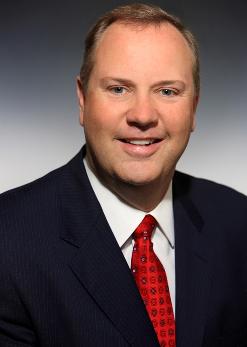
Jansen (Courtesy: TechCentral)

Yet several of his competitors want to keep the caps on and prices high, earning lucrative profits on a service Jansen says is becoming less costly to deliver every day.

Jansen admits MWeb is currently forced to traffic shape certain activities on his network, particularly bandwidth-intensive peer to peer traffic, because other providers in the country don’t agree with his wide-open view of the Internet.

He wants every provider in South Africa to agree to “open peering,” a practice that allows providers to exchange traffic with each other without charging transit fees.  He also wants to see wholesale mobile wireless pricing come down.  In Africa, mobile broadband has a strong place in a market where cable infrastructure (and broadband speed) is often lacking.

Telkom, South Africa’s equivalent to AT&T or Bell, is cited by Jansen as the biggest impediment to his plan to deliver truly unfettered, unlimited access.

Some South Africans deride the state phone company as "Hellkom"

In South Africa, broadband customers pay two providers — Telkom for the monthly rental of the telephone line and an ISP for the DSL service that connects through it.  Jansen says Telkom’s broadband line rental prices are too high.  But more importantly, the interconnection fee Telkom charges providers to access its network is “absolutely ludicrous.”

“Those prices are far more than the price of international connectivity,” Jansen says. “Telkom charges us to get access to their last mile and then charges end users to get access to the same last mile, so they make double money on it. And it’s completely mispriced.”

Despite the challenges from other providers, MWeb will celebrate the first anniversary of uncapped broadband tomorrow with a surprise announcement, probably targeting small business clients.

Share

Time Warner Cable’s iPad ‘TV Everywhere’ App Crashes Under Heavy Demand

Time Warner Cable’s new free iPad application, giving authenticated cable customers a selection of live cable channels to watch on the portable device, crashed under heavy demand last evening, hours after the company unveiled it in a mass e-mail campaign to customers.

Time Warner Cable TV for iPad is Time Warner’s first serious effort at delivering a cable TV experience to an online audience, initially streaming 31 cable channels in HD to customers who pay for both cable television and broadband from the company.

Several of the featured networks were part of earlier contract battles with the cable company. Scripps-Howard’s Food Network and HGTV are there, as is Fox’s FX and Fox News.  Some smaller “less-connected” networks like Hallmark Channel also made the cut.  Comcast-NBC’s networks also have a prominent place, including Bravo and CNBC.  All four major cable news channels are included.  Time Warner has been making a point to negotiate for on-demand and streaming rights with cable networks as part of contract negotiations.

Channel Lineup

A&E
ABC Family AMC
Animal Planet
BET
Bravo
CMT
CNBC
CNN
Comedy Central
Discovery
Disney Channel
E!
Food Network
Fox News
FX
Galavision
Hallmark Channel
HGTV
History
HLN
Lifetime Movie Network
MSNBC
MTV HD
National Geographic
Nick
Spike
SyFy
TLC
Travel Channel
USA
VH1

Requirements

  • iPad™ with iOS 4.
  • Time Warner Cable video package at the Standard (Expanded Basic) level or higher.
  • Time Warner Cable Internet Service (Road Runner® Standard or higher recommended for best experience. EarthLink® High Speed or EarthLink® Cable Max is also supported).
http://www.phillipdampier.com/video/TV for iPad Time Warner Cable Ad.flv

Time Warner Cable advertises its new iPad app for online viewing.  (15 seconds)

Time Warner Cable's new app for the iPad delivers 31 channels of live cable network viewing for free -if- you are a cable subscriber willing to watch from home.

Plenty of channels are missing though, including local broadcasters, Turner Broadcasting-owned networks like TNT and Turner Classic Movies, and sports networks.

But the most obvious limitation is that the service only works from inside of your own home, over a Time Warner Wi-Fi broadband connection.  You cannot take your viewing on-the-go.  This limitation seemed curious, considering other companies provide similar online viewing apps that can be used anywhere a wireless connection exists. 

Despite the limits, AdWeek reports several unnamed cable networks fired off warning shots yesterday to Time Warner Cable executives warning them they were streaming networks without permission.

Network legal reps are issuing a flock of heated missives to the nation’s No. 2 cable operator, calling for an immediate halt to a new service that allows subscribers to stream video content to iPads and other tablet devices. Although Time Warner Cable introduced the free app just 24 hours ago, a number of cable network groups have already made it abundantly clear that they had not signed off on any such distribution arrangement.

[...] “Distribution via any sort of third-party app is not addressed in our carriage deals with Time Warner Cable or any other operator,” said one affiliate chief. “There is going to be a messy dissection of what the rights are, but our position is that [this sort of distribution] is not authorized by our affiliate agreements.”

TWC CEO Glenn Britt has cautiously navigated the syntactic rapids, offering carefully worded assessments about the nature of the service. “Certainly all the business structures with the owners of copyrights are not fully in place, but you can begin to see a very exciting future for this set of industries and for the American consumer,” Britt said last August, after announcing plans to bow the iPad app. “There is great potential in all these devices…But it’s also a complicated process.”

Cable networks are concerned viewers who are not authenticated cable subscribers could get free access to programming from account sharing.  But considering Time Warner Cable has locked down viewing to inside the home for the time being, it is unlikely Time Warner Cable faces the same degree of wrath that could be heaped on Comcast and satellite dish TV providers who deliver apps that permit anywhere-viewing.

Time Warner Cable's new iPad app crashed under a heavy load last night.

The cable company’s heavy promotion of the newly-available app in mass e-mail announcements was probably a mistake, however.  The online viewing party came to a rapid end last night when the company’s servers, unprepared for the demand, ended up turning away many would-be viewers.

Jeff Simmermon, director of digital communications for the cable company, said they did not anticipate the level of demand they got last night.

“At about 8 o’clock last night the app crashed under a much heavier load than we anticipated. Our engineering team is working as hard as they can to put a fix in place and get everything up and running as soon as they can,” Simmermon wrote on Time Warner’s blog.

“For the time being, the app is running with only 15 channels. We have found that by temporarily reducing the number of available channels, we can ease strain on the authentication process. This will enable us to offer at least some sort of an experience to our customers while we get a fix in place. We’ll add the other 17 channels back in as soon as we can fix the underlying issue, and we’ll be adding more channels in future iterations of the app as well.”

http://www.phillipdampier.com/video/BTIG Time Warner Cable iPad App.flv

Rich Greenfield demonstrates Time Warner’s new iPad app.  (3 minutes)


Share

North Carolina Action Alert: Anti-Broadband Bill Railroad Stops at Finance Committee Tomorrow Morning

Don't allow a "dollar-a-holler" mouthpiece for the broadband industry to speak on your behalf. Get on the phones and send those e-mail messages today!

H.129, Rep. Marilyn Avila’s (R-Time Warner Cable) anti-broadband bill has been moving full speed ahead as she hurries it through the state legislature before consumer outrage gets a chance to block it.  Tomorrow morning, it will make a stop at the Finance Committee, where we expect the bill’s broadband-killing language will remain largely intact, thanks to hard work from Time Warner Cable and their astroturf friends.

While Ms. Avila is e-mailing copies of a so-called “independent article” about H.129 written by a man who received a $20,000 check from Time Warner Cable and works for a telecommunications company-funded think tank to her colleagues, you need to be e-mailing, tweeting, and calling your friends and neighbors and get everyone to call or write the individual members of the Finance Committee immediately.

Here are the points you need to raise:

  1. Please vote NO on H.129, an unnecessary bill that does nothing to improve broadband in North Carolina;
  2. H.129 is sponsored by the state’s biggest cable and phone companies to protect their anti-competitive markets and guarantee high rates for slow service indefinitely;
  3. The fastest broadband at the fairest prices in the state comes from 21st century fiber optic networks that will be driven out of business if this bill becomes law;
  4. Although Ms. Avila and Chairwoman Howard promised to protect and exempt existing community broadband networks from the terms of this bill, they have not yet kept their promise;
  5. If the companies supporting this bill delivered broadband at the speed they are rushing H.129 through the legislature, North Carolina would not have a broadband problem;
  6. If rural communities cannot solve their own broadband problems, who will?  The companies that refused to provide appropriate service yesterday, today, and will continue to not do so tomorrow?

Make sure you remind your legislator this is not a Republican of Democratic issue — it’s a consumer issue, it’s an issue for every rural community, and it’s an issue for the future economic well-being of a state that needs digital economy jobs.

Finance Committee Members

(click each name for contact information)

Senior Chairman Rep. Howard
Chairman Rep. Folwell
Chairman Rep. Setzer
Chairman Rep. Starnes
Vice Chairman Rep. Lewis
Vice Chairman Rep. McComas
Vice Chairman Rep. Wainwright
Members Rep. K. Alexander, Rep. Brandon, Rep. Brawley, Rep. Carney, Rep. Collins, Rep. Cotham, Rep. Faison, Rep. Gibson, Rep. Hackney, Rep. Hall, Rep. Hill, Rep. Jordan, Rep. Luebke, Rep. McCormick, Rep. McGee, Rep. Moffitt, Rep. T. Moore, Rep. Rhyne, Rep. Ross, Rep. Samuelson, Rep. Stam, Rep. Stone, Rep. H. Warren, Rep. Weiss, Rep. Womble
Share

Multiple Time Warner Cable Service Outages – Get Those Credits

Phillip Dampier March 16, 2011 Consumer News, Time Warner Cable No Comments

Time Warner Cable has experienced several significant outages this week in different areas of the country.  When service conks out, customers are entitled to service credits, but you must request them — they do not come automatically.

The most significant problems:

  • Yesterday: Northeastern U.S. — Telephone and broadband service was knocked out for several hours, causing a flood of calls to area newsrooms and clogging up Time Warner’s own call centers;
  • This Morning: Ohio — Telephone and broadband service down in many areas.

The easiest and fastest way to request credit is sending a message to Time Warner Cable using their Online E-Mail form, select Billing Inquiry, and send a message like this (edit it as appropriate):

I am writing to request one day service credit for the Internet and phone service outage that occurred in my area yesterday. Please credit my account.

Share

Congestion Pricing Myths Exposed: A Guide to the ‘Bandwidth Crisis’ at AT&T (Or Anywhere Else)

AT&T's Fairy Tales of Broadband Congestion

Just a few days after Broadband Reports broke the news AT&T was imposing an Internet Overcharging scheme on its broadband customers, evidence continues to arrive illustrating the company’s planned usage limits are more about protecting their U-verse video business than actually controlling “heavy users.”

Dave Burstein, a well-known industry analyst who has tracked the broadband universe for years was so miffed about the nonsense he was reading in the Wall Street Journal, he picked up the phone and called the AT&T spokesperson who claimed the company was overburdened by heavy users:

Mark Siegal, AT&T’s top flack, hung up the phone on me when I said his comment to the Wall Street Journal was apparently a lie. It’s prohibitively unlikely their DSL cap “is to ensure the quality of the customer experience” necessary to solve “congestion in certain points of the network and interfering with other people’s access.” I’m certain that far less than 1% of the time do AT&T DSL customers have any impact from congestion. I’m pretty confident it’s less than 1/10th of 1% and probably less than 1/100th of 1%. My sources that wireline congestion on AT&T is minimal include statements from two CTOs of the company. Cheng, now a veteran in D.C., knew the comment was misleading at best. A mantra in D.C. is “wireline may not have congestion but wireless is different.” It was Sunday and perhaps hard to factcheck, but he’ll easily confirm the problem on Monday.

AT&T has long maintained they have a more robust network and cable is the one with “bandwidth hog” problems. But Comcast’s cap was 60% higher than AT&T and Comcast has said they will raise it. AT&T has gone 13 years without caps on their DSL network because they said they didn’t need them. Traffic growth is actually down slightly (Cisco, Odlyzko) so there’s only one reason to impose caps now: their video service, U-Verse, has become a $5B business. They don’t want people to be able to cut the cord and watch all their video over the net. 150 gigabytes is 40-80 hours of U-Verse quality TV, far less than the average U-Verse user watches.

In fact, AT&T is one of America’s largest Internet Service Providers, and maintains an important role in America’s Internet backbone.  As one of the largest providers, AT&T doesn’t worry about broadband traffic like a small wireless ISP does.  Its broadband pipes from the middle-mile to their nationwide network offers near limitless capacity thanks to fiber optic technology.  In fact, AT&T’s theoretical “bottlenecks” occur in the “last mile” of the network, from the phone company’s central switching offices or its interface between a fiber connection and the plain old copper wires that work their way into your home or business.

But first, a word about costs.

Dave Burstein

We have new evidence from both Burstein and the Internet Overcharging drama unfolding in Canada that providers literally pay pennies per gigabyte of traffic.  In fact, the broadband traffic customers generate represents only 2%-5% of what we pay for broadband in both countries.  Burstein uses some of Craig Moffett’s prolific comments in the media against his own argument for Internet Overcharging.  Moffett, a Wall Street analyst, is not alone when he reports broadband margins are as high as 90%, according to official company filings.  John Hodulik from UBS joins him.

Burstein gives providers’ argued need for increased investment to keep up with demand the benefit of the doubt and is willing to suggest profit margins at a reduced 75%.  In either case, running a large broadband network is a veritable license to print money in North America.  The costs to provide the service keep dropping, and providers keep on raising prices.

Burstein was generous with Comcast when he called their 250GB usage limit imposed in 2008 “fair.”  But as Stop the Cap! has argued, Comcast — like other Internet Overchargers — has not grown the cap over time, even as their costs decline.  In fact, customers are probably lucky the country’s largest cable operator hasn’t reduced it, as providers in Canada have done repeatedly. Burstein calls on Comcast to honor their promise and raise their cap.

Burstein also notes the rest of the world enjoys lower prices, more competition, and often faster service — with providers across the board still enjoying considerable profits.

But why not here?

America’s broadband market is a monopoly or duopoly in virtually every American city.  One cable operator and one telephone company deliver service to the vast majority of American broadband users.  Wireless providers are largely owned by legacy phone companies and strictly limit usage.  Without significant competition, providers can raise prices at will and milk profits to sustain their balance sheets even as other business divisions suffer from a downturned economy or shifting cultural changes.  The “landline” is rapidly becoming a thing of the past, and cable television provided by cable and phone companies could face cord cutting from consumers watching their favorite shows over their broadband connections.

Broadband service carries up to a 90 percent profit margin

Burstein tracks the business model:

15 gigabytes/month: The average (mean) user in the U.S., per Cisco’s respected VNI survey and numerous comments from the major companies.

Going Down: Bandwidth usage growth per customer. The rate has been about 30% per year, with the rate slightly falling the last few years. The growth in average usage is actually going down slightly, per Cisco VNI and the MINTS data of Professor Andrew Odlyzko.

Going Down: Capital investment required. In 2009, AT&T cut U-Verse by 1/3rd. In 2010, Verizon cut FiOS by 2/3rds. John Stankey of AT&T has said they will cut U-Verse much further after this year. Fran Shammo of Verizon says “Wireline will continue to come down year over year.” Cablecos have been dropping capex as a % of sales and often in absolute dollars. According to a recent survey by Heavy Reading, 70% of the cable networks have been upgraded to DOCSIS 3.0 already. There’s no significant capital spending beyond that at least until mid-decade. The Columbia University CITI report to the broadband plan aggregated analysts forecast and predicted a drop in overall capital spending on broadband, particularly in wireline. The primary capital spending for wired broadband is behind us, with few significant network buildouts in the next five years or longer.

Going Up: Profit Margins. Prices for broadband have generally been going up in the U.S. since 2007 while costs drop. Comcast, Time Warner, Verizon and most others have raised their broadband prices and ARPU. They also have (modestly) raised the prices of triple play including broadband, according to Dave Barden of Bank of America. Capex is dropping pretty dramatically while other operating costs are also falling. Customer support costs have gone down as few new customers (who need more support) are added. Modems and other gear continue dropping in price. Costs down, prices up = higher profits. Both Stankey and Shammo pointed to improved margins.

AT&T DSL (left) vs. AT&T U-verse (right): Hunting season on customers of both is now open.

AT&T argues their usage caps are less about the money and more about dealing with network congestion.  But does that play out?

AT&T has a convenient argument to use, which several journalists have come to believe gives the company a track record of being victimized by “heavy users.”  Namely, their network congestion brought about by the flood of iPhone users on AT&T Mobility’s cellular network.  Even if a reporter does not understand the profound differences between a wired and wireless broadband network, they have heard about AT&T’s problems coping with their wireless traffic.

In short, the company underestimated demand from its exclusive deal with Apple for the wildly popular phone, and refused to invest adequately to mitigate overcongested cities.  Instead, it spent millions lobbying for permission to “manage” the traffic with artificially-slowed speeds, usage limits, confiscatory overlimit penalties, and even some equipment to offload wireless users onto home broadband connections (for which AT&T still deducts airtime and data usage from your wireless allowance.)  Robust Wi-Fi also tries to drive customers off of AT&T’s inadequate 3G network.

For home broadband users who will be affected by AT&T’s Internet Overcharging scheme, let’s break them into two separate categories: DSL customers who face a 150GB cap and U-verse customers who will get a 250GB allowance.

AT&T DSL is a legacy product dependent on traditional copper wire phone lines.  Available in many areas unserved by U-verse, this technology typically provides up to 6Mbps service — often slower, sometimes higher.  The distance between the phone company office and one’s home usually determines what speeds customers receive.  In rural areas, 1-3Mbps is often typical.  In some urban areas, higher speeds are sometimes possible.  DSL is not a “shared” technology like cable broadband.  Each DSL customer has their own line between their home and central office (or remote repeater).  From there, a connection from the central office to AT&T’s backbone is made over a middle mile network.

AT&T U-verse VRADs (a/k/a 'lawn refrigerators') in Houston, Tex. (Courtesy: Swapdisk)

But AT&T’s DSL customers are already constrained by the reduced speeds DSL provides them.  It is unlikely a customer with 3Mbps DSL service is going to present much of a traffic challenge to a multi-billion dollar company unless they purposely under-invest in network upgrades.

Where congestion does exist, it occurs at the central office — usually because the company inadequately provisioned a sufficiently large data pipe to handle the traffic.  Since these circuits are increasingly fiber-based, congestion issues disappear when AT&T uses technology from this century instead of the last.

AT&T argues heavy users are overburdening their DSL lines, but their prescription makes no sense.  The company says, despite the alleged traffic jam, it is more than willing to sell users additional capacity for $10 per 50GB increment.  If AT&T’s aim was to cut congestion, they would be unwilling to sell additional capacity they don’t have to customers who need it.

A usage cap on AT&T’s new U-verse platform makes even less sense and opens a political minefield.

When one pushes away the promotional and marketing glitz AT&T provides when pitching U-verse, you are left looking at just one thing — a high speed broadband connection.  AT&T’s entire platform of television, phone, and broadband all resides on that single, super-speed broadband pipeline.

AT&T has built this super fast pipe with a combination of fiber optic cables and copper phone wires.  It uses fiber, which doesn’t degrade with distance the way copper wire connections do, to reduce the amount of copper phone wiring between your home and AT&T.  With this “fiber to the neighborhood” approach, AT&T can create a robust pipeline which can accommodate multiple television channels, a phone line, and your broadband connection all running concurrently.

AT&T only seeks to limit one part of that connection, however: the broadband service you could theoretically use to bypass AT&T’s television and phone service in favor of another provider.  It’s the same platform — only the services are different.

AT&T claims network congestion is a problem for U-verse as well, which is a controversial claim to make considering AT&T designed U-verse with excess capacity that goes unused to this day.

What does AT&T’s U-verse network look like?

AT&T’s regional offices maintain watch over their U-verse network of TV, Internet, and phone services.  This portion of the network is entirely fiber-based.  From there, fiber extends to individual central offices, part of the company’s middle-mile network.  AT&T’s fiber journey typically ends at large metal cabinets strategically placed in different neighborhoods.  These “Video Ready Access Devices” (VRADs) are probably familiar to you if you live in an AT&T area.  Sometimes derided as “lawn refrigerators,” the huge metal cabinets contain the interface between the fiber optic network and the copper wire telephone lines running to your home.

It’s this “choke point” AT&T tries to claim as a point of congestion.  If enough customers use their connection at the same time, it can “overburden” the network.  But can it, really?

Early adopters of U-verse pestered AT&T engineers about the network as it was constructed and learned a lot about it.

Phil Karn has been a U-verse customer since November 2009 and has become an expert on how his U-verse service works, and importantly how it holds back a considerable amount of available bandwidth.

An AT&T engineer “tried to tell me that the network equipment was like the engine in a sports car. You don’t want to drive it at the red line all the time because that will wear it out. I don’t know if he was told to use that analogy or if he came up with it on his own, but needless to say it’s a pretty silly one. And completely inapplicable,” Karn shares on his website.

He then claimed, rather weakly, that backhaul capacity considerations from the VRAD limit how much can be offered to each individual subscriber. This argument might even have begun to hold water except for the numbers he then provided. The VRADs, he said, are connected by 10 gigabit Ethernet over fiber, and each VRAD serves upwards of 200 homes. Let’s see…10 gigabits over 200 homes is 50 megabits per home. My [U-Verse] link runs at 32.2Mbps.

The whole point is that it doesn’t really matter how fast or slow the backhaul from the VRAD may be. With modern Internet routers and priority [Quality of Service] mechanisms, there is no reason to force capacity to remain idle when a user could be using it. Not unless, of course, you’re trying to maintain the public impression that broadband capacity is really scarce and expensive.

Karn

In fact, because few Internet users fully drive their broadband connections on a continuous basis, it can be argued that continuous video streams delivered to television sets left on in the homes of U-verse customers for hours at a time present a bigger “congestion” problem for AT&T, at least at this point in their network.  But the company has no plans to limit television viewing — only their broadband Internet service.

U-verse is AT&T’s answer to slow speed DSL, and part of how the company intends to stay relevant as landline customers depart.  But the company’s business plan depends on a certain percentage of customers subscribing to their pricey television service.  Should AT&T’s broadband customers decide to stop paying for television service, watching everything online instead, that threatens a $5 billion dollar business.

Burstein predicted this scenario when he discussed it with former FCC Chairman Kevin Martin:

“In 2005, Kevin Martin discussed with me the issue of what he would do if AT&T favored U-verse. I believe he felt he would have to act, but at that point hoped competition would prevent him from facing that decision. Now AT&T’s multi-million dollar über-lobbyist Jim Cicconi has presumably told them [current FCC Chairman] Julius Genachowski is sufficiently under control he won’t do anything about this.”

In the end, many of AT&T’s arguments simply are incoherent.  If only a small handful of AT&T customers are creating such a dilemma for the company it has to inconvenience every customer with a usage limit, AT&T has a much larger problem to contend with.  Furthermore, the company’s existing acceptable use policy already includes provisions for dealing with users that create problems on their network, all without bothering everyone else.

Share

The Industry<->Regulator Revolving Door Keeps Turning; Former FCC Boss in as Top Cable Lobbyist

Phillip Dampier March 15, 2011 Astroturf, Net Neutrality, Public Policy & Gov't 1 Comment

Powell

Former Federal Communications Commission Chairman Michael Powell has been hired as America’s top cable industry lobbyist — taking over as president of the National Cable & Telecommunications Association.

Powell’s tenure on the Commission started during the Clinton Administration after President Clinton signed the 1996 Communications Act into law, which brought sweeping deregulation and industry consolidation.  Powell’s appointment as one of two Republican commissioners came with an agenda for deregulation and competition.  Powell believed free markets were best equipped to manage telecommunications in the United States.

His regulatory record impressed President George Bush, who appointed him chairman of the FCC during his first term.  Powell’s service at the Commission was marked by good times for the telecommunications industry, which was rapidly consolidating even as it added new customers.  Broadband was a rapid growth industry and getting service to consumers was a priority.  Powell’s interest in broadband often walked over the interests of others regulated by the Commission.  Powell was a major proponent of the now-forgotten “broadband over power lines” concept, which alienated broadcasters and amateur radio operators because the technology used unshielded power lines which often reduced much of the AM and shortwave radio dial to a cacophony of digital noise where it was attempted.

Powell’s record was consistently pro-provider except in one area — he was a strong advocate of Net Neutrality, going as far as to fine Madison River Communications for blocking VoIP telephone service in 2005 – the first time the concept of Net Neutrality was enforced.

The NCTA is the cable industry's biggest lobbying group.

Later, he laid the foundation for a flawed mechanism to partially enforce Net Neutrality under an FCC policy that classified broadband as an “information service,” not a “telecommunications service.”  It was this policy that was the subject of a lawsuit by Comcast which objected to the policy framework as untenable and lacking in authority.  A DC Court of Appeals agreed and overturned the policy, setting the stage for the 2010 fight for Net Neutrality.

During the start of Bush’s second term, Powell left the FCC and quickly assumed membership on the Board of Directors at Cisco, an equipment manufacturer that also sells the theory of the “zettabyte era,” where a great wave of Internet usage could create Internet “brownouts.”  Cisco and other manufacturers have also closely aligned themselves with the large telecommunications companies who are among their best customers.

Powell today serves as “honorary co-chair” of the industry front group Broadband for America, perhaps America’s largest corporate astroturf telecom group supporting broadband policies favorable to the industry that pays for their operation, while purporting to represent consumer interests.

Kyle McSlarrow is the outgoing head of the cable lobby.

His assumption of leadership at the NCTA, replacing Kyle McSlarrow (who is headed to Comcast to run their DC lobbying operation) — a strong advocate of Internet Overcharging — is likely a natural fit for the cable industry agenda, with the exception of Powell’s “tarnished record” of supporting Net Neutrality.  But his anti-regulatory, pro-provider credentials go unquestioned by most in the industry.  The congratulatory well-wishes have come pouring in since the announcement earlier today:

Matt Polka, American Cable Association: “The American Cable Association congratulates former Federal Communications Commission chairman Michael Powell on his appointment as NCTA’s new president and CEO. Everyone in the independent cable community wishes Michael the very best in his new position, and we look forward to working with him on the issues that are important to both large and small cable operators.”

Brian Roberts, Comcast: “We are thrilled that Michael Powell has accepted the position as CEO of NCTA. As a former FCC Chairman and advisor to Providence Equity, Michael brings unprecedented government and business experience to his new position. Michael is respected by the leaders of both the Senate and House, Republicans and Democrats, as well as the Administration and the business community. The cable industry is fortunate to have him as the new leader of our trade association.”

Gordon Smith, Nat’l. Assn. of Broadcasters: “NAB salutes the NCTA for its outstanding choice of former FCC chairman Michael Powell as its new president and CEO. I got to know Michael well during my tenure on the Senate Commerce Committee, and always found him to be thoughtful, engaging and a tremendous public servant. Though NAB and NCTA do not always agree on every issue, we look forward to working with Michael in the months ahead on public policy issues where we might find mutual agreement.”

The revolving door never stops turning as regulators take jobs with the industries they used to regulate.

Among consumer groups, Media Access Project and Public Knowledge tried to start off on a good note.  Andrew Schwartzman from MAP has a long history disagreeing with Powell during his time at the FCC, but still calls him a friend and looks forward to sparring with him in the future.  Gigi Sohn from Public Knowledge said their group hopes he will “help the association realize the transition to a broadband economy will take many forms, as consumers wish to exercise choices of online services and service providers.”

Free Press was in no mood to ingratiate themselves with Powell.  Craig Aaron, Free Press Managing Director, issued a statement affirming this was indeed good news for the cable industry.

“If you wonder why common sense, public interest policies never see the light of day in Washington, look no further than the furiously spinning revolving door between industry and the FCC.

Former Chairman Michael Powell is the natural choice to lead the nation’s most powerful cable lobby, having looked out for the interests of companies like Comcast and Time Warner during his tenure at the Commission and having already served as a figurehead for the industry front group Broadband for America.

During his time as a public servant, Chairman Powell once dismissed the notion of a digital divide as no different from the Mercedes divide that afflicted him — after all, he said, not everyone who wants a Mercedes can have one.

Thanks in no small part to the policies he pursued at the FCC and to the cable lobby’s unyielding fight against any real competition in the broadband market, the digital divide is still with us. But today we can finally say, at least in Michael Powell’s case, that the Mercedes divide is closing.”

Share

Wall Street and Providers Work to Distort Record on Unlimited Broadband

Wonder Twins: AT&T and Wall Street team up to support Internet Overcharging. "Shape of usage caps, form of ripping broadband users off."

The Wall Street Journal has left its readers with the impression America is the last bastion of the unlimited, all you can use, broadband plan.

In a story for the Dow Jones Newswires, Roger Cheng reports AT&T’s imposition of data caps and other Internet Overcharging schemes “is the latest step taken to get people out of the mindset that online access is an all-you-can-eat buffet. It’s part of a broader shift by companies on both the wireless and fixed-line sides to get consumers comfortable with a usage-based pricing model, in line with how the service is delivered elsewhere around the world.”

But that statement is provably inaccurate.  In fact, usage limits and so-called “usage-based pricing” is a phenomenon growing mostly in under-competitive markets in North America.

As Stop the Cap! has reported over the past few years, while the rest of the world is moving away from these usage-limited plans, providers in the United States and Canada are seeking to impose them to boost profits and monetize broadband traffic.  Some are even exploring charging you based on individual web applications and websites visited.

At the same time Korea is moving towards delivering 1Gbps unlimited broadband to every resident by 2013, American providers are trying to limit the broadband party to protect their own business interests.  In Canada, AT&T’s counterpart Bell was caught distorting the record on why it wanted to cease unlimited access, eventually admitting it was about getting users to reduce usage, particularly of video services which compete against its own pay television product.  Shaw Cable was caught lowering usage allowances when the threat of Netflix arrived in Canada.  So did Rogers Cable.

Around the world, usage-limited broadband is either yesterday’s story, or will be soon:

Make no mistake: every survey ever conducted on this issue shows consumers loathe Internet Overcharging schemes and prefer unlimited access usage plans, particularly for wired broadband:

South Africa adopts unlimited Internet.

It’s no wonder telecommunications companies rival big banks among the Wall Street Cheat Sheet’s 18 Most Hated Companies.  Among the despised: AT&T, Comcast, Time Warner Cable, Cox Cable and Charter Communications.

Why?  Pricing and usage caps are covered among the reasons.

Despite the overwhelming evidence to the contrary, Wall Street analysts joined AT&T’s chorus claiming such usage capped broadband was the wave of the future:

  1. DISTORTED CLAIM: “All-you-can-eat is a uniquely American service,” said Dan Hays, who covers telecom for consultancy PRTM. Consumers, who have enjoyed years of flat-rate pricing for Internet, may have a hard time accepting limits on their landline service, analysts said.
  2. BROKEN RECORD: “We expect the cable operators to follow AT&T’s move by introducing pricing plans that include caps for lower end packages,” said Craig Moffett, analyst at Sanford C. Bernstein & Co. Moffett said the logical reaction to more cord-cutting would be usage-based pricing.

Hays is provably wrong on his claim unlimited access is “uniquely American.”

Moffett said precisely the same thing in December (and earlier) when Net Neutrality was halfheartedly adopted at the FCC.  He had called for these pricing schemes in the past and will continue to do so.

Both of these analysts work for companies who favor the higher profits Internet Overcharging will bring providers (and their investing clients), so it’s no surprise both are willing to cheerlead price hikes.  But readers are left in the dark as both are quoted with the impression they are independent observers with no interest in the outcome.

As for the impact on consumers, nobody from the Wall Street Journal bothered to talk to any to find out.

What AT&T has proven, yet again, is that American broadband is moving backwards to enhance their profits as the rest of the world advances.

Share

An iPad 2 Adventure: Apple Channels Willy Wonka and Gets Veruca Salt… and Me, Standing in Line

Phillip Dampier March 14, 2011 Consumer News, Editorial & Site News No Comments

The crowds in New York City waiting for iPad 2 to arrive. (Courtesy: Digital Trends)

You have to give Apple credit.  Nobody knows how to design a product for intuitiveness, sex appeal, and downright usability like Apple. Although I have never been devoted to the Macintosh or other Apple personal computers, nobody can deny Apple has had one success after another with their personal communications and entertainment devices:

  • iPod – It changed music players the same way the Sony Walkman did a generation earlier;
  • iPhone – Not since Ben & Jerry’s Chocolate Chip Cookie Dough ice cream have I seen people literally fight over something.
  • iPad – The only tablet I have found tolerable.

Acquiring these products, particularly around launch time, is often an experience.  Apple is the ultimate control freak when it comes to managing its product releases, with pages of requirements about how, when, and where people will be able to acquire the latest Apple Anything. They also know how to stage events guaranteed to bring the media out.

And so last Friday, in the middle of a nasty wind-whipped snowy day, there I was standing outside of a Best Buy store in Victor, N.Y., with around 75 others waiting in line to acquire iPad 2 (it’s not “the iPad” I learned — it’s just “iPad” thank you very much.)

It could have been worse.  At the Apple Store inside Eastview Mall, adjacent to Best Buy, hundreds were camped out, with some arriving with the early morning mall walkers.  A much smaller group gathered at Target and Wal-Mart, two other retailers who were part of the opening day festivities.

An hour before the 5pm official start of sales, I was #15 in line — not bad, but not great either in the 5 degree wind chill.  Not since a CompUSA Thanksgiving night promotion a few years ago had I waited in a significant line for anything.  As I chatted up several new-found queue-friends, I began to notice a trend.  I was the only one there who did not already own iPad.  At one point, while checking the time on my Motorola Droid X phone, audible gasps were heard.

“You… you don’t have an iPhone?” my line neighbor asked, as I realized I was the skunk at Apple’s garden party.

“No, nothing is worth being stuck with AT&T for cell phone service,” I replied, trying to recover from my social faux pas.  Not good enough.

The whispering began — “he doesn’t have an iPhone… what is he doing here?”

Eventually, after some friendly interrogation, it was decided I was okay, because at least I owned an iPod Touch, an Apple TV, and a Mac Mini.  Besides, there was plenty of time to evangelize me with tales that AT&T wasn’t so bad in Rochester.  Hey, the iPhone is available from Verizon, I was told.

Yes, I replied.  I sort of knew that.

As members of the crowd texted their compatriots staked out at other retail locations sharing rumors and sightings, we learned the Apple Store crowd was now completely out of hand at the mall just a few hundred yards away.

“The line is down to Macy’s!” one hollered.  “I’m glad I came here, instead,” another replied.

Best Buy's store in Victor, N.Y.

Anxiety levels seemed to increase whenever someone entered or exited the store.  Were they line jumping?  If an employee emerged, what did they know?  Best Buy employees were strictly forbidden, by Apple it turned out, to reveal -anything- about the product people were waiting to buy.  How many are on hand?  Can’t say.  Why are we waiting outside?  Because Apple required it.  What models will you have?  Can’t say that either.  What happens if you run out?  We will begin taking names for the reservation list tomorrow.  Why tomorrow?  Apple rules, came the reply.

The frustration of Best Buy management was on full display, knowing full well that any unhappy or disappointed customers were likely to blame Best Buy, not Apple, for being unable to walk away with iPad 2 right then and there.

By 4:45pm, it became clear Target could care less about Apple’s rules, as the first winners in the Apple device lottery emerged from the store waving their conquest.  It turned out they had eight units to sell.  Wal-Mart had 10.  This was not going over well with the Best Buy line, who now wondered how many the Best Buy store in the most wealthy part of greater Rochester would actually have on hand.

At 4:50pm, Best Buy employees emerged with folders described as “tickets” customers could use to buy the units they had to sell.  But be careful, we were told.  Apple required ticket holders to complete their purchases at Best Buy no later than 6pm or their “ticket” would expire.

Then a fever swept the line as people tried to guess how many tickets Best Buy had to hand out.  Not since Charlie and the Chocolate Factory has there been this much excitement over tickets (at least with Willy Wonka you got a chocolate bar as a consolation prize.)

I want iPad 2 NOW! I don't care how much it costs.

Within minutes it became obvious Best Buy had exactly 15 units to sell to a line of 75.  Uh oh.  Worries over making the “right choice” between the white or black, 16 or 32GB model were replaced with “you will take what we give you and like it.”

And there I was clutching the last folder for a 16GB white model, actually fearing someone might swoop in and grab it.  I shook my head — now I am caught up in this silly hysteria.

Instantly, like one of those well-choreographed flash mobs, the losers silently dissolved into the parking lot, heading for their cars, despite Best Buy employees’ best efforts to promise to “take names” tomorrow for future sales.  No deal.  But one desperate young lady who wandered up minutes later, encouraged seeing only 15 of us preparing to enter the store, flew into a panicked tantrum when she realized they were already sold out.

“I need iPad 2 today!  I don’t care what it costs or what model.  I need it now,” she wailed.

I realized I’ve just encountered the 2011 reincarnation of Veruca Salt.

“A hardcore Apple junkie,” one of the fellow 15 whispered to a friend.

“Yes, she should have got here hours ago if she was serious,” came the reply.  “Amateur.”

With that we were paraded into the store with one manager at the front and another employee at the rear to protect “line integrity.”  But it was not the beginning of a magical adventure with a golden ticket.  It was still just Best Buy.

My DOA iPad 2 serves me right. I don't own an iPhone.

Moments later, we were trapped in a “special line” facing upselling snipers trying to pick us off with extended warranty service plans, accessories, and Zagg’s invisibleSHIELD, the product that requires the patience of Job to apply.

“No problem, we can do it for you for $14.95,” an employee chimed in on queue.

Nearly an hour(!) later, I finally managed to get to the register and tell them “no” on the extras, swipe my card, and get the heck outta there.

Later that evening I unwrapped it, plugged it in, and discovered (and later confirmed), it was a dud — dead on arrival.  It went back on Saturday.

Lessons Learned:

  1. It is never worth waiting in line for an hour or more for -anything- unless you enjoy the experience of waiting and chatting people up;
  2. Being an early adopter means you are a beta tester, bound to end up with early manufacturing boo-boos;
  3. Steve Jobs is a Bond Villain;
  4. It’s my own fault.  After all, I didn’t have an iPhone.
Share

The Truth About North Carolina’s Community Networks Told in Four Minutes

http://www.phillipdampier.com/video/North Carolina Community Networks Best Broadband.flv

Despite provider-financed arguments in opposition of North Carolina’s community broadband networks, here is a fact incumbent cable and phone companies simply cannot argue with: Fibrant and GreenLight deliver far better broadband service with the fastest speeds in the state, all without slowdowns or Internet Overcharging schemes like usage limits.  (4 minutes)

Share

Updated: Dollar-a-Holler Industry Lobbyist Attacks North Carolina’s Community Networks

Bennett

We received word this afternoon proponents of community-0wned broadband in North Carolina were under attack by the ironically-named Innovation Policy Blog from the Information Technology & Innovation Foundation (ITIF), a thinly-disguised, industry-funded think tank.

Charges and counter-charges are flying fast and furious. Well-travelled muni broadband consultant Craig Settles says the authors are in the pockets of Time-Warner Cable, and urges people around the country to lobby NC legislators to kill the bills:

The battle is now fully joined in NC. But it’s not just their fight, and it’s not a fight solely about broadband. This fight affects everyone who believes that communities deserve the freedom to choose their own best solutions to key problems involving economic development. Communities own the problems of this terrible economy.

Philip Dampier, the supporter of former New York Congressman Eric Massa who joined the broadband policy fight when Time Warner was experimenting with metered pricing, is even more shrill than Settles.

I suppose being called “shrill” is a little better than “mean and nasty,” even if perennial industry defender and comment troll Richard “I Don’t Work for a K Street Lobbyist, But I Do” Bennett doesn’t bother to spell my name correctly.

Bennett’s read of North Carolina’s H.129 is that it’s a minor little bill that does no harm.

I don’t see what our perpetual network operator-haters are so worked up about, although I can certainly see that the network equipment vendors want more outlets for their gear; more power to them. The bills actually don’t place any restrictions at all on unserved communities (where 90% or more can’t get broadband) who want to build themselves a first-class, triple-play enabled, broadband network or anything else better than dial-up. If there weren’t such an exemption, I’d be just as riled as the people I’ve quoted.

Supporting innovation from the right kind of companies.

I suspect Bennett may have trouble seeing the facts on the issue because they are obscured by the $20,000 stipend he picked up from Time Warner Cable.  That is in addition to his regular salary provided by players with a dog in the fight.

Unfortunately for those who accidentally stumble their way into the warped world of “innovation” some of our biggest telecommunications companies have in store for us, Bennett forgets to disclose who pays him.

Our argument (the one that comes without industry money-strings attached) is explored in great detail here.

For the benefit of those who don’t want to dirty themselves wading through the ITIF’s blog, here is our response in full:

Richard and I have discussed several issues impacting the broadband community over the past two years.  He always takes the side of the industry that pays him well to serve as their mouthpiece, and I represent actual consumers and do not take a penny of industry money.

The ironically named “Innovation” blog attacks the very innovation that community broadband brings to hard-pressed communities in North Carolina who want to reinvent themselves from their tobacco and cotton-past.  The reason these networks exist is because existing companies refused to provide the service needed to accomplish this task.  Richard has no idea what these communities and ordinary North Carolina consumers are going through because his article exists merely as a “drive-by” hit piece that mischaracterizes the bill, the people that oppose it, and leaves his readers thinking he doesn’t have direct ties to a company that helped write the bill.

Gone undisclosed: Bennett accepted a $20K stipend from Time Warner Cable and does work on behalf of a K Street lobbyist.  That’s “dollar a holler” reporting.

Folks, follow the money.  If a Big Telecom company is involved, Richard reflexively adopts their position, often to the detriment of consumers.  He is also factually wrong.

1) Wilson did not “buy” their fiber to the home network, they built it.
2) Davidson and Mooresville bought a bankrupt Adelphia system that needed major upgrades.  Time Warner would have done precisely the same thing the community did, only they would pay for it with rate hikes across the state (except in Wilson which has avoided rate increases from Time Warner precisely because GreenLight is running there).
3) Salisbury has had a waiting list for signups.  Not bad for a “failure.”  EPB just finished their award-winning network in Chattanooga ahead of schedule.

The public-private partnership idea has no opposition, except among providers who won’t hear of anything they don’t own, operate, and control outright.  It is telling ongoing negotiations over Ms. Avila’s Time Warner-written bill have broken down because she still objects to language that would keep those networks in business to create those kinds of success stories.

All of the pipe dreams in this piece come from the author.  I’m not an industry consultant.  I just know a much better deal when I see one.  GreenLight, EPB, and Fibrant all deliver better service than the cable company or phone company and the money paid to them remains in those communities.  They also deliver unlimited service, an issue that now becomes more important than ever with AT&T’s attempt to launch its Internet Overcharging scheme.

The key question Bennett never asks is exactly how H.129 will improve broadband in the state, whose broadband rankings are unworthy of its potential.  Answer: it won’t.  It simply delivers protection for incumbent providers who will continue to not deliver the kind of service people want and will continue to ignore rural areas they have always ignored.  When a “small government” conservative like Marilyn Avila writes micro-management requirements for these networks right down to banning them from promoting themselves and arguing over service area boundaries (conditions Time Warner is exempted from), it tells you how far certain legislators will go on behalf of large telecom companies.

As for voter approval, it already exists in the form of elections.  I haven’t seen any “throw the bums out” movement in Tennessee or North Carolina over this issue.  In fact, the only ones out of office are the last two legislators that proposed these anti-community broadband bills.  Ty Harrell resigned in disgrace and David Hoyle left office admitting, on camera, Time Warner Cable wrote the bill he introduced.

Nice try, Richard.  Maybe if Time Warner gave you $40k, you would have spent more time coming up with legitimate arguments instead of just attacking the “music men” who can name your tune after the first predictable note.

Phillip M. Dampier
Editor, Stop the Cap!

[Update 3:42pm -- We just received a carbon copy of an e-mail Rep. Marilyn Avila (R-Time Warner Cable) sent out after Bennett's piece was published (coordinated effort, anyone?).  Amusingly, she forgot to hide the carbon copy list.  Among the recipients -- two lobbyists from Time Warner Cable, the state's top cable association lobbyist, and CenturyLink.  The most hilarious part of all -- her claims Bennett's piece represented an "independent explanation" to correct the "false record" on her anti-consumer bill.  Every resident in North Carolina should be on the phones and e-mail today telling the Finance Committee to oppose H.129, and also let them know Ms. Avila's office is sending out distorted articles written by a K Street lobbyist who accepted a $20k stipend from Time Warner Cable, the company that most strongly supports this bill.  How "independent" is that?]

Share

Search This Site:

Contributions:

Recent Comments:

  • Smith6612: I always avoid the hype about super antennas. They don't do much besides induce more noise which really puts you back at square one anyways with digit...
  • Smith6612: Do you have any proof that they are in fact messing with VPN connections and what not? I'd like to see that myself, personally. If you don't use VP...
  • Smith6612: It seems there is still some work to be done to the comment editor, unfortunately. For some reason I can edit others' comments and I'm not even an adm...
  • James R Bivins: I live on a budget and cable is in that budget,but if you don't have cable or the speeds for the these sevices.You are out of luck when is comes to ru...
  • James R Bivins: People in rural area are not been offered the better option for true broadband.Cable is faster,cheaper,and has the GB's.They offer 1 to 3 services an...
  • Fred: Bruce Edward Walker and Dr. Joseph P. Fuhr, Jr are two frauds who no one needs to listen to....
  • nolan: antenna did not work, i have a outside antenna with a digital converter box that pulled in 31 channels.and clear cast only got 12, also have 2nd tv w...
  • David Smith: AT&T's bandwidth capping is akin, in my opinion, to trampling on free speech. The Internet and today's technology makes us realize that there is ...
  • Michelle: How can I file a lawsuit against Cricket broad spying on my service. Every time I connect to the internet, I am bombard with a VPN connection of a rou...
  • Theresa Reid: I just got my Clear Cast today I was able to get only 4 channels. It WILL be going back....
  • Alex Perrier: Ultra-Lite discontinued! :|...
  • Greg: Sonic.net will do 1Gbps for $70/month in their limited FTTH service area. They are a private company too. Admittedly they are a very awesome priva...

Your Account: