

 Subscribe
[Updated 1:00pm ET: Stop the Cap! reader Michael Chaney found a video interview done last fall with some Australian providers falling all over themselves to praise themselves for Internet Overcharging schemes, and suggest American providers learn from them how to get away with trying the same thing.]
The group managing director of Telstra (Australia), Justin Milne, wants you to know that the era of free love is over. They are sick and tired of letting content producers like Ninemsn (a partnership between Australia’s Nine Network ((think ABC or CBS)) and Microsoft’s MSN) use their pipes for free to send those video clips to their customers. It’s time to break out the checkbooks and start paying them for freeloading on their network.
In a commentary for ZDNet Australia, Milne equates Net Neutrality with greed and “economic self-interest dressed up as moral virtue.” Pot to kettle, especially when he quotes Franklin Roosevelt:
Franklin Roosevelt said during the Great Depression that heedless self-interest reflected not only bad morals but bad economics too. Seventy years on, his advice still rings true.
Yes it does, and Telstra is a perfect example of that in practice, offering dreadful broadband service with paltry limits on usage and heavy throttles on speed when one exceeds them, all for a substantial price. Telstra’s own self-interest leaves a lot of Australians despising the provider and begging for alternatives. The morality of a company that now wants content providers, with whom it has no business relationship, to pay them money to reach their customers, can be left to the reader’s determination.
This is a tune we’ve heard before. AT&T’s former CEO Edward Whitacre was the guy who first lit the flame to the gas line of abusive provider tactics using generally the same language:
How do you think they’re going to get to customers? Through a broadband pipe. Cable companies have them. We have them. Now what they would like to do is use my pipes free, but I ain’t going to let them do that because we have spent this capital and we have to have a return on it. So there’s going to have to be some mechanism for these people who use these pipes to pay for the portion they’re using. Why should they be allowed to use my pipes? (11/07/05)
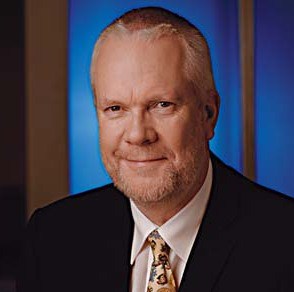
Justin Milne
After Whitacre was educated that providers already pay hosting fees, infrastructure and licensing costs, and provide the very stuff that drives consumers to sign up for AT&T’s broadband services (and pay them for it) in the first place, Whitacre did a full reversal three months later:
“Any provider that blocks access to content is inviting customers to find another provider. And that’s just bad business.” (3/21/06)
Milne follows in Whitacre’s earlier footsteps, except he wants to be paid by everyone. His customers are already subjected to limits on usage, which have limited Australia’s multimedia online experience years behind most others, and now he wants to have the money he earns from Internet Overcharging -and- the right to limit content that reaches his customers to only those who pay Telstra for the right to deliver it:
“Some content providers such as ninemsn argue that Telstra should subsidise the cost of the ninemsn customers visiting their internet sites. We might also assume [they] would prefer petrol to be free for their cars, and Hayman Island would like air travel to the resort free,” Milne wrote.
“But Shell, Qantas and Woolworths do not give their services away for free. Just like BigPond and the rest of Australia’s ISPs, they need to charge their customers a fee so that over time their investment is recouped,” he said.
Of course, Shell, Qantas and Woolworths only charge once for their products and services. They don’t install a toll booth on a road and claim that because a full petrol tank weighs more than a near-empty tank, there needs to be a surcharge toll. Qantas doesn’t send people down the aisle on a flight with a collection plate demanding more money for your ticket because the plane was packed. All of Australia’s ISPs charge their customers for providing broadband connectivity. Telstra does as well. The difference is that Telstra wants to charge its customers a fee and also charge the websites you choose to visit a “transport fee” on top of that. Your bill as a customer doesn’t go down because of “cost sharing.” Telstra’s profits simply go up.
Milne’s problem with Net Neutrality is its core principle that all legal data traveling across the net must be treated equally. That means Telstra has no way to enforce their HissyFit. In the absence of Net Neutrality, they can block, limit, or throttle those that refuse to pay them.
The cost of the infrastructure to support this traffic has been borne almost entirely by internet service providers, and not by the publishers. In Telstra’s case alone, the company has invested billions of dollars in the Next G mobile broadband network covering 99 per cent of Australian consumers, the HFC cable network in major cities and the extensive ADSL network.
Unfortunately there is no magic pudding, so this investment must be repaid by the beneficiaries of the internet — the users on the one hand, and the publishers who seek to make money from those users through advertising and subscriptions.
Milne almost suggests they did this out of the goodness of their heart, and their investment was not going to be paid back. The fundamental reality is that subscribers to those services are Telstra’s customers and they pay for that service, such as it is. That is where that investment will be recouped. Demanding a company that has no business relationship with your company to pay up or else face the potential of being cut off is akin to extortion.
I offered Milne two alternative suggestions:
- Expand your network to create infrastructure suitable to meet the needs of your subscribers, who will sign on in greater numbers to your service.
- Create hosting platforms and services at attractive prices to content providers who will use your service to host their content (and pay you for actually doing something for them).
Barring that, this is nothing but a HissyFit from another provider looking for a payday.
Michael Chaney, one of our readers, discovered this video interview compilation done last fall by ZDNet. Enjoy the Internet Overcharging excuse making, where the customer becomes the enemy, and the creativity to find new ways to charge more in without bounds.
“The attempt is being made certainly in the UK but also in the US to push that cost onto the content owner by saying, you pay, and we’ll prioritise your traffic,” he said. “[And] if you don’t pay, your traffic will be really crap.”
[flv width=”480″ height=”360″]http://www.phillipdampier.com/video/ZDNet Australia Providers 2008.flv[/flv]

WOW! Watch this video with Milne and two other ISP. I’m astounded by how much they despise their customers and content providers!
http://www.zdnet.com.au/insight/communications/soa/Net-neutrality-is-an-American-problem-/0,139023754,339292161,00.htm
This gives great insight into the evil mindset of these ISPs (and probably th mindset of ISPs in the U.S.)
“The attempt is being made certainly in the UK but also in the US to push that cost onto the content owner by saying, you pay, and we’ll prioritise your traffic,” he said. “[And] if you don’t pay, your traffic will be really crap.” …. and how is this not extortion?
That video is pretty interesting. They did mention how the US had unlimited access and how providers have to keep upgrading their networks in the US due to unlimited usage, and it does in fact keep people happy while bringing in profits for companies as well. I might also note on the fact about Customers pulling video 24/7, people are in fact doing that today with Hulu, ESPN360, soon to be OnLive (in beta as of right now), and more. Not to mention, a few local businesses in my area who have fat internet connections are using IPTV streaming and… Read more »
I love how Milne basically states that he’d like to see the Internet get divided up into the haves and have-nots — the more you can afford, the more you get to use the Internet. In his view, the Internet should exist to make him oodles of money and the best experience should only be had by those with the money to pay for it. His statement about people regulating themselves is somewhat true except that instead of regulating themselves based on how much they afford to *download* it is (or could be) based on how *fast* one can afford… Read more »