August 2008

You are currently browsing the monthly archive for August 2008.

A death in the family has kept me away from adding new articles during the past week, but coverage of several important stories, including the Comcast usage cap and some updates on other providers’ plans, as well as more on the Frontier matter, will be forthcoming shortly.

I appreciate your understanding for the delay.  I will be adding additional editors and writers to Stop the Cap! in September to increase our coverage and frequency of reports.

Stay tuned!

AP

By PETER SVENSSON, AP Technology Writer
Fri Aug 22, 10:36 AM ET

NEW YORK - Three months ago, Guy Distaffen switched Internet providers, lured from his cable company to his phone company by a year of free service on a two-year contract. But soon the company quietly updated its policies to say it would limit his Internet activity each month.

“We felt that were suckered,” said Distaffen, who lives in the small village of Silver Springs in upstate New York.

The phone company, Frontier Communications Corp., is one of several Internet service providers that are moving to curb the growth of traffic on their networks, or at least make the subscribers who download the most pay more.

This could have consequences not just for consumers — who would have to learn to watch how much data their Internet use entails — but also for companies that hope to make the Internet a conduit for movies and other content that comes in huge files.

Cable companies have been at the forefront of imposing and talking about usage caps, because their lines are shared between households. Frontier’s announcement is noteworthy because it is a phone company — and it is matching a seemingly low ceiling set by a main cable rival: just 5 gigabytes per month, the equivalent of about 3 DVD-quality movies.

“We go through that in a week,” Distaffen said. “If they start enforcing the caps we’re going to have to change service.” Other subscribers on Broadbandreports.com, where the cap was first reported, echoed his feelings.

But since the other option for wired broadband in the village is Time Warner Cable Inc., switching providers isn’t necessarily going to get Distaffen away from a bandwidth cap. The cable company is trying out a 5-gigabyte traffic cap for new users in Beaumont, Texas. Every gigabyte above that costs $1. More expensive plans have higher caps — at $54.90 per month, the allowance is 40 gigabytes. Depending on the results of the trial, Time Warner Cable may apply the same pricing structure elsewhere.

Frontier’s biggest market is in Rochester, N.Y., where it competes with Time Warner Cable.

“This isn’t really an issue that’s just going to be about Frontier,” said Philip Dampier, a Rochester-based technology writer who is campaigning to get Frontier to back off its plans. “Virtually every broadband provider has been suddenly discovering that there’s this so-called `bandwidth crisis’ going on in the United States.”

In a sense, caps on Internet use are no stranger than the limited number of minutes a cell phone subscriber gets each month. Internet use varies hugely from person to person, and service providers argue that the people who use it the most should pay the most. But the industry hasn’t worked out where to set the limits, or how much to charge users who exceed them. Fearing a customer backlash, most providers are setting the limits at levels where very few would bump into them. Comcast Corp. has floated the idea of a 250-gigabyte monthly cap.

Frontier says it plans to start enforcing its 5-gigabyte cap next year. First, it will let customers know how much data they use each month, a figure that most people don’t know how to track on their own (the tech-savvy Distaffen gets it from his Internet router). Then it will offer premium plans with higher caps to those who use more data.

Frontier says most of its 559,300 broadband subscribers consume less than 1.5 gigabytes per month. But in an e-mail to Frontier employees, Chief Executive Maggie Wilderotter said traffic is doubling every year, which means that by the time the caps would be put in place, a lot more users will exceed them. In two years, the average user could be consuming 6 gigabytes of traffic per month if the current growth rate holds up.

The growth of traffic means the company has to invest millions in its network and infrastructure, threatening its profitability, according to the e-mail.

Dampier disagrees, saying the costs of network equipment and connecting to the wider Internet are falling.

“If they continue to make the necessary investments … there’s no reason they can’t keep up” with increasing customer traffic, he said.


Read more…

Reuters reported this week that a wave of consolidation in the rural telephone marketplace is about to begin as telephone companies fight continued declines in the telephone access line business.

The biggest target for a takeover?  “Frontier Communications,” says Stanford Group analyst Michael Nelson. “They’re really the only one that would move the needle significantly,” he said.

Frontier targeted for takeover?

Frontier targeted for takeover?

Frontier, based in Stamford, Connecticut, is the nation’s fourth largest independent largely-rural telephone company, with 2.3 million telephone lines.

In the market for merger opportunities, and speculated to be looking closely at Frontier, is Little Rock, Arkansas-based Windstream Communications.  Windstream, the nation’s second largest rural telephone company, announced it was aggressively interested in pursuing merger opportunities.

Little Rock-based Windstream Communications seen as likely suitor for Frontier Communications

Little Rock-based Windstream Communications seen as likely suitor for Frontier Communications

Windstream’s takeover of Frontier is seen by some industry observers as practically a done deal. 

Nelson sees a Frontier deal in about six months, costing Windstream $9 billion, including the assumption of about $4.6 billion in debt.

Big deals that maximize cost savings would make sense for Windstream, according to Jefferies analyst Jonathan Levine, who said closing even small deals require a lot of money and time as they involve reviews from the regulators of each state where the target companies have operations.

“I think they’re going to probably look at some of the larger players,” Levine told the Reuters wire service.

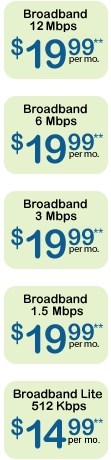
Windstream's Broadband Promotional Pricing for 12 Months

Such a merger would likely leave Windstream in charge of the merged company.  Windstream has aggressively deployed broadband DSL services into their rural service areas, with speeds dependent on the infrastructure available in different areas.

Windstream has no plans to implement usage caps on broadband customers at this time, nor does it charge customers for company-supplied modems.  It is too early to speculate about the impact a merger would have on existing Frontier employees.  Windstream already provides customer and technical support from call centers in India and Georgia and has a track record of eliminating or reducing staff at call centers formerly run by its acquisition targets.

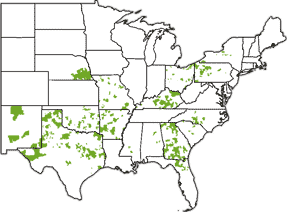
Windstream's coverage area, providing local phone service in 16 states

Windstream was created primarily from the old Alltel network of local telephone companies, mixing in customers from VALOR/GTE Southwest, GTE Georgia, Standard Group, Aliant, and CT Communications.  From a series of acquisitions, it rebranded itself as Windstream Corporation in 2006, dropping the Alltel name.

Consolidation is expected to become a growing factor in the independent telephone company marketplace, as companies face significant challenges from cable systems and wireless phone companies.

The nation’s number three independent telephone company, CenturyTel of Monroe, Louisiana, may also be interested in Frontier, and could spark a bidding war for Frontier’s assets.  CenturyTel is also reportedly looking at Iowa Telecom or Consolidated Communications as potential merger targets.

Only one independent telephone company, the nation’s largest, Embarq, spun off by Sprint-Nextel, is not likely to be in a position to begin a shopping spree.  Analysts report the company’s poorly positioned to embark on a merger adventure because of the company’s perceived lower value.  Analysts have urged Embarq to begin cost-cutting and improve earnings.

Frontier Communications stock has been progressively increasing in value since merger speculation began.  The company is currently trading at 12.72 per share.

Frontier to limit Internet usage

By Tom Grace
Cooperstown News Bureau
The Daily Star (8/16/08)
 

Beware, downloaders: Frontier Communication Inc. plans to meter your Internet usage.

Company spokeswoman Karen Miller said Friday that the telecommunication firm plans to limit its customers’ free Internet usage to five gigabytes a month in 2009.

If you download more, you’ll pay more.

“As it stands now, five gigabytes will be free and there will be a tiered system for those who use more,” she said.

Miller said the company, which has many customers in Chenango County, is going to charge for usage “to make the heavy users pay their fair share.”

Asked if five gigabytes a month made one a “heavy user,” Miller said, “Our customers, on average, use 1.5 gigabytes a month.”

Those who use the Internet a lot are a source of concern because they force the company to spend money on its infrastructure to expand its capabilities, she said.

Frontier, a communications giant that operates in 24 states, is now notifying its customers of the coming change: Paying by the gigabyte.

One such customer is Elizabeth Ramsey of Treadwell, who has opted to drop Frontier’s DSL service in protest.

“Five gigabytes is ridiculous; it’s really a backdoor way of ending ‘Net Neutrality,”’ said Ramsey, a retired Time Warner employee.

Ramsey, who has no television, likes to use her computer to watch movies downloaded from the Internet.

“With five gigabytes, they’re limiting you to watching four two-hour movies a month,” she said. “And then, they’re going to charge you more, even though you’re already paying $88 a month for phone and Internet?”

Ramsey said she’s decided to downgrade to dial-up service and get her classic movies another way until the company relents and maintains the value of its DSL service.

The issue of limiting free Internet usage by American Internet service providers has led to the formation of consumers’ groups such as Stop The Cap, at www.Stopthecap.com, and international media coverage.

Read more…

It has been quiet here the last few days as work continues on our expanded Resources section.  Some sample Letters to the Editor are online already, but additional writing is underway to help people do more than just read about usage caps, but also fight them.  Keep an eye out for developments.

I am also contacting many of those who have written in who want to get more actively involved in fighting the cap issue, in addition to joining a team of writers to post articles, news, and links to other stories on this issue.  We welcome anyone who wants to help join the fight.  Just use the Contact form or reply with a Comment and I’ll be in touch.

Some important articles are in the works on the issue of usage caps, including at least one major wire service report which should land in newspapers around the country which should appear in the next few days.

It was a good thing we launched when we did.  The Working Families Party and the Alliance for Quality Education were stuck with Stopthecap.org for their new website to protest New York Governor David Patterson’s plan to cap property taxes in New York State.  They launched a high price advertising campaign across the state to get people to contact their elected officials and get them to say no:

Property Taxes are a real problem. But the tax cap gimmick will hurt our schools, and won’t even reduce property taxes. 

If you arrived here looking for that website, it’s because you reflexively typed stopthecap.com into your web browser.  But before you go, take a moment and read up on an issue New Yorkers are likely to face in the next twelve months - unjustified usage caps on your Internet access, now proposed or being tested by two major Internet providers in the state - Frontier Communications and Time-Warner’s Road Runner service.

We’re devoted to protecting consumer interests, and as a fellow New Yorker that is already paying too much for everything in the Empire State, the last thing we all need is to cough up $40 a month (or more) for Internet access that limits you to watching two movies a month, or charges you outrageous overage fees for anything you use above the limit.

One of the usual excuses given to promote the need for usage caps on residential broadband accounts is the person on the network who has fired up their peer-to-peer sharing application (usually torrent software) and has left the thing running 24/7 for the entire month.  This person is inevitably held up as an example in the pro-cap community as someone who is “abusing the network” by downloading terabytes worth of data “that no person could reasonably use in a month.”

There have been some interesting reports on the impact of peer-to-peer applications on broadband in the last two weeks (”20% Drop in p2p on AT&T Backbone Other video, like YouTube and Hulu, twice as high” - DSL Prime, 8/1/2008).  Ask a torrent fan what they enjoy getting the most from using such applications and it usually turns out to be television shows.  With the advent of more… authorized methods of accessing favorite programs, including Hulu, Joost, iTunes, and the network websites themselves, people can get near instant gratification without waiting hours, if not days, for a coveted episode to finally arrive over some BitTorrent site.

Is there something missing from the usual equation offered by cap advocates that “excessive/abusive use” + “limited bandwidth” = a usage cap to “better manage network traffic?”

Also, is there a place in the discussion for bandwidth providers to better dialogue with their customers, educating them about the impact of running certain file sharing peer-to-peer software on a continuous basis, not only on network traffic, but also potentially slowing down the connection for everyone else in the house?  How many parents have only the most limited knowledge about the software their kids are running?  And if it’s the head of the household running the software, do they even know how much bandwidth such tools could consume if left running continuously.

Do you think people would respond to a voluntary request by providers to not run such software unattended for hour after hour, day after day?  Would a customer be more inclined to reduce usage knowing that a voluntary reduction could mean not having to place caps on every customer?  What are your feelings about such a proposal?  Would it be effective?  Or do you dismiss the peer to peer traffic argument entirely?

Part of the purpose of Stop the Cap! is to offer some potential new ideas with providers genuinely interested in traffic management and not simply imposing caps as a way to increase revenue.  Your comments and advocacy for or against this idea are welcome.  Just hit the Comments button under the article headline and share your views.  Providers do read Stop the Cap! and many are genuinely interested in reading your views.

On August 13th, Microsoft’s motherload of bug fixes, updates, and upgrades landed on the desktop in my office, which still runs Microsoft XP.  From ActiveX Killbits to the Windows Malicious Software Removal Tool - August edition, some 14 patches adding up to 37 megabytes of data were delivered over my broadband connection.  Considering the fact we maintain three desktops and three laptops here, that 37 megabytes just became 222 megabytes, just for whatever problems Microsoft uncovered this month.

In a usage cap environment, even routine software updates count against your monthly bandwidth allotment.  And don’t forget to include the frequent updates to anti-virus, anti-spyware and other related applications that will bring updates sometimes more than once per day.

While no single application of this type will consume an enormous amount of bandwidth, the impact is cumulative.  A little here, a little there, and suddenly you find yourself over the limit.

It’s just one more talking point to consider mentioning in a broadband world hampered by usage caps and limits.

[Update: A great comment from rreay reminds me of these updates in the last week or two as well.  Anyone have any more to add to the list?]

  • The recent iPhone/iPod touch update was 250 MB.
  • 60 MB for the last iTunes/Quicktime update.

[Editor's Note: As promised, Stop the Cap! now moves on to expanding coverage of the issue of broadband usage caps by North America's other broadband providers.  In the coming weeks, we'll be reviewing the plans, proposals, and implementation of caps by companies large and small.  We will also continue to report on how this potentially impacts on our national competitiveness, considerations of Net Neutrality issues, and addressing the digital divide by information-have's and have-nots.] 

Beaumont, Texas

Beaumont, Texas

Beaumont, on the eastern border of Texas with Louisiana, is one of America’s mid-sized cities of just over 100,000 people, best known for the Texas Wildcatters, a smattering of oil and gas companies, and the first advance by Time Warner, America’s second largest cable television company, into this year’s issue of bandwidth usage caps.

Company officials first announced the market test in January, impacting only new customers in Road Runner’s Golden Triangle Division with usage caps ranging from 5GB for the Lite Tier plan to 40GB for the Turbo Tier.  The charge for exceeding your plan’s cap is $1 per gigabyte.

Like other companies talking about usage caps, everyone likes to use their own internal definitions of what 1GB of usage represents.  Time Warner’s is:

1GB gets you about 70,000 e-mails, 34 hours of gaming or 1,344 hours of Web browsing; or, it’s the approximate equivalent of downloading 569 photos, 277 music files, 7 hours of low-resolution video (YouTube), 3 hours of standard definition streaming video or 45 minutes of high-definition streaming video.

Again, my own calculations bring some different numbers to the table, and, honestly, does anyone really worry about going over a usage cap from reading e-mail and web browsing alone?

Randomly grabbing 277 MP3 music files consumed 1.56GB of usage.  Downloading 569 photos assumes your collection consists of pictures averaging 1.75MB apiece.  I grabbed some digital photos I took to Walgreens for printing and looked at the files I uploaded to their server.  My pictures, at high resolution (but not extremely high) come closer to 8MB apiece.  One episode of Law & Order (around 42 minutes without the commercials and dropping the stream before the end credits rolled) consumed 360MB at standard definition rates.  As noted earlier, a movie delivered by Akamai can consume 6-9GB for just one 720p high definition film, nearly double that if you choose the 1080 version.

Taking each of these activities into consideration individually, usage caps of 20GB a month (or 40GB) don’t immediately sound alarming.  But people do not use their Internet connections for a single activity, and the more people you bring to the table, such as in a four person household, the easier it is to see just how quickly a family, especially with teenagers, will quickly exceed even these kinds of caps.

Beaumont residents are the first to participate in a Road Runner trial with usage capped.

Beaumont residents are the first to participate in a Road Runner trial with usage capped.

There are users out there who use their connections for little more than basic e-mail and occasional web browsing, and Time Warner offering a plan at a discount for those users is not a problem, assuming they actually promote such plans to potential customers.  The greater issue comes from a service provider charges the same price (or more) for a plan that is now seriously limited by a cap.  And to date, there has been no proposal for retaining an “unlimited” tier in addition to offering a range of capped tiers for those who figure they will use considerably less.

Wireless telephone companies, which historically sold usage in plans with buckets of minutes, are now moving towards offering flat rate options - pay one price, talk all you like, while the broadband industry, which marketed “unlimited, always on” connections for a variety of content they include in their advertising are now headed in the other direction, limiting consumer choice and access.

Time Warner has been complaining about broadband growth as both a content distributor and as a bandwidth provider, which adds an interesting twist to the rationale companies have to implement caps.

Saul Hansell, a reporter and blogger for The NY Times, noted company officials are growing tired of basic cable networks making them pay license fees for content, and then seeing that content being given away on the web.

Speculation that bandwidth caps may also have to do with limiting the amount of streaming video that consumers watch have also been offered as a reason for providers adding caps to their Internet service.

Time Warner’s rationale for bandwidth capping was, according to the company itself, to control what they felt was excessive use of their network.

“This is not targeted at people who download movies from Apple,” Time Warner spokesman Alex Dudley told the NY Times. “This is aimed at people who use peer-to-peer networks and download terabytes.”

And again that brings up the question of how a 20-40GB cap is the most effective way to control a minority of users running a torrent client or server 24/7 and consuming terabytes over an entire month.  That is the equivalent of dropping a nuclear weapon on a pesty moth.  The weapon does get the moth, but it also impacts on a far larger circle of customers that don’t come close to consuming that level of data.  Every ISP has language in their contracts with customers that allow them to cut off the 24/7 torrent addict today.  Some, including Comcast, have enforced these kinds of provisions before without a usage cap.

To date, consumer reaction in Beaumont has been mixed.  Many are convinced the caps are unjustified, too low, or simply too expensive for what you get.  Others object to the excessive rate of $1 per gigabyte for overage fees.  Some don’t like the idea of having to measure everything they do online in fear of exceeding a usage cap.  There are also some that like the idea of paying for what they use, and are willing to consider different plans based on what they actually consume if it also means they get the speeds they were promised in advertising.

Dudley argues that the usage cap issue is not a foregone conclusion at Time Warner.  Dudley told GigaOm that TWC’s experiment in Texas was just that – a test. If consumers don’t want it, the company is going to back away from it. “I think this is a trial and we are going to learn from this trial,” he said.

Stop the Cap! wants the company to learn as well.  If you ask customers if they’d prefer paying the same amount they do today for unlimited access or capped access, there will be little surprise as to the outcome.

Now that we’ve reached the two week anniversary of Frontier’s inclusion of a 5GB clause in their Acceptable Use Policy first going up on their website, it’s probably useful to provide the latest information in a summary format.  Additionally, we’re now reaching a point where new information about Frontier’s consideration of the cap is slowing down as the company ponders where things go from here.  So here is the latest summary of where things stand:

1) Frontier has published on their website two references to usage information.  Their marketing indicates that 5GB of usage is provided as part of their DSL account.  The company has now also publicly stated that until they state otherwise, they are not going to charge overages or terminate accounts for exceeding that usage.  When we get news of a date if/when that changes, we’ll let you know.

2) Their marketing material online indicates customers with “price protection agreements” will not be subject to any usage caps for the duration of their contract.  Assuming that language is inserted into their actual contract for customers, that could be the one good thing to come out of this.  (Hint to Frontier’s marketing gurus - if you offer a cap-free plan in return for a service agreement, we’ll sing its praises and I’d personally recommend it.)

After all, the goal of this site is to advocate for a cap-free Internet experience, and we’ll praise any company offering one.

3) The company continues to take input from customers on the matter, and we encourage people to share their views with Frontier regarding usage caps in general.  I personally hope they will drop the entire idea altogether and ride the marketing potential their service would have should the cable industry adopt caps or limits.  If you are not comfortable with where things stand on this issue, you have the right to take your business elsewhere.

We’ll be continuing to follow this issue as developments warrant.  Frontier is not the only company out there contemplating capping their customers, so Stop the Cap! must also delve into what the cable industry is up to, and there is plenty to report there.

« Older entries