Home » NBC » Recent Articles:

Could NBC Now Be History? Comcast Completes Offer for NBC-Universal – May Drop ‘NBC’ Name

ceg_logoComcast Corporation has completed its offer for NBC-Universal and they accepted in an early morning press conference unveiling a deal that had been privately rumored for months.  Comcast will assume 51% control of NBC-Universal, with NBC-owner GE controlling the remaining 49% stake.

The combined entity, to be known as Comcast Entertainment Group, will bring Comcast-owned media into the home of every American, even those not served by Comcast Cable.

Although company officials said little would change immediately, Comcast has not ruled out dropping the legacy ‘NBC’ brand down the road.  Broadcasting & Cable noted the company may be hinting at its intentions through its domain name registrations.  The trade publication reported Comcast’s registrar locked ComcastNBCU.com and NBCUComcast.com in mid-October, but returned and registered ComcastEntertainment.com ten days later.

Brian Roberts, CEO of Comcast Corporation, joked that NBC’s fourth place position among the major American broadcast networks might “get in the way” of recognizing NBC-Universal’s cable networks, which he characterized as “fantastic.”  Perhaps a change of NBC, which stands for the National Broadcasting Company, to Comcast Entertainment Network might change that perception?

Changes like that, and the implication of renaming a major American network after what most Americans recognize as a cable company has brought significant unease among some examining the scope of the transaction.
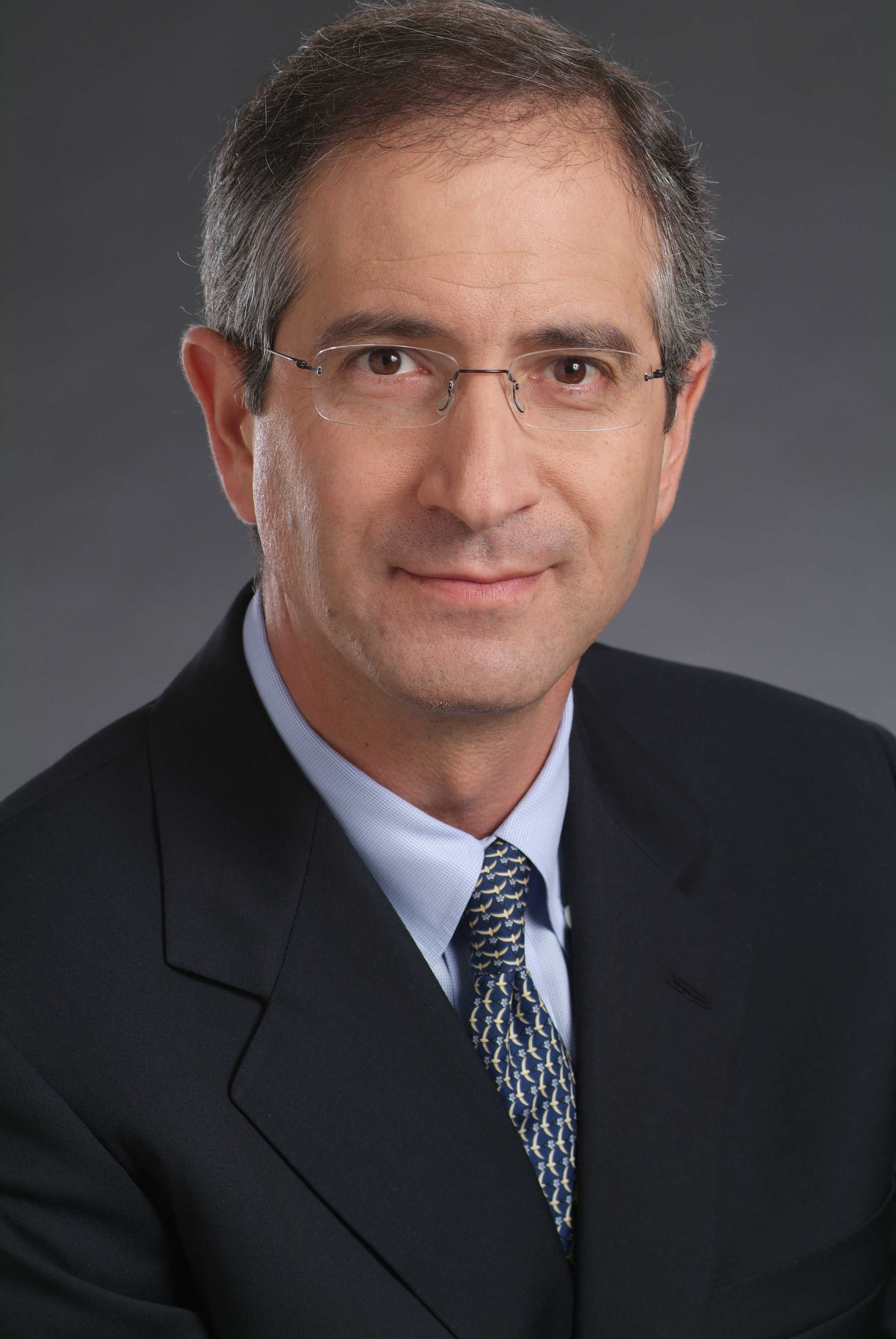
Comcast CEO Brian Roberts

Comcast CEO Brian Roberts

Comcast Entertainment Group will control a major American broadcast network, Telemundo – a major American Spanish-language broadcast network, Comcast Cable, the nation’s largest cable system operator, several cable networks, 27 GE-owned television stations in major American cities, a large number of regional sports networks, and more.  It also manages broadband service for nearly 16 million Comcast customers.

Stifel Nicolaus telcom analysts Rebecca Arbogast and David Kaut warned potential investors this deal has a lengthy and difficult regulatory review waiting for it in Washington, DC: “We would expect scrutiny of the transaction’s impact on program access, program carriage and retransmission consent, as well as local TV advertising, broadcast-network affiliate arrangements, program bundling, broadband/Internet video and network neutrality and possibly other issues, including cable pricing…broadband service, labor concerns, spectrum and privacy.”

The dealmakers recognized the challenges and started throwing voluntary concessions to concerned groups.  Unimpressed Comcast shareholders got a bone thrown their way — a surprise 40% increase in their dividend, in hopes that will quiet shareholder unease.

Comcast also sent letters to regulatory officials promising NBC will remain a free, over the air broadcast network and not be converted into a cable-only channel.

The cable operator will also add additional independently-owned cable networks to its lineup to quiet concerns it might favor its own cable networks.  Of course, whether customers want to watch and pay for those channels is another matter.

Finally, Spanish language services from Telemundo and other channels will receive enhanced free on-demand cable viewing options in cities where Telemundo is seen over-the-air.

For broadband users, the deal means Comcast gets a seat at the table of online video provider Hulu.  NBC-Universal was a major proponent of the online video service which gives broadband users free access to broadcast and cable programming.

That deeply concerns Andrew Schwartzman, president and CEO of Media Access Project.  He’s concerned about the enormous market power Comcast Entertainment will have.
nbc_universal“I am especially concerned about the effects the merger would have on evolving technologies for delivering video over the Internet….I also expect a great deal of opposition from the private sector, since the merger has anti-competitive implications for local TV stations, independent cable programmers, advertisers, internet video entrepreneurs and many other businesses,” he told The Hill.  Both Media Access Project and Free Press have called on regulators to reject the deal.

“The American public doesn’t want a media behemoth controlling the programming they watch and how they can access it,” said Josh Silver , executive director of Free Press. “If Washington allows this deal to go through, Comcast will have unprecedented control of marquee content and three major distribution platforms: Internet, broadcast and cable. We’ve never seen this kind of consolidated control.”

[flv width=”596″ height=”356″]http://www.phillipdampier.com/video/NBC Today Show Announces Comcast Deal 12-03-09.flv[/flv]

This morning’s Today show on NBC briefly reviewed the deal and what it means for consumers (1 minute)

[flv]http://www.phillipdampier.com/video/CNBC Parsing the Comcast NBC Deal Craig Moffett 12-03-09.flv[/flv]

Sanford Bernstein’s Craig Moffett talks with CNBC about why many telecom sector analysts are underwhelmed by the Comcast-NBC deal (3 minutes)

<

p style=”text-align: center;”>

GE CEO Jeffrey Immelt and Comcast CEO Craig Roberts join CNBC’s David Faber for an in-depth discussion about the transaction and the changing media business. (28 minutes)

Learn more about NBC’s broadcast operations impacted by this deal below.
… Continue Reading

Storm Clouds Gather Over Comcast-NBC Deal: Opposition from Consumers, Views from ‘Darth Vadar,’ Stonewalling from Vivendi

Phillip Dampier November 23, 2009 Comcast/Xfinity, Public Policy & Gov't, Video 1 Comment
Edward Wasserman

Edward Wasserman

The Comcast-NBC deal that would bring one of the nation’s largest television networks under the control of the nation’s largest cable operator has not enjoyed the smoothest sailing since the deal was first rumored more than a month ago.

Consumer advocates oppose the deal because it would give Comcast too much control over the video content it would now own, and some industry leaders suggest the era of integration is over, warning bigger is not always better.

“The only beneficiaries of this deal are the industry titans who already enjoy too much market power,” said Josh Silver, executive director of Free Press.  Free Press is mounting a national campaign for consumers to become involved and help block the deal.

“If this deal goes through, Comcast would have control of marquee content and three major distribution platforms: Internet, broadcast and cable,” Silver said. “We’ve never seen this kind of consolidated control across so many platforms.”

Edward Wasserman, Knight professor of journalism ethics at Washington and Lee University, penned a scathing review of the proposed deal.  “Stop Comcast’s Power Grab” quotes a bitter Ted Turner, who saw his media empire fall from his control several years ago under the super-structured AOL-Time Warner deal:

“Big media today wants to own the faucet, pipeline, water and the reservoir. The rain clouds come next,” Turner wrote in a Washington Monthly article five years ago indicting big corporate media control.

The concept of vertical integration in media involves companies owning as much of the content and distribution as possible.  In a best case scenario, one company would control every element, from the production to the sales and distribution of that content.  The more you control in-house, the less you have to pay or answer to someone else.  Wasserman picks up the story:

And vertical integration is why Comcast, the country’s biggest owner of cable systems, the company that decides which networks reach one of every four U.S. homes, is drooling over NBC Universal. The deal, if it happens, would be a staggering one.

NBCU, in short, is a mammoth content machine. And, Comcast, though chiefly an immensely rich operator of cable pipes, isn’t just the $34 billion-a-year utility whose bill you bellyache about every month. It, too, covets content. It tried to buy Disney in 2004, and it owns all or part of 20 cable networks, including E! Entertainment Television, Style, G-4, the Golf Channel and a bunch of national and regional sports channels.

And now it wants NBCU. One analyst estimated that combining the content arms of the two companies would bring roughly one-quarter of the country’s TV programming under a single owner. Another said the merged entity would control one of every five hours of programming.

[…]

The usual objections to such deals have to do with the outsized economic clout the resulting colossus would wield. Scale emasculates market discipline. When you control access to 24 million homes, you aren’t ruled by prevailing prices, you set them. Recession? Comcast is squeezing $6 more per household now than it was a year ago, and its profits were up 22.5 percent last quarter.

Very nice, but when you own the programs, too, you can make sure your networks get delivered even when that means elbowing other producers aside. You can strong-arm your competitors — satellite companies, for instance — by threatening to withhold popular networks or forcing them to carry the dogs as well. You can cut deals with other distributors who want the shows they control flowing through your pipes. You get your way.

Naturally, you’ll resist innovation unless you control it. Comcast would get a 30-percent stake in Hulu, the upstart distributor of first-run Hollywood programming via the Internet — a huge potential threat to cable operators. Subscription cable is Comcast’s bread and butter, and a business that makes $944 million on quarterly revenue of $8.8 billion is some business. Comcast will make sure that online’s future doesn’t endanger its own.

[…]

The whole point of vertical integration is to secure unfair advantage, to unlevel the playing field. And besides, since when is avoiding the worst the best we can hope for? It has been longstanding public policy to encourage localism, diversity and competition in the media business. It’s time to dust off that policy and give it some teeth by blocking this ridiculous and dangerous deal.

CNBC’s John Faber got some industry insider perspective from Dr. John Malone, a power player in the cable television industry during his reign at Tele-Communications, Inc., which used to own cable systems now largely a part of the Comcast empire.

Dr. John Malone

Dr. John Malone

As far as Malone is concerned, this deal could herald a radical transformation away from traditional broadcasting models and “free TV.”

Malone believes America could be on the verge of dumping traditional broadcast network-local affiliate distribution of programming and switching to a “cable-centric” model where television programming is no longer distributed for free over broadcast television, or perhaps a hybrid approach where half of today’s television networks become cable/broadband-only.

He believes the government could be persuaded to support such a model if it meant returning broadcast spectrum back to the government for resale to the highest bidder, presumably for wireless broadband applications.

Malone’s vision leaves big vertically-integrated players like the broadcast networks and cable operators as big winners, owning and controlling programming, distribution, and all of the advertising slots, and cutting local television stations out of the deal.

Losers?  Independent local television stations and viewers that eschew pay television services like cable and satellite and rely on free over-the-air broadcasting.  “Free” may be an unsupportable business model, at least in Malone’s world view.  As many television stations are independently owned and operated, their concern for future viability is also sure to be an issue in the deal, Malone tells Faber.

Malone’s remarks are nothing unusual for the controversial cable mogul.  Al Gore once referred to Malone as the “Darth Vadar” of cable, leading a cable Cosa-Nostra with an agenda of a monopolist bent on dominating the television marketplace.

[flv]http://www.phillipdampier.com/video/CNBC Faber Report John Malone 11-23-09.flv[/flv]

Dr. John Malone talks about the Comcast-NBC Universal deal in this CNBC Exclusive with John Faber, aired earlier today. (4 minutes)

VivendiFor any deal to consummate, Comcast and NBC Universal need the consent of Vivendi, the French conglomerate which now finds itself in the catbird seat.  The Paris-based media concern is asking for several hundred million dollars more than NBC-owner General Electric is prepared to part with, sources tell today’s Wall Street Journal:

GE has offered Vivendi something in the neighborhood of $5 billion for its stake, according to people familiar with the matter. That is lower than the value implied by the deal GE has tentatively negotiated with Comcast. The GE-Comcast deal would value NBC Universal at about $30 billion. Allowing for debt that NBC Universal now carries, that value would imply Vivendi’s equity stake is worth somewhat less than $6 billion.

GE is offering Vivendi less than the value implied by its Comcast deal because it believes Vivendi wouldn’t be able to fetch as much through a public sale that it also has the right to pursue, according to people familiar with the talks.

Vivendi, meanwhile, has asked for a price somewhere from the “mid-five” billion dollars to closer to $6 billion, according to people familiar with the matter. Two people familiar with the matter said GE and Vivendi were within about $500 million in price.

Vivendi has also asked for deal guarantees, according to people familiar with the matter. Those guarantees could include GE paying for at least part of its stake before any Comcast agreement closes. Vivendi doesn’t want to assume the risk that GE’s deal with Comcast could be blocked by regulators in Washington, or could otherwise fall apart, according to a person familiar with the matter.

Most deal-watchers predict Vivendi will eventually part with its stake after it gets what it wants.

One of the Journal‘s sources said it was unlikely those working out the deal would let “a few hundred million” stand in the way.

Goodbye to Free?: The ‘Great Wall of Pay’ Under Construction

Phillip Dampier October 29, 2009 Editorial & Site News, Online Video 7 Comments
The Great Wall of Pay

The Great Wall of Pay

Newspaper, broadcasting, and cable magnates have had enough of online web visitors accessing all of their content for free.  Free is naughty.  Free must be stopped.  Free threatens to devalue everything.

For the last few years, content producers have been looking for ways to recoup investments in online publishing.  Newspapers publish articles online and fear that causes people to stop paying for the printed edition.  Studios and networks make their shows available on Hulu, and people find on-demand viewing more convenient than watching ad-packed live television.  Cable magnates worry about people dropping cable subscriptions and watching all of their video online.

Broadcasting & Cable generated a firestorm late last week when it quoted one of Hulu’s partners — News Corporation’s Deputy Chairman Chase Carey telling the B&C OnScreen Summit “it’s time to start getting paid for broadcast content online.”

“I think a free model is a very difficult way to capture the value of our content. I think what we need to do is deliver that content to consumers in a way where they will appreciate the value,” Carey said. “Hulu concurs with that, it needs to evolve to have a meaningful subscription model as part of its business.”

CNN picked up the story in one of their news blogs, and promptly generated more than 700 responses, most hostile to paying for anything on Hulu, and that included the blog’s author:

“I certainly won’t be pulling out my credit card if the service puts up a subscription pay wall. And I doubt many other customers will be happy to start paying money for a service they previously received for free.”

Most comments indicated they’ll go back watching online TV shows and movies the old fashion way – downloading them from peer to peer torrent networks or newsgroups.

“The Internet abhors a content vacuum, especially one created artificially by a subscription wall,” Stop the Cap! reader Jake writes.  “Just like what happened with digital rights management schemes and viewing rights blockades, enterprising net users will always find a way around them and distribute the content a few don’t want us to have.”

The quest for control is increasingly becoming more contentious among super-sized corporate entities that create and distribute content.  Comcast seeks ownership of NBC-Universal, a content creator and partner in Hulu, which currently gives away content for free Comcast charges customers to watch.  A newly constructed Great Wall of Pay could help stop these business model challenges.

When online content was successfully monetized by advertising, few cared about handing it out for free.  In fact, providers like AOL abandoned many of its ‘subscriber-only’ walls to “go free” and attract a larger audience, and corresponding increased ad revenue.  In a post-bailout recession era, ad dollars have become scarce and no longer pay all of the bills Hulu’s owners want paid.  Advertising industry consultants say Hulu cannot simply increase the number of advertisements to make up the difference.  Even though Hulu users confront far less advertising than traditional broadcast television, research has shown online TV watchers resent a lot of the advertising they see now.  Many Hulu viewers actively develop a form of ad blindness based, in part, on the resentment those ads bring to the experience.  Hulu occasionally offers viewers one extended ad at the start of a show, instead of having them seeded throughout the program.  Many take Hulu up on the offer and use that 90 seconds to grab a snack.

Interestingly, the shorter a web ad, the more viewers retain information contained within it.  Some web ads run only 10 seconds, and are sold to clients with this in mind, and at a budget price to boot.

For web-ad haters, the worst of all worlds would be a Hulu that retains its limited commercial interruptions -and- charges a subscription fee.  For many, that would be the equivalent of “basic cable on the web.”  Many will drop Hulu “like a rock” should this happen.

A day after the hue and cry was raised by the Broadcasting & Cable article, skeptics said it was unlikely Hulu would entirely abandon free programming.  It may provide a premium pay service offering extra episodes, or perhaps remove commercials entirely for premium customers, a proposition at least some were willing to entertain, depending on the price.

“I would consider paying a very small (less than $3.00) monthly fee to watch Hulu if, and only if, they removed the commercials. Otherwise there are other alternatives,” one commenter wrote on CNN’s blog.

Newspapers are also feeling the bite, even more than online video sites.  The printed “dead tree format” of the daily paper has become anathema to the under-30 crowd, despite valiant efforts by some publishers to appeal to younger audiences with feature stories and even free weeklies that mix light news with entertainment features.  The only answer has been to take the paper online.  For years, concepts like online subscriptions, micropayments (paying a few cents per story), free access only for print subscribers, and charging per story for access to week-old and beyond news archives have been considered, tried, abandoned or ignored when web visitors flee or simply skip the pay content.  The daily local newspaper is not what it used to be, and when the “pay here” box pops up, many web visitors simply take their news reading business elsewhere, thanks to the near-universal access to wire service reports and competing media covering stories of interest for free.

Newsday, the Long Island newspaper owned by Cablevision, abandoned its “freeloading” audience yesterday with a new Great Wall of Pay charging a steep $5 a week for those who do not subscribe to either the newspaper or have a broadband account with Cablevision.

The newspaper’s Wednesday edition teased non-subscribers with stories that suddenly drifted off into ellipsis… with an invitation to open your wallet to read more.

Sports media blogger Neil Best, who writes for Newsday, seemed resigned to the fact he was losing a lot of his audience in his farewell-to-free column published Tuesday:

The inevitable decline in my national visibility (and page views) mostly is an ego thing. More to the point, Long Island advertisers understandably have little interest in readers in Dubuque.

For those readers who won’t be coming along for the ride – especially those outside Cablevision territory who in many ways are innocent bystanders in all this – thank you for your readership, input and support.

You will be missed.

Best realistically assessed the number of web visitors he’d see post-Wall, particularly from outside of the immediate area.  Best and his readership seemed to collectively sense this project was destined to fail, another bad experiment from aloof and out of touch management to the realities of the web world.  One commenter lamented the real victim would probably be Best himself:

What’s most frustrating of all, though, is that everyone knows this venture will fail. It’s never succeeded before and there’s truly no reason it will now. Pay for blogs? Are you kidding me? Even the pay-for-columns model is a one-in-a-million risk. But blogs? We all know this is not just you and I missing Neil, it’s Newsday destroying a commodity that could have helped it promote its other products. So Newsday loses– this has no chance– none– to succeed. And Neil loses –immediately– the majority of his followers. He will suffer the most immediate and quantifiable of harms. His readers, his fans, the people who support him and have helped him grow. Now his bosses shut us out and help him dwindle. And we lose. We lose our beloved journalists– we lose their thoughts and every day muses– things that dont even belong in a newspaper.

The use of the word “commodity” would no doubt cause much consternation among Newsday’s management and Wall Street types.  It is the “commoditization” of the news business, with endless debt-laden mergers and acquisitions and the cost-cutting that followed, that trained readers to realize that with the decrease in unique, local content in many newspapers, and their increasing reliance on partnerships with broadcast news operations, wire services, and syndicated feature content, why pay when you can get nearly the same (if not the same) content for free on the next website in the Google results list?

The big believers in the Great Wall of Pay fear what happened to newspapers could happen to their cable, broadcasting, or video rental operations.  The commoditization “crisis” is largely self-made: cable and phone companies with their “dumb pipes,” the cost-cutting local broadcaster that dispensed with nightly news, or the alienating video rental chain store made obsolete by Netflix or the Redbox ‘Tardis’ positioned in the entrance to your local supermarket.  When companies extract maximum revenue through minimal devotion to quality, uniqueness, and integrity, and either overcharge or irritate customers, why be surprised when consumers rebel when being asked to pay or pay more?

One of the rare success stories in pay content has come from Consumer Reports, which charges an annual fee for access to its online reviews.  Consumers notice the dramatic difference between a publication that accepts no advertising and keeps its integrity because of it, and other news sites contemplating pay schemes that are so cluttered with online advertising, autoplaying loud video ads, pop-ups and unders, they can barely find the content they are now being asked to pay for.

Consumers can and will pay for quality content, but many will not be forced into doing so with a corporate blockade on content from “walled gardens” and other “pay me to watch this, right after this ad” schemes.  Online, there is more than one way around the Great Wall of Pay.

Skepticism Stalks the Rumored Comcast-NBC Deal, Remember AOL-Time Warner?

Phillip Dampier October 27, 2009 Comcast/Xfinity, Public Policy & Gov't Comments Off on Skepticism Stalks the Rumored Comcast-NBC Deal, Remember AOL-Time Warner?
Is the Comcast-NBC deal the result of media moguls playing with cable monopoly money?

Is the Comcast-NBC deal the result of media moguls playing with cable monopoly money?

A few weeks after word broke that Comcast was sniffing around NBC-Universal some on Wall Street are wondering whether a deal is more trouble than its worth.  The deal, valued at $27 billion dollars, would wed the nation’s largest cable operator with NBC-Universal, which owns a broadcast network, a Hollywood studio, and several cable networks.

Bernstein Research, which has favored cable stocks for years, has been the source of considerable unease about the deal.

“Media moguls see it almost as a birthright to buy and sell assets, but most of it clearly has not worked out,” said Craig Moffett, who covers the cable industry for Bernstein. “The value of the deal is the conceptual value of vertical integration, and most of it is against the law as a regulatory matter.”

Moffett’s comment was part of a piece in The New York Times raising questions about whether a Comcast-NBC deal would create more problems than it would solve.

David Carr, writing for the Times, suggests the heady days of media moguls building celebrated giant corporate empires might be behind us, particularly in telecommunications.  Carr, among others, raised memories of the AOL-Time Warner deal, when an upstart pre-dot.com-crash online service  managed to build enough value to buy a content mega-company like Time Warner for $164 billion dollars in 2000.  Just nine years later, AOL has become a forgotten relic, a shadow of its former glory.  Even if the idea of wedding AOL’s online network with Time Warner’s content sounded like a good idea at the time, in the end it just didn’t work out, and Time Warner CEO Jeff Bewkes is devoting plenty of attention spinning AOL away, right down to peeling the letters “AOL” off the front of the building.

Deal proponents suggest Comcast’s cable systems combined with NBC-Universal’s content would give Comcast diversity in its business model, which relies almost entirely on its cable systems.  Opponents say it will preoccupy Comcast with trying to integrate its focused cable-oriented business with a Hollywood studio and a legacy television network and the distractions that come with both.  The deal also comes with a 30% stake in Hulu, which is good and bad according to Carr.  It’s good because it gives the cable operator some control over a video distribution channel that could directly challenge its cable interests.  It’s bad for precisely the same reason, practically begging for regulatory hurdles from a more sensitive-to-antitrust Obama Administration.

Carr suggests if Comcast is in the acquiring mood, it might want to keep its focus on the remarkably stable cable industry in a downturned economy.  One such company, Time Warner Cable, the nation’s second largest cable operator, is a candidate according to Carr, and like Comcast is almost entirely focused on the cable television business.

Of course, such a deal would also certainly attract regulatory attention because of its size and scope.

Sacred Wind Communications Voted Most Inspiring Small Business in America, But Rural Broadband Remains Uninspired

Phillip Dampier October 19, 2009 Broadband Speed, Editorial & Site News, Public Policy & Gov't, Rural Broadband, Video, Wireless Broadband Comments Off on Sacred Wind Communications Voted Most Inspiring Small Business in America, But Rural Broadband Remains Uninspired
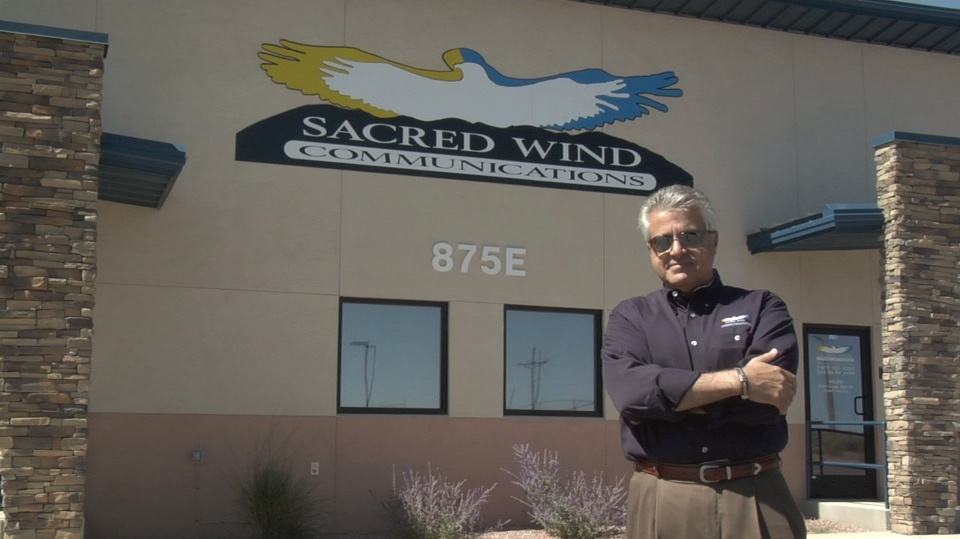
John Badal, CEO of Sacred Wind Communications

John Badal, CEO of Sacred Wind Communications

NBC Universal and American Express today announced Sacred Wind Communications (Albuquerque, N.M.) as the winner and most inspiring small business in the “Shine A Light” program, determined by public vote.

Sacred Wind Communications will receive $50,000 in grant money and $50,000 in marketing support from American Express, and will be featured on MSNBC’s small business show, “Your Business.”

John Badal, described by the Shine A Light Foundation as an entrepreneur, founded Sacred Wind to provide service across the largely ignored Navajo Reservation in New Mexico.  Fewer than 40% of the homes had access to even basic telephone service, provided by Qwest on what the foundation describes as a “dilapidated telephone system.”

Badal, along with a few others, thought Qwest’s turtle-like-speed to provide basic telephone service was not acceptable.

Badal should know — he was the former president of Qwest New Mexico from 2000-2004, overseeing that phone network.

During his involvement with Qwest, the frustration to wire the economically challenged Native American community in his area was daunting.  He told Fierce Broadband Wireless that laying copper cable throughout a rugged, rural desert area to reach a small number of customers who couldn’t afford to pay much for service wasn’t economically feasible for Qwest.

In four years, Qwest only managed to bring phone service to 42 new customers–out of thousands. “It took us two years to get through the rights of way process. Six of those homes had moved by the time the process was completed. It would have taken 45 years to reach 70 percent of the homes in our territory,” Badal said. “We needed a different technology altogether. We needed to go wireless.”

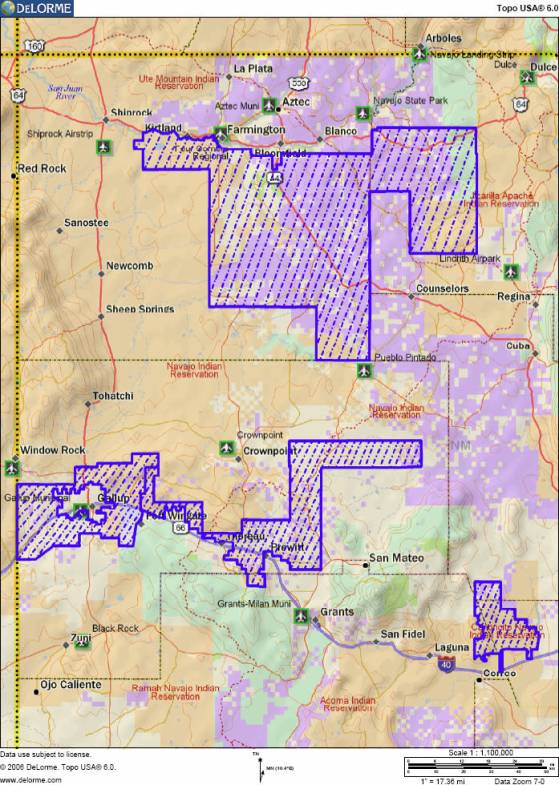
Sacred Wind's service areas (click to enlarge)

Sacred Wind's service areas (click to enlarge)

Badal decided to build a for-profit telecommunications company with a business plan that would depend on funding from the government.

“The only way any company could hope to provide service to the Navajo Nation is with the help of the Federal Communications Commission’s Universal Services Fund,” Badal told New Mexico Business Weekly in 2005.

“We can make this affordable, where Qwest cannot,” says Badal, who expects half of the cost to be picked up by government funding. “That is a necessary part of this equation. Without that, the Navajo cannot be served.”

Virtually every American pays into the Universal Services Fund through a charge levied on telephone bills.  The funding underwrites the expense of providing rural America with access to basic telecommunications services.

In 2004, the same year Badal left Qwest, the company agreed to sell its telephone business on the Navajo Reservation to Badal’s new company.  Sacred Wind, which the company says “evokes a sense of connection between what we do – to send communications over the air – with a larger-than-life purpose for starting this business,” launched service two years later in 2006.

Sacred Wind uses recently developed wireless technology to provide phone service to 2,700+ customers, using both point-to-point wireless and fixed WiMAX to reach as many customers as possible in the sparsely populated desert region.  It’s a challenging proposition for any company, considering most of their service area has less than one home per square mile.  Even when finished constructing their network, Badal estimates there will only be two or three homes served per square mile.

One third of Sacred Wind’s customers live in Navajo or federal government sponsored public housing, another third live in small clusters of a half dozen homes separated by several miles, and the last third live at least a half mile from the nearest neighbor.  Most are economically disadvantaged and have household incomes below $15,000 a year — 57.9% living below the poverty level.  More than two-thirds of reservation homes have no telephone, with some driving up to 30 miles to reach the nearest pay phone.  Several lack access to electricity, which makes wireless phone service and broadband even more challenging.  Sacred Wind is exploring solar options to serve these unpowered homes.

The benefits achieved from Sacred Wind’s focus on their service area are obvious – they know the landscape, the culture, the economics, and the people.  The company will work on problems that a large multi-state carrier like Qwest would not.  Technicians trying to reach one customer five miles away from the nearest wireless base station could not get service until a technician experimented with bouncing the three gigahertz wireless signal off a granite cliff face to extend coverage, which worked.

A company specializing in providing service to rural Native Americans, that also has a non-profit arm dedicated to computer training, provides scholarships, and e-commerce opportunities for Native Americans, is a natural for recognition, and the public responded, calling Sacred Wind’s mission inspiring.

“It’s a real honor to be voted most inspiring small business in the Shine A Light program,” Badal said. “It’s so exciting and rewarding to start your own business and be able to make an impact on the community. Through the support we will receive from American Express as winner of this program, we will be able to further extend our commitment to serving the Navajo people with advanced technology and educational resources.”

Since August, people across the country have nominated thousands of small businesses for the “Shine A Light” program. Three finalists were ultimately selected with the help of host and entrepreneur Ellen DeGeneres, fashion designer and entrepreneur Diane von Furstenberg and MSNBC’s small business expert and host JJ Ramberg.

[flv width=”480″ height=”320”]http://www.phillipdampier.com/video/sacred wind intro.flv[/flv]

A one minute introduction to Sacred Wind Communications

Sacred Wind Broadband Speed/Pricing

Sacred Wind Broadband Speed/Pricing

In addition to telephone service, Sacred Wind also provides Internet access to its customers, and here is where the story becomes considerably less inspiring.

Sacred Wind’s “broadband” service for most affordable tiers fails to qualify as “broadband” at all, using the FCC standard of 768kbps.  Pricing is exorbitant and speeds are slow.

It self-describes its dial-up option as “stable, fast, and affordable.”  The “affordable” claim may be true when comparing pricing with the first broadband tier that actually meets the minimum definition of broadband – $49.95 a month for 768kbps service.  Paying $79.95 a month will bring you their maximum speed offering — just 3Mbps.

The company also sells customers annual contracts to avoid the $99 installation and $65 equipment fees.

Still, for those who have never had telephone service, much less Internet access, it’s considered by many residents to be a good beginning.  The company is amenable to the idea of raising those speeds when technically and financially feasible.

[flv width=”480″ height=”320″]http://www.phillipdampier.com/video/Fujitsu Sacred Wind.mp4[/flv]

Fujitsu showcases Sacred Wind Communications and how it approached the technological challenges involved in providing service to the Navajo Reservation [8 minutes]

Unfortunately, like its bigger telephone brethren, Sacred Wind is not entirely free from the telephone industry politics that often lobbies for anti-consumer policies.  A concerning document on Sacred Wind’s website promotes a questionable legislative agenda, including support of legislation that would permit providers to “create fair compensation in network use by identifying traffic on our networks,” which is a Net Neutrality no-no if it applies to their broadband network.  Another mysterious bullet point, not well explained, objects to “video programming and broadcasting practices that make it difficult to provide an affordable product to our customers.” That could apply to wireless frequency allocations or traffic on their broadband network — it’s not well defined.

While the FCC works on its goal of providing broadband access to underserved Americans, actual case studies illustrating “successes” like Sacred Wind that only manage to bring 3Mbps service to rural areas underline the need for Universal Services Fund reform.  Dedicating additional economic assistance to construct considerably more advanced networks to meet the needs of an increasingly high bandwidth Internet is essential to correct the urban-rural digital divide.  The original purpose of the USF to guarantee basic phone service in rural areas was a noble idea a decade ago, but that was then and this is now.

As the pile of money in the USF continues to grow from Voice Over IP and mobile phone surcharges, it was only a matter of time before waste, fraud, and abuse also turned up.  The administrators of the USF have often wasted considerable amounts of that money on questionable projects in decidedly un-rural areas.  Redirecting, reforming, and broadening USF resources to cover broadband deployment in areas like the Navajo Reservation may be one of the only ways to build sustainable and equitable broadband access networks that are scalable and affordable, even for the most financially-challenged communities.  Providing 256kbps service for $30 a month doesn’t come close to cutting it in poverty-stricken communities.

Additional video coverage of Sacred Wind can be found below the jump.

… Continue Reading

Search This Site:

Contributions:

Recent Comments:

Your Account:

Stop the Cap!