

Home » Community Networks » Recent Articles:

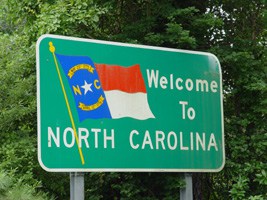
Welcome to North Carolina Week!

welcomencThis week, StoptheCap! will be paying extra attention to the events in North Carolina, as the state legislature continues its review of two bills that would effectively end municipal broadband competition across the state.  Competition is a key asset in dealing with rogue corporate providers that leverage the lack of competitiveness in a market with high prices and comparatively bad service.  Time Warner, among other incumbent providers, have been heavily engaged in trying to stop municipal competition before it spreads around the state.

If you are a resident of North Carolina, this is your action week.  Without the potential threat of municipal broadband, big providers can keep your access capped, metered, and slow.  Threaten them with the potential of competition, and your access to the latest broadband technology is a much safer bet.

If you are outside of North Carolina, you should still be paying close attention to this issue.  If your community is stuck with a single provider of fast broadband threatening to impose profit parties through caps and metered billing, and the other provider in town offers slow service, is unavailable, or threatens to cap as well, municipal broadband is a mighty powerful sword to wave at bad actors.  Protecting the ability to build such a system requires vigilance from bad legislation hand-written by big cable and their lobbyist friends to ban or restrict this tool.

Get involved, for your own sake, even if your local community doesn’t have a system on the drawing board… yet.


WETM Elmira – Why Limited Competition & Caps Kill Smaller Communities

Phillip Dampier April 28, 2009 Community Networks, Public Policy & Gov't, Video 2 Comments

Many people still think of broadband Internet access as some sort of luxury “extra,” like a premium movie channel on your cable subscription, or maybe a nice dinner out at an expensive restaurant.  Only it’s not.  Increasingly, students are choosing where to attend school based on connectivity, high tech business incubators are built in communities where access is available at affordable prices, and now one New York State senator has released a report showing lack of access to affordable broadband is hurting the real estate market.

Senator George Winner (R/C/I – Elmira) released a report last fall documenting the trials and tribulations of inadequate availability and competition for broadband in smaller towns and cities, including many in his district in the southern tier of New York.

Winner fears that without equity of access and a healthy competitive marketplace, the impact will be felt community-wide.

Lack of access to broadband is influencing the real estate market. Homes that have broadband are winning out over more remote ones that don’t. Areas with better and faster broadband are becoming more desirable than ones with slower access. Experts believe that over time, the lack of universal broadband, could pull people from the countryside toward cities and suburbs. On the federal level, the FCC is considering using the Universal Service Fund, which subsidizes phone service in rural areas, to promote broadband coverage as well.

That’s why communities like Elmira, and others in the Twin Tiers region, were paying attention when Time Warner announced broadband usage cap experiments in Beaumont, Texas.  For most, Road Runner -is- their broadband provider.

Can anyone place that anchor’s accent?  It’s definitely not from the western New York area!

StoptheCap! heard from many Frontier customers scattered nationwide across their service area, which encompasses mostly rural communities from coast to coast.  For them, broadband Internet service means getting it from an expensive satellite service, or getting DSL from Frontier Communications.  There is no cable service in many of these communities.  When Frontier was considering a usage cap of 5GB per month, these consumers weren’t just alarmed, they were in full panic.

Rural and underserved markets are routinely bypassed by providers from the latest technological innovations, and are often under punitive contracts at high prices.  Senator Winner’s report details private and public initiatives to reach these communities.  He’s a conservative Republican who serves a district that would prefer not to be bothered by political schemes hatched in Albany, but the issue of broadband access is one that crosses party lines, as readers of this site have come to learn.  It’s not a right or left issue.  It’s one that will rapidly become as important as wiring communities for electricity and universal access to telephone service.

Expensive caps and overlimit fees are an anathema to the development of broadband nationwide.  It’s an issue rural communities are following, as they often have few, if any alternatives.

Action Alert: North Carolina, Get Writing Now for Municipal Broadband Protection!

Phillip Dampier April 24, 2009 Community Networks, Public Policy & Gov't 4 Comments

If you live in North Carolina, get writing. We need a full court press opposing North Carolina Senate Bill 1004 and North Carolina House Bill 1252, immediately!  Protecting the city of Wilson is also going to protect your choice to consider municipal broadband in your community.  A sample letter follows.  Be sure to modify it so that you are writing to the State Senate about SB 1004 and to the State House about HB1252.  Please write one in your own words for maximum effectiveness.  You can find e-mail addresses for your representative at the bottom.  Cut and paste the correct one and send an e-mail today!

April 24, 2009

Dear Senator [insert name] -or- Dear Representative [insert name]:

I am writing you to express my strong opposition to [Senate Bill 1004] -or- [House Bill 1252].  At a time when North Carolina continues to face the perils of a difficult economy, our state must do all that it can to work towards recovery.

As you may know, in 2007 the city of Wilson was confronted with a challenge.  The incumbent cable provider, Time Warner Cable, declined multiple requests by city officials to improve their broadband service for residential and business customers.  City officials decided that with the intransigent position by Time Warner, it had no other choice but to consider building its own municipal broadband system, with state of the art fiber optic technology.

It is unfortunate that most communities in our state have broadband service provided by a virtual duopoly – the cable company and the telephone company.  In markets where competition is less than strong, companies lack the incentive to improve service on an ongoing basis.  This left cities like Wilson confronting the fact they would soon be left in a broadband backwater when compared to Raleigh and other nearby cities.

You may have been told that tax dollars are being used to build this, and other, municipal broadband systems.  The city of Wilson’s system does not rely on one penny of taxpayer dollars.  Time Warner’s claims that this bill would provide a “level playing field” are dubious at best.  What this legislation effectively does is make municipal systems difficult and expensive to propose, untenable to administer, and give unwarranted protection to the existing commercial players.

Few municipalities in healthy, competitive markets, feel the need to build their own systems for the benefit of their communities.  But when competition barely exists, or does not exist at all, it would be devastating to limit a community to essentially “live with what they’ve got,” and this legislation is a one way ticket to that reality.  That means high technology businesses will locate elsewhere, good jobs will not be created, and our future competitiveness will be at serious risk.  Broadband is not just a convenience, it’s an absolute necessity.

Let me be clear.  It’s my opinion that any vote in favor of this legislation represents a vote for big business at the expense of the citizens of North Carolina.  It is an issue of critical importance to me, and others, and I urge you in the strongest possible terms to vote against this bill.

I appreciate your consideration, and look forward to hearing your views at your convenience.

Very truly yours,

[//signature//]

E-Mail Contacts [Find YOUR elected official here – don’t bother writing to those outside of your district]

[email protected], [email protected], [email protected], [email protected], [email protected], [email protected], [email protected], [email protected], [email protected], [email protected], [email protected], [email protected], [email protected], [email protected], [email protected], [email protected], [email protected], [email protected], [email protected], [email protected], [email protected], [email protected], [email protected], [email protected], [email protected]

Action Alert: North Carolina Anti-Municipal Broadband Bill Moved to House Utility Committee

Phillip Dampier April 24, 2009 Community Networks, Public Policy & Gov't 5 Comments

[Editor’s Note: My efforts to tell the story of Wilson in an orderly manner are being challenged by fast-moving developments in the state legislature.  So even though you have yet to see the story play itself out here in its entirety, if you live in North Carolina, this is something you need to act on today.  Wilson may not be a part of the Triad, but my friends, municipal broadband may be one way out of the cap mess once and for all, so you need to get involved in the fight.]

HB1252, a bill to severely curtail municipal broadband projects in North Carolina, was moved without prejudice Wednesday to the House Utility Committee for further consideration.

Brian Bowman, who runs the Save NC Broadband website, in addition to his other job — Public Affairs Manager for the city of Wilson, North Carolina, had some interesting observations of just how much involvement Time Warner has in this particular bill:

Several times, members of the committee asked bill sponsors Rep. Ty Harrell (Wake) and Rep. Thom Tillis (Mecklenburg) for clarification. The lawmakers turned to a Time Warner staff member and an attorney who represents the industry to speak on their behalf. You read that right. The sponsors, elected by their communities, had to ask a Time Warner representative to clarify what their own bill said.

Although the debate now moves to a different venue, the need for North Carolina residents to contact their state government representatives remains critical.  A comprehensive contact list is expected shortly at Save NC Broadband’s website.

The sponsors of this anti-consumer legislation are:

NC Rep. Ty Harrell, Ty.Harrell at ncleg.net, 919.733.5602

NC Rep. Earl Jones, Earl.Jones at ncleg.net, 919.733.5825

NC Rep. Marilyn Avila, Marilyn.Avila at ncleg.net, 919.733.5530

NC Rep. Thom Tillis, Thom.Tillis at ncleg.net, 919.733.5828

If any of these people represent you, get on the phones and/or e-mail them your profound disappointment for their anti-consumer position, and let them know you will remember their vote when they come up for re-election.  If your representative isn’t listed here, then you should be watching the Save NC Broadband site for further developments and contact information, and informing your elected officials of your opposition to HB1252.

Let them know this is a transparent effort by corporate interests to kill off municipal networks that are critical to deliver the high tech platform North Carolina needs to succeed in a high tech economy.  Remind them that municipal projects in Wilson do not rely on taxpayer dollars and are designed to be self-sustained by subscription revenue.  Also let them know these networks would not have been needed had the incumbent providers stepped up and provided an advanced level of service.  Because they didn’t, municipally-run networks for the benefit of their citizens are a positive development, and you want to make sure nothing is done to forestall their development.

WRAL Raleigh: David vs. Goliath – Wilson Faces Cable Industry Boot Crushing Municipal Broadband

Phillip Dampier April 24, 2009 Community Networks, Video 3 Comments

Apparently not being sufficiently warned off by Time Warner’s earlier statements that municipal broadband would be expensive and a pain for the community of Wilson to administer, they found some friendly legislators in state government and helped push a bill that would effectively hamper, if not terminate the Wilson community’s broadband initiative. In a well orchestrated lobbying effort, cable industry officials began claiming that taxpayer funds were being used to leverage the public sector’s broadband product at the expense of “the free market.” But as Wilson city officials explained, their Greenlight project is firewalled from using public tax revenue. The project was paid for by a bond offering and is expected to be self-sustaining through ongoing customer receipts.

Cable industry officials continued to attack municipal broadband projects as failures waiting to happen, pointing to earlier projects that often relied on wireless networks, wi-fi, or older technology. Many cities with these projects have been unable to scale them to grow with expected demand, or have had difficulty expanding their network into other areas of the community. Others outsourced them to be administered by private providers in return for public considerations, such as free/discounted access in certain areas.

Fiber optic broadband projects are new to most municipal broadband projects, and come as a result of a lack of comparable service from private providers unwilling to meet the needs of communities. So having not succeeded in dissuading municipal competition, they now seek to effectively kill it with handcrafted legislation passed into friendly hands.

thumbs-up8WRAL continues its in-depth coverage on the challenges Wilson, NC faces in building their municipal fiber network.  Time Warner officials, among others, make some unproven accusations and statements in this report that go unchallenged, but overall it provides a balanced look at the growing controversy.

Search This Site:

Contributions:

Recent Comments:

Your Account:

Stop the Cap!