
Home » consumption billing » Recent Articles:

Drive-By Shallow Reporting On Comcast’s Reintroduction of Usage Caps in South Carolina

Phillip Dampier October 29, 2013 Broadband "Shortage", Comcast/Xfinity, Competition, Consumer News, Data Caps, Editorial & Site News, Rural Broadband, Video Comments Off on Drive-By Shallow Reporting On Comcast’s Reintroduction of Usage Caps in South Carolina
More drive-by reporting on usage caps.

More drive-by reporting on Comcast’s usage caps.

When the media covers Internet Overcharging schemes like usage caps and consumption billing, it is often much easier to take the provider’s word for it instead of actually investigating whether subscribers actually need their Internet usage limited.

Comcast’s planned reintroduction of its usage caps on South Carolina customers begins Friday. Instead of the now-retired 250GB limit, Comcast is graciously throwing another 50GB of usage allowance to customers, five years after defining 250GB as more than generous.

The Post & Courier never bothered to investigate if Comcast’s new 300GB usage cap was warranted or if Charleston-area customers wanted it. It was so much easier to just print Comcast’s point of view and throw in a quote or two from an industry analyst.

In fact, the reporter even tried to suggest the Internet Overcharging scheme was an improvement for customers.

The newspaper reported Comcast was the first large Internet provider in the region to allow customers to pay even more for broadband service by extending their allowance in 50GB increments at $10 a pop. (Actually, AT&T beat Comcast to the bank on that idea, but has avoided dropping that hammer on customers who already have to be persuaded to switch to AT&T U-verse broadband that tops out at around 24Mbps for most customers.)

Since 2008, the company’s monthly limit has been capped at 250 GB per household. When customers exceeded that threshold, Comcast didn’t have a firm mechanism for bringing them back in line, other than to issue warnings or threaten to cut off service.

“People didn’t like that static cap. They felt that if they wanted to extend their usage, then they should be allowed to do that,” said Charlie Douglas, a senior director with Comcast.

Charleston is the latest in a series of trial markets the cable giant has used to test the new Internet usage policy in the past year. As with any test period, the company can modify or discontinue the plan at any time.

During the trial period in Charleston, customers will get an extra 50 GB of monthly data than they’re used to having. If they exceed 300 GB, they can pay for more.

“300 GB is well beyond what any typical household is ever going to consume in a month,” Douglas said. “In all of the other trial markets with this (limit), it really doesn’t impact the overwhelming super-majority of customers.”

The average Internet user with Comcast service uses about 16 to 18 GB of data per month, Douglas said.

Customers who use less than five GB per month will start seeing a $5 discount on their bills.

“We think this approach is fair because we’re giving consumers who want to use more data a way to do so, and for consumers who use less, they can pay less,” Douglas said.

Data caps are designed to stop content piracy?

Data caps are designed to stop content piracy?

The Charleston reporter asserts, without any evidence, “data-capping is a trend many Internet service providers are expected to follow in the next few years as the industry aims to reduce network congestion and to find safeguards against online piracy.”

Suggesting data caps are about piracy immediately rings alarm bells. Comcast and other Internet Service Providers fought long and hard against being held accountable for their customers’ actions. The industry wants nothing to do with monitoring online activities lest the government hold them accountable for not actively stopping criminal activity.

“It’s not about piracy, per se,” said Douglas. “We don’t look at what people are doing. The purpose is really a matter of fairness. If people are using a disproportionate amount of data, then they should pay more.”

Comcast’s concern for fairness and disproportionate behavior does not extend to the rapacious pricing and enormous profit it earns selling broadband, flat rate or not.

MIT Technology Review’s David Talbot found “Time Warner Cable and Comcast are already making a 97 percent margin on their ‘almost comically profitable’ Internet services.” That figure was repeated by Craig Moffett, one of the most enthusiastic, well-respected cable industry analysts. That percentage refers to “gross margin,” which is effectively gravy on largely paid off cable plant/infrastructure that last saw a major wholesale upgrade in the 1990s to accommodate the advent of digital cable television and the 500-channel universe. Broadband was introduced in the late 1990s as a cheap-to-deploy but highly profitable, unregulated ancillary service.

How things have changed.

Just follow the money....

Just follow the money….

Customers used to being gouged for cable television are now willing to say goodbye to Comcast’s television package in growing numbers. Today’s must-have service is broadband and Comcast has a high-priced plan for you! But earning up to 97 percent profit from $50+ broadband isn’t enough.

A 300GB limit isn’t designed to control congestion either. In fact, had she investigated that claim, she would have discovered the cable industry itself disavowed that notion earlier this year.

In fact, it’s all about the money.

Michael Powell, the head of the cable industry’s top lobbying group admitted the theory that data caps are designed to control network congestion was wrong.

“Our principal purpose is how to fairly monetize a high fixed cost,” said Powell.

Powell mentioned costs like digging up streets, laying cable and operational expenses. Except the cable industry long ago stopped aggressive buildouts and now maintains a tight Return On Investment formula that keeps cable broadband out of rural areas indefinitely. Operational expenses for broadband have also declined, despite increases in traffic and the number of customers subscribing.

[flv]http://www.phillipdampier.com/video/CNBC Internet v. Cable 8-20-10.flv[/flv]

Don’t take our word for it. Consider the views of Suddenlink Cable CEO Jerry Kent, interviewed in 2010 on CNBC. (8 minutes)

“I think one of the things people don’t realize [relates to] the question of capital intensity and having to keep spending to keep up with capacity,” said Suddenlink CEO Jerry Kent. “Those days are basically over, and you are seeing significant free cash flow generated from the cable operators as our capital expenditures continue to come down.”

Unfortunately, Charleston residents don’t have the benefit of reporting that takes a skeptical view of a company press release and the spokesperson readily willing to underline it.

If Comcast seeks to be the arbiter of ‘fairness,’ then one must ask what concept of fairness allows for a usage cap almost no customers want for a service already grossly overpriced.
Time Warner Cable Doubles Premium Broadband Speeds in Los Angeles, New York, Hawaii

Phillip Dampier October 29, 2013 Broadband Speed, Competition, Data Caps 1 Comment

timewarner twcTime Warner Cable customers in Los Angeles, New York, and Hawaii subscribed to the company’s top 50/5Mbps Ultimate speed tier will get a free upgrade to 100/5Mbps between now and the end of this year.
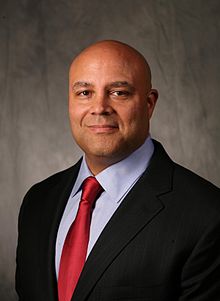
“Residential customers in Los Angeles who subscribe to our Ultimate 50 tier are being automatically upgraded to Ultimate 100 at no extra cost,” said Time Warner’s Andrew Russell. “Ultimate 50 residential customers in New York City and Hawaii will be upgraded by year’s end. By early 2014, all customers in these markets will have access to Ultimate 100, with more TWC markets to follow next year.”

“Consumers are adding more and more connected devices into their digital lifestyle,” said Steve Cook, general manager of Time Warner Cable residential Internet. “These new ultra-fast Internet speeds are designed to satisfy their growing demand to stream, download and connect simultaneously across multiple devices.”

Time Warner Cable announced several speed upgrades over the last year, but it still remains the least aggressive major cable operator in the speed category. Among the largest five cable operators, Time Warner Cable’s premium speed tiers are the slowest, with top upstream speeds of just 5Mbps and a maximum downstream speed of 50Mbps for most. But Time Warner Cable has no compulsory usage caps or consumption billing.

Over the last year, Time Warner Cable increased speeds for all but their Extreme customers (30/5Mbps), the only plan to have not seen any major speed boost in most markets since being standardized as an entry level DOCSIS 3 tier.

Time Warner also announced a speed improvement for their budget-conscious Lite tier, now 1/1Mbps in most markets.

Priced at $14.99 per month, the new offering will deliver 2/1Mbps — adequate for basic web browsing, e-mail and limited multimedia use — and becomes available nationwide beginning Nov. 4.

“We’re making our entry-level product even better and more affordable for the casual Internet user and cost-conscious consumer,” said Cook. “At both ends of our speed options and everything in between, we’re focused on giving our customers the best experience at the best value.”

Time Warner Cable will now offer most customers seven different speed tiers, all unlimited use (except when opting in to usage limited plans in return for a discount):

  • Lite: 2/1Mbps
  • Basic: 3/1Mbps
  • Standard: 15/1Mbps
  • Turbo: 20/2Mbps
  • Extreme: 30/5Mbps
  • Ultimate: 100/5Mbps

Former FCC Chairman Turned Lobbyist Warns Providers to Hurry Usage Caps & Billing Before It’s Too Late

Powell

Powell

A former chairman of the Federal Communications Commission turned top cable lobbyist rang the warning bell at an industry convention this week, recommending America’s cable operators hurry out usage caps and usage-based billing before a perception takes hold the industry is trying to protect cable television revenue.

Michael Powell, the former head of the FCC during the Bush Administration is now America’s top cable industry lobbyist, serving as president and CEO of the National Cable & Telecommunications Association (NCTA). From 2001-2005 Powell claimed to represent the interests of the American people. From 2011 on, he represents the interests of Comcast, Time Warner Cable, Cox, and other large cable operators.

Attending the SCTE Cable-Tec Expo 2013 in Atlanta, Powell identified the cable industry’s top priority for next year: “broadband, broadband, and broadband.”

The NCTA fears the current unregulated “Wild West” nature of broadband service is ripe for regulatory checks and balances. The NCTA plans to prioritize lobbying to prevent the implementation of consumer protection regulations governing the Internet. Powell warned it would be “World War III” if the FCC moved to oversee broadband by changing its definition as an unregulated “information service” to a regulated common carrier utility.

Powell is very familiar with the FCC’s current definition because he presided over the agency when it contemplated the current framework as it applies to DSL and cable broadband providers.

While Powell has a long record opposing blatant Net Neutrality violations that block competing websites and services, he does not want the FCC meddling in how providers charge or provision access.

Powell believes some of cable's biggest problems come from bad marketing.

Powell believes some of cable’s biggest problems come from bad marketing.

Powell disagreed with statements from some Wall Street analysts like Craig Moffett who earlier predicted the window for broadband usage-based limits and fees was closing or closed already.

Powell does not care that consumers are accustomed to and overwhelmingly support unlimited access. Instead, he urged cable executives to “move with some urgency and purpose” to implement usage-based billing for economic reasons, despite the growing perception such limits are designed to protect cable television service from online competition.

“I don’t think it’s too late,” Powell said. “But it’s not something you can wait for forever.”

Powell pointed to the success wireless carriers have had forcing the majority of customers to usage capped, consumption billing plans and believes the cable industry can do the same.

The NCTA president also described many of the industry’s hurdles as marketing and perception problems.

The cable industry, long bottom-rated by consumers in satisfaction surveys, can do better according to Powell, by making sure they are nimble enough to meet competition head-on.

Powell described Google Fiber as a limited experiment unlikely to directly compete with cable over the long-term, and with a new version of the DOCSIS cable broadband platform on the way, operators will be able to compete with speeds of 500-1,000Mbps and beyond. He just hates that it’s called DOCSIS 3.1, noting it wasn’t “consumer-friendly” in “a 4G and 5G world.”

Kevin Hart, executive vice president and chief technology officer of Cox Communications joked the marketing department would get right on it.

Comcast Hires ‘Internet Guy’ to Embrace Broadband Innovation; Start By Killing the Usage Cap

Phillip Dampier September 23, 2013 Broadband Speed, Comcast/Xfinity, Consumer News, Data Caps, Editorial & Site News, Net Neutrality Comments Off on Comcast Hires ‘Internet Guy’ to Embrace Broadband Innovation; Start By Killing the Usage Cap
Phillip "Unlimited Innovation depends on Unlimited Access" Dampier

Phillip “Unlimited Innovation depends on Unlimited Access” Dampier

Comcast wants to embrace innovation and change. Before it can succeed, the cable company needs to permanently retire usage caps and consumption billing schemes, now being market-tested for possible reintroduction nationwide.

Comcast today announced it created a new executive position — vice president of consumer services for video, phone, Internet, and home products and appointed Marcien Jenckes to the position. His role is to oversee development of ideas for new products and services that can be sold to Comcast customers.

Jenckes says Comcast’s product lines are blurring as convergence between television and broadband continues. His role is to keep customers of both services happy by embracing innovation and change.

He will find his hands tied should Comcast bring back its usage cap, now under serious consideration. Limiting residential broadband limits customers’ interest in innovative new online applications that carry the threat of a wallop to one’s wallet from overlimit fees. Comcast ditched its arbitrary 250GB usage cap in the spring of 2012, but continues to think about bringing it back. This year, Comcast has tested a new 300GB cap in certain states tied to an overlimit fee for customers exceeding their usage allowance.

Customers don’t like usage caps one bit. Neither should Comcast “innovators” like Mr. Jenckes.

The future of Internet innovation is likely to be developed on a platform that delivers faster Internet speeds, opening up new high bandwidth applications not easily possible today. Usage caps are anathema to that kind of innovation because customers will be unlikely to embrace new services that blow their usage allowance away.

If Mr. Jenckes is seriously interested in promoting a new spirit of innovation at Comcast, he should start by pressing his fellow executives to ditch usage caps and consumption billing once and for all. The future of unlimited innovation in broadband has its best chance of success with unlimited access.

Verizon Considers Offering FiOS TV On a Low-Fiber Diet; Use Your Existing Broadband Provider to Watch

Phillip Dampier September 12, 2013 Competition, Consumer News, Data Caps, Net Neutrality, Online Video, Public Policy & Gov't, Verizon Comments Off on Verizon Considers Offering FiOS TV On a Low-Fiber Diet; Use Your Existing Broadband Provider to Watch
Coming soon nationwide? Comcast, Time Warner, AT&T and CenturyLink sure hope not.

Coming soon nationwide? Comcast, Time Warner, AT&T and CenturyLink sure hope not.

Verizon is talking to major cable programmers about launching a nationwide version of FiOS TV as an over-the-top video service that works with your existing broadband provider.

The NY Post reports Verizon is looking at launching an online pay television service for customers without installing additional fiber optic lines to deliver it.

The service would likely be an extension of the “TV Everywhere” online video platforms that many national cable and telco-TV providers already offer existing cable TV subscribers. What would make Verizon’s offer radically different is selling the virtual cable TV service in areas where it does not offer FiOS service.

Verizon must carefully negotiate with programmers to distribute networks over an online video service that would likely compete directly with those programmers’ best customers: cable operators and telco IPTV services like U-verse and Prism TV.

The concept was rejected out of hand Wednesday by Time Warner Cable chief operating officer Rob Marcus, who agreed with Comcast executive vice president Steve Burke’s contention that “over the top” video services that offer virtual cable television outside of their respective service areas lacked a compelling business model and would be difficult to monetize.

“At this point we don’t really aspire to delivering an over-the-top service,” Marcus said. “Our value proposition is delivering video via our facilities as opposed to being a retailer of somebody else’s video, which is a somewhat commoditized product.”

Neither cable executive mentioned the fact cable operators have also maintained an informal “wink and nod” agreement to steer clear of head-on competition with each other for decades.

Verizon: The next big supporter of Net Neutrality?

Verizon: The next big supporter of Net Neutrality?

Verizon apparently wants to shake things up and sell online video without incurring the cost of expanding its fiber optic network FiOS to deliver it.

“They’ve had exploratory talks about how to become a virtual [multiple-system operator],” one person close to the conversations told the Post. “It’s a question of how to get there.”

Interestingly, Verizon CEO Lowell McAdam is worried about developing the service without Net Neutrality protection or some other form of government oversight of broadband. Verizon could spend millions to negotiate programming contracts only to find competitors with their own TV packages to protect outmaneuvering the venture. Without Net Neutrality, Verizon could find its service blocked by competitors or made untenable with the implementation of broadband usage caps or consumption billing that would make a subscription too costly to consider.

The company is now trying to figure out exactly which branch of government (or agency) controls broadband policy in the nation.

The FCC’s current Net Neutrality policy depends on a shaky regulatory framework now being challenged in federal court.

Verizon declined to comment.

Search This Site:

Contributions:

Recent Comments:

Your Account:

Stop the Cap!