Home » consumption billing » Recent Articles:

WNY Call to Action: Rep. Dan Maffei’s Curious Opposition to Broadband Oversight and Net Neutrality

Phillip Dampier May 26, 2010 Data Caps, Editorial & Site News, Net Neutrality, Public Policy & Gov't, Video Comments Off on WNY Call to Action: Rep. Dan Maffei’s Curious Opposition to Broadband Oversight and Net Neutrality

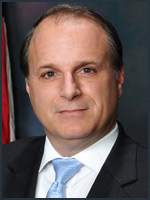
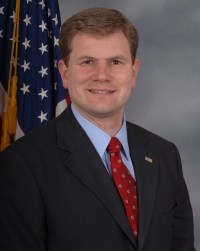
Rep. Dan Maffei (D-NY)

Rep. Dan Maffei (D-New York) has begun to worry broadband consumers in his western and central New York district.

In April 2009, when Time Warner Cable’s announced Internet Overcharging experiment was upsetting customers in Rochester, Maffei claimed he was concerned about limiting broadband usage for customers in the area.  But when former Rep. Eric Massa introduced legislation to ban unjustified usage caps and consumption billing, Maffei told his constituents he wasn’t interested in Massa’s approach:

Thank you for contacting me regarding H.R. 2902, the Broadband Internet Fairness Act. I appreciate hearing from you and welcome the opportunity to respond. The Broadband Internet Fairness Act was introduced by Representative Eric Massa (NY-29) on June 16, 2009, and was referred to the Committee on Energy and Commerce. The bill would authorize the Federal Trade Commission (FTC) and the Federal Communications Commission (FCC) to review volume usage service plans of major broadband internet service providers to ensure that such plans are fairly based on cost.

When Time Warner Cable announced in April that Rochester would be used as a test market for charging Internet users based upon consumption usage, I, along with Representative Massa, opposed this policy. We helped persuade Time Warner to abandon the plan in the area. At that time, Representative Massa also introduced the Broadband Internet Fairness Act.

Other utilities, like water or electricity, charge customers based on usage, but Internet users have traditionally been charged a flat fee for unlimited access to the web. The Broadband Internet Fairness Act would require Internet Service Providers that want to implement usage-based pricing plans to go through several traditional regulatory hurdles. While I share many of the goals of Representative Massa’s legislation, I do not believe passing this stand-alone bill is the right approach at this time.

Of course broadband is nothing like water or electric utilities.  In fact, Maffei’s inclusion of that reference is a classic talking point of the telecom industry.  Notice they, and Maffei, didn’t mention telephone service — the one utility that provides flat rate calling for most Americans.  It also happens to be the utility most comparable to broadband service!
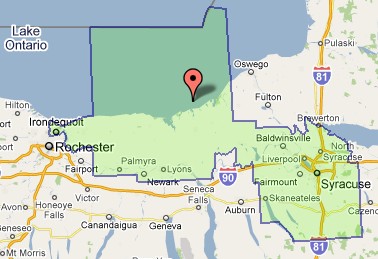
New York's 25th Congressional District

But Maffei made a bad situation worse when he joined 72 other House Democrats co-signing a letter from Rep. Gene Green (D-AT&T), urging FCC Chairman Julius Genachowski not to fight a court decision overturning the agency’s ability to conduct broadband oversight.

The letter represented one giant talking point — the false premise that enforcing a fair, free, and open Internet with Net Neutrality would somehow stifle investment in broadband expansion.  Yet AT&T was required to honor the very same principles when it merged with SBC, and managed to remain a multi-billion dollar powerhouse well positioned to expand broadband service to additional customers in its ever-growing service areas.

The fact the broadband industry is a duopoly for most Americans — one that can threaten to pull back on service if it doesn’t get its way in Washington — is just one more reason the industry requires more oversight, not less.

Yet Rep. Maffei stood alone as the only member of the western New York Congressional delegation to sign his name to the agenda of big cable and phone companies.

Perhaps the congressman has forgotten these facts which trouble broadband consumers across western and central New York:

  • Rochester, NY was the only city in the northeast where Time Warner sought to conduct an Internet Overcharging experiment, made possible because of limited competition in the Rochester market;
  • Rochester’s other broadband provider, Frontier Communications, insists on a monthly usage allowance of just 5GB per month in its Acceptable Use Policy;
  • Verizon FiOS has suspended expansion indefinitely and the service will never be available in most of the 585 area code where Frontier operates, and it will take years for most of the rest of his Syracuse district to see the service reach those areas;
  • Time Warner Cable increased its broadband rates in 2010, as did Verizon;

Green’s letter dances around the real issue — telecommunications companies are spending millions to oppose pro-consumer reforms and stop a return of oversight authority the FCC lost after a recent court decision.  Without this authority, the FCC cannot implement the National Broadband Plan’s insistence that American providers not block or impede network traffic.  These Net Neutral policies preserve net freedom.  The FCC cannot even require that providers tell the truth about broadband speeds and include the company’s terms of service in plain English.

Western New York is a hotbed of consumer activism on broadband issues, particularly because we are actual victims of provider abuse.  No one knows more than we how critical 21st century broadband is to the transformation of this region’s perennially challenged economy.

Rep. Maffei needs a reminder this is a hot button issue for consumers from Irondequoit to Manlius.  Perhaps he just doesn’t fully understand what’s at stake here.  You need to remind him.

We’ve included a suggested letter you can use to help write your own.  For maximum effectiveness, include some of your own personal stories, challenges, and frustrations with your local broadband provider.  Feel free to share yours in the Comments section.

Dear Rep. Maffei:

I was extremely disappointed to discover you signed your name on a letter written by Rep. Gene Green urging FCC Chairman Julius Genachowski not to restore oversight authority over broadband.  While Rep. Green’s letter illustrates he’s mostly concerned about the well being of AT&T, Verizon, Time Warner Cable and Comcast, as a consumer I am more concerned about the broadband duopoly that exists in Rochester & Syracuse.

If the FCC does not regain its ability to oversee broadband by reclassifying it under Title II — as a telecommunications service (which it very clearly is), the FCC can effectively do nothing to stop broadband provider abuses, such as Comcast’s notorious speed throttle on customers using certain Internet websites and services. It took an FCC investigation to finally get the cable company to admit the truth — it was interfering with customers’ broadband speeds.  The oversight power the agency had was just what was needed to convince Comcast to stop.

Unfortunately, a DC Circuit Court recently disagreed it had that authority and effectively stripped it away.  Chairman Genachowski is simply seeking a return to the status quo before that court decision was handed down.  He’s not asking to regulate broadband anything like telephone service.  In fact, he’s insisted on a “light touch.”  That’s better than today’s court-imposed total-hands-off reality.

By signing Rep. Green’s letter, you effectively tell us you don’t support Net Neutrality protections that guarantee providers cannot censor or impede web traffic.  You also do nothing to protect consumers from other provider abuses.  Considering what residents of Rochester went through last year fighting a Time Warner Cable scheme that would have tripled broadband prices for the same level of service, I’m shocked you of all people would be a supporter of big telecom’s agenda.

Telecom companies are claiming that if regulations enforcing Net Neutrality are enacted, investment will suffer and broadband expansion will be slowed.  Yet AT&T was required, as part of its merger with SBC, to respect Net Neutrality for several years.  The company flourished, broadband was offered to more customers than ever, and investors liked what they saw.

The record in western New York is clear — Time Warner Cable was willing to limit its customers access to broadband service, Frontier already does in its terms and conditions, and Verizon FiOS deployment has been suspended indefinitely.  For too many of us, there are too few choices.  In fact, the only thing we can be assured of is higher pricing and a strengthened duopoly.

I strongly urge you to remove your signature from Rep. Green’s letter and get on board with consumers like myself in your district who believe deregulation and oversight failures have given us nothing but nightmares — from Wall Street to BP’s oil spill.  Let’s not make another mistake in handing cable and phone companies unfettered permission to abuse their customers.

Please get back in touch with me as soon as possible on this important matter.

Rep. Dan Maffei told constituents he was concerned about Time Warner Cable’s Internet Overcharging scheme proposed in April 2009.  At a town hall meeting in Irondequoit, New York, he admitted Time Warner Cable held near-monopoly power over consumers in Rochester.  What changed his tune when he signed on to Rep. Gene Green’s anti-consumer letter to the FCC? (April 9, 2009 — 2 minutes)

Rep. Dan Maffei’s Contact Information

Washington, D.C. Office
1630 Longworth HOB
Washington, DC 20515
Phone: (202) 225-3701
Fax: (202) 225-4042

Syracuse Office
P.O. Box 7306,
1340 Federal Building
Syracuse, NY 13261
Phone: (315) 423-5657
Fax: (315) 423-5669

Irondequoit/Rochester Office
1280 Titus Avenue
Rochester, NY 14617
Phone: (585) 336-7291
Fax: (585) 336-7274

[Update: 11:30pm EDT: Free Press reports Rep. Maffei accepted $29,000 in contributions from telecom companies, including Verizon, Comcast, and AT&T.]

Liberals Promise Universal Broadband Across Rural Canada – Join Today’s Online Town Hall at 3:30pm EDT

Phillip Dampier May 5, 2010 Broadband Speed, Canada, Data Caps, Editorial & Site News, Net Neutrality, Public Policy & Gov't, Rural Broadband Comments Off on Liberals Promise Universal Broadband Across Rural Canada – Join Today’s Online Town Hall at 3:30pm EDT

(The Liberal Party is sponsoring an online town hall meeting this afternoon at 3:30PM EDT on the issue of expanding broadband in rural Canada.  Why not join in and demand that Michael Ignatieff commit to reforming the Canadian Radio-television and Telecommunications Commission, which has landed Canada in a real broadband mess filled with Net Neutrality violations and Internet Overcharging schemes like usage caps and consumption billing.  The CRTC has been so submissive to Canadian telecom, they might as well be their trade association.

Tell him rural broadband expansion doesn’t do much good if the existing providers, which got Canada into this mess, are still in charge of running it.  Real broadband reform requires a government committed to universal broadband that works for Canadians and doesn’t simply profit from them.  Demand Net Neutrality commitments from the Liberal Party and an end to overcharging schemes.  Universal broadband doesn’t mean much to Canada if Canadians can’t use it without fear of overlimit fees and enormous bills at the end of the month. — Phillip Dampier)

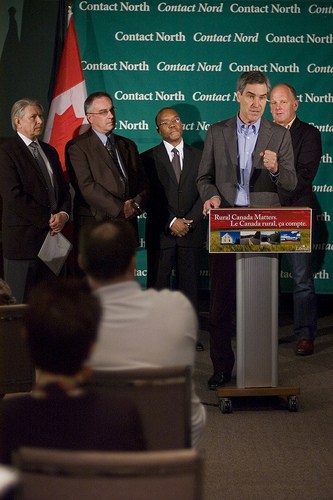
Ignatieff announces the Liberals' rural broadband plan at Contact North in Thunder Bay, Ont.

The Liberal Party of Canada has promised rural Canadians they will not be left behind the digital online revolution, unveiling a promise Tuesday to deliver universal broadband access to all Canadians within three years of taking office.

Michael Ignatieff, Liberal leader made the commitment as part of a series of planks the party introduced under its “Rural Canada Matters” platform to attract support from rural Canadians, who tend to vote Conservative.

“Too many rural communities can’t get access to essential services, because we don’t have the digital infrastructure to deliver them,” said Ignatieff. “That’s why I’m committing a future Liberal government to 100 percent high-speed Internet for every rural, remote and Northern community in our country.”

According to Ignatieff, using proceeds from a 2011 wireless spectrum auction, a Liberal government would invest to achieve an interim target of 100 percent high-speed Internet connectivity of at least 1.5 Mbps. A Liberal government would also seek to set a more ambitious goal for 2017, Canada’s 150th anniversary as a country.

The Liberals blasted the incumbent Conservatives for breaking their promise to deliver rural broadband to Canadians.

In 2006, Canada’s Telecommunications Review Panel recommended the federal government achieve 100% high-speed Internet connectivity by 2010. This goal was not achieved under the Conservative government.  According to the CRTC, in 2009 close to 800,000 Canadian households still did could not access high-speed Internet – or 20% of all rural Canadians. At the turn of the century, Canada ranked second in the world in Internet connectivity, but has now fallen to tenth place.

Ignatieff announced the plan in Thunder Bay, Ontario at an Internet access center run by Contact North.  He characterized the current state of broadband in Canada as threatening the country’s economic competitiveness and quality of life for rural residents.

“While railways and highways were the essential infrastructure of the 20th century, fiber optic lines, satellites and wireless towers, are the digital infrastructure needed to connect our communities and strengthen our economy in the 21st century,” said Liberal Rural Caucus Chair Mark Eyking, “In all regions of Canada, families and businesses depend on access to the Internet and mobile phone coverage.”

New Democratic Party (NDP) MP Bruce Hyer (Thunder Bay-Superior North) praised the Liberal plan.

The Liberal Party is trying to capture an increased share of traditional Conservative Party supporters with a rural-focused agenda

“Obviously, country-wide broadband is a good idea,” Hyer told The Chronicle-Journal newspaper in Thunder Bay. “And there should be virtually no community of any size in Canada, and nowhere along the Trans-Canada, for sure, that we don‘t have high-quality mobile phone access and service. The United States has those things, and we should have them, too.”

But NDP MP John Rafferty (Thunder Bay-Rainy River) told the newspaper he’s heard it all before.

“Liberals have been talking about rural broadband access for a decade now,” he said. “The interesting thing is that he says rural Canada matters. But clearly it hasn’t mattered to Liberals for a long time, or else we would’ve had broadband.  They had a chance to do this. What they’re doing is regurgitating old promises.”

Rafferty said the Liberals first brought it up in 2001, and said then it would cost $4 billion.

“I’m not sure where he comes up with ($500 million).”

Another concern for the Liberal Party plan is the fact it relies entirely on private providers to deliver the service, something they have refused to provide many rural Canadians thus far.  In effect, the government would transfer $500 million dollars earned from large telecommunications companies buying additional spectrum and then hand it all back to those same companies to construct slow speed broadband services they can then profit from.

While many Canadian officials blame Canada’s large rural expanse for the digital divide, others blame Canada’s broadband providers who have engaged in usage-limiting schemes, increased prices, and throttled the speeds of certain broadband services.

Country

Universal Service Target

Target date

US 4 Mbps 2020
UK 2 Mbps 2012
Canada (Liberal Proposal) 1.5 Mbps within 3 years of being elected
South Korea 1 Mbps Currently available
Finland 1 Mbps Currently available
Ireland 1 Mbps 2010
Germany 1 Mbps 2010
France 0.5 Mbps 2010

T-Mobile Dumps Overlimit Fees, Reduces Speeds for Customers Exceeding 5GB Per Month

Last year I participated in an online focus group about wireless broadband pricing.  The subject was consumption billing vs. usage limits — do consumers value unlimited broadband plans with overlimit fees more than strict usage caps that cause speeds to plummet for customers who reach them.  Also under consideration were various usage allowances sold at different price points.  Focus group members could rate the plans’ acceptability from a scale of “extremely interested” to “would not consider this plan.”  It took me mere minutes to work my way through dozens of combinations, rating them all unacceptable.  Participants were next directed into an online forum to discuss the different plans amongst ourselves, with a moderator focusing and encouraging discussions.

Inevitably, I was asked why I rated every plan on offer as not worthy of my consideration.  My short answer was that while I understand wireless was not presently a limitless resource, the plans suggested all included overlimit fees or plan allowances that would-be customers had to choose, many with no insight into what their monthly usage could or would be.  Not on offer was a true consumption plan that charged wireless customers only for what they used during a month.  If they didn’t use it at all, no bill would result.  My bottom line — customers should not have to take a crash course in data consumption to predict their usage or face steep penalties when they guessed wrong.

T-Mobile has found a third way, although Cricket’s wireless broadband service beat them to it well over a year ago.

The company’s new 5GB wireless broadband plan offers a traditional usage cap every mobile broadband customer is familiar with, but imposes no overlimit fees on customers that exceed it.  Instead, they reserve the right to dramatically reduce your speed until the next billing cycle begins.  T-Mobile representatives tell Stop the Cap! the company won’t automatically impose the speed throttle unless customers have a history of regularly exceeding their usage allowance (or dramatically exceed it.)  T-Mobile also may forgive a customer for an occasional breach, dropping the speed throttle for those who contact customer service and ask.

This effectively matches Cricket’s pricing and usage plan, which may cause that carrier to consider increasing usage allowances or reducing the price to compete.

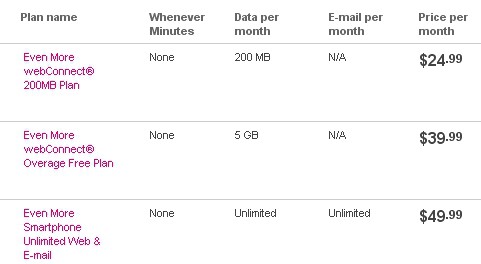
T-Mobile's data plans for mobile broadband and smartphones

Broadband Reports notes that the 200 megabyte plan still requires overlimit fees, but they’ve been cut in half from 20 cents per megabyte to 10 cents.

Larger carriers like AT&T and Verizon still impose overlimit fees on their usage-capped wireless broadband accounts.  Cricket sells a $50 10 gigabyte usage allowance plan through Wal-Mart as well.

1st Anniversary of Time Warner Cable Internet Overcharging Experiment for Texas, North Carolina, New York

Today marks the first anniversary of news that Time Warner Cable planned to expand an Internet Overcharging scheme being tested in one Texas city to four additional cities within its service area.

Residents of Rochester, New York, the Triad Region surrounding Greensboro, North Carolina, as well as Austin and San Antonio, Texas first learned of the planned expansion of so-called “metered broadband” from a Business Week article dated March 31st, which has since accumulated more than 450 comments to date:

Web users, the meter is running. In a strategy that’s likely to rankle consumers but be copied by competitors, Time Warner Cable is pressing ahead with a plan to charge Internet customers based on how much Web data they consume. Starting next month, the company will introduce tiered pricing in several markets.

In April, Time Warner Cable will begin collecting information on its customers’ Internet use in the Texas cities of Austin and San Antonio and in Rochester, N.Y. Consumption billing will begin in those cities later this summer. In Greensboro, N.C., the billing changes will begin sooner. Spun off from Time Warner this month, Time Warner Cable had been testing a plan to meter Internet usage in Beaumont, Tex., since last year.

Proposed pricing models created by Time Warner Cable would have tripled broadband bills to an unprecedented $150 a month for consumers seeking the same level of broadband service they enjoyed a month earlier.  For a cable industry that was used to pushing through rate increases well above the annual rate of inflation, such an enormous rate increase was unprecedented, even for them.

For consumers willing to ration their broadband use, the news was slightly better — you’d still pay more for less service, and be exposed to overlimit fees and penalties should you exceed your monthly allowance, which was as low as a 1 GB per month for one proposed plan.

While residents of Beaumont, Texas had to endure these prices for several months prior to the announced expansion of experimental Overcharging, once news hit tech-savvy cities in Texas, New York, and North Carolina, an all-out consumer rebellion began.  Residents in Austin met with city officials to discuss alternatives to a cable company that threatened Austin’s high tech status.  For residents in Rochester, already coping with a 5 GB usage allowance for Frontier Communication’s DSL service, it was a clear-cut case of monopolistic greed.  In North Carolina, working to transition its way towards a digital economic future, an Internet rationing plan would hurt the economy of the entire Triad region.  San Antonio residents were equally unimpressed with the cable operator as well, demanding alternative providers.

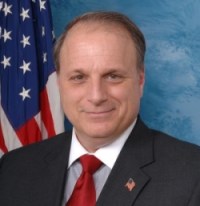
Former Congressman Eric Massa (D-NY)

Consumers banded together on Stop the Cap! and other consumer-oriented websites to coordinate the pushback effort.  Protests were held, the media was engaged, and at least in New York, the politicians were not going to sit back in Time Warner Cable’s favor.  Former Rep. Eric Massa expressed outrage at the company for its new pricing plan and Senator Chuck Schumer personally called Time Warner Cable CEO Glenn Britt.

A few lapdogs in the trade press and “dollar a holler” astroturf groups praised Time Warner Cable’s price gouging plans.  One even went as far as to suggest Time Warner Cable “took one for the team” — referring to a cable industry just waiting to test some Internet Overcharging of their own.

Time Warner Cable dispatched some of their social media minions to try and explain away the outrageous price increases, offering to “listen” to consumers with suggestions about how to “improve the plan.”  One, like TWCAlex offered “proof” consumers wanted this kind of pricing.  The disingenuousness of the effort rivaled Lord Haw Haw’s Germany Calling propaganda broadcasts on the Reichssender Hamburg.  Company officials ignored the overwhelming consensus that consumers didn’t want metered or capped service and then weeks later those who did submit comments were notified they were “deleted without being read.”

Meanwhile, Rep. Massa’s office began drafting legislation to ban the unprecedented pricing schemes, culminating in a bill introduced in 2009 to ban unjustified usage caps and metered billing.

On April 9th, Landel Hobbs, Chief Operating Officer of Time Warner Cable, issued a recitation of the reasons why Time Warner Cable felt justified in exposing customers to up to 150 percent rate hikes — reasons we’ve managed to debunk over the past year’s coverage:

With the ever-increasing flood of content on the Internet, bandwidth consumption is growing exponentially. That’s a good thing; however, there are costs associated with this increased Internet usage. Here at Time Warner Cable, consumption among our high-speed Internet subscribers is increasing by about 40% a year. As a facilities based provider, we’ve built a network that must be maintained and upgraded. We have increasing variable costs and we have to continue to invest in the network itself.

As we’ve since proven, Hobbs statements to the public obscure the facts in his own company’s financial reports which are remarkably consistent quarter after quarter: revenues for broadband service are increasing while the costs to provide it are falling.  In fact, broadband is rapidly becoming the most important element of the cable industry’s quest for fat profits.  Time Warner Cable, as well as others, have plenty of financial resources from the billions in profits they earn from broadband every year to provide cost-effective upgrades that benefit them as well as consumers at today’s flat rate prices.

Just a few weeks ago, Hobbs told investors consumers are so devoted to their broadband service, the company could raise broadband prices anytime they like.  Funny how “increasing costs” never came into the discussion there.

This is a common problem that all network providers are experiencing and must address. Several other providers have instituted consumption based billing, including all major network providers in Canada and others in the U.K., New Zealand and elsewhere. In the U.S., AT&T has begun two consumption based billing trials and other providers including Comcast, Charter and Cox are using varying methods of monitoring and managing bandwidth consumption.

As Stop the Cap! has illustrated repeatedly, such consumption billing schemes are despised by consumers -and- most countries see them as hampering their digital economy.  Australia and New Zealand have government initiatives to improve broadband service to the point where consumption billing and usage caps are a distant memory.  Canada’s usage based billing schemes come from market concentration, particularly from Bell which is by far the largest wholesale supplier of bandwidth in the country.  Their quest for profits, along with a compliant regulatory body (the CRTC) has made such ripoff pricing commonplace.  The result on Canada’s broadband rankings are clear as the country continues to fall further behind other OECD nations.  Canadians do not want such pricing, but when a duopoly is allowed to exist unfettered by appropriate oversight, the end result is always the same – higher prices for poorer service.  In the United Kingdom, several flat rate plans are available, with more on the way as the UK embarks on its own Digital Economy plan.

There are other reasons why such consumption billing schemes are in place in other countries – namely insufficient international capacity to move traffic back and forth outside of the region.  That too is being addressed.

That other cable operators are overcharging consumers or limiting their usage is hardly a surprise considering insufficient competition in the marketplace makes that possible.  However, Comcast’s 250 GB limit is far more generous than anything Time Warner Cable proposed, Cox rarely enforces their limits, and Charter recently announced it had abandoned theirs.

For good reason. Internet demand is rising at a rate that could outpace capacity within a few years. According to industry analysts, the infrastructure may not be able to accommodate the explosion of online content by 2012. This could result in Internet brownouts. It will take a lot of money to fix the problem. Rather than raising prices on all customers or limiting usage, we think the fairest approach is to move to a tiered model in which users pay more if they use more.

Hobbs’ reliance on the “exaflood” or the “zettabyte” theory of Internet brownouts comes courtesy of the prostituting, industry-backed Discovery Institute — the people who will cough up bought and paid for “research studies” that say anything the buyer wants them to say and Cisco, which makes a handsome buck off selling broadband network equipment to providers they panic with stories of Internet data tsunamis and brownouts.

Hobbs

Two weeks after the Business Week article, Senator Schumer flew to Rochester and joined a few of our local Stop the Cap! members and myself to announce the end of the nightmare — no more Internet Overcharging consumers in any of the three states. Even Beaumont was soon freed from the ripoff pricing experiment.

But Time Warner Cable promised that one day, they could be back with the same schemes, after “educating their customers.”  Stop the Cap! has spent the last year assembling an extensive record of just how unjustified these pricing schemes really are, and we’ve been educating consumers about how an duopolistic broadband industry is seeking to monetize and control as many aspects of America’s online experience as possible.

We’ve exposed dozens of astroturf and other industry-backed groups trying to peddle the broadband industry agenda, often trying to hide who is paying the bills.  Whether it’s scare stories about broadband brownouts, fear that oversight and regulation will drive away investment and reduce service, or the need to stop Net Neutrality — it’s all designed to protect provider profits, not help consumers.

There is nothing fair about Internet Overcharging schemes.  There has never been a true consumption billing scheme that charged consumers nothing if they didn’t use the service, and the prices being charged for consumption above one’s allowance are often several thousand percent above actual cost.  Indeed the CEO of Crown Fibre Holdings CEO Graham Mitchell, admitted the truth about such pricing schemes when he told Techday that where ISP’s engage in such pricing schemes, they don’t make their money in providing access to broadband; they make it out of data caps.

We have no illusion providers won’t be back for a second bite at your wallets, which is why the education effort continues.  Over the last year, we’ve expanded our coverage to promote better broadband, and to expose bad actors among the broadband cable, telephone, wireless, and satellite industry.  We’ll continue to expose lobbying efforts to legislate away oversight, consumer protection, and limit potential competition.  Stop the Cap! also continues to fight for improved rural broadband that moves beyond today’s satellite fraudband that delivers woefully slow, heavily limited and expensive service.  We’ll also coordinate efforts to push back whenever Internet Overcharging schemes appear on the horizon, and we won’t let go until such language is banished from customer agreements and Acceptable Use Policies, whether they are formally enforced or not.

One year later, America’s broadband users are safer from such schemes, but not yet safe.  Thanks to all of our readers for staying engaged.

Rep. Eric Massa Set to Resign Office Monday; Radio Appearance Answers Numerous Questions About Resignation

Rep. Eric Massa (D-NY) is expected to resign his seat Monday

Rep. Eric Massa (D-New York), author of the Broadband Internet Fairness Act (HR 2902) — legislation that would ban Internet Overcharging, announced he will resign his office Monday.

In a fast-moving series of events, Massa first announced he would not seek re-election because of health reasons — the congressman faces a renewed battle with cancer, but allegations of ethical violations also surfaced earlier this week which have gotten national news coverage.

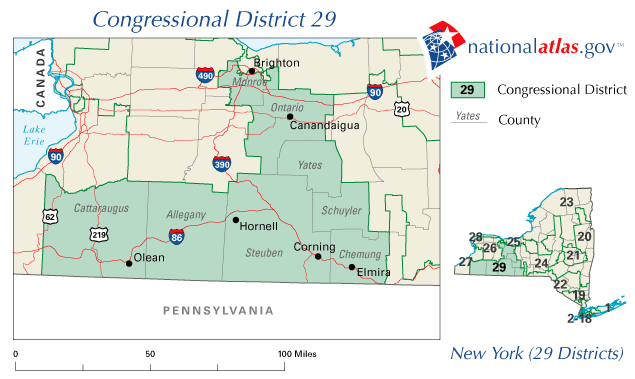
Massa is a first term congressman in New York’s 29th Congressional district, which has traditionally elected Republican candidates to office.  But as the national Republican party has trended further to the right, northeastern Republicans have become an endangered species in Congress.  Former Rep. Randy Kuhl only held onto the seat for two terms before being defeated by Massa in 2008.  Kuhl himself replaced retired congressman Amo Houghton, a long-serving moderate Republican whose voting record often split with the national Republican party on major issues.

Massa’s decision not to run for re-election surprised voters in his district, which runs from suburban Rochester to the Pennsylvania border along the southern tier.  Friday’s sudden announcement he’ll also resign his office effective Monday shocked voters and started a scramble for who might assume Massa’s seat upon his resignation.

The loss of Eric Massa to the Stop the Cap! cause is a concern for broadband consumers.  Massa stepped up to protect consumers from an Internet Overcharging experiment proposed last April by Time Warner Cable, which serves most of his district.  Massa immediately blasted the cable company’s plan to test usage-based billing on residential customers in the Rochester area, which is the only major city in New York State not served by Verizon and its expanding fiber to the home FiOS system.

Massa’s proposed legislation would have banned such schemes unless a company could demonstrate a clear financial need to adopt consumption billing and usage limits.

Thankfully, New York senator Chuck Schumer (D-NY) remains in office, and is the only senator to protest Time Warner Cable’s experiment, and helped end it, not just for residents of western New York, but for residents of Texas and North Carolina as well.

As to the swirling of allegations surrounding Massa, I have no interest in expanding on them here.  You can get a detailed review of the congressman’s views on these issues by listening to a 90-minute radio show aired today on a WKPQ-FM in Hornell, New York.  Today’s show will probably break news because Massa expands in great detail what’s behind the allegations and the reasons for his retirement.

Eric Massa’s regular Sunday show on WKPQ-FM Hornell, NY today discussed his decision to resign his office in great detail. (90 minutes)
You must remain on this page to hear the clip, or you can download the clip and listen later.

As for his replacement, a number of Democrats from both the southern tier and Monroe County/Rochester are considering entering the race.  Massa’s already-campaigning Republican opponent, former Corning Mayor Tom Reed remains in the race.  The Republican county supervisor for Monroe County, Maggie Brooks, is also considering a run.  But so is the former Congressman Randy Kuhl.  “Randy the Dandy” would be the worst possible option.  His undistinguished record and contempt for his constituents makes my skin crawl.  In his last term, Kuhl refused to hold open town hall meetings, instead shepherding constituents in for ‘five minutes with Randy’ where someone took notes and another escorted you out when your time was up.  Nobody should have bothered to take notes — his ongoing lack of concern about what voters in his district thought helped him lose his seat in the first place.  His lack-of-listening tour would fit perfectly with certain cable companies who don’t listen to their customers.  Hopefully, voters will not contemplate a return of Randy Kuhl.  Four years was more than enough.

We’ll be looking for other members of Congress to take up where Eric Massa left off.  I would like to thank Congressman Massa for his hard work on behalf of our cause, as well as helping make a difference on so many other matters important to the voters in his district.  I wish him good health and best wishes.

[flv]http://www.phillipdampier.com/video/Eric Massa Resigns Monday 3-6-10.flv[/flv]

Several television stations announced Rep. Massa’s decision to resign his office Friday in “breaking news” headlines.  This clip has three reports from WETM-TV Elmira, WHAM-TV Rochester, and WENY-TV Corning. (6 minutes)

[flv]http://www.phillipdampier.com/video/Eric Massa Reactions 3-6-10.flv[/flv]

Residents in the 29th congressional district react to Rep. Massa’s resignation announcement, and local politicians jockey for position to potentially run for Massa’s seat.  Three reports are included from WHAM-TV Rochester, WROC-TV Rochester, and WENY-TV Corning. (6 minutes)

Search This Site:

Contributions:

Recent Comments:

Your Account:

Stop the Cap!