Home » consumption billing » Recent Articles:

Verizon: No Caps for FiOS, No More Unlimited for Wireless, and Don’t You Dare Tether Without Paying

Verizon Communications is a study in contrasts.  It runs one of the most advanced wired broadband services in the country that wins rave reviews from consumers and businesses, is on the verge of ending its unlimited use data plans for smartphone customers on the wireless side, and has launched a major “police action” against individuals that are using their smartphones as wireless hotspots without paying an additional $20 a month for the privilege.

Verizon Says No to Data Caps and Consumption Billing

When you run an advanced fiber to the home network like FiOS, the concept of data caps is as silly as charging for each glass of water collected from Niagara Falls.  That’s a point recognized by Joseph Ambeault, director of media and entertainment services for Verizon.  Talking with GigaOm’s Stacey Higginbotham, Verizon continues to insist their network was built to handle both today and tomorrow’s network demands.

“Our network is always engineered for big amounts of data and right now there are no plans [to implement caps], but of course you never want to say never because things could change.”

However, in the same conversation he talked about how the FiOS service has gone from offering a maximum of 622 Mbps shared among 24 homes in the beginning to tests of 10-gigabit-per-second connections in individual homes that Ambeault mentioned. For now, Verizon is testing 10-gigabit-per-second-shared connections and offering up to 150 Mbps home connections. This kind of relish for massive bandwidth is not evident in conversations with folks at AT&T or even those cable firms deploying DOCSIS 3.0. Which is why when Ambeault added, “We don’t want to take the gleam off of FiOS,” as his final say on caps, I tend to believe that Verizon may be the last holdout as other ISPs such as AT&T, Charter and Comcast implement caps.

Verizon Says Yes to Ending Unlimited Smartphone Data Plans

Verizon is among the last holdouts still offering unlimited data plans for smartphone customers.  Priced at $30 a month per phone, these plans have proved very profitable for Verizon in the past, in part because they are mandatory whether you use a little data or a lot.  But now as data consumption grows, Verizon’s profits are not as luxurious as they once were, so the “unlimited plan” must and will go, probably within the next three months.

Verizon has always been hesitant about following AT&T’s lead for wireless data pricing, which delivers a paltry 2GB for $25 a month.  AT&T still sells its legacy unlimited plan, grandfathered for existing customers, for just $4 more per month.  So while AT&T can claim they’ve reduced the price for their data plans, they’ve also introduced a usage allowance.  Those exceeding it will find a much higher bill than the one they would have received under the old unlimited plan.

Verizon will probably echo AT&T’s tiered data plans, perhaps with slightly more generous allowances, but the real excitement came from Verizon CFO Fran Shammo, who told attendees at the Reuters Global Technology Summit it was prepared to finally introduce the much-wanted “family data plan,” which would allow every family member to share data on a single plan.  That’s a potential smartphone breakthrough as customers resistant to paying up to $30 a month per phone for each individual data plan might see their way clear to buying smartphones for everyone in the family if they all shared a single family-use data plan.

“I think it’s safe to assume that at some point you are going to have megaplans and people are going to share that megaplan based on the number of devices within their family. That’s just a logical progression,” Shammo said.

Of course, the devil is in the details, starting with how much the plan will cost and what kind of shared allowance it will offer.

Verizon Says ‘Oh No You Didn’t Tether Your Phone Without Our $20 Add-On’
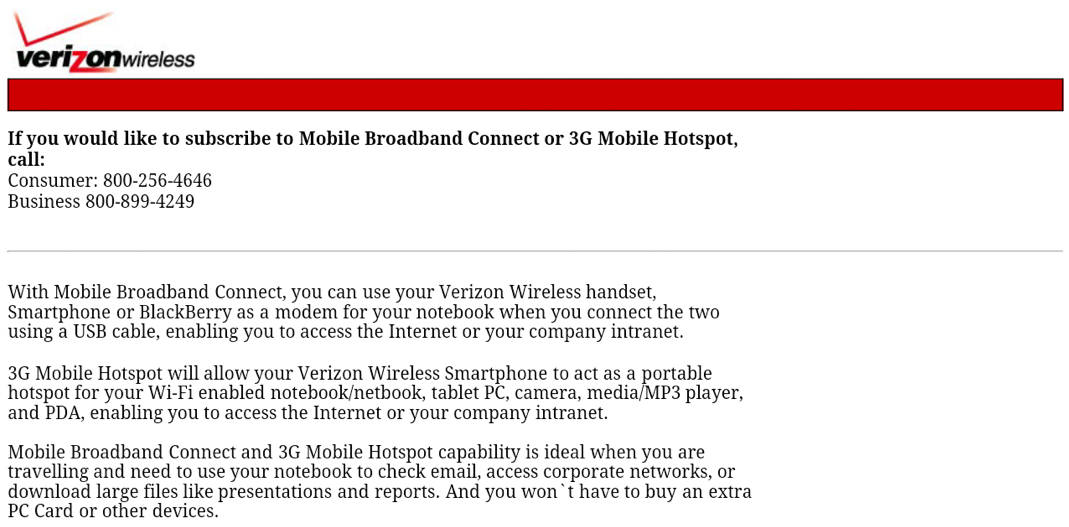
Phandroid posted this copy of a message Verizon customers are receiving if they are using unauthorized third party tethering apps. (Click to enlarge.)

Earlier today, Verizon Wireless customers using popular third-party tethering apps to share their smartphone’s built-in Wi-Fi Hotspot with other nearby wireless devices began receiving the first of what is expected to be a series of warnings that the jig is up.

Tethering allows anything from a tablet computer to a netbook or laptop to share a Verizon Wireless data connection without having to pay for individual data plans for each device.  Third party software applications bypass Verizon’s own built-in app, the 3G Mobile Hotspot, which involves paying an additional $20 a month for a secondary data plan delivering a 2GB monthly usage allowance.

Just as AT&T hated to see the possibility of lost revenue passing them by, Verizon has begun ferreting out customers using these apps and sending them friendly reminders that tethering requires an official Verizon Wireless add-on plan.  While the third party apps are not yet being blocked, most expect Verizon to gradually crack down on their use if customers persist in using them.  Verizon can also block the sale of the apps from the Android Market and can also insert roadblocks to prevent their use.  Or they can follow AT&T’s lead and threaten (perhaps illegally) to automatically enroll customers caught using tethering apps in their paid tethering plans.

Breaking News: AT&T Ending Unlimited Broadband Service for DSL/U-verse Customers May 2nd

Broadband Reports has obtained a leaked memo stating AT&T plans on eliminating its flat rate broadband plans for DSL and U-verse customers effective May 2nd.

On that date, AT&T will limit its DSL customers to 150GB per month and its U-verse customers to 250GB per month in what will be the largest Internet Overcharging operation in the nation.  Customers who violate the usage limits will face a three-strikes-you’re-overcharged penalty system.  After three violations of the usage limit, customers will pay an additional $10 for each block of 50GB they consume.  Although that represents just $0.20 per gigabyte, less than some others have imposed, it is not pro-rated.  Whether a customer uses one or fifty “extra” gigabytes, they will face the same $10 fee on their bill.

Customers will begin receiving notification of the change in the company’s terms of service March 18.

AT&T claims only 2 percent of their DSL customers will be exposed to the Internet Overcharging scheme.

“Using a notification structure similar to our new wireless data plans, we’ll proactively notify customers when they exceed 65%, 90% and 100% of the monthly usage allowance,” AT&T’s Seth Bloom told Broadband Reports. The company also says they’ll provide users with a number of different usage tools, including a usage monitor that tracks historical usage over time, and a number of different usage tools aimed at identifying and managing high bandwidth consumption services.

“Using a notification structure similar to our new wireless data plans, we’ll proactively notify customers when they exceed 65%, 90% and 100% of the monthly usage allowance,” AT&T tells us. The company also says they’ll provide users with a number of different usage tools, including a usage monitor that tracks historical usage over time, and a number of different usage tools aimed at identifying and managing high bandwidth consumption services.

However, AT&T’s accuracy in measuring broadband usage is open for debate.  The company is facing a class action lawsuit over its wireless usage billing.  According to the suit, AT&T consistently inflates usage measured on customer bills.  No third party verification or oversight of usage meters is mandated — customers simply have to trust AT&T.

AT&T ran trials in Beaumont, Tex., and Reno, Nev., from 2008 with a range of usage limits.  Customer reaction to the trials was hostile, and the test ended in early 2010.  In December, FCC Chairman Julius Genachowski told providers the agency was not opposed to usage limits and consumption billing schemes, leading some to predict the green light was given to companies willing to test whether customers will tolerate Internet Overcharging.

AT&T claimed this weekend its new pricing was going to benefit customers.  So long as customers keep paying their bills, AT&T will not “reduce the speeds, terminate service or limit available data like some others in the industry,” Bloom said.

But the usage limits come at the same time Americans are increasing their consumption of online video and other high bandwidth services.  Usage limits which may appear to be reasonable at first glance become punishing when they do not change over time and customers increasingly risk exceeding them.  Once established, several companies have repeatedly lowered them to further monetize broadband service usage.  AT&T has delivered some of the lowest usage limits in the wireless industry, so it has faced customer criticism in the past.

Customers tied to existing term contracts may likely avoid the usage caps temporarily.  Others will not stick around long enough to find out.

“I will be canceling my U-verse service on Monday and go back to Time Warner Cable,” writes Stop the Cap! reader Jeffrey.  “I will never do business with a provider that imposes overlimit fees on usage that literally costs them next to nothing to provide.  It’s like charging extra for every deep breath.”

Some of our other readers are headed back to Comcast, which has a 250GB usage cap, or exploring DSL provided over AT&T lines by third party companies, which likely will not impose usage limits, at least for now.

“Charging 20 cents per gigabyte isn’t too bad, but you just know AT&T will lower the caps or jack those rates up,” our reader Ian writes. “It is very important to send AT&T a message right now we are prepared to quit doing business with them over this issue, or else we will be nickle and dimed to death by them tomorrow.”

Our reader Jared asks whether new legislation has been introduced to curb unjustified Internet Overcharging.  In 2009, then Rep. Eric Massa (D-N.Y.) introduced a bill to ban Internet Overcharging unless companies could prove it was justified.  At the moment, there is no new legislation, but when providers attempt to overreach and impose pricing the vast majority of broadband customers oppose, that could change.

At the moment, Stop the Cap! recommends AT&T customers begin to explore alternative providers and prepare to terminate their service with AT&T unless they scrap their Internet Overcharging scheme.  AT&T earns billions in profits from their broadband division and spends millions on lobbying.  With this amount of largesse, AT&T does not need this pricing scheme to remain profitable.

Wall Street Journal Nonsense: Canada Just Ahead of U.S. in Introducing Internet Overcharging

Phillip Dampier March 9, 2011 Broadband "Shortage", Canada, Competition, Consumer News, Data Caps, Editorial & Site News, Net Neutrality, Online Video, Public Policy & Gov't, Wireless Broadband Comments Off on Wall Street Journal Nonsense: Canada Just Ahead of U.S. in Introducing Internet Overcharging

Jenkins

The Wall Street Journal attempted to attach its own conventional wisdom in an opinion piece about cloud-based streaming that suggests Canada “is just ahead of the U.S. in introducing usage-based pricing [and] has bloggers and politicians accusing Bell Canada of unconscionable ‘profiteering’ from usage caps. The company, they rage, is reaping huge fees for additional units of bandwidth that cost Bell Canada virtually nothing to provide.”

The author, Holman Jenkins, is a regular on the ultra-business friendly editorial page of the Journal, and has been raging against Net Neutrality and for higher Internet pricing for several years now.

Jenkins’ latest argument, just like his earlier ones on this subject, falls apart almost immediately:

This critique, which is common, could not more comprehensively miss the point. Another car on the roadway poses no additional cost on the road builder; it imposes a cost on other road users. Likewise, network operators don’t use overage penalties to collect their marginal costs but to shape user behavior so a shared resource won’t be overtaxed.

Jenkins needs to spend less time supporting his friends at companies like AT&T and Bell and more time exploring road construction costs.  If you are going to try and make an analogy about traffic, at least get your premise straight.

Before debunking his usage-based billing meme, let’s talk about road construction for a moment.  In fact, the kind of traffic volume on a roadway has everything to do with what kind of road is constructed.  In the appropriately named “Idiots’ Guide to Highway Maintenance,” C.J.Summers explores different types of road surfaces for different kinds of traffic.  Light duty roads in rural areas can get results with oil and stone.  Medium duty side streets and avenues are frequently paved with asphalt, and heavy duty interstates routinely use concrete.  Traffic studies are performed routinely to assist engineers in choosing the right material to get the job done.

Digital information doesn’t wear down cables or airwaves.  If broadband traffic occupies 5 or 95 percent of a digital pipeline, it makes no difference to the pipeline.  Jenkins is right when he says Internet Overcharging schemes are all about shaping user behavior, but for the wrong reasons.

Jenkins thinks Netflix and other high bandwidth applications face usage-based pricing to allow providers to keep their broadband pipes from getting overcongested:

Netflix is one of the companies most threatened by usage-based pricing, and it has quickly geared up a lobbying team in Washington. In a recent letter to shareholders, CEO Reed Hastings downplayed the challenge to Netflix’s video-streaming business. In the long run, he’s probably right—the market will settle on flat-rate pricing once the video-intensive user has become the average user.

In the meantime, however, Netflix shareholders had better look out.

In fact, providers are reaping the rewards of their popular broadband services, but almost uniformly are less interested in investing in them to match capacity.  It is as if the AT&Ts of this world assumed broadband users would consume    T H I S    M U C H   and that’s it — time to collect profits.  When upgrade investments don’t even keep up as a percentage of revenue earned over past years, the inevitable result will be a custom-made excuse to impose usage limits and consumption billing to manage the “data tsunami.”

Canadian providers did not slap usage caps on broadband users because Netflix arrived — they lowered them. Telling users they cannot consume the same amount of bandwidth they used a month earlier has nothing to do with managing traffic, it’s about protecting their video businesses by discouraging consumers from even contemplating using the competition.  Jenkins works for a company that understands that perfectly well.  News Corp., has a major interest in Hulu as well as satellite television services in Europe and Oceania.

The rest of Jenkins’ piece is as smug as it is wrong.  In attacking Net Neutrality supporters as “crazies” trying to defend their “hobby horse,” Jenkins claims public interest groups are pouting about usage-based billing, too:

All along, what the net neut crazies have lacked in intellectual consistency they’ve made up in fealty to the business interests of companies that fear their services would become unattractive if users had one eye on a bandwidth meter. That’s why opposition to “Internet censorship” morphed into opposition to anything that might price or allocate broadband capacity rationally. But such a stance is rapidly becoming untenable, whether the beneficiary is Google, with its advertising-based business model, or Netflix, Apple, Amazon and others who hope to capitalize on the entertainment-streaming opportunity.

All are betting heavily on the cloud. All need to start dealing realistically with the question of how the necessary bandwidth will be paid for.

Part of Jenkins’ theory calls back on his usual Google bashing — he perceives the company as a parasite stealing the resources bandwidth providers paid for, while forgetting the success of their businesses ultimately depends on content producers (who indeed pay billions for their own bandwidth) making the service interesting enough for consumers to buy.

But there is nothing rational about Jenkins’ support for Internet Overcharging.  North Americans already pay some of the highest prices in the world for the slowest service.  While providers attempt to lick the last drop of profits out of increasingly outdated networks (hello DSL!), their future strategy is less about expanding those networks and more about constraining the use of them.

Jenkins is ignorant of the fact several of Net Neutrality’s strongest proponents, Public Knowledge being a classic example, have not historically opposed usage-based pricing, much to my personal consternation.  As we’ve argued (and I submit proved), Net Neutrality and Internet Overcharging go hand in hand for revenue hungry providers.  If they cannot discriminate, throttle, or block traffic they consider to be costly to their networks, they can simply cap demand on the customer side with usage limits or confiscatory pricing designed to discourage use.  That is precisely what Canadians are fighting against.

It’s all made possible by a broken free market.  Instead of hearty competition, most North Americans endure a duopoly — a phone company and a cable company.  Both, particularly in Canada, have vested interests in video entertainment, television and cable networks, and other entertainment properties.  As long as these interests exist, companies will always resist challenges to their core business models, such as cable TV cord cutting.  It’s as simple as that.

The “realistic” way bandwidth will be paid for escapes Jenkins because his quest for condescension takes precedence over actual facts.  Content producers already pay enormous sums to bandwidth providers like Akamai, Amazon, and other cloud-based distribution centers.  Consumers pay handsomely for their broadband connections, part of which covers the costs of delivering that content to their homes and businesses.  AT&T and other providers don’t deserve to get paid twice for the same content.  Indeed, they should be investing some of their enormous profits in building a new generation of fiber-based broadband pipelines to keep their customers happy.  Because no matter how much data you cram down a glass fiber, the ‘data friction’ will never cause those cables to go down in flames, unlike Jenkins’ lapsed-from-reality arguments.


Bad Analogies from MSNBC Columnist Illustrate Lazy ‘Journalism’ from a Future Comcast Employee

No, don't get up. We've got it.

Want an example of the kind of lazy journalism you get from one of America’s largest news operations, about to become a part of the Comcast family?  Look no further than MSNBC’s Wilson Rothman, who shared some serious Net Nonsense in his piece: ‘Open’ Internet just a pipedream.

Rothman apologized in a tweet after publishing the essay, admitting it was “cynical.”  But we want to know where the apology is for being wrong on the actual facts.

The author tells readers it’s a Comcast world this winter:

As long as you buy Internet access via cable provider, wireless carrier or telecom, you’re going to have to play — or at least pay — by their rules. They’ll just have to make sure to tell you what those rules are. That seems to be the real gist of the FCC order that was ratified today.

[…]The only people currently getting throttled by their broadband providers are file-sharing pirates who wouldn’t be protected by any net neutrality regulation anyway; meanwhile, wired and wireless broadband networks are increasingly controlled by a smaller, more powerful cadre of competitors.

Tiered pricing has to happen

You can use as much electricity from the power grid as you want, but you have to pay by the kilowatt hour. If you think of the Internet as a utility — and why shouldn’t you? — network management should look something like that. Prices offered by regulated private companies should be competitive and reasonable, but highly metered. Sadly, that means no more flat-fee unlimited access.

[…]I don’t mean to sound cynical, but I come at this from a technology background, not a legal or political one. What I see are all the ways in which “public” access to utilities become profit centers for increasingly massive companies.

After the break-up of the Bells, the phone companies eventually consolidated and worked their way back together like some kind of liquid-metal Terminator. The good news? Instead of a single monopolistic phone company, we have two Leviathans and some smaller fish. Long-distance service used to be their cash cow; now it’s wireless and broadband, and they’re not going to let those slip so easily.

“Give that man a raise,” said Brian Roberts, Comcast CEO.

Seriously, Rothman might come from a technology background, but he sure doesn’t know his way around the broadband public policy debate. Digging into the reasons for today’s broadband mess would require actual reporting.

Rothman suggests Americans are effectively required to accept today’s decision from the Federal Communications Commission.  That’s akin to telling Time Warner Cable customers they should have just knelt down to the cable company’s 2009 pricing experiments.  Or that North Carolina needed to padlock community broadband networks until they could be sold on eBay to the highest Big Telecom bidder.  Or that Frontier can and should get away with a 5GB usage cap.

We said no.  You said no.  And we won all three of those battles.

Today’s FCC vote has relevance only until the first major cable or phone company (or interested third party) files a lawsuit.  The outcome is predictable — the same court that threw out the FCC’s authority earlier this year will do so again, for many of the same reasons.  For consumers, that isn’t all bad.

Rothman’s claim that only pirates are victims of speed throttling is demonstrably false, and nothing less than journalistic malpractice.  Innocent consumers are routinely throttled on wireless and wireline broadband networks using “network management” technology.  Are Clear’s customers all pirates?  How about Cricket’s clients?  Exceeding an arbitrary amount of usage on these networks guarantees you a spot in the dial-up-like doghouse.

The author also misses the point about increasing consolidation in the Big Telecom marketplace.  Cadre?  Sure.  Competitors?  Hardly.  Most Americans endure a broadband duopoly for reasonable Internet access — a cable and phone company.  Cable and phone companies have quite a deal.  They effectively charge around the same price for service and never have to worry about a third cable or phone company entering the marketplace.  Cable companies don’t compete with other cable companies.  Same for telephone companies.  Community broadband networks deliver the only real competition some areas have, which is why Big Telecom wants to ban these upstarts wherever they can.  Big Telecom believes Americans should not get to choose an alternative cable company if Comcast delivers terrible service.  Consumers living in small communities like Penn Yan, N.Y., live with Verizon DSL, if they are lucky.  Outside of the immediate town limits, there isn’t a cable competitor, much less another phone company.  That’s the real “take it or leave it” Americans contend with.

Rothman's electric utility analogy is as valid as charging for broadband by the foot.

Why shouldn’t Americans think of broadband as just another electric utility?  Because it isn’t.  This common talking point/analogy adopted by Rothman’s future employer has as much validity as pricing broadband by how many feet of wire was necessary to install it.

Broadband is neither a limited resource nor a product that requires a utility to purchase raw materials to perpetually generate.  His argument works only if a provider “generated” the actual content you consume online.  They don’t — they simply transport content from one point to another over a network that becomes enormously profitable once the initial construction costs are paid.  Rothman can discover this for himself reviewing the quarterly financials of broadband providers.  After billions in profits are counted, it’s clear this is one recession-proof industry that is hardly hurting.

It’s no mistake these analogies always leave out the one utility that is most comparable to broadband — telephone service.  You know, the one service that is rapidly moving towards unlimited, flat rate — talk all you want.  Providers using the consumption billing argument cannot afford to include phone service in their analogy, because then the ripoff would be exposed.  One would think a reporter for NBC News might have managed to figure that one out as well, but no.

The fact is, there is no healthy competition in broadband.  You know what that means — high prices for limited service.  Rothman seems ready and willing to take whatever Big Telecom wants to dish out, but then his paycheck is about to be paid by one of those companies, so he can afford to be cynical.

Unfortunately for his readers, Rothman is oblivious to the reasons why phone companies have consolidated and consumers are stuck with the results.  The recipe:

  • A multimillion dollar lobbying effort that includes huge contributions to politicians, astroturf “dollar-a-holler” groups paid to front for Big Telecom’s agenda, and a mess of scare tactics predicting horrible things if they do not get their way;
  • A supine media that simply accepts provider arguments as fact, deems the abusive practice that follow as inevitable, and apologizes later for being cynical;
  • An uninformed public that decreasingly relies on media companies that also happen to have direct financial interests in the outcome of these public policy debates.

Consumers have more power than Rothman thinks when they take a stand with elected officials.  When taking AT&T money becomes more costly than voting for their constituents, elected officials will do the right thing.  That takes individuals letting elected officials they are watching them closely on these issues.

Consumers can also tell their local elected officials that the Big Telecom Money Party needs to come to an end.  A community-owned broadband network that throws out the online toll booths and creates a network for Main Street instead of Wall Street is the functional equivalent of handing unruly Verizon and Comcast their coats and escorting them the door.

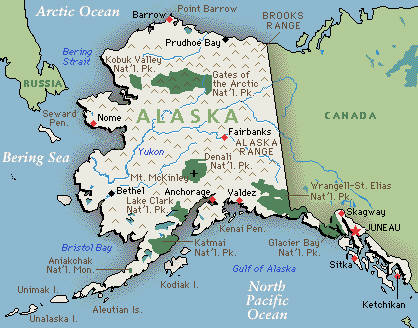
GCI Rip-Off: Alaskan Broadband Customers Face Wrath of Cable Company for “Excessive Use”

Phillip Dampier August 18, 2010 Data Caps, GCI (Alaska), Rural Broadband, Video 36 Comments

Broadband customers face dramatically higher prices for Internet service from a telecom company that wants to define for Alaskans an “appropriate” amount of “fair usage” of the Internet.

GCI, Alaska’s largest cable company, is currently embarked on a so-called “education” campaign over the summer telling residential customers it might be time for them to log off, or face the consequences of enormously higher broadband bills.

For one Anchorage coffee shop, that added up for several hundred dollars for just a single month of usage — all because they offer free Wi-Fi to their customers.

“People use it for their second space. Their home office,” Kaladi Brothers Coffee COO Dale Tran told KTVA news. “We’ve always offered an open network in our cafes, and after hours some people come by and park out front.”

Tran says the result was a bill from GCI several hundred dollars higher than expected.

GCI Communications Manager David Morris says at least two percent of their 110,000 customers are using “too much” service and violating the company’s “fair use” policies.  Morris also warned customers with wireless equipment that if they don’t take steps to lock down their routers with passwords and security, they could be exposed to a huge bill from GCI for providing free Internet service to the entire neighborhood.

Morris claims the company wants to specifically define what it considers “fair use,” claiming it will make things more equitable for everyone.

But GCI’s Internet Overcharging scheme will never save a single customer a penny.  Instead, customers will see only skyrocketing bills should they not fit within GCI’s arbitrary definition of “fair use”:

The company’s website states, “For a large majority of customers, normal usage activities are not expected to exceed the plan profiles defined below”:

Plan Name Usage
Ultimate Xtreme 40,000 MB
Ultimate Xtreme Family 60,000 MB
Ultimate Xtreme Entertainment 80,000 MB
Ultimate Xtreme Power 100,000 MB

GCI customers are not happy.  One reader of the AK Community forum provided additional insight:

To add a little dimension to this before I start ranting, here are the respective rates for the above service plans:

Plan Monthly Rate
Ultimate Xtreme $39.99
Ultimate Xtreme Family $49.99
Ultimate Xtreme Entertainment $69.99
Ultimate Xtreme Power $99.99

Now, those prices are misleading because they are only for the internet service portion of the “bundle.”  What they’re not telling you (anywhere on the web site that I can find, in fact) is that in order to receive that price, data transfer rate, and monthly bandwidth, you must also pay for GCI’s digital cable television service ($57.99 when part of a bundle), local phone service ($15.49 a month), and long distance service ($5.99 a month plus taxes and surcharges).

Without factoring in the various FCC fees and whatnot, the above information brings the total cost of GCI’s fastest, highest monthly bandwidth package to $179.46 per month!  That’s actually the cost they quoted me on the phone, too, so at least we know their “customer service” staff are at least intelligent enough to figure out an adding machine.

Oh, and did I mention that those speeds and transfer rates are not available for standalone cable modem [subscribers]?

[…] What happens when you do go over?  BAM!  $5.12 per gig tacked on to your bill!  I don’t know about you guys, but I’m sick of getting ripped off by GCI.  Those of you who live outside of Alaska can confirm this, but GCI is just about the only cable company that still meters their customers’ bandwidth.  I have friends who tell me that they’re paying $49.00 a month for 8Mb/s transfer rate and unlimited bandwidth!

What GCI is doing is highway robbery.  How are they getting away with it?  I’ll tell you: no competition.  For very high speed broadband internet, they’re the only show in town, so they can charge whatever they want to anybody who wants more than 3Mbps (standard speed DSL service from Alaska’s other big telecom provider, the phone company).

[flv width=”478″ height=”380″]http://www.phillipdampier.com/video/KTVA Anchorage GCI Fair Internet Use Crackdown 6-2-10.flv[/flv]

KTVA-TV in Anchorage ran this report about GCI’s plans to force many of their broadband customers to pay more if they enjoy the Internet “too much.”  (3 minutes)

Search This Site:

Contributions:

Recent Comments:

Your Account:

Stop the Cap!