Home » Clearwire » Recent Articles:

NetZero’s “Free Wireless Internet Access” Comes With Catches

The days of free Internet access are back… sort of.

United Online, Inc. announced Monday that it will offer free wireless Internet access through its NetZero service, provided as a “loss leader” that depends on users upgrading to paid access to cover the service’s costs.

NetZero became familiar to most Americans in the 1990s when the company handed limited dial-up Internet access, paid for through online advertising that subscribers endured in return for getting the service for free.  But broadband costs considerably more, so as the transition away from dial-up turned into a stampede, NetZero faded into memories about as much as AOL signup floppy disks and CD’s.

But now the company is back pitching free access to “4G wireless Internet” with no strings attached, contract commitments, or overage fees.  But that does not tell the full story.

While there is no contract commitment, NetZero requires an upfront investment in wireless hardware — $50 for a USB antenna stick suitable for a laptop or $100 for a “mobile hotspot” that can deliver a Wi-Fi connection to other nearby devices.  The devices are for sale on NetZero’s website.

The “free wireless” offer is probably better described as dim sum — it comes with a 200MB monthly usage limit, which makes it suitable for basic web browsing and e-mail only.  Once your limit is reached, the service is cut off for the remainder of the month, unless you agree to one of several paid usage plans that range from $9.95 for 500MB to $49.95 for 4GB, billed monthly.

After 12 months, NetZero’s free ride is over unless you agree to continue with a paid usage plan.  It ends even sooner if you choose to upgrade to a paid plan anytime during the first year.  Once you do, you lose the option of switching back to the free plan.

Whether paid or not, NetZero users ride on Clear’s troubled 4G WiMAX network, which Sprint — Clear’s largest customer — is planning to eventually abandon for more advanced LTE.  The long term future of Clear, also known as Clearwire, is also up in the air.  The company has ceased investing in its WiMAX network and is making preparations of its own to switch to LTE 4G technology — incompatible with the NetZero hardware you will spend $50-100 to acquire.

Clear’s network has also received considerable criticism for its speed and performance.  Because it operates on much higher frequencies, Clear’s wireless signal has problems penetrating indoors, and has even more trouble where energy efficient window coatings are used, especially in the south.

While NetZero does, in fact, deliver the service for free, the upfront investment and potential service headaches limit its usefulness.  Light users may find free Wi-Fi, increasingly common in a number of businesses, more convenient, affordable, and faster than the NetZero alternative.

Sprint: “50% Chance of Chapter 11 Bankruptcy,” Says Wall Street Analyst

A Wall Street analyst says Sprint has a 50/50 chance of being forced into bankruptcy, either pulling through a difficult upgrade to LTE 4G and stabilizing its partnership with Clearwire, or sinking under a load of debt incurred by Apple’s iPhone and network upgrade expenses.

Sanford Bernstein Research analyst Craig Moffett downgraded Sprint this morning from “market perform” to “underperform,” noting Sprint’s complicated five year credit default swap financing deal already prices in a 50/50 chance Sprint will be forced into Chapter 11 bankruptcy reorganization.

Moffett told investors he believes Sprint’s near term future can be described in one of two ways:

“In the first, the company successfully navigates its complicated Network Vision upgrade, stabilizes Clearwire‘s financial position, and delivers a compelling 4G product. In the second, some combination of its gargantuan take-or-pay contract with Apple, a hobbled 4G offering, and a stupendous debt burden bring the company to its knees.”

Moffett says Sprint’s biggest risk may come from Apple’s forthcoming 4G LTE iPhone, which he does not believe will work well on Sprint’s network.

“The problem is 4G. Sprint doesn’t have enough free-and-clear spectrum on which to launch a competitive LTE network, and it doesn’t have the money to clear spectrum that’s already in use,” Moffett said. “We expect Sprint’s competitiveness to begin to backslide when LTE becomes the nation’s de facto standard.”

Sprint continues to rely primarily on its troubled partner Clearwire for 4G service, which uses the aging WiMAX standard other carriers abroad are decommissioning.

With the iPhone 5 due later this year, should it provide access to 4G LTE service, Sprint could be in real trouble.  By fall, Sprint’s LTE network is expected to only provide limited coverage in a handful of cities, and on PCS spectrum less suitable for penetrating buildings.  Sprint would be forced to compete against Verizon’s nearly-completed LTE network as well as AT&T’s mixture of LTE and HSPA+ 4G services.  Verizon and AT&T will operate their 4G networks on 700MHz spectrum which can deliver robust signals indoors and out.

“Unfortunately, at this point we simply don’t believe there is any analytical framework that provides strong conviction as to whether Sprint can or cannot avoid bankruptcy over the next four years or so,” Moffett says. “Instead, one is left with this; are the perceived risks rising, or are they falling? We conclude … that risks of bankruptcy are rising, and that perceived risks will rise still further with the release of the first 4G iPhone.”

[flv]http://www.phillipdampier.com/video/CNBC Sprint to Go Bankrupt 3-19-12.flv[/flv]

CNBC speaks with Craig Moffett about the challenges afflicting Sprint’s effort to build a 4G LTE network and how a bankruptcy might affect customers.  (4 minutes)

T-Mobile: Allowing Verizon to Acquire Airwaves from Cable Industry Against the Public Interest

...some of that juicy 700MHz spectrum Verizon is getting from the nation's biggest cable companies.

In an ironic turnabout, Deutsche Telekom’s T-Mobile USA, last year an acquisition target of AT&T, has filed comments with the Federal Communications Commission opposing Verizon’s spectrum purchase from the nation’s largest cable companies as “contrary to the public interest.”

Verizon Wireless is seeking to acquire a substantial block of unused AWS spectrum that is unlikely to provide any near-term benefits to Verizon Wireless customers (indeed, the company already holds other AWS spectrum and has not even put it to use yet). Rather, the principal impact of the acquisition would be to foreclose the possibility that this spectrum could be acquired by smaller competitors – such as T-Mobile – who would use it more quickly, more intensively, and more efficiently than Verizon Wireless. The acquisitions will limit the deployment of LTE by competitors of Verizon Wireless and the bandwidth available for such deployments.

If these transactions go forward, the end result will be less LTE capacity available overall and reduced competition in the provision of LTE, which would be contrary to the public interest.

T-Mobile, in particular, is upset because it owns no spectrum in the valuable 700MHz range — frequencies that can travel longer distances and easily penetrate buildings.  Verizon Wireless does, and will acquire much more if the FCC approves the deal to transfer spectrum from Comcast, Time Warner Cable, and Cox. [Correction: As one of our readers pointed out, the spectrum being acquired is in the AWS band, which T-Mobile argues in its filing is still suitable for a 4G network deployment.]  T-Mobile argues Verizon does not need the spectrum, and will effectively “warehouse” the frequencies to keep them off the open market.  Without prime spectrum, T-Mobile argues, it will be difficult for the company to deliver a 4G experience to its customers.

T-Mobile also has a bone to pick with Verizon Wireless and the cable industry over what it suspects is a non-compete agreement:

At least in effect, this has all the hallmarks of a pure horizontal allocation of markets.

From the limited information available, it appears as though Verizon, the majority owner of Verizon Wireless, has agreed (tacitly if not expressly) to halt its extensive efforts to expand into the cable business and the cable companies have, in turn, traded their control of valuable spectrum in exchange for this protection of their cable markets.

It has been publicly reported that, coincident with acquiring the cable companies’ spectrum, thereby eliminating potential new competition in mobile wireless, Verizon ended its FiOS build out plans and terminated its agreement to resell satellite television. This series of acts appears to limit Verizon’s activity as a potential competitor in the video market and limit the cable companies’ role as potential competitors in the wireless market, while at the same time foreclosing competing providers from one of the only available sources of spectrum.

As a result of this “triple play,” competition in both markets will be substantially reduced. The antitrust laws have long condemned such agreements, even among potential competitors.

Not All Frequencies Are Created Equal

USA Carrier Voice Frequencies (MHz) 3G 4G Notes
AT&T 850 / 1900 850 / 1900 700  Will turn over limited frequencies to T-Mobile as per failed merger agreement.
Metro PCS 1900 / AWS 1900 / AWS AWS  Provides limited service, targeting urban markets.
Sprint 1900 1900 2500  Sprint and its partner Clearwire have some of the least valuable spectrum.
T-Mobile 1900 AWS/(1900(limited)) AWS/(1900(limited))  T-Mobile’s network was built from acquisitions like VoiceStream and Omnipoint.
Verizon 850 / 1900 850 / 1900 700  Has used 700MHz to effectively deploy the largest 4G/LTE network to date.

Will Verizon ultimately warehouse its newest acquired spectrum?

Unless you are well-acquainted with the wireless industry, all most people know about their cell phones is that they turn them on and a signal strength meter indicates what kind of reception quality you are getting.  In fact, wireless companies use a range of frequencies across several different frequency bands to handle voice calls and data.  As an end user, you never know the difference.  But if your wireless company is forced to use higher frequencies, they often have a harder time penetrating buildings or provide only limited distance coverage.  That’s why AT&T and Verizon customers have a better chance of making and receiving calls in the middle of a supermarket or office building while others lose reception.

Clearwire has an extensive holding of very high frequencies at its disposal — frequencies the company cannot effectively use because they require considerably more infrastructure (ie. more cell towers) to provide an effective service to customers.  Clearwire customers already complain about poor reception inside buildings, a problem exacerbated by the very high frequencies the company has to use for its service.  Verizon and AT&T collectively control the majority of the best, more robust spectrum — the 700MHz band.  Verizon’s LTE network, for example, relies on spectrum that used to be used by high numbered UHF television channels.

Companies like T-Mobile rely on frequencies in the 1700MHz and 1900MHz bands.  While certainly adequate in urban and suburban areas, T-Mobile has to spend more on cell tower deployment and be especially concerned with rural coverage, especially in areas where the terrain makes “line of sight” reception from cell towers more difficult.

While today’s 2G and 3G networks have made due with current spectrum, companies like T-Mobile are having a hard time finding space to launch the next generation — LTE/4G technology — on their current spectrum.  Without LTE, T-Mobile (and others) will find themselves at a competitive disadvantage.  The company argues it should have the right to acquire some of the frequencies Verizon intends to capture from the cable industry, especially if Verizon has no immediate plans to use the spectrum.

Some of the wrangling by T-Mobile seems especially ironic because parent company Deutsche Telekom has indicated it wants to sell T-Mobile USA and leave the American wireless market.  It has shown little interest so far investing in a LTE/4G network upgrade.  Additionally, as part of AT&T’s failed merger bid, T-Mobile is expecting to receive frequencies from AT&T as part of the “failed transaction” clause in the original merger proposal.


LightSquared Sunk by FCC; Shared Spectrum Interference to GPS Devices Cited

Phillip Dampier February 15, 2012 Competition, LightSquared, Public Policy & Gov't, Video, Wireless Broadband Comments Off on LightSquared Sunk by FCC; Shared Spectrum Interference to GPS Devices Cited

A billionaire who invested enormous sums to purchase airwaves for a new national wireless broadband network learned Tuesday ruled he cannot use them to launch LightSquared.

The Federal Communications Commission said yesterday Philip Falcone’s vision for competitive wireless service cannot go forward on the frequencies he acquired because tests show they create significant interference to other nearby spectrum users, especially GPS.

Falcone’s hedge fund poured nearly $3 billion into LightSquared, which the company still claims would not create significant problems for GPS users including aircraft, cars, and ships.

Falcone

But when tests were conducted in early 2011, significant interference problems were reported, some that could jeopardize the safety of American air travel.  The FCC decided it preferred to be safe instead of sorry.

The announcement by the FCC calls into question the future of the company and the value of its airwave assets, which are now likely worth a fraction of the price paid.

The company’s agreements with at least 30 wholesale customers are also at risk, and one of its largest partners, Sprint-Nextel, has spent the last few months distancing itself from the project, anticipating the decision the FCC announced yesterday.

The rejection has upset the FCC’s plans to increase wireless competition for AT&T and Verizon, which dominate American wireless.  The agency hoped the spectrum LightSquared obtained would open the doors to a new national player, but that appears unlikely for now.

LightSquared executives said in October they would sue the FCC in court if the agency blocked their network from operating.

The only new player on the horizon may be Dish Network, which earlier acquired wireless spectrum from two bankrupt companies, and now seeks to use them as mobile phone spectrum.  Separately, Clearwire is working with Sprint to construct a new national 4G network, while still operating Clear’s existing WiMAX 4G service.

[flv]http://www.phillipdampier.com/video/CNBC LightSquared Faces Prohibition Following Interference Report 2-14-12.flv[/flv]

CNBC discusses LightSquared’s new troubles and where the company can go from here.  (3 minutes)

High Technology Companies Warn South Carolina Against Adopting Anti-Broadband Initiative

A coalition of high tech companies including Google and Alcatel-Lucent are warning South Carolina legislators they are playing with future high tech jobs and will stifle the state’s digital economy if they grant the request of large phone and cable companies to make it difficult, if not impossible for community-owned broadband to compete.  Alcatel-Lucent, American Public Power Association, Atlantic Engineering, Fiber to the Home Council, Google, OnTrac, Southeast Association of Telecommunications Officers and Advisors, Telecommunications Industry Association, and the Utilities Telecom Council all co-signed the letter addressed to the state’s Senate Judiciary Committee:

January 31, 2012

Dear Senator McConnell and Members of the Senate Judiciary Committee:

We, the private-sector companies and trade associations listed below, urge you to oppose H.3508 because these bills, on top of South Carolina’s existing barrier to public communications initiatives, codified in SC Code §§ 58-9-2600 et seq., will harm both the public and private sectors, stifle economic growth, prevent the creation or retention of thousands of jobs, hamper work force development and diminish the quality of life in South Carolina. In particular, these bills will hurt the private sector in several ways: by curtailing public-private partnerships, stifling private companies that sell equipment and services to public broadband providers, and impairing educational and occupational opportunities that contribute to a skilled workforce from which businesses across the state will benefit.

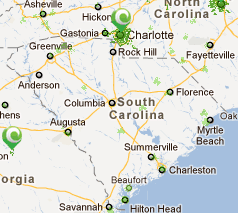
Clearwire's coverage map shows no service in South Carolina.

The United States continues to suffer through difficult economic times.  The private sector alone cannot lift the United States out of this crisis.  As a result, federal and state efforts are taking place across the Nation to deploy both private and public broadband infrastructure to stimulate and support economic development and jobs, especially in economically distressed areas.  For example, in South Carolina, Orangeburg and Oconee Counties have received broadband stimulus awards to bring much-needed broadband services and capabilities to communities that the private sector has chosen not to serve adequately.  H.3508, together with SC Code §§ 58-9-2600 et seq., would impose burdensome financial and regulatory requirements that will prevent public broadband providers from building the sorely needed advanced broadband infrastructure that will stimulate local businesses development, foster work force retraining, and boost employment in these economically depressed areas.

Consistent with these expressions of national unity, public entities across America, including South Carolina, are ready, willing, and able to do their share to bring affordable high-capacity broadband connectivity to all Americans. Enactment or retention of direct or effective barriers to community broadband, such as H.3508 and SC Code §§ 58-9-2600 et seq., would be counterproductive to the achievement of these goals.  These measures are also inconsistent with our country’s National Broadband Plan, which recommends that no new barriers be enacted and that existing barriers be removed.

We support strong, fair and open competition to ensure that users can enjoy the widest range of choices and opportunities.  H.3508 is a step in the wrong direction.  South Carolina should be removing barriers to public broadband initiatives rather than establishing new ones, so that high technology companies can spread and prosper into all the communities in this beautiful state.  Please oppose H.3508, repeal SC Code § 58‑9‑2600 et seq., and reject any future measures that could significantly impair municipal broadband deployments or public-private partnerships in South Carolina.

Stop the Cap! earlier noted this legislation is heavily sponsored by AT&T and other telecommunications companies already operating in South Carolina.  Several months ago, we reported on South Carolina’s woeful broadband: A Corridor of Shame, with large sections of the state without anything close to “broadband” service, even as state legislators in 2009 leased away the state’s publicly owned Educational Broadband Service-spectrum to private companies like Clearwire that don’t appear to be delivering any service in South Carolina.

Search This Site:

Contributions:

Recent Comments:

Your Account:

Stop the Cap!