Home » Competition » Recent Articles:

Time Warner Cable’s Rate Hikes Reach the Carolinas: Still $58/mo for Standalone Broadband

Winston-Salem Time Warner Cable customers can expect to pay around 4% more for cable service in 2012.

Time Warner Cable’s annual rate increases have now reached the Carolinas.

The company is mailing letters to customers that announce rate hikes for off-contract clients in the $2-4 a month range, including price increases for Road Runner broadband that will now cost between $49.45-$57.95 a month.

“Our new prices reflect dramatically higher programming costs, additional programming and features, and continued investment in our network and customer service,” said Time Warner spokesman Scott Pryzwansky. “Time Warner Cable invested more than $350 million in capital in the Carolinas over the past year to make our network even more robust and to enable our customers to get the services and features they want.”

The company also invested heavily in lobbying lawmakers to keep community-owned broadband competition at bay, helping pass a measure through the Republican-controlled legislature that makes municipal broadband competition much more unlikely.

The result is another year of unfettered rate increases for customers in cities like Winston-Salem:

  • Cable TV increases from $10.23 to $11.49 for broadcast basic, $64.99-$69.49 for standard analog service, $80.99-$85.49 for digital cable;
  • Broadband increases from $47.95 to $49.45 for customers who also have digital cable, $52.95 to $55.95 for customers with any other tier of cable TV, $57.95 for standalone broadband service;
  • Telephone rates are unchanged.

Customers can avoid some of the price increases through creative bundling, threatening to take your business elsewhere, or by signing up for alternative providers:

  1. Customers on discounted promotional packages, retention deals, and term contracts will not face the rate increases until their promotional rates or contract expires;
  2. If you are unhappy with the rate increase, consider calling Time Warner and telling them to cancel your service 1-2 weeks from today’s date.  Then wait for them to start calling you with promotional “win-back” offers that deliver at least a year of substantial savings off regular rates;
  3. If you are a broadband standalone customer, consider signing up for Earthlink under their six-month promotion for just under $30 a month.  You will continue to be billed by Time Warner Cable and receive the same speeds and service with two exceptions: no PowerBoost (a temporary speed increase during the first few seconds of downloading), and you lose your Road Runner e-mail address (which you are not actually still using, are you?)  Get a Gmail account, don’t worry about speed gimmicks, and save $28 a month.  At the end of six months, sign up for Time Warner’s Road Runner service under their promotional rate, which is around $30 a month for a year.  Total savings over the 18 month combined promotional rate term: $504!

More than two years after Time Warner introduced DOCSIS 3 speed upgrades in New York, Time Warner is finally completing broadband upgrades for their customers in the Carolinas.  The latest cities scheduled to get the company’s Wideband (50/5Mbps) and Road Runner Extreme (30/5Mbps) services are Wilmington, Jacksonville and Morehead City. The new services will be available by early 2012.

Most customers in eastern North Carolina and parts of South Carolina still get Standard service speeds of 10Mbps download, 512kbps upload.  After the upgrade, a boost in upstream speeds to 1Mbps for Standard service customers is expected.
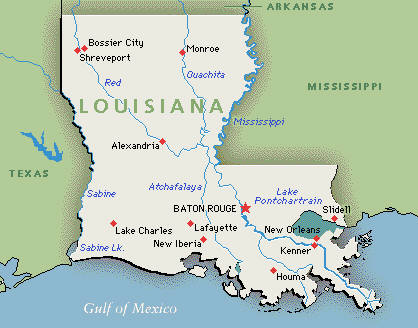
Public Service Commissioner Accuses Louisiana Governor of Sabotaging Broadband Grant

Phillip Dampier November 17, 2011 AT&T, Community Networks, Competition, Consumer News, Public Policy & Gov't, Rural Broadband, Video Comments Off on Public Service Commissioner Accuses Louisiana Governor of Sabotaging Broadband Grant

Campbell

A commissioner on the Louisiana Public Service Commission accused Gov. Bobby Jindal of sabotaging a now-rescinded $80 million dollar broadband improvement grant for the benefit of the state’s largest telecommunications companies.

Public Service Commissioner Foster Campbell publicly berated the Republican governor for intentionally interfering with the project until time ran out and the government withdrew its funding.

The cancellation of the project has proved embarrassing because it is the first and only time a state has lost federal broadband grant money.

“We want to know what the heck happened; we’re the only ones in the country that dropped the ball,” Campbell said. “I meet with people in every parish, and the number one priority by far is high-speed Internet, and how do you lose $80 million coming from the federal government to do that. How do you drop the ball, and if they did drop the ball was it because someone whispered in their ears, ‘it’s going interfere with big companies?'”

Campbell suspects the state’s largest phone and cable companies lobbied the governor’s office for changes in what was originally proposed as a public broadband network reaching large sections of rural Louisiana that do not have broadband access.

The state’s Division of Administration eventually scrapped plans for the public broadband network and replaced it with a proposal to use grant dollars to purchase long term institutional broadband contracts from private providers.  AT&T is the dominant local phone company in Louisiana — the same company that has steadfastly refused to provide DSL service across rural Louisiana. The new proposal would have not delivered any broadband access to individual Louisiana homes, only to institutions like schools, libraries, and local government agencies.

In Campbell’s eyes, the grant represented a competitive threat and seeing it dead and buried was the governor’s special favor to Big Telecom.

“I think they threw a little dirt on this one or a lot of dirt on it,” Campbell told the Tulane Hullabaloo.

Jindal himself admits his administration did get directly involved in changing the project’s course.

The governor called the revised private provider-focused project “a reasonable approach that would have expanded broadband access and not hurt private providers.” Jindal attacked the public broadband network originally planned by the Louisiana Broadband Alliance as “a heavy-handed approach from the federal government that would have undermined and taken over private businesses.”

With the $80 million dollars back in the hands of the federal treasury, Jindal is now blaming the Obama Administration for taking the money back.

The Louisiana Broadband Alliance, a collaboration among six state agencies, would have deployed more than 900 miles of fiber-optic network to expand broadband Internet service in some of the most economically distressed regions of Louisiana. The new network intends to provide direct connections for more than 80 community anchor institutions including universities, K-12 schools, libraries, and healthcare facilities. The 3,488-square-mile service area includes 12 impoverished parishes targeted by the state’s Louisiana Delta Initiative and a separate five-parish area that is home to four federally-recognized American Indian Tribes.

Cox Disconnects Its “Unbelievably Fair” Cell Service; Existing Customers Will Migrate to Sprint

Phillip Dampier November 16, 2011 Competition, Consumer News, Cox, Wireless Broadband Comments Off on Cox Disconnects Its “Unbelievably Fair” Cell Service; Existing Customers Will Migrate to Sprint

Don't bother.

Cox’s ambitious plans to get into the cell phone business were already tempered by the cable company’s decision last spring to simply resell Sprint service under the Cox name.  Now it’s “game over” as the company today quietly stopped signing up new customers and will pull the plug on existing ones March 30, 2012.

Those customers already signed up for Cox’s “unbelievably fair” cell service will officially become Sprint customers next April.

In a confidential memo obtained by Engadget, Cox executives ultimately decided it didn’t make sense for the company to invest in a limited range 3G cellular network.

Cox’s plans to utilize the 700MHz wireless spectrum it acquired in 2008 for 3G-powered wireless service began to go wrong almost from inception.  The wireless business is increasingly in the hands of two super-sized companies, thanks to ongoing mergers and acquisitions.  That leaves smaller, regional companies at a competitive disadvantage unless they heavily discount service.  While Cox was contemplating its first 3G network, AT&T, Verizon, and Sprint were well on the way to launching next generation 4G service that would have left Cox behind.

Cox itself is a regularly-rumored takeover target, likely by Time Warner Cable.  No cable industry buyer has much interest in a cell phone service.  Shedding it could make the company more attractive for would-be suitors.

Engadget reader Sal Petrarca observed:

I always thought it ironic when I [heard Cox’s radio ad asking customers] ‘You wouldn’t order cable from the phone company, would you?’ I guess no one is going to be ordering [cell] phones from the cable company now, eh?”

CRTC Splits the Difference on Usage Based Billing; Consumers Will Pay More

Phillip Dampier November 16, 2011 Bell (Canada), Broadband Speed, Canada, Competition, Data Caps, Public Policy & Gov't Comments Off on CRTC Splits the Difference on Usage Based Billing; Consumers Will Pay More

The Canadian Radio-television and Telecommunications Commission late Tuesday ruled against a revised proposal from Bell that could have effectively ended flat rate Internet service across the country, but also allows the phone company to raise wholesale prices for independent Internet Service Providers (ISPs).

The Commission ruled Bell and cable companies like Rogers must sell access to third party providers at a flat rate or priced on speed and the number of users sharing the connection.  The CRTC rejected a Bell-proposed usage-based pricing scheme that would have charged independent ISPs $0.178/GB.

Ultimately, the CRTC came down closest to adopting a proposal from Manitoba-based MTS Allstream, which suggested a variant on speed-based pricing, steering clear of charging based on usage.  Under the CRTC ruling, independent ISPs can purchase unlimited wholesale access based on different speed tiers.  The new pricing formula requires independent providers to carefully gauge their usage when choosing an appropriate amount of bandwidth.  If an independent ISP misjudges how much usage their collective customer base consumes during the month, they could overpay for unused capacity or underestimate usage, leaving customers with congested-related slowdowns.  ISPs will be able to purchase regular capacity upgrades in 100Mbps increments to keep up with demand.  They can also implement network management techniques which may discourage heavy use during peak usage.

The CRTC decision underscores that Internet pricing should be based on speed, not on the volume of data consumed by customers.  That’s a model Stop the Cap! strongly approves because it does not allow providers to monetize broadband usage.

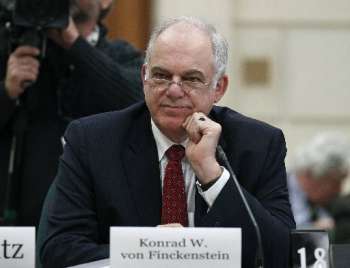
Finkenstein

But that is where the good news ends.  Nothing in the CRTC ruling changes the Internet Overcharging regime already in place at the country’s leading service providers.  Companies like Bell and Rogers are free to continue setting arbitrary limits on usage and charging overlimit fees for those who exceed them.

Konrad von Finckenstein, chair of the CRTC, says the regulator made a mistake in deciding last year to allow Bell to raise its prices for independent service providers.

“Our original decision was clearly not the best one. It was wrong and it was pointed out by a lot of people, including Minister Clement. He was right. We have today fixed it, we have made this new decision,” von Finckenstein said. “The bottom line is that you as a consumer will not face a cap or limitation of use because of anything mandated by the CRTC. Any kind of cap or limit, payment per use, that you will have to pay is because your ISP decides to charge you, not because we mandate it.”

But many independent providers are unhappy with the CRTC ruling because it also allows wholesale providers like Bell to raise prices, sometimes substantially, on the bandwidth they sell.

One independent ISP — TekSavvy, said it faced increased connectivity costs in eastern Canada.

“The CRTC decision is a step back for consumers. The rates approved by the Commission today will make it much harder for independent ISPs to compete”, said TekSavvy CEO Marc Gaudrault. “This is an unfortunate development for telecommunications competition in Canada,” he added.

“Rates are going up,” added Bill Sandiford, president of Telnet Communications and of the Canadian Network Operators Consortium, an independent ISP association.

In addition to whatever rate increases eventually make their way to consumers, some independent providers may end up adopting network management and usage cap policies that attempt to slow down the rate at which they are forced to commit to bandwidth upgrades.  That’s because providers purchase capacity based on what they believe their peak usage rate is likely to be.  Providers will be free to upgrade service in 100Mbps increments.  But with the new, higher prices, providers could overspend on capacity that goes unused or find themselves underestimating usage, creating congestion-related slowdowns for all of their customers.

Angus

Some network management techniques that could reduce peak usage — and the need for upgrades — include speed throttles for heavy users during peak usage times or usage caps that fall away during off-peak hours when network traffic is lower.

Yesterday’s decision will provide some small relief to wholesale buyers of bandwidth in Quebec, where’s Videotron’s sky-high wholesale prices are set to be reduced.  But the unusual divide in Internet pricing between eastern and western Canada will remain.  Western Canadians will continue to enjoy much larger usage allowances, and lower wholesale pricing, than their eastern neighbors in Ontario and Quebec.

The CRTC’s ruling did not go far enough for NDP Digital Issues critic Charlie Angus. Angus notes only 6 percent of Canadians purchase Internet service from independent providers.  The rest will still be stuck with what he calls “unfair billing practices and bandwidth caps.”

Angus is convinced the CRTC just gave the green light to force rate hikes for the minority of consumers who found a way around companies like Bell, Shaw, Videotron, and Rogers.

“Allowing big telecom companies to reach into the pockets of struggling families and ask for even more money is just plain wrong,” Angus said.

Bell’s senior vice-president for regulatory and government affairs, Mirko Bibic, still believes the company’s proposal to charge just under 20c per gigabyte to wholesale users was appropriate, but the CRTC’s permission to allow Bell to increase wholesale rates was a nice consolation prize.  Bibic tried to frame the decision as forcing ‘independent ISPs to pay their fair share.’

Independent ISPs “are going to have to lease more traffic lanes,” he told CTV News. “I think the philosophy is [to] put the independent ISP in a position of responsibility. If usage goes up, you’re going to have to buy more lanes – it’s the same decision that we have to make.”

Comcast’s Snake Oil Astroturf Operation Pulls Up Stakes in Longmont

Phillip Dampier November 15, 2011 Astroturf, Comcast/Xfinity, Community Networks, Competition, Editorial & Site News, Public Policy & Gov't Comments Off on Comcast’s Snake Oil Astroturf Operation Pulls Up Stakes in Longmont

Days after the citizens of Longmont, Col. turned their backs on an expensive lobbying and astroturf campaigned fueled (not by choice) by Comcast ratepayers, the so-called “community activists” opposed to the community using its own fiber network as it sees fit evaporated into dust, but not before one celebrating citizen took out a giant ad in the local Times-Call newspaper:

As Christopher Mitchell from Community Broadband Networks discovered, “citizen activism” has an expiration date when the industry money stops flowing:

If there had been a shred of local legitimacy among the “Look Before We Leap” group that was run by Denver-based strategists, it probably would have kept its website up for longer than a few days after the election. If I were them, I would want to keep a record for the future.

But they don’t. Because they were just a bunch of paid public relations people working a job. They didn’t oppose Longmont’s initiative, they didn’t know anything about it. They were collecting a paycheck.

And when the money ran out, the days of their website were numbered in the single digits.  The only thing left of lookbeforeweleap.org is a cached copy courtesy of Google.  (And by the way, Squarespace, the hosting company, wants the site owner to contact them.)

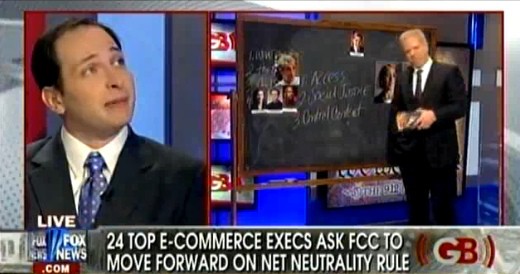
Americans for Prosperty's Phil Kerpen on Glenn Beck's show opposing Net Neutrality

Comcast’s propaganda campaign fooled no one.  Borrowing from the cable industry’s bag of old tricks, Look Before We Leap conflated Longmont’s fiber optic network with a few failed Wi-Fi projects run years earlier in concert with Earthlink in other states.

The editors at Times-Call had to respect Comcast and its merry band of dollar-a-holler followers for at least being bold.  After all, they tried to convince voters “that the city having control over its own property was somehow ‘risky.‘”  But of course the cable company would prefer Longmont stay out of the comfortable duopoly it has with phone company CenturyLink.

The newspaper had little time and patience for the antics of “Americans for Prosperity” either.  The hilariously misnamed group funded by large corporations to convince people to vote against their own best interests considers Net Neutrality and community broadband self-empowerment evidence of Marxism — at least that is what policy director Phil Kerpen said on Glenn Beck’s now defunct paranoia festival on Fox News Channel.

Longmont doesn’t put out the welcome mat for corporate influence peddlers.  Voters believe local government can be an effective steward of community resources, something Comcast subscribers don’t believe applies to a cable company that shovels hundreds of channels most people never watch and expects annual rate increases to help pay for them.

Times-Call’s Tony Kindelspire:

Ask a local businessperson how Longmont having its own electric utility is working out for them. We have some of the cheapest rates in the country.

It takes leadership to stand up against big business lobbyists to act on behalf of what you think is right, not what’s going to raise you the most amount of campaign cash the next time around. How very, very refreshing it was to see, and I hope it’s a lesson that spreads far and wide.

So do we.

Search This Site:

Contributions:

Recent Comments:

Your Account:

Stop the Cap!