Comcast’s Digital Upgrade Chaos in Virginia: Supplied Equipment Doesn’t Work, Some Say

Phillip Dampier November 21, 2011 Broadband Speed, Comcast/Xfinity, Consumer News, Video 5 Comments

Comcast Cable has been embarked on a gradual effort to convert many of their cable systems to digital platforms, which means more channel space, faster broadband speeds, and major headaches for some customers.

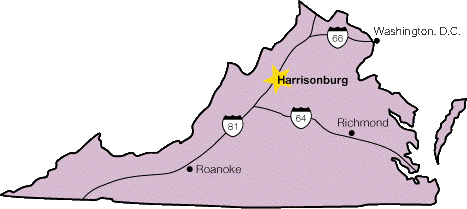
In Harrisonburg, Va., Comcast customers have been surprised and frustrated to find many of their favorite channels missing.  The cable company migrated most of the basic cable lineup to digital.  Customers who already use Comcast set top boxes never noticed the difference, but those who don’t certainly did.
The cable company spent weeks notifying customers they may need a “digital transport adapter” (DTA) — a fancy name for a small set top box — to continue to receive Comcast service on televisions that do not already have a box attached.  Many cable customers are confused by the transition, assuming if they own a “digital-ready” television, they don’t need extra equipment.  But most, in fact, do.

When customers discovered they needed the new box, minor chaos ensued at area Comcast retail outlets.  The Virginia State Police was reportedly pressed into service directing traffic in and out of some crowded cable store parking lots, and one customer even found a trooper guarding the cable company’s front door.

Some customers are telling local media they waited hours in long lines to obtain the equipment.  Several others are complaining even with the boxes, their favorite channels are still missing.

Most of the trouble seems to surround the authorization process required to enable the new equipment.
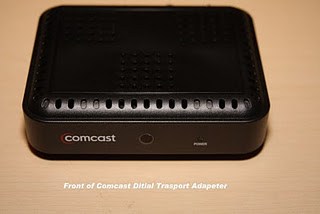
Comcast DTA (Courtesy: David Trebacz)

A reporter for an area television station discovered that on the air as she attempted, and failed, to get her box authorized for service, even after an hour waiting.  Customers report very long hold times when calling Comcast as well.

The cable company acknowledged some of the challenges.

“For the past few months, we’ve been communicating with our customers in the Shenandoah Valley about our ‘World of More’ digital enhancement,” the company said in a statement. “We’re moving analog channels to digital, and we do see an increase in the number of customers trying to get digital equipment. We’ve been offering extended hours and stepping up staffing to respond to increased demand.”

Comcast says the transition will increase the number of HD channels on offer in Virginia.  It also opens the door to faster broadband speeds through DOCSIS 3 upgrades.  In all, the company plans to add 50 new HD channels in the Staunton, Waynesboro and Augusta County areas after the upgrade is complete.

Area customers just wish the experience worked more seamlessly. Comcast customers in many communities have already dealt with digital upgrades.  Time Warner customers, starting in Maine, are just beginning the experience.

[flv width=”640″ height=”380″]http://www.phillipdampier.com/video/WHSV Harrisonburg Comcast Problems in Va 11-16-11.flv[/flv]

This WHSV reporter in Harrisonburg, Va. tried to demonstrate how to install and activate Comcast’s new set top box equipment… and failed because the cable company authorization process didn’t work.  (2 minutes)

Charter Cable Increasing Broadband Speeds, But You’ll Hit Their Caps Faster

Phillip Dampier November 21, 2011 Broadband Speed, Charter Spectrum, Consumer News, Data Caps 5 Comments

Charter Cable is upgrading its broadband service to deliver free speed upgrades, but with the company’s Internet Overcharging-usage cap scheme in place, some customers are not impressed.

“We plan to streamline Charter Internet options to: Lite, Express, Plus, and Ultra,” Charter social media rep “Eric” wrote on the Broadband Reports‘ Charter customer forum. “Current Max customers will be able to move to a different level of Internet Service.”

The company’s boosted speeds (prices vary in different markets):

  • Charter Lite: 1Mbps/128kbps → Unknown ($19.99) 100GB limit
  • Charter Express: 12/1Mbps → 15/3Mbps ($44.99) 100GB limit
  • Charter Plus: 18/2Mbps → 30/4Mbps ($54.99) 250GB limit
  • Charter Max: 25/3Mbps → Discontinued ($69.99) 250GB limit
  • Charter Ultra: 60/5Mbps → 100/5Mbps ($99.99-109.99) 500GB limit

Charter has usage caps on all of its residential broadband service plans, but Stop the Cap! readers tell us they are not always enforced.  No overlimit fees are charged.  No announcements have been made about any changes to the existing usage limits.  Some Charter Max customers tell us they are using the speed upgrades an an excuse to downgrade to the cheaper Plus plan, which is faster and $15 less a month, with the same 250GB usage cap.  Customers who absolutely won’t tolerate a usage limit have to upgrade to commercial-grade service, which is considerably more expensive.  Lower speed plans run about $80 a month in many areas, but are unlimited.

“I’m glad to discover faster upload speeds, which I’ve waited for a long time, but I’d rather have no usage limits to worry about instead of faster speeds,” shares Stop the Cap! reader and Charter customer Paul McNeil.  “My problem with these faster speeds is that you can’t use them for too long.  Why buy a luxury race car you can only drive down the street?”

Light users who use the Internet primarily for e-mail or web page browsing rarely require more than the most budget-priced broadband package because high speeds do not deliver a significantly improved user experience.  But those who use the Internet for higher-bandwidth applications including video, downloading, certain online games, and file backup do benefit the most from high speed packages.  But when providers slap usage limits on them, the value erodes away.

“Why spend more for less?” asks McNeil. “Two years ago there were no limits and I honestly received more value from my Charter Internet service then over what I have to deal with now.”

CenturyLink Announces Usage Caps; Conveniently Exempts Their Own Video Content

CenturyLink announces their own Internet Overcharging scheme; customers call to cancel their service.

CenturyLink is quietly introducing usage caps for its broadband customers that will limit residential customers to between 150-250GB of usage per month.

The Internet Overcharging scheme was inserted into the company’s High Speed Internet Service Management disclosure page, and suggests heavy users are using an inappropriate amount of data, slowing down the network for other users:

The majority of CenturyLink High-Speed Internet customers make great use of their service and comply with the CenturyLink High-Speed Internet Subscriber Agreement. An extremely small percentage use their service excessively, or at such extreme high volumes, that they violate the terms of their CenturyLink High-Speed Internet Subscriber Agreement. While this high volume use is very rare, CenturyLink is committed to helping these customers find a high-speed Internet solution to better meet their needs.

CenturyLink is announcing the following Excessive Usage Policy (EUP), which will become effective in February 2012:

CenturyLink’s EUP applies to all residential high speed Internet customers and is only enforced in the downstream (from Internet to customer) direction. Video services provided by CenturyLink PRISM™ TV are not subject to the usage limits. The policy has the following usage limits per calendar month:

  • Customers purchasing service at speeds of 1.5Mbps and below, have a usage limit of 150 Gigabytes (GB) of download volume per month.
  • Customers purchasing service at speeds greater than 1.5Mbps, have a limit of 250GB in download volume per month.

There are no overage charges or metering fees for usage as part of the Policy.

The company exempts their own video service PRISM TV from the scheme.

“It’s another CenturyLink ripoff in action, and despite their claims that they treat all data the same, they certainly do not,” says CenturyLink customer Rob Cabella. “Their video programming is sent from local facilities, as data, down the same pipe as their broadband service, yet they conveniently leave their TV product out of the usage cap equation.”

Prism customers can watch unlimited TV, but face limited broadband usage over the exact same pipeline.

Cabella says PRISM operates much like AT&T’s U-verse.  Fiber provides service into individual neighborhoods and then standard copper phone lines deliver service the rest of the way to customer homes.

“It’s one pipe they divide up for video, phone, and Internet, but they are protecting their video service by limiting broadband use while leaving their television and phone service completely unlimited,” Cabella says.  “Video is the biggest bandwidth hog of all, and CenturyLink invites you to watch as much as you want, as long as it comes from them.”

Cabella thinks the very fact CenturyLink is offering unlimited video disproves their argument about ensuring appropriate levels of broadband usage.

“Their local facilities get overloaded to the point where they temporarily stop signing up customers, yet it’s a video free-for-all, as long as you get your video from ‘the right place’ and that sure isn’t Netflix or Hulu,” Cabella notes.

CenturyLink’s limits will apply to broadband customers signed up for PRISM or the company’s traditional DSL service.  Uploads will not count against the cap.

For the moment, overlimit fees will not be charged and the company will send warning letters to offenders that invite customers to migrate “to a higher speed if available or to a business grade data service that better fits their bandwidth usage.”

Customers who repeatedly exceed their usage limits after being notified may have their service discontinued.

Cabella isn’t waiting.

“I called my local cable company which still offers unlimited service and signed up this morning,” Cabella says. “CenturyLink didn’t even know what I was talking about when I called and said their website must have been hacked or in error.  Why would I want to do business with a company that doesn’t even have a clue what their own business is doing?  Goodbye CenturyLink.”

Time Warner Cable’s Rate Hikes Reach the Carolinas: Still $58/mo for Standalone Broadband

Winston-Salem Time Warner Cable customers can expect to pay around 4% more for cable service in 2012.

Time Warner Cable’s annual rate increases have now reached the Carolinas.

The company is mailing letters to customers that announce rate hikes for off-contract clients in the $2-4 a month range, including price increases for Road Runner broadband that will now cost between $49.45-$57.95 a month.

“Our new prices reflect dramatically higher programming costs, additional programming and features, and continued investment in our network and customer service,” said Time Warner spokesman Scott Pryzwansky. “Time Warner Cable invested more than $350 million in capital in the Carolinas over the past year to make our network even more robust and to enable our customers to get the services and features they want.”

The company also invested heavily in lobbying lawmakers to keep community-owned broadband competition at bay, helping pass a measure through the Republican-controlled legislature that makes municipal broadband competition much more unlikely.

The result is another year of unfettered rate increases for customers in cities like Winston-Salem:

  • Cable TV increases from $10.23 to $11.49 for broadcast basic, $64.99-$69.49 for standard analog service, $80.99-$85.49 for digital cable;
  • Broadband increases from $47.95 to $49.45 for customers who also have digital cable, $52.95 to $55.95 for customers with any other tier of cable TV, $57.95 for standalone broadband service;
  • Telephone rates are unchanged.

Customers can avoid some of the price increases through creative bundling, threatening to take your business elsewhere, or by signing up for alternative providers:

  1. Customers on discounted promotional packages, retention deals, and term contracts will not face the rate increases until their promotional rates or contract expires;
  2. If you are unhappy with the rate increase, consider calling Time Warner and telling them to cancel your service 1-2 weeks from today’s date.  Then wait for them to start calling you with promotional “win-back” offers that deliver at least a year of substantial savings off regular rates;
  3. If you are a broadband standalone customer, consider signing up for Earthlink under their six-month promotion for just under $30 a month.  You will continue to be billed by Time Warner Cable and receive the same speeds and service with two exceptions: no PowerBoost (a temporary speed increase during the first few seconds of downloading), and you lose your Road Runner e-mail address (which you are not actually still using, are you?)  Get a Gmail account, don’t worry about speed gimmicks, and save $28 a month.  At the end of six months, sign up for Time Warner’s Road Runner service under their promotional rate, which is around $30 a month for a year.  Total savings over the 18 month combined promotional rate term: $504!

More than two years after Time Warner introduced DOCSIS 3 speed upgrades in New York, Time Warner is finally completing broadband upgrades for their customers in the Carolinas.  The latest cities scheduled to get the company’s Wideband (50/5Mbps) and Road Runner Extreme (30/5Mbps) services are Wilmington, Jacksonville and Morehead City. The new services will be available by early 2012.

Most customers in eastern North Carolina and parts of South Carolina still get Standard service speeds of 10Mbps download, 512kbps upload.  After the upgrade, a boost in upstream speeds to 1Mbps for Standard service customers is expected.

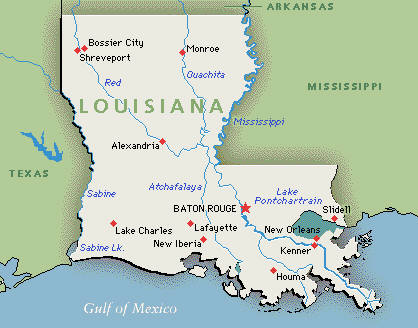
Public Service Commissioner Accuses Louisiana Governor of Sabotaging Broadband Grant

Phillip Dampier November 17, 2011 AT&T, Community Networks, Competition, Consumer News, Public Policy & Gov't, Rural Broadband, Video Comments Off on Public Service Commissioner Accuses Louisiana Governor of Sabotaging Broadband Grant

Campbell

A commissioner on the Louisiana Public Service Commission accused Gov. Bobby Jindal of sabotaging a now-rescinded $80 million dollar broadband improvement grant for the benefit of the state’s largest telecommunications companies.

Public Service Commissioner Foster Campbell publicly berated the Republican governor for intentionally interfering with the project until time ran out and the government withdrew its funding.

The cancellation of the project has proved embarrassing because it is the first and only time a state has lost federal broadband grant money.

“We want to know what the heck happened; we’re the only ones in the country that dropped the ball,” Campbell said. “I meet with people in every parish, and the number one priority by far is high-speed Internet, and how do you lose $80 million coming from the federal government to do that. How do you drop the ball, and if they did drop the ball was it because someone whispered in their ears, ‘it’s going interfere with big companies?'”

Campbell suspects the state’s largest phone and cable companies lobbied the governor’s office for changes in what was originally proposed as a public broadband network reaching large sections of rural Louisiana that do not have broadband access.

The state’s Division of Administration eventually scrapped plans for the public broadband network and replaced it with a proposal to use grant dollars to purchase long term institutional broadband contracts from private providers.  AT&T is the dominant local phone company in Louisiana — the same company that has steadfastly refused to provide DSL service across rural Louisiana. The new proposal would have not delivered any broadband access to individual Louisiana homes, only to institutions like schools, libraries, and local government agencies.

In Campbell’s eyes, the grant represented a competitive threat and seeing it dead and buried was the governor’s special favor to Big Telecom.

“I think they threw a little dirt on this one or a lot of dirt on it,” Campbell told the Tulane Hullabaloo.

Jindal himself admits his administration did get directly involved in changing the project’s course.

The governor called the revised private provider-focused project “a reasonable approach that would have expanded broadband access and not hurt private providers.” Jindal attacked the public broadband network originally planned by the Louisiana Broadband Alliance as “a heavy-handed approach from the federal government that would have undermined and taken over private businesses.”

With the $80 million dollars back in the hands of the federal treasury, Jindal is now blaming the Obama Administration for taking the money back.

The Louisiana Broadband Alliance, a collaboration among six state agencies, would have deployed more than 900 miles of fiber-optic network to expand broadband Internet service in some of the most economically distressed regions of Louisiana. The new network intends to provide direct connections for more than 80 community anchor institutions including universities, K-12 schools, libraries, and healthcare facilities. The 3,488-square-mile service area includes 12 impoverished parishes targeted by the state’s Louisiana Delta Initiative and a separate five-parish area that is home to four federally-recognized American Indian Tribes.

Search This Site:

Contributions:

Recent Comments:

Your Account:

Stop the Cap!