Time Warner Cable: Fix My Fence

Phillip Dampier August 23, 2011 Consumer News, Video Comments Off on Time Warner Cable: Fix My Fence

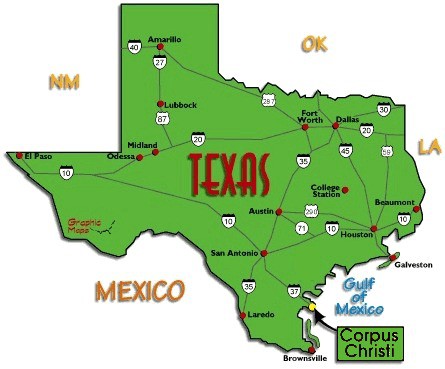
Corpus Christi resident Sonny Tristan wants Time Warner Cable to fix the fence he claims they damaged more than a year ago when the company installed cable service at his Texas home.

Tristan says the cable company dug a trench to install the underground cable wire, but didn’t complete the job, leaving his backyard fence unstable and threatening to fall down.

Even a cable company technician agreed it was Time Warner’s responsibility to fix the problem, but for weeks all he got was talk and no action.

Like so many cable and telephone company problems Stop the Cap! covers for consumers, public exposure by local or online media is what usually draws enough attention to get a supervisor involved to fix the problem.  This time, Tristan went to KZTV’s Troubleshooters to try and cut through the red tape.

After the station called Time Warner, repair crews quickly arrived with word they were going to fix the fence without further delay, at no charge.

[flv]http://www.phillipdampier.com/video/KZTV Corpus Christi Troubleshooters Cable Company Damages Fence 8-17-11.flv[/flv]

Too often, media attention is the only effective way to cut through red tape that keeps cable and phone companies from fixing problems for customers.  KZTV in Corpus Christi reports it took their Troubleshooters team to get Time Warner out to fix a resident’s fence damaged by their installers.  (2 minutes)

President Obama Brings Improved Cell Service to Martha’s Vineyard… Temporarily

Phillip Dampier August 23, 2011 Consumer News, Verizon, Wireless Broadband 1 Comment
Courtesy: Norman Einstein

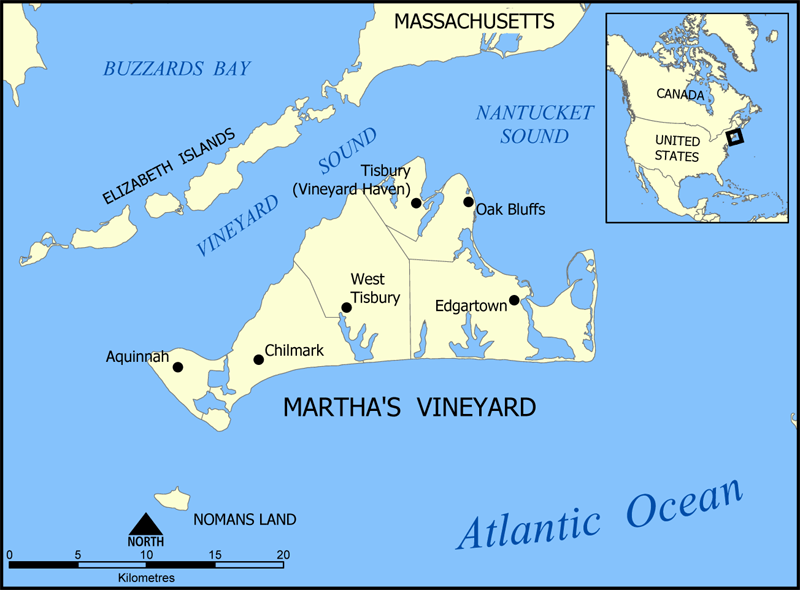
Martha's Vineyard

President Barack Obama’s arrival on Martha’s Vineyard brings a gift any local resident can enjoy: improved cell phone reception on the island, located off the coast of Massachusetts.

The president’s advance team and entourage rely on Verizon Wireless cell phone service, so when the president travels to a vacation spot, Verizon Wireless usually follows with one or two temporary cell towers to guarantee adequate coverage.  This summer is no different, and customers that used to have to walk outside and face the mainland for adequate reception are suddenly enjoying four bars, thanks to two traveling cell towers strategically placed on the island at Chilmark and West Tisbury.

Martha’s Vineyard is notorious for lousy cell phone reception, and the island’s small population has not justified investment for improved service.  Even when carriers explore the idea, local residents usually object to the proposed cell towers, dismissed as unsightly.

But for much of August, the island’s cell phones have been ringing as Verizon customers accustomed to simply going without service while on the island are suddenly getting rock solid service.  That puts a temporary end to the usual practice of trading knowledge of “known reception spots” — specific floors in buildings, certain sidewalks with an especially clear view to the coastline, or where unknown forces converge to deliver enough signal to make a quick call or send a text message.

The cacophony of ringtones has received a mixed reception from the locals, some of whom are unimpressed with wealthy vacationers, bankers, and politicians who call Martha’s Vineyard home for two weeks during the summer.

Rachel Fox, an entertainment lawyer from Manhattan whose family has a home on the island told the New York Times, “A lot of the people who vote here, who live here year-round, couldn’t care less if the people who invade them in the summer get to talk to their Hollywood producers in the middle of the Chilmark [general] store.”

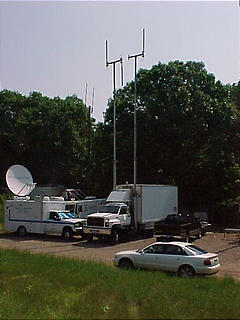
Cell Tower on Wheels

When the president leaves, Verizon’s two cell-on-wheels-trucks leave as well, leading some 15,000 locals to ponder who is paying Verizon to haul the two towers on and off of the island and the expense to run them.  The newspaper wondered the same and didn’t get a clear answer.

Laura Williams, a spokeswoman for the White House Communications Agency, said its job was to ensure “that the president has the best communications possible wherever he travels” so that he can “remain informed and connected.” But Ms. Williams would not answer specific questions about the enhanced service, including how much it costs and who pays for it, citing security concerns.

One thing is certain, the two or three week cell phone nirvana the island enjoys in the summer only benefits Verizon Wireless customers.  Those with AT&T, T-Mobile, and Sprint find themselves with no bars in virtually all places on the island.

That suits Linda Alley, whose home in West Tisbury is located right next door to one of Verizon’s temporary towers, just fine.

“I’m not attached to my cell phone like a lot of people are,” she told the Times. “I couldn’t care less.”

Sen. Chuck Schumer Proposes Security Lockout for Stolen Smartphones

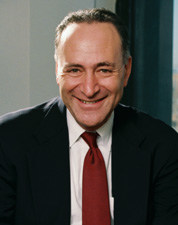
Sen. Schumer

Senator Chuck Schumer (D-New York) has proposed cell phone carriers permanently disable stolen cellphones, unless and until they are reactivated by the original owner.

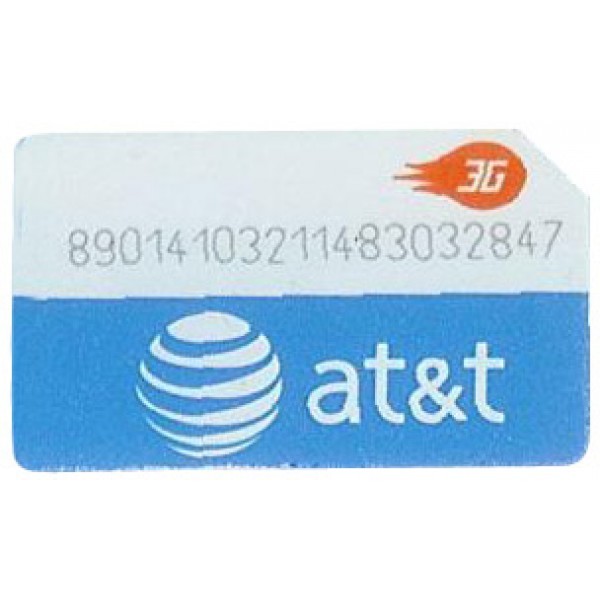
Currently, only Verizon Wireless shuts down stolen phones, preventing their easy reactivation.  Other carriers only disable internal SIM cards, which are easily replaced by any thief in minutes, and for a fee AT&T and T-Mobile will reactivate any phone.  Sprint only disables access to stored contact lists and contents of memory cards that often accompanying modern smartphones.  But anyone can reactivate a stolen Sprint or Nextel phone just by claiming to have acquired it legitimately from the former owner and replacing the removable SIM card.

The result of easy reactivation is a thriving black market for stolen phones, particularly in New York.

“Forty-one percent of all property crimes in New York City in the first half of this year were related to cellphones,” Schumer said, noting phones often sell for hundreds of dollars and are back in operation sometimes hours after being stolen.

SIM Card

Schumer says if carriers permanently disabled stolen phones until the rightful owners declare them retrieved, phones would become worthless to would-be thieves.

The senator notes that European carriers use each phone’s unique identification code to monitor the status of the phone.  Once reported stolen, overseas carriers will not reactivate a disabled phone without a signed statement from the original owner authorizing the transfer of ownership.

Schumer notes cell phone theft is rising dramatically in New York as more people start carrying increasingly sophisticated smartphones.

In 2009, 10,650 phones were stolen in the city.  In 2010 — 10,746.  So far this year, more than 11,320 phones have been taken by thieves.

[flv width=”640″ height=”500″]http://www.phillipdampier.com/video/WNYW New York Deactivate Cellphones 8-21-11.flv[/flv]

WNYW-TV in New York has raw video of Sen. Schumer’s press conference on cell phone theft.  (10 minutes)

Gouge Train: AT&T Wireless Eliminates Budget Texting Plans: Welcome to $20+ Texting

AT&T “streamlined” its text messaging plans over the weekend for new customers, eliminating a less-expensive $10/1000 text budget plan in favor of unlimited texting plans that cost much more.

That means new AT&T customers who want to text will pay dearly for the privilege:

  • $0.20 per text message sent/received,
  • $20.00 Unlimited texting (individual line)
  • $30.00 Unlimited texting (family plan)

So much for asking customers to ‘pay for what they use.’  AT&T is moving towards unlimited texting — at a very high price — while moving away from unlimited data.

AT&T released a statement about the changes:

“We regularly evaluate our offers and are making some adjustments to our messaging lineup. Starting August 21, we’re streamlining our text messaging plans for new customers and will offer an unlimited plan for individuals for $20 per month and an unlimited plan for families of up to five lines for $30 per month. The vast majority of our messaging customers prefer unlimited plans and with text messaging growth stronger than ever, that number continues to climb among new customers. Existing customers don’t have to change any messaging plan they have today, even when changing handsets.”

Gizmodo points out AT&T is charging customers who don’t have a text plan 100,000 percent more than what they charge for online data:

Here’s how it breaks down:

AT&T charges $25 for 2 gigabytes of mobile data, which states how much they think their bits and bytes are worth. That comes out to 80 megabytes per dollar. 80 megabytes will get you 500,000 text messages—assuming you’re writing the largest possible message, which you’re often not (i.e. “Hey” “Nothing” “lol”).

Now divide that dollar by the 500,000 potential texts. That comes out to $0.000002 per text—two ten thousandths of a cent. A very, very, very small amount of money.

Now, let’s say you send 5,000 texts a month. That’s a large, though wholly realistic number. Multiply that by the above worthless cost per text, and you’ve got—hold onto your wallet!—$0.01. A penny for five thousand texts, according to how much AT&T says its data is worth in a data plan.

But outside of the data plan? Oh boy! Things get very different very fast. And by very different, I mean inordinately overpriced. Those same 5,000 texts, at a rate of $0.20 per message, will cost you $1,000. Not a penny—a grand. Two very different prices for literally the exact same thing.
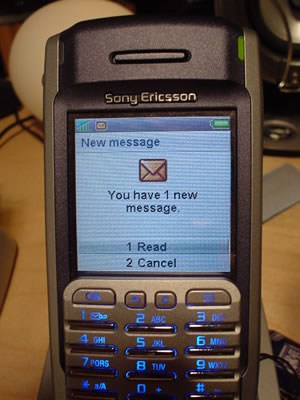
For customers who only send and receive occasional text messages, losing the $10 option means most will either pay the heavily marked-up $0.20 a-la-carte price, or pay double and not worry about how many messages they send.

Ultimately, AT&T’s new prices may drive an increasing number of users to alternative ways of communicating with friends and family, especially as prices keep rising.  Some AT&T customers remain grandfathered on text plans that offer 200 messages for $5 a month.  But for customers like Ben Chinn of San Francisco, even $5 is asking a lot.

“With everything with the mobile carriers, I feel I’m getting nickeled and dimed,” Chinn told the Los Angeles Times. “I resent paying so much for text messaging, and I feel that it’s not a reasonable price to pay for something that costs the carriers next to nothing.”

Free Press Research Director S. Derek Turner says AT&T’s new prices foreshadow the kinds of higher prices all Americans will pay if the wireless industry continues its march towards consolidation.

“This move is simply another example of AT&T passing off a price increase for consumers as a benefit,” Turner said. “If this were a truly competitive market, AT&T would offer its customers more choice and value, and no carrier would get away with a 10-million-percent markup on its services. This should serve as a warning to the Department of Justice and the Federal Communications Commission — if AT&T is already able to unilaterally increase prices, allowing the company to eliminate low-cost competitor T-Mobile will only make things worse.”

The Times notes Juniper Research has predicted that global revenue for text messaging will peak this year and begin to drift down. And in a recent report, UBS Investment Research warned that “customers could elect not to pay for texting as smartphones and third-party applications become pervasive.”

Facebook has introduced Messenger, a free smartphone app that allows members to exchange text messages with friends, as well as anyone else who happens to have a cell phone.  Google Voice includes unlimited free texting, if those sending messages remember your Google Voice number.  Apple’s forthcoming iMessage will be pre-installed on most Apple devices, offering a ready-made opportunity to bypass high-priced text plans.  There are dozens of other apps that offload text traffic to your smartphone data plan, where the added traffic is so insignificant, it has largely no impact on even the lowest usage plans.

The preferred outcome of using any of these third-party apps is to cancel expensive texting plans from your phone carrier.  But there are obstacles:

  1. Many friends may continue to text your primary cell phone number directly, incurring a-la-carte text messaging fees if you cancel your text plan;
  2. Many require all of your contacts to run specific apps to exchange messages, which can quickly become a burden;
  3. Apple’s iMessage assumes all of your friends are using Apple phones or devices.  Everyone else will have to hope for, find, and install another app to support the service.

The trade-off works for some, but not for others.

Hieu Do of St. Louis tells the Times he’s had to pay for individual text messages after dropping his text plan, but Google Voice has still helped him save money:

“At the beginning of every month I would lose a dollar here and there from people texting my old number, but it’s worth it more than paying $5 or $10 a month for a texting plan,” he said.

But Jim Jeffords, one of our readers, tried Google Voice for awhile and decided it was just too cumbersome for texting.

“I ended up getting text messages from a lot of business contacts that didn’t know about my Google Voice number, but had my cell phone number,” Jeffords says. “I was not about to throw a Google Voice number into the mix and come across as cheap and make them remember what number to text.”

Jeffords went back to a basic text plan with a few hundred messages a month included.

“It wasn’t worth the hassle to deal with,” he said.

Online Flash Mobs — Tip for Rational Business: Lower Prices = More Sales

Phillip Dampier August 22, 2011 Editorial & Site News 3 Comments

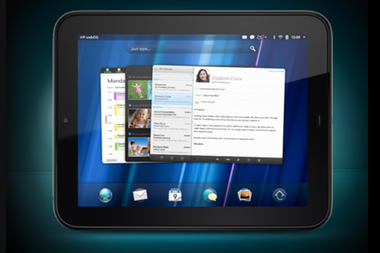
This device brought a Texas data center to its knees this morning.

We started getting complaints about site slowdowns and the unavailability of our multimedia content on Stop the Cap! earlier this morning, and the complaints grew as the morning wore on.  Attempts to access certain content here brought error messages or slow load times, when the content loaded at all.

We finally received an explanation early this afternoon that explains it all: the data center providing service for this website (and thousands more) was suffering from a virtual onslaught — an online flash mob of eager buyers trying to pound a certain online retailer for the now-deeply-discounted, and very-discontinued HP WebOS-based TouchPad.  Originally selling for $400 and up, HP on Friday announced they were slashing prices on their entire inventory to as low as $99 for a 9.7″ 16GB tablet they originally hoped would compete with Apple’s iPad.

At $99, it does now, as tens of thousands of customers poured online in search of one, creating a tidal wave of traffic that brought HP’s own website, and those run by several major online retailers, to their knees.  We (and other websites in the same data center) were collateral damage, until merchandise stocks were depleted and the mob moved on (most are now parked on deal sites like Slickdeals, in the tens of thousands, waiting for the next merchant to post the new sales price while avoiding doing their day jobs.)

HP’s phenomenal sales over this past weekend proves one time-honored truth.  If you cut prices in a battered economy, customers will come, even for a tablet running the Rodney Dangerfield of operating systems — WebOS — that gets very little respect (ask Palm how WebOS worked for them).

If only certain telecommunications companies learned the lesson: charging less can, and often does equal more customers.

Search This Site:

Contributions:

Recent Comments:

Your Account:

Stop the Cap!