Qwest: The Phone Company Nobody Wanted

Phillip Dampier February 9, 2010 Competition, Rural Broadband 3 Comments

Qwest, born from a merger between US West and Qwest Communications is up for sale.  Again.  Actually, analysts are wondering exactly when Qwest wasn’t for sale over the last several years.  Like that odd house on the corner of your street that nobody wants to buy, Qwest keeps lowering its asking price, hoping would-be suitors will stop driving past.
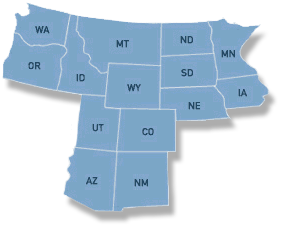
Qwest's service area

Qwest has a lot going against it.  Unlike its bigger cousin Baby Bells, mostly absorbed into the AT&T or Verizon Continuum, Qwest is saddled with a service area that often spells r-u-r-a-l.  The company got the short end of the stick when the Bell System was carved up in the mid-1980s, stuck with Arizona, Colorado, Idaho, Iowa, Minnesota, Montana, Nebraska, New Mexico, North Dakota, Oregon, South Dakota, Utah, Washington, and Wyoming.  That’s a service territory shaped like a “T” which spells “trouble.”  Outside of a few major cities like Phoenix, Denver, Minneapolis-St. Paul, Salt Lake City, and Seattle, the rest of Qwest Country is desert, ranch land, mountain ranges, farms, prairies, and some nice lakes and rivers.

While a great place to vacation, these spectacular landscapes are not what investors are looking for when considering what to do with a 100-year old copper wire telephone system.  Qwest never even managed to launch its own cell phone service, instead relying on reselling Verizon Wireless to interested customers.  Its foray into the cable TV business also flopped, and the company currently resells satellite TV service to customers.

The company was plagued with insider trading and other allegations of financial irregularities in the mid-2000s, and since 2005 has been rumored to be on the sales block.

The asking price keeps dropping, along with the company’s value.  Originally worth $45 billion dollars ten years ago, Qwest can’t attract buyers even at half the price.

Customers aren’t very impressed either.  In Lake County, Minnesota, the local newspaper printed a damning editorial Thursday accusing the company of being a villainous, untrustworthy liar after phone service went out for virtually the entire North Shore of Minnesota:

We’d like to have a villain in this story, but, so far, that character sketch is thin. Qwest is fitting the bill if you like obsequiousness on par with cigarette or multinational food companies.

Qwest touted the promise of high-tech 911 service, fast internet, a better connected North Shore. They’ve turned out to be good at promises but lousy on delivery when things go wrong.

The Lake County News-Chronicle excoriated Qwest in an editorial published last Thursday

Most people heard “All circuits are busy, please try your call again later” on their phones Tuesday. For more than a week, we’ve heard the same line from Qwest regarding what happened in Duluth and why there wasn’t a reroute up the Shore.

You can’t help becoming wary about how our technological infrastructure works after such failure Tuesday. Everyone was surprised to know that when fiber optic goes, so do cell phones. It was even more surprising to know that there was no detour for the line up the Shore. But that wasn’t technological indifference. That was a trust we put in Qwest.

[…]

It’s different when Qwest lies about why its line failed and we find out its assurance about a reroute was pure fantasy. There ends any trust or understanding to calmly wait out its line failures.

With Qwest, everything has been below the ground, literally and figuratively. It’s answer that repairing fiber optic is “difficult,” the empty promise of rerouting, and the lack of explanation of the real cause of the damage in Duluth, are all unacceptable.

It’s as if Qwest prefers a cloak of mystery about its technology and we should be happy to have it at all. That’s a poisoned relationship to have with fiber optic as it becomes ubiquitous in our lives.

Qwest, tell us what really happened under that street in Duluth, and, if it was the result of your own negligence, own up to it. Tell us why you told customers, including agencies responsible for public safety, you had a plan, a reroute in the case of a line break, but really didn’t.

And tell us why we should trust you again with this vital link to safety, health, and business along the North Shore.

While plots can be richer for their villains, we’d rather not have one in this story.

Ouch.

The Wall Street Mergers & Acquisition-vultures are circling over the company again, raising the stakes that Qwest is once again the common-sense choice for a takeover.  But even they realize nobody may want the entire company, saddled with rural states’ phone customers over an aging network that will cost billions to upgrade.  So the next best thing is to carve up the profitable bits and sell those to the highest bidder.  Companies like AT&T, Verizon, and BellSouth could do well serving the major population centers in Qwest’s territory, leaving folks in states like Wyoming, Idaho, Montana and the Dakotas to their choice of likely “rural telco” suitors: CenturyLink, Frontier Communications, or Windstream.  Qwest’s valued fiber optic network could fetch a billion or more on the open market.  Their data centers could manage another cool billion if sold.

As Qwest’s revenue continues to decline, the company is likely going to continue cutting costs, keeping themselves as attractive as possible to would-be suitors.

“It gets harder and harder to keep cutting costs,” Donna Jaegers, an analyst with D.A. Davidson & Co. told the Denver Post.  “As (former WorldCom chief executive) Bernie Ebbers used to say, ‘There’s no more lemon juice left in that lemon.’ ”

Just ask customers on the North Shore of Minnesota, as they sip Qwest’s bitter lemonade.

Frontier Communications Launches Online Video Site With 100,000 Videos You Can Already See Elsewhere Online

Phillip Dampier February 9, 2010 Editorial & Site News, Frontier, Online Video, Video Comments Off on Frontier Communications Launches Online Video Site With 100,000 Videos You Can Already See Elsewhere Online

More of the same you can already get elsewhere

If you’re a phone company unwilling to make the investment into delivering a real telco-TV package to customers, why not do online video on the cheap with a new online portal that offers 100,000 videos you can already easily find elsewhere online?

That works for Frontier Communications, who today is patting themselves on the back over the launch of my fitv.com, a new online video site.

“my fitv reflects the disappearing lines between televisions, personal computers and mobile devices and the way time is shifting. Today, consumers don’t have the time or patience to see programs at specific times, or to even sit through an entire program. my fitv gives viewers control, and its unique user experience offers more than 100,000 titles and seamless search and navigation functions. It’s all about search less and watch more,” says Maggie Wilderotter, Chairman and CEO of Frontier.

Unfortunately for Frontier, virtually all of their launch content is readily available and easy to find on sites like Hulu.  The site also contains a handful of news clips from two of the evening newscasts in Minneapolis-St. Paul, Minnesota, with more promised in the future.

Hulu invites anyone to embed their video content, so even you can build your own online video portal.  But giving visitors a compelling reason to visit a site that offers little, if any, original content is a challenge.

The site is available to Frontier customers and those who aren’t, and why not?  Frontier isn’t out anything if outsiders start using the service.

Frontier isn’t the only phone company running an online video portal.  AT&T Entertainment launched last year repackaging Hulu and other content providers’ ’embeddable videos’ to an underwhelmed audience.

[flv width=”640″ height=”380″]http://www.phillipdampier.com/video/Frontier My FITV Ad.flv[/flv]

Frontier Communications ran this ad Sunday in Rochester, N.Y., Cincinnati, Ohio, Sacramento, Calif. and Minneapolis/St. Paul, Minn., to launch my fitv.

Fake Verizon Employees Ringing Southwestern-Florida Doorbells – Check ID Before Opening Your Door

Phillip Dampier February 9, 2010 Verizon, Video 1 Comment

Local media warns residents to look first before opening the door to potential trouble

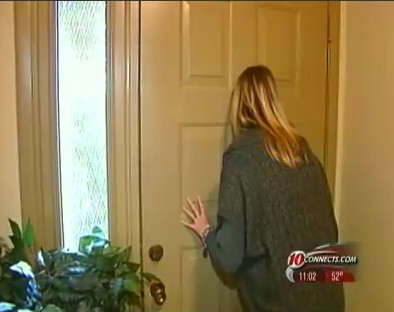
As many as five men wearing Verizon jackets have been ringing doorbells in the Bradenton, Florida area seeking entry into residents’ homes claiming to be service or sales representatives.  Police are concerned an unsuspecting resident may admit the impostors unaware of their likely criminal intentions.  Bright House Networks, the area’s cable operator, has also faced phony representatives peddling its products.

With increased competition between phone companies and cable operators for your telecommunications business, many providers hire third party door-to-door sales personnel to promote services, especially when new service options become available.  Verizon uses 20/20 Companies, an Ft. Worth, Texas-based door to door marketing firm to sell its Verizon FiOS fiber to the home service.  20/20 Companies promises its clients “a thorough, national background check and a 10-panel drug screen” for all of its sales representatives to “protect the client, the brand, and, most importantly, the customer.”

Still, consumers may not be aware of what to consider before opening their doors to uninvited knocks.  It has happened to me when a fake Frontier Communications “representative” knocked on my door a few years ago with lots of personal questions but no answers:

  1. Cable and telecommunications companies do not make unscheduled service calls.  If a representative claims they “detected a problem,” tell them you will call the company yourself to schedule an appointment.
  2. If the doorbell rings and you weren’t expecting anyone, consider simply ignoring it.  At least verify to your satisfaction the identity of the visitor before opening the door or even interacting with him or her.
  3. Sales representatives and other company personnel should have clear, unambiguous, professionally-produced identity badges.  A shirt sticker or generic jacket with a logo on it doesn’t come close.
  4. Trust your instincts.  If something doesn’t seem right, it probably isn’t.  Don’t hesitate to contact police.  Many communities require all door to door sales personnel to have a peddler’s license on file with the local town or city government.  If they don’t, police can charge them.
  5. Alert your neighbors.  You may have been aware enough to avoid a potential problem, but an overly trusting neighbor might not.  They’ll appreciate you looking out for them.

Consumers concerned about this type of door to door sales activity should contact service providers and tell them you don’t appreciate at-home intrusions and that you hope the company will modify its marketing practices to discontinue unscheduled marketing visits.  Instead, suggest they send sales teams only to homes that specifically request an in-person visit, with an appointment.

[flv width=”480″ height=”340″]http://www.phillipdampier.com/video/WTSP Tampa Police warn of Verizon and Bright House service tech impostors 2-9-2010.flv[/flv]

WTSP-TV in Tampa warns southwestern Florida residents about fake employees trying to gain entry into local residents’ homes.  (3 minutes)

[flv width=”540″ height=”380″]http://www.phillipdampier.com/video/WFLA Tampa Fake Verizon Employees 2-9-2010.flv[/flv]

WFLA-TV in Tampa tells viewers to ask for ID before opening a door to a telecommunications company employee.  (2 minutes)

Bright House Increasing Speed And Price for Road Runner Turbo Customers In Indianapolis

Phillip Dampier February 9, 2010 Broadband Speed, Online Video Comments Off on Bright House Increasing Speed And Price for Road Runner Turbo Customers In Indianapolis

Road Runner Turbo is getting a makeover in Indianapolis.  Faster speeds are forthcoming, but at a higher price.

Bright House Networks currently provides Road Runner Standard customers with 7Mbps/512kbps.  Getting better speed requires the purchase of Road Runner Turbo at a new price of $15 per month.  In return, Bright House is boosting Turbo speed customers to 20/2Mbps service, with PowerBoost temporarily accelerating downstream speeds up to 30Mbps.

In most markets, Road Runner Turbo is priced at $9.95 per month, but it’s five dollars more in Indianapolis.

Bright House headquarters in Indianapolis

Will the increased price for Turbo become a trend in return for faster speeds in other markets?

Ironically, the associated public relations campaign sells customers on signing up for Turbo to enjoy a better online video experience.

“Building the excitement toward the opening games of the Olympics, we’re able to add to the enjoyment of and access to entertainment and information with these exclusive new products and features,” said Wayde Klein, vice president of marketing and customer operations for Bright House Networks Indiana. “With our speed boost to Road Runner Turbo, customers will be able to take advantage of some of the highest Internet speeds available, making video viewing over the Internet an even better, real-time experience.”

The upgrade in broadband service is part of Bright House’s effort to improve service in central Indiana.  The cable operator is also adding several new high definition networks and introducing the “Start Over” feature allowing viewers to return to the start of a program in progress.

Bright House is licensed to provide Road Runner service, a brand more commonly associated with Time Warner Cable.

Time Warner Cable Increasing Road Runner Turbo Speed In South Texas

Phillip Dampier February 8, 2010 Broadband Speed 2 Comments

Road Runner Turbo customers in south Texas can expect to receive more speed for their money soon.

Time Warner Cable is boosting speeds for Turbo customers in Corpus Christi, Del Rio, Eagle Pass, Laredo, the Rio Grande Valley and Uvalde.

“We are very excited to offer this upgrade and time-saving feature to our Road Runner customers,” said Gavino Ramos, vice president of communications for Time Warner Cable South Texas.

Downstream speeds increase from 10 to 15Mbps and upstream speeds are doubled from 1Mbps to 2Mbps.

The price for Turbo service remains unchanged.

Although the exact date for the upgrade is unclear, customers can check if the upgrade is completed in their area by following this company-recommended procedure:

  1. Unplug the cable modem and wait 60 seconds.
  2. Plug the cable modem back in. The lights will flash as it reconnects to the network.
  3. When the modem lights are solid again, restart your computer and experience the new faster speed.
Customers in San Antonio already received a speed upgrade last year. If you experience problems or have questions, you can reach Time Warner Cable at 1-800-CABLE55.

Search This Site:

Contributions:

Recent Comments:

Your Account:

Stop the Cap!