Corporate Hypocrisy – Recording Industry Faces $6 Billion Copyright Infringement Lawsuit

Phillip Dampier December 8, 2009 Canada 3 Comments

One of the side issues of the fight against Internet Overcharging is the copyright enforcement issue.  Some members of the recording industry believe unlimited broadband promotes piracy and encourages providers to monitor customer activity to enforce copyright law.  Now the recording industry wants a global Anti-Counterfeiting Trade Agreement, part of which could include a three-strikes provision that would force your broadband provider to shut off your service for a year if you’re caught downloading copyrighted material.  The language for the agreement is being worked out, in secret, and you’re not invited to participate.

criaThe recording industry that has hassled broadband users for more than a decade about copyright matters itself now faces a charge of rank hypocrisy as it defends itself against a $6 billion dollar copyright infringement lawsuit. Warner Music Canada, Sony BMG Music Canada, EMI Music Canada, and Universal Music Canada, the four principle members of the Canadian Recording Industry Association, are all named in the suit originally filed in October 2008.

Recording artists charge that for years Canadian record companies have used their works without permission in so-called “compilation” CD’s, containing music from many different popular artists and marketed with titles like “Top Country Music of 2009” or “Your Holiday Favorites 2008.”

Record companies use what the lawsuit describes as “exploit now, pay later if at all” business practices.  It allegedly works like this: a record company needs 12-17 songs to build a new compilation CD.  As the CD is produced, the record company adds the name of the artist and the song to a “pending list” that suggests they’ll sell first, and get the required permission and payment negotiation later.

    Unfortunately for artists, that “pending list” is usually a black hole.  That list still contains lists of songs used in the 1980s, and has since grown to more than 300,000 titles.  The creation of the “pending list” loophole has provided a convenient stall tactic for the industry not to pay its artists for using their music.

    Details from the court case continue to leak out, including an affidavit from David Basskin, the president and CEO of the Canadian Musical Reproduction Rights Agency Ltd.  Basskin provides a potential explanation for why the “pending list” has gone unattended for decades: “the record labels have devoted insufficient resources for identifying and paying the owners of musical works on the pending lists.”

    The existence of the lists could prove to be very expensive to the Canadian recording industry because it openly admits liability to those unpaid artists.  The impacted artists seek damages up to $20,000 per song, which could result in a judgment against the industry for more than $60 billion dollars.

    Those are big numbers, but some suggest they are not any bigger than the demands by the music industry for consumers to pay millions in damages for “copyright infringement.”

    “After years of claiming Canadian consumers disrespect copyright, the irony of having the recording industry face a massive lawsuit will not be lost on anyone, least of all the artists still waiting to be paid,” said Michael Geist, who holds the Canada Research Chair in Internet and E-commerce Law at the University of Ottawa. “Indeed, they are also seeking punitive damages, arguing ‘the conduct of the defendant record companies is aggravated by their strict and unremitting approach to the enforcement of their copyright interests against consumers.'”

    Special Investigation: Part 1 – How Phone Companies Game the System to Maximize Profits & Outwit Regulators, Leaving You With the Bill

    Phillip Dampier December 7, 2009 AT&T, Competition, Public Policy & Gov't, Verizon, Video 5 Comments

    This is part one in a series of stories illustrating how telecommunications companies use a combination of public relations firms, professional lobbyists, friendly regulators, and outmaneuvered state officials to sell “improved service” to the public in return for regulatory “reform.”  Too often, that “reform” is loaded with loopholes and language that guarantees providers can break their promises, tie state and local regulators’ hands when bad service results, and ultimately stick you with the bill.
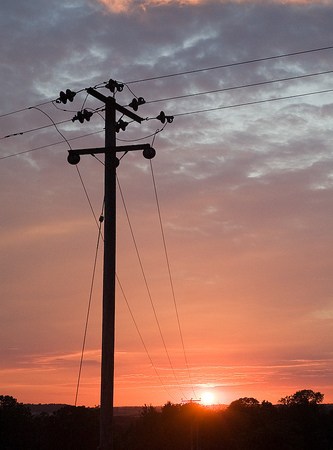
    phone pole courtesy jonathan wOver the past several months, several communities in New Jersey have been up in arms about Verizon’s reinterpretation of a state law originally written in the 1940s but “updated” just a few years ago, to mean it no longer has to pay telephone pole and infrastructure taxes to municipalities for using the public right of way.  Verizon’s “reinterpretation” of the state’s Business Personal Property Tax law surprised several municipalities who now face significant financial challenges as a result of the lost revenue.  New Jersey residents will likely make up the difference with a higher property tax rate.

    On the surface, it might appear Verizon simply happened upon tax savings.  Verizon claims the law only requires it to pay taxes in communities where it has more than 51% of the area’s phone customers.  Despite protestations from local officials, Verizon has signaled its intent to carry on, estimating 150 communities will join the 50-60 already impacted by next year.

    Changes in telecommunications public policy do not occur in a vacuum.  They happen when providers lobby for regulatory reform and bring gift baskets filled with promises for dramatically improved service.  Using a network of high priced lawyers and public relations campaign experts, companies can easily outmaneuver local and state regulators at every turn.  Unfortunately, by the time consumers (and sometimes regulators) realize they were left with a Trojan Horse filled with empty promises, it’s too late.

    Some deals just bring consumers higher prices while others saddle communities with highly-leveraged, heavily indebted companies that eventually collapse in bankruptcy.

    Just how did we get here?  In this series, we’ll look at New Jersey’s history with its largest resident phone company.  From New Jersey Bell to Bell Atlantic to Verizon, more than 20 years of questionable reform has left residents “touched” in their wallets.  The blame doesn’t rest entirely with the phone company, either.  Local and state officials were repeatedly won-over by professionally-run lobbying campaigns.  After repeated bad experiences, one might assume they’d know better by now.  Those communities no longer getting tax payments from Verizon can testify they haven’t.

    Let’s turn back the clock to the dramatic changes in telecommunications that came with the 1984 breakup of Ma Bell and the Bell System.

    Telecommunications Industry Sets the Stage for a Money Party

    [flv width=”640″ height=”500″]http://www.phillipdampier.com/video/1977 The Bell System.flv[/flv]

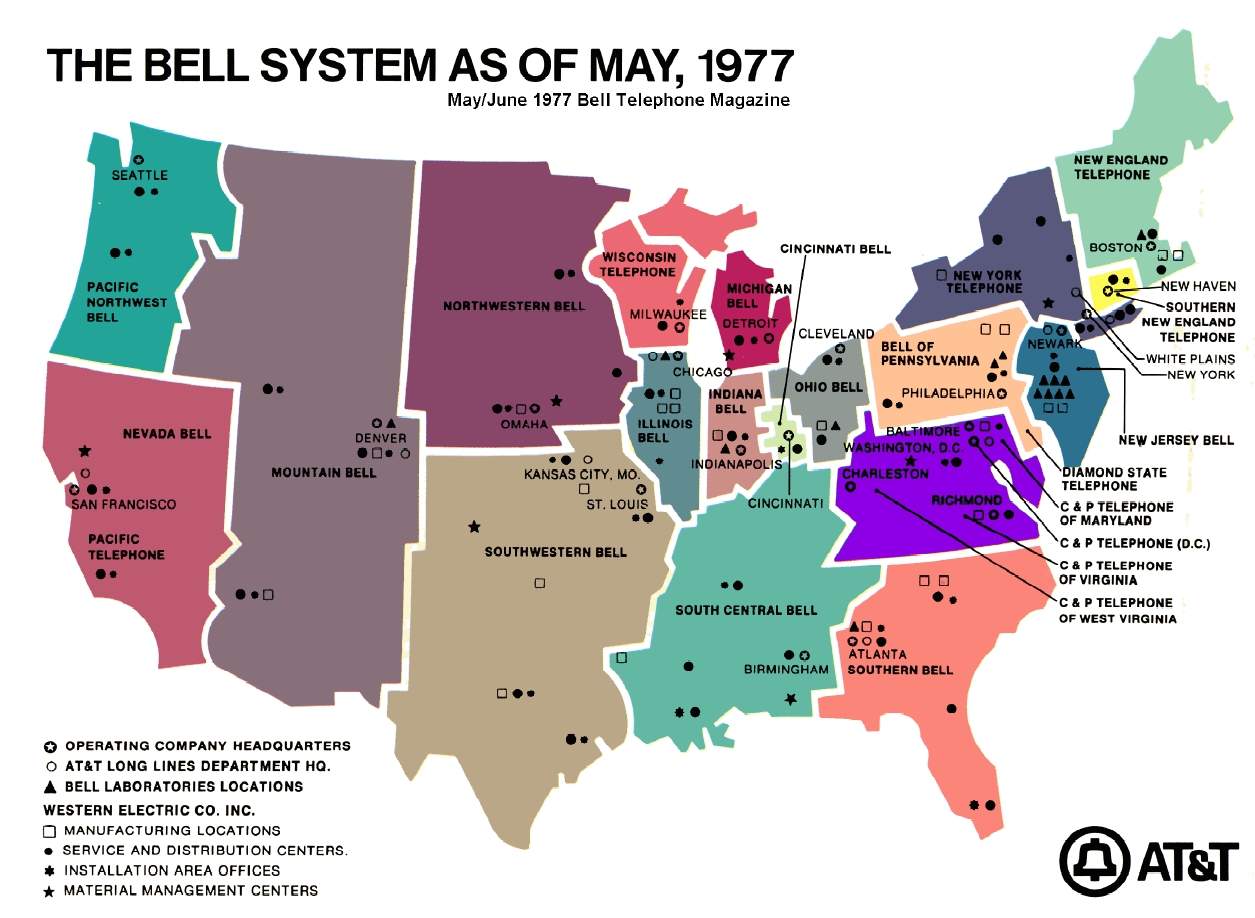
    In 1977, the overwhelming majority of Americans were served by “the phone company,” namely AT&T and its family of Bell companies providing local service. (2 minutes)
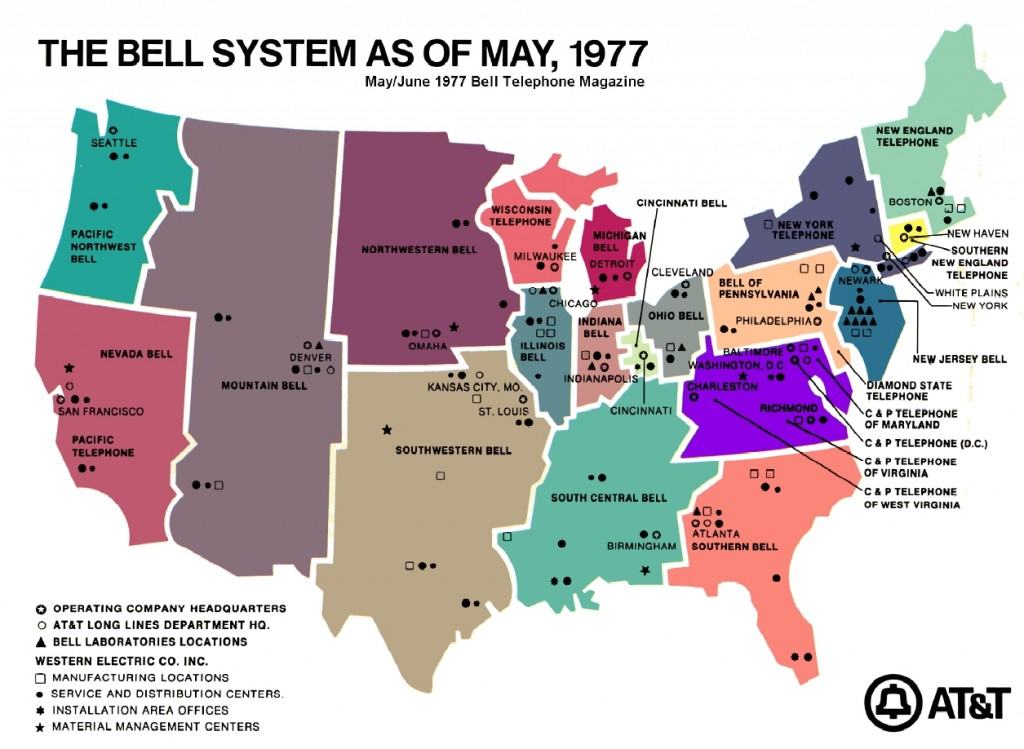
    AT&T's Bell System in 1977

    AT&T's Bell System in 1977 (click to enlarge)

    For decades, telephone service was run largely as a monopoly by the enormous Bell System and several dozen smaller, non-Bell independent phone companies.  Telephone service was regulated by state and federal authorities who approved rate increase requests and made sure providers met service quality standards. Consumers did not own the telephone equipment in their homes – it was rented from the phone company.  Although often uninspired, Bell System telephones were often virtually indestructible, ranging from basic utilitarian black rotary dial phones to the flaunting Princess phone, which had a lighted dial and came in several colors.

    As America began earnestly developing data transmission systems in the late 1960s and early 1970s, AT&T kept its monopoly intact there as well.  At the time, a cooperative arrangement between IBM and AT&T ensured most American businesses would probably deal with one or both companies for their data communications needs.

    The eventual fall of the monopoly glory days of AT&T and its Bell System monopoly can be laid at the feet of corporate arrogance, particularly from one John D. deButts who became AT&T’s new Chairman and CEO on April 1, 1972.  deButts was AT&T born and bred, rising through the ranks over decades of employment with AT&T.  To him, anything smacking of competition was to be considered a duplication of effort and wasted resources.  AT&T, in his view, had already strayed too far from its past when Americans could go from coast to coast and deal with just one telephone system using uniform standards and practices of operations.  Consistency and quality should be the highest priority for AT&T, not squabbling with smaller competitors fighting with each other for customers.

    A politically tone-deaf deButts infuriated a post-Watergate Congress hellbent on reform at a time when Americans had grown suspicious of big power players, be they political or corporate.  The confident AT&T executive delivered a speech before regulatory commissioners in the fall of 1973 that included within it, “[we must] take to the public the case for the common carrier principle and thereby implication to oppose competition, espouse monopoly.”

    Not only did the speech irritate many members of Congress, it helped convince one of AT&T’s competitors, MCI to file a 22 count lawsuit against AT&T in March 1974, accusing Ma Bell of being engaged in illegal antitrust activities.

    An even more important lawsuit was filed by the U.S. Justice Department on November 20, 1974.  The federal government also accused AT&T of antitrust behavior, claiming the company locked-up the telephone equipment business for itself, and was well-suited to crush any potential competitor from getting a serious foothold in the marketplace.  At the time, AT&T officials sniffed that the lawsuit was completely without merit and promised to fight back at all costs.

    deButts ordered company lawyers to stall, delay, and roadblock the government’s case as much as possible, and the company enjoyed years of court delays.  The lawsuit dragged through several preliminary hearings and motions, until the then-presiding judge, Joseph Waddy, fell ill and had to reduce his caseload.  The United States v. AT&T was transferred to a newly-appointed District Judge named Harold Greene in September 1978.  The days of delay were over.  Greene quickly ordered the case to trial starting in September 1980.

    While the court case saw some changes, AT&T did as well.  In February 1979, deButts was out, replaced with a far more conciliatory Charles Brown.  He changed AT&T’s tune, publicly welcoming competition into the marketplace, announcing “I am a competitor and I look forward with anticipation and confidence to the excitement of the marketplace.”

    Having that attitude probably wasn’t helpful to defending AT&T’s case, and the company eventually threw in the towel, reaching a settlement with the government in 1982.  Overseen by Judge Greene, AT&T was promised it could keep its long distance service, Western Electric (which manufactured telephone equipment), and Bell Labs, the company’s research and development arm.  In return, it had to divest all 22 local phone monopolies.
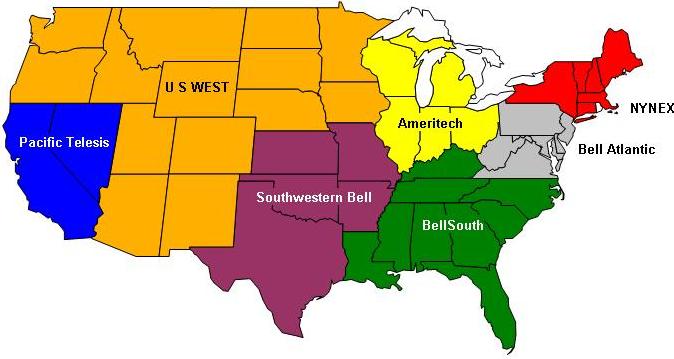
    America's newly independent regional telephone companies post-1984

    America's newly independent regional telephone companies post-1984

    Judge Greene, issuing a final consent decree to be effective January 1, 1984 formally broke up the Bell System.  The 22 local phone companies under AT&T were merged into seven Regional Bell Operating Companies, each to be run independently:

    • Ameritech (acquired by SBC in 1999 – now part of AT&T again)
    • Bell Atlantic (acquired GTE in 2000 and changed its name to Verizon)
    • BellSouth (reabsorbed back into a newly reorganized AT&T in 2006)
    • NYNEX (acquired by Bell Atlantic in 1996 – later to become part of Verizon)
    • Pacific Telesis (acquired by SBC/AT&T in 1997)
    • Southwestern Bell (changed its name to SBC in 1995, then acquired the remnants of AT&T in 2005, rechristening itself as the ‘new’ AT&T)
    • US West (acquired by Qwest in 2000.)

    The goal was to create several smaller regional companies not too large to face challenging competition from new independent providers entering the marketplace.

    The result of all of this upheaval was competition in the long distance calling marketplace, but very little competition for local residential telephone service over phone company-provided telephone lines.

    Still, for a time the post-breakup family of former Bell companies enjoyed stability and a less regulated marketplace, and several raised rates for local phone service, even while cutting long distance prices.  Customers could now buy and install their own telephone equipment, including answering machines and computer modems, and several competitors began to spring up to serve business customers.

    By the 1990s, a new upstart appeared on the horizon that would potentially threaten the whole ‘arrangement.’  The cable television industry, subjected to a more regulated marketplace after years of monopoly abuse of customers, was looking for new unregulated add-on services they could provide to bring back the days of big profits they enjoyed just a few years earlier.  Two potential services: providing connectivity to the Internet and providing cable customers with telephone service.

    When phone companies realized cable was planning to invade their turf, this meant war.

    In part two, learn more about how the telephone companies went ‘back to the future’ and rebuilt the empire Judge Greene broke up.


    Americans Embrace New Ways to Watch TV Without Fundamentally Changing Old Habits; Providers Feel Threatened Anyway

    Phillip Dampier December 7, 2009 Comcast/Xfinity, Data Caps, Online Video 14 Comments

    Subscription television providers should relax: Americans are not moving away from watching television on television sets.  Nielsen’s Three Screen Report, issued today, finds most Americans are not fundamentally changing the way they watch TV — they are simply taking advantage of more convenient ways to watch.

    The report shows considerable year over year growth in terms of time spent for Digital Video Recorder viewing (up 21.1%) and online video (up 34.9%) since the fall of 2008. Given the consistent spike in usage among the three screens of television, Internet and mobile, consumers are clearly adding video platforms to their schedule, rather than replacing them.

    “Americans today have an insatiable appetite for not only content, but also choice,” says Nic Covey, director of cross-platform insights at Nielsen. “Across all age groups, we see consumers adding the Internet and mobile devices to their media diet — consuming media anytime and anywhere possible.”

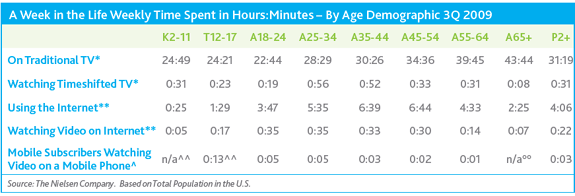
    Nearly 99% of television viewing is spent watching it on a television set, according to Nielsen’s findings.  But consumers are also discovering broadband and mobile viewing can add convenient new options, and are taking advantage of them:

    • In 3Q09, the average American watched 31 hours of TV per week, with 31 minutes spent in playback mode with their DVR.
    • In addition, each week the average consumer spent 4 hours on the Internet and 22 minutes watching online video.
    • The average consumer spent 3 minutes watching mobile video each week.
    source: Nielsen

    The biggest fans of mobile video are teenagers, some spending just over seven hours per month watching video on their phones.  Watching television on a broadband connection is a popular trend among those aged 18-44, one noticed by Comcast chief operating officer Steve Burke.  Burke spoke about the trend at the recent Cable & Telecommunications Association for Marketing’s three day conference in Denver.  He noted his own children now prefer to watch their shows on a laptop from one of the free online services and not on the family television.

    Allowing young viewers to grow up assuming they can watch anything, anywhere, for potentially no charge is a very dangerous proposition for people in Burke’s business.

    Stephen Burke, Comcast Chief Operating Officer

    Stephen Burke, Comcast Chief Operating Officer

    “An entire generation is growing up with that preference,” Burke said. “If we don’t do something to change that behavior so they respect copyrights on the side of content provider, and cable subscriptions or satellite subscriptions or telco subscriptions on the side of the distributors, we are going to wake up with a lot of ingrained habits going the wrong way and we will see cord-cutting.”

    Comcast has two ways to make sure viewers learn their lessons about paying for what they watch:

    1. The formalized introduction of the forthcoming usage meter, better enforcing Comcast’s 250GB monthly limit for their broadband service.  Watching a lot of online video will take a major bite out of your broadband usage allowance.
    2. The launch of Comcast’s Fancast Xfinity TV, a service that will allow only existing Comcast cable-TV package subscribers access to many of their favorite shows online, on demand, for no additional charge.  That new name comes courtesy of Comcast’s marketing gurus, to replace what readers better know as: TV Everywhere.

    The usage meter and “authenticated subscribers-only” pay wall are Comcast’s one-two punch to keep subscribers from eventually dropping their cable-TV package to watch television exclusively over their broadband connection.

    Cable operators already treat companies like Netflix, which use broadband to deliver an increasing number of movies and TV shows on-demand to subscribers, as a major threat.  Insight Communications CEO Jamie Howard called Netflix the equivalent of the third largest cable operator in the country in terms of content delivered.  That’s content not owned or directly managed by Insight or other cable providers.

    Some in the industry believe who owns and controls online video will eventually decide the winners and losers in the subscription television business.  Derrick Frost, founder and CEO of Invision.TV, an Internet video search engine, warned the outcome of the battle can’t come soon enough.  Otherwise, consumers “will find other ways — legally or illegally — to access it.”

    Time Warner Cable Guy Arrives Late to Service Call, Leaves Claiming Homeowner Had “Bad Air”

    Phillip Dampier December 7, 2009 Issues 3 Comments

    http://www.flickr.com/photos/stefanb/3782368970/ (Courtesy: StefanB)I see a number of stories from consumers upset about poor service from their cable or telephone provider, but Joanne Hanson from Indio, California has a keeper:

    After waiting for the Time Warner Cable people, who were two hours late, the installer disappeared when he told me he needed to go to the truck.

    After speaking with the supervisor about the installer disappearing, he told me that the guy had left because of the poor air quality in my home. It made him feel unsafe, so he left, unannounced.

    Then they told me that they couldn’t reschedule until next week because they are overbooked.

    A Challenge Providers Will Never Accept: Turn Over Usage Data to Justify Usage Cap Schemes

    Phillip "No, I won't take your word for it" Dampier

    Phillip "No, I won't take your word for it" Dampier

    Did you realize if you are pro-Net Neutrality, you’re probably pro-piracy and a broadband hog?  That’s the new low achieved this past week by Net Neutrality opponents who are spending millions trying to protect their broadband fiefdoms from any regulation.  But even if they lose their fight to stop Net Neutrality when they find consumers won’t accept a throttled “network managed” broadband future, providers will be “forced” to control those dirty pirates and broadband hogs with usage limits and overlimit fees to help “pay for network expansion.”

    It’s why Net Neutrality and Internet Overcharging schemes like usage caps and “consumption billing” go hand in hand.  What providers can’t profit from on one end they’ll try from another.

    Longtime readers of Stop the Cap! already know how this scam works.  Canadian broadband users got stuck with both: speed throttles -and- usage caps and overlimit fees.  Assuming purposely throttled speeds are banned by Net Neutrality policies, simply under-investing in network expansion, despite the rampant profit-earning capacity broadband delivers, gets us to the same place — throttled speeds from overcongested networks and a convenient excuse to impose usage limits and other control measures to more “fairly” provide service to every customer.  Best of all, providers can pocket the overlimit fees charged to customers who exceed their allowance and train them to use less broadband with fears of more stinging penalty fees on their next bill.

    Back in 2008, when Stop the Cap! launched, we challenged providers to provide the raw data to prove their assertions that they needed to impose formal limits and so-called “consumption-based billing” and abandon the lucrative flat rate pricing model that earns them billions in profits every year.  Of course, they have always refused, citing “competitive reasons,” “customer privacy,” or some combination of laws that supposedly prohibits any third party analysis.  Of course, they’re only too happy to characterize usage themselves, and we’re supposed to trust them — the same people that want to use that data to justify Internet Overcharging schemes.  Independent analysis?  When broadband pigs fly!

    Now, telecom analyst Benoit Felten from the Yankee Group is asking the same questions on his Fiberevolution blog and issuing a challenge:

    So here’s a challenge for them: in the next few days, I will specify on this blog a standard dataset that would enable me to do an in-depth data analysis into network usage by individual users. Any telco willing to actually understand what’s happening there and to answer the question on the existence of hogs once and for all can extract that data and send it over to me, I will analyse it for free, on my spare time. All I ask is that they let me publish the results of said research (even though their names need not be mentioned if they don’t wish it to be). Of course, if I find myself to be wrong and if indeed I manage to identify users that systematically degrade the experience for other users, I will say so publicly. If, as I suspect, there are no such users, I will also say so publicly. The data will back either of these assertions.

    Felton’s co-author Herman offers his assessment:

    Unfortunately, to the best of our knowledge, the way that telcos identify the Bandwidth Hogs is not by monitoring if they cause unfair traffic congestion for other users. No, they just measure the total data downloaded per user, list the top 5% and call them hogs.

    For those service providers with data caps, these are usually set around 50 Gbyte and go up to 150 Gbyte a month. This is therefore a good indication of the level of bandwidth at which you start being considered a “hog”.  But wait: 50 Gbyte a month is… 150 kbps average (0,15 Mbps), 150 Gbyte a month is 450 kbps on average. If you have a 10 Mbps link, that’s only 1,5 % or 4,5 % of its maximum advertised speed!

    And that would be “hogging”?

    The fact is that what most telcos call hogs are simply people who overall and on average download more than others. Blaming them for network congestion is actually an admission that telcos are uncomfortable with the ‘all you can eat’ broadband schemes that they themselves introduced on the market to get people to subscribe. In other words, the marketing push to get people to subscribe to broadband worked, but now the telcos see a missed opportunity at price discrimination…

    TCP/IP is by definition an egalitarian protocol. Implemented well, it should result in an equal distribution of available bandwidth in the operator’s network between end-users; so the concept of a bandwidth hog is by definition an impossibility. An end-user can download all his access line will sustain when the network is comparatively empty, but as soon as it fills up from other users’ traffic, his own download (or upload) rate will diminish until it’s no bigger than what anyone else gets.

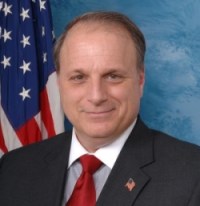
    Rep. Eric Massa (D-NY) has a better idea to stop Internet Overcharging: the Broadband Internet Fairness Act (HR 2902), which would ban unjustified billing schemes for broadband

    Rep. Eric Massa (D-NY) has a better idea to stop Internet Overcharging: the Broadband Internet Fairness Act (HR 2902), which would ban unjustified billing schemes for broadband

    The arbitrary nature of what constitutes a “hog” invalidates providers’ arguments at the outset.  Frontier defines a hog as someone who consumes more than 5GB.  Comcast sets their definition of a broadband piggy at 250GB.  The gap between the two is wide enough to allow a small planet to slip through unencumbered.

    If a consumer does all of their downloading from midnight to six the following morning, are they as much of a hog on a shared cable modem network as the user watching Hulu during prime broadband usage time?  Probably not.  If a cable provider tries to force too many homes to share the same finite amount of bandwidth available in a designated area, service will slow for everyone during peak usage times.  But nobody will notice or care if customers are maxing out their connection in the middle of the night.  The appropriate answer, especially for an industry that enjoys enormous profits, is to expand their network to maintain basic quality of service at peak times.  DOCSIS 3 upgrades for cable are cost efficient, flexible and often profitable, because providers can market new, premium-priced speed tiers to those who want cutting edge service.

    Instead, some providers see delaying upgrades as a better answer, enjoying the cost savings that follow implementation of usage caps, limits and other overcharging schemes which artificially limit demand and further monetize their broadband service offerings.

    Unfortunately, even if Felten got responses from providers, he’ll be forced to trust the integrity of data he didn’t collect himself.  Rep. Eric Massa has a better idea.  His proposed Broadband Internet Fairness Act would ban such overcharging schemes unless providers could prove to the satisfaction of a federal agency that such pricing was warranted.  The big difference is that providing “massaged” data to Mr. Felton might be naughty, but would be downright criminal if tried with the federal government.

    Shouldn’t the central lesson here be to “trust but verify?”

    Search This Site:

    Contributions:

    Recent Comments:

    Your Account:

    Stop the Cap!