

AT&T Damage Control: Running an Internet Overcharging Re-Education Campaign

Phillip Dampier December 14, 2009 AT&T, Competition, Data Caps, Editorial & Site News 2 Comments

dampier1AT&T Mobility has been sending out their blogger team to try and clean up the damage from CEO Ralph de la Vega’s not-too-subtle hint that the days of unlimited iPhone data plans are numbered:

Unfortunately, there has been a lot of misinformation, rumor and pure speculation floating out there during the last day on this topic.

[…]

We carry more smartphone data traffic than any other U.S. provider, with traffic growing 5,000 percent over the past three years. As a result, we are working aggressively and investing heavily in our network to support this tremendous growth. Our $17 – $18 billion CapEx spend for 2009 includes:

  • Nearly doubling the wireless spectrum serving 3G customers in hundreds of markets across the country, using high-quality 850 MHz spectrum.  This additional spectrum expands overall network capacity and improves in-building reception.
  • Adding about 2,000 new cell sites, expanding service to new cities and improving coverage in other areas.
  • Adding about 100,000 new backhaul connections, which add critical capacity between cell sites and the global IP backbone network.  We’re doubling the number of fiber-served cell sites this year.
  • Enabling widespread access to our Wi-Fi network – the largest in the country with more than 20,000 hotspots in all 50 states – allowing them to take advantage of the best available AT&T mobile broadband connection.
  • Rolling out even faster 3G speeds with deployment of HSPA 7.2 technology, with availability in six markets planned by the end of the year.
  • Preparing for field trials of next generation, LTE wireless networks next year, with deployment planning to begin in 2011.  This schedule aligns with industry expectations for when a wide variety of compatible 4G wireless devices should be available.

We have seen very positive results from our efforts thus far.  In one of the most common measures of reliability – dropped calls – AT&T’s national performance is within two-tenths of 1 percent of the highest score among major providers as measured by an independent firm, with only 1.32 percent of calls dropped nationally.
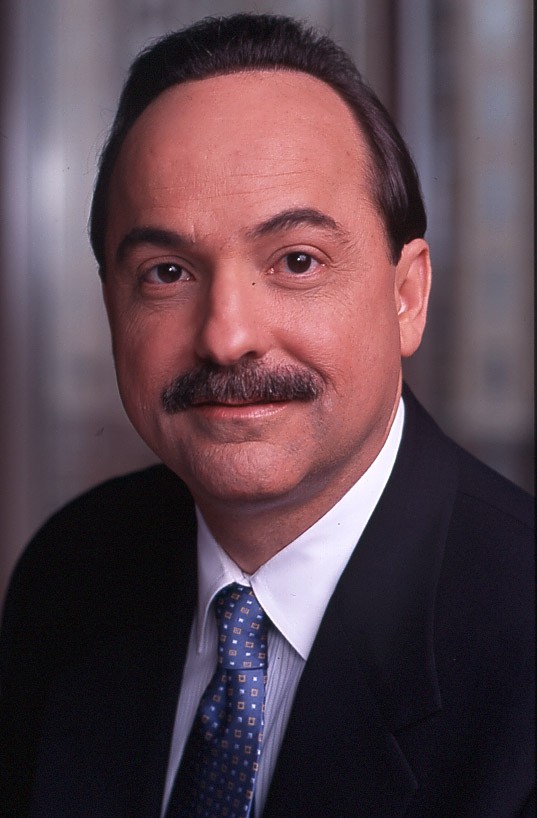
Ralph de la Vega

Ralph de la Vega

AT&T’s blogger team says it isn’t true that de la Vega is definitively saying he’s “capping” services.

But de la Vega never said in his original statements that he was advocating “capping” service.  He said, “there’s got to be some sort of a pricing scheme that addresses … usage.”  Scheme is right.  That’s code language for consumption or usage-based billing, something the blogger team doesn’t rule out.  A strict usage cap simply says a customer cannot exceed a specified amount.  Most consumption billing schemes monetize data consumption, not with a true pay-for-use system that bills by the megabyte, but rather a fixed monthly price with an allowance and overlimit penalties for exceeding it.  AT&T already uses consumption-based billing for its prepaid and postpaid mobile broadband plans, so extending it to the iPhone isn’t exactly novel.

The iPhone customer has been treated as a profit engine by AT&T since the phone was first introduced.  Compelling customers to purchase a mandatory data plan that was originally priced at $20 and was raised to $30 was the price iPhone customers had to pay for bragging rights.  Should AT&T impose consumption billing, that price may go much higher.

AT&T must believe iPhone users are willing to pay that price or dramatically cut usage.  Either way, AT&T milks the very last nickle out of its exclusivity arrangement that some industry observers believe will expire in the early summer of 2010.  When that happens, AT&T must be quietly pondering what customers will do once they can buy an iPhone from other carriers.

Leafing through January’s issue of Consumer Reports, I find one possible answer in the magazine’s annual survey of America’s best and worst cell phone providers (subscription required for detailed results).  More than 50,000 subscribers rated their wireless carrier, and AT&T turned in dismal ratings, usually ending up at the bottom except in some cities where Sprint achieved that dubious honor.  AT&T’s problems, reported in cities from coast to coast:

  • No service where service should exist
  • All circuits busy
  • Dropped calls
  • Static

Results have been so poor, the magazine recommended that those affected should call AT&T and demand credit.  Many customers have gotten at least three months’ worth of service credits valued at more than $200 for doing so.

Logical conclusion: customers love the iPhone but hate the network it is tied to.  With de la Vega’s recent data usage temper tantrum, it’s just one more reason to be annoyed with AT&T.

For customers who entertain the notion of owning an iPhone, but simply refuse to leave their current provider to obtain it, that’s nearly $3,000 left on the table over the life of a two-year contract.  That should concern both Apple and AT&T.  For Apple, it means potentially losing new iPhone customers to impr0ved competing phones, such as those running Google’s Android operating system.  For AT&T, once the Berlin Wall of exclusivity falls and two year contracts expire, years of consumer frustration with their network could lead to a stampede for the exits.


Mozy On Through Your Usage Allowance With Comcast ‘Secure Backup & Share’

Phillip Dampier December 11, 2009 Comcast/Xfinity, Data Caps, Issues 3 Comments

comcastbackupOne service the usage cap-happy broadband industry will be certain to threaten is online file backup.  Consumers who don’t know any better can easily configure software to back up entire hard drives to a remote hard drive, blowing through an online usage allowance in a matter of days.  Even usage allowances as large as Comcast’s 250GB per month are no match for today’s super-sized hard drives.

So it comes with a bit of irony that Comcast has quietly launched its new Secure Backup & Share service, “powered by” Mozy.

Every Comcast broadband customer will soon be pelted with promotions for the new free add-on, which will initially provide 2GB of storage space.  The free version is enough to backup small collections of music, photos, and documents, and probably won’t hurt your allowance too much.  But Mozy gets to up-sell customers to their much-larger capacity plans right from the home page.  A year’s worth of 50GB of storage costs $50.  Get 200GB of storage space for $100 a year.

Exceeding 250GB of usage per month, with or without the service, will potentially get you a warning letter and then an account suspension.

Bonus points to you if you can find the 250GB usage limit disclosed on the home page for the service.

For providers who try for far lower usage allowances, or charge up to $2 per gigabyte after exceeding them, an online file backup service could make your provider’s day once they send you the bill.

More Holiday Fun With Verizon, AT&T, And Others

Phillip Dampier December 11, 2009 AT&T, Competition, Verizon, Video, Wireless Broadband Comments Off on More Holiday Fun With Verizon, AT&T, And Others

While Verizon Wireless and AT&T Mobility have settled their differences in the courtroom, agreeing to withdraw mutual lawsuits against one another over their advertising claims, the war on the airwaves continues.  We had some good response to the last round of ads and lots of people dropping by to watch them, so it’s time for another round of fun.  Most of the ads will appear below the page break, so be sure to select Continue Reading… to see the entire article.

In North America, the holiday season is  -the- time of the year to move mobile phone products.  They are a perennial favorite for gift giving and providers know it, so they pull out all of the stops on advertising.  Verizon Wireless upped the ante this year by vilifying AT&T’s 3G coverage areas to gain a competitive advantage.  A clearly stung AT&T has since struck back with Luke Wilson, going all out to challenge Verizon’s map claims with postcards and marbles, as well as a website to de-fang Verizon’s map comparisons.  We’re even back to AT&T taking pot shots at Verizon over those “milky minutes” that expire at the end of the month.

[flv width=”640″ height=”380″]http://www.phillipdampier.com/video/ATT Marbles.mp4[/flv]

Verizon Wireless is full of marbles in AT&T’s view.  Luke Wilson tries to do damage control over Verizon Wireless calling out AT&T’s 3G map coverage.

… Continue Reading

A Point of Personal Privilege

Phillip Dampier December 10, 2009 Editorial & Site News 2 Comments

We interrupt our regular coverage for a point of personal privilege…

Last week, I received a few concerned e-mails from readers noticing our interrupted coverage Tuesday the 1st and Wednesday the 2nd and wondering what was up.  My partner and webmaster, John Passaniti, suddenly received word that Tuesday was his final day at his job-that-pays-real-money.  Needless to say this came as a surprise, and not a welcome one during the upcoming holiday season, especially in today’s economy.

For our Rochester-area readers employed in the tech sector, you can do me a great favor and consider passing along John’s resume and/or communicating with him directly about potential leads.  Getting him re-employed helps keep me focused and in a writing mood, which is good news for readers and bad news for Internet Overchargers.  It’s a way readers in my hometown can help return the favor of the work being done to keep overcharging schemes at bay.

John writes:

I am a software engineer with 22 years of experience in embedded systems.  Most of that work has been in industries related to audio and telecommunications (electronic musical instruments; professional, commercial, and home theater audio; enterprise and embedded Ethernet switching products), but I also have experience in web technologies and software project management.  I am most interested in embedded systems work in or near the industries I’ve previously been in, but I am open to evaluating any job opportunity where I can apply my wide range of skills.  My resume is available online.  I would appreciate readers who know of job opportunities for experienced software engineers to review my resume and contact me directly.

Thanks to everyone for letting me break into our regular coverage for a moment to discuss a more personal matter.

Here We Go Again: Net Neutrality Violates Corporate Freedom of Speech, Says Cable Association

Kyle McSlarrow

Kyle McSlarrow

Once again, the telecommunications industry is threatening to run to the courts if it faces Net Neutrality regulation, claiming their corporate freedom of speech would be violated by protecting the rights of consumers to access the content of their choice on their terms.

Kyle McSlarrow, President & CEO of the National Cable & Telecommunications Association, the nation’s big cable operator trade association, delivered the warning at yesterday’s appearance at the Media Institute in Washington, DC.

In a speech clearly designed to put regulators on notice, McSlarrow dismissed Net Neutrality as a solution in search of a problem and a concept big cable would likely challenge in the courts.

“When all the dire warnings of the net neutrality proponents are stripped away, there really are no signs of actual harm.  Yes, there have been a couple of isolated incidents that keep being held up as examples of what needs to be prevented, but nothing that suggests any threat to the openness of the Internet,” McSlarrow said. “Internet Service Providers do not threaten free speech; their business is to enable speech and they are part of an ecosystem that represents perhaps the greatest engine for promotion of democracy and free expression in history.”

McSlarrow told the audience that the cable industry would be among the victims of Net Neutrality, claiming their rights to transact business on their networks could be trampled by an overzealous Federal Communications Commission.

Almost every net neutrality proposal would seek to control how an ISP affects the delivery of Internet content or applications as it reaches its customers.   This is particularly odd for two reasons:  First, there is plenty of case law about instances of speech compelled by the government – “forced speech” — that suggests such rules should be scrutinized closely. Second, and perhaps more importantly, it is an almost completely unnecessary risk.  All ISPs have stated repeatedly that they will not block their customers from accessing any lawful content or application on the Internet.  Competitive pressures alone ensure this result:  we are in the business of maximizing our customers’ choices and experiences on the Internet.  The counter examples used to debate this point are so few and so distinguishable as to make the point for me.

Beyond the forced speech First Amendment implications, however, net neutrality rules also could infringe First Amendment rights because they could prevent providers from delivering their traditional multichannel video programming services or new services that are separate and distinct from their Internet access service.  While the FCC’s NPRM acknowledges the need to carve out “managed” or “specialized” services from the scope of any new rules, it also expresses concerns that “the growth of managed or specialized services might supplant or otherwise negatively affect the open Internet.”   Meaning what?  Well, the strong implication is some kind of guaranteed amount of bandwidth capacity for services the government deems important.

McSlarrow is focused front and center on the rights of providers, not consumers, when he speaks about the First Amendment.  His constituents are Time Warner Cable, Cox, Comcast, Charter, and the other NCTA members, namely big cable companies.  In his view, any regulation or interference in how providers decide to deliver service is a potential violation of their constitutionally protected rights.  That’s a side effect of the nation’s courts recognizing that corporations have rights, too.

McSlarrow predicts a laundry list of  ‘doom and gloom’ scenarios that would befall providers if Net Neutrality was enacted:

  • Net Neutrality could prevent providers from delivering their traditional multichannel video programming services or new services that are separate and distinct from their Internet access service;
  • Net Neutrality would prohibit ISPs and applications providers from contracting for any enhanced or prioritized delivery of that application or content to the ISPs’ customers.  Under the proposal, ISPs wouldn’t even be permitted to offer such prioritization or quality-of-service enhancements at nondiscriminatory prices, terms and conditions to anyone who wanted it.
  • Net Neutrality may mean that they [content providers] can’t provide material in the enhanced form that they want.
  • Net Neutrality could tell a new entrant or an existing content provider that it cannot enter into arrangements with an ISP for unique prioritization or quality of service enhancements that might enable it to enter the marketplace and have its voice heard along with those of established competitors.

McSlarrow doesn’t offer a shred of evidence to prove his more alarmist predictions, even as he demands it from those who support Net Neutrality.  The kind of unregulated, non-neutral net McSlarrow advocates already exists in places like Canada.  What you see there is what you’ll get here  — threats of usage caps unless speed throttles are permitted, arbitrary “network management” that reduces speeds for some services while “enhancing” or “exempting” certain other services (usually those partnered with the provider), and in the end usage caps -and- throttles -and- price increases.  In Canada, the story extends beyond the retail broadband market.  Wholesale broadband sold to independent ISPs comes nicely throttled and overpriced as well.

McSlarrow maintains a see no evil, hear no evil approach to his provider friends who pay his salary.  Comcast’s quiet throttling of peer to peer applicati0ns that blew up into a major scandal when the truth came out was evidently one of the “isolated incidents” he speaks about.  That’s only the nation’s largest cable operator — no reason to get bent out of shape about that.

Let’s break down McSlarrow’s concerns and read between the lines:

  • Nothing about Net Neutrality impacts on a cable system’s ability to deliver its multichannel video programming.  What McSlarrow is hinting at is that cable may end up using some of the same technology that moves online video to your computer to transport television programming to your TV set.  AT&T does that today with its U-verse system.  It’s basically a fat broadband pipe over which television, telephone, and broadband service travels together over a single pair of wires.  There is no demand that broadband must usurp your cable television package.
  • McSlarrow is trying to be clever when he describes “new services” that he defines as separate and distinct from Internet access service.  That usually includes “digital phone” products which providers already exempt from usage limits imposed on competitors like Vonage.  If “network management” throttles Vonage while exempting the cable system’s own phone product, is that fair?  What about the forthcoming TV Everywhere?  Could a provider throttle the speed of Hulu while exempting its own online television service?  What happens if a provider’s own service is exempted from these throttles and can deliver a higher quality picture because of that exemption?
  • “Bandwidth is not infinite.”  That’s something I’ve heard providers argue for more than a year complaining about their congested networks and why they need to impose controls to “manage them.” McSlarrow wants providers to be able to “manage” those networks by selling enhanced speeds for applications that partner with the provider.  Unfortunately, because cable broadband is a shared resource, those premium enhanced speeds will consume a larger share of that resource, naturally slowing down everyone else who didn’t agree to pay. Providers will say they are not ‘intentionally’ slowing down the free lane, but that’s a distinction without a difference to the consumer who will find many of their websites slower to access.
  • Today’s model asks consumers to make the ultimate choice. If they want a faster online experience, they can purchase a faster tier of service. Now providers want to change that by establishing a nice protection racket — pay us for “enhanced speeds” or your content may not reach your customers at a tolerable rate of speed.
  • It’s ironic McSlarrow is suddenly crying about how unfair it is content providers can’t purchase these “enhanced services.”  That’s a change of tune from an industry that used to accuse the large number of content providers who support Net Neutrality as freeloaders trying to use “their pipes for free.”

Customer demand for higher speeds and more reliable service should be all the impetus the cable industry needs to deliver quality service, particularly considering consumers pay a lot of money for the service and remain loyal to it.

McSlarrow’s final argument is a testament to the arrogance of the cable industry on the issues that concern subscribers.  A-la-carte channel choice, equipment options and expenses, usage limits, rate increases, and service standards are all issues this industry has fought with regulators about.  What customers want is secondary, and can remain that way as long as consumer choice is kept limited.  McSlarrow’s valiant defense of the rights and freedoms of the cable industry to offer extra freedom of speech through enhanced speed-privileges to content partners is more important to him and his provider friends than the rights of customers to not have their service artificially degraded to make room for even bigger cable profits.

Search This Site:

Contributions:

Recent Comments:

Your Account:

Stop the Cap!
