Hill Country About To Get Fastest Internet in South Texas: Non-Profit Co-Op Provides Fiber That Bigger Providers Won’t

Phillip Dampier December 16, 2009 Broadband Speed, Competition, GVTC Communications, Video 6 Comments

GVTCGVTC Communications yesterday launched 40Mbps service across its service area — the Hill Country north of San Antonio — marking a new broadband speed achievement for south Texas.

The company providing the service is about to reap the rewards of a $35 million investment in a fiber-to-the-home network reaching 80 percent of customers in North San Antonio and the Hill Country.  The new premium speed tier bests the company’s current 20Mbps service, and also includes 10Mbps upstream speed for $89.95 a month with a contract.

GVTC says it can deliver even faster speeds, upwards of 100Mbps, but wants to see what kind of demand they have for 40Mbps service first.

GVTC’s speeds will leave San Antonio’s Time Warner Cable and AT&T U-verse customers drooling.  GVTC speeds achieve nearly twice the speed of either provider, and leaves them in the dust when comparing upload speeds.  The company provides true fiber connections straight to customer homes, not the fiber-copper systems both cable and AT&T rely on.

[flv width=”480″ height=”380″]http://www.phillipdampier.com/video/GVTC-FTTH 12-10-08.flv[/flv]

GVTC Communications explains the benefits of fiber to the home service.  (4 minutes)

GVTC believes upstream speeds are particularly important for the area’s small businesses, as well as families with multimedia to share.

AT&T U-verse last week announced a speed upgrade to 24Mbps service in San Antonio, but their upstream speed tops out at 3Mbps.  Time Warner Cable currently provides San Antonio customers up to 15Mbps service with 2Mbps upstream speeds.

Time Warner Cable spokesperson Jon Gary Herrera said the company will respond with an upgrade to DOCSIS 3 in San Antonio as soon as the first half of 2010.  The upgrade, dubbed “Wideband” in marketing materials, will provide connections up to 50Mbps downstream and 5Mbps upstream.

[flv width=”320″ height=”260″]http://www.phillipdampier.com/video/KSAT San Antonio – Boerne Gets Wired 9-13-07.flv[/flv]

On September 13, 2007 KSAT-TV San Antonio ran this report about Boerne getting new fiber optic access through GVTC.  (2 minutes)

That GVTC Communications was able to handily beat both AT&T and Time Warner Cable in both product offerings and fiber optic deployment may be a result of the company’s status as a non-profit cooperative.  The more revenue the company brings in, the more the company returns to its customers in the form of Capital Credits.  GVTC has always been a major innovator in Texas, being the first phone cooperative in Texas to launch cable television service in the 1980s and the company began using fiber in the 1990s.  The company’s service area spans 2,000 square miles and eleven counties, some rural.  Despite questions about whether wiring rural customers would provide sufficient return, the company went ahead with the project anyway, which today permits the cooperative to enjoy revenue from telephone, television, and broadband service.  It also permits many of their less-urban customers to enjoy the same level of service as the “big city folks.”


Comcast’s XFINITY TV Now Online, But Watching Counts Against Your Usage Cap

Phillip Dampier December 16, 2009 Comcast/Xfinity, Online Video 4 Comments

fancastComcast has formally announced their version of TV Everywhere is now online.  Fancast XFINITY TV “is available to any Comcast customer with a digital cable and Internet subscription.”  There is no additional charge for the service.

Comcast customers can access the service after logging in through Comcast.net or Fancast.com with their account username and password.  Once “authenticated” as a confirmed Comcast cable subscriber, customers can watch approximately 2,000 hours of programming from more than 30 cable networks, including premium channels HBO, Cinemax, and Starz.  A demonstration showed Comcast had complete seasons of series like The Sopranos and Big Love.

Some programmers are exploring whether Nielsen can count online viewing as part of its ratings measurements.

Initially, Comcast will restrict access to customers who are confirmed digital cable and broadband customers, but will extend the service to those who only subscribe to Comcast cable programming in approximately six months once security and authentication issues have been resolved, according to company officials.

The service should be accessible by subscribers on-the-go through mobile broadband or other connections, as long as customers log in.  Access is not allowed outside of the United States for copyright clearance reasons.

Customers should be aware any video accessed by the service counts against Comcast’s 250GB monthly usage limit.  Advertising on the service also counts.  Unlike Hulu which typically provides just one advertisement for every break, Comcast’s program partners have tested full commercial loads, up to seven minutes worth in a 30-minute program.  That’s 14 ads to sit through, each eating into your usage allowance.  Comcast says programmers are individually testing different amounts of advertising to learn how viewers react.  The prevailing view is that online viewers are less tolerant of advertising than typical television viewers.

Time Warner Cable Merrily Raising Your Rates This Holiday Season Even While It “Gets Tough” On Costs

Phillip Dampier December 15, 2009 Video 2 Comments

rolloverWhile Time Warner Cable continues to ask customers if they should “get tough” with cable programmers’ price hikes, they are rolling over customers with more rate increases anyway.

The latest region facing higher cable bills is southern California.  Customers were notified rates were increasing an unspecified amount in January 2010.  Company spokesman Darryl Ryan told the Orange County Register that he can’t easily categorize the average increase since every bill will be different.

Readers managed:

  • Margaret from Huntington Beach says that some price hike examples are: The All the Best goes to $122.99, from $119.95; the ‘Surf ‘n View’ increases $2.04; broadcast cable goes up $2; Internet only goes up $2.04; and DVR increases to $1.54. One decrease: the remote control drops $0.05.
  • Dana from Anaheim Hills got a letter too and had to call customer service to figure out what it meant. Essentially, Dana found out basic service was going up $5 to $8 per month. To keep the existing price, customers must commit to a 2-year contract.

This price increase, with more likely to follow, comes because of programming costs according to the nation’s second largest cable operator.  The company has recently tried to engage consumers in an effort to “keep costs down” through its “Roll Over or Get Tough” campaign.  Time Warner Cable claims broadcasters and other cable programmers are demanding as much as 300% more for their programming in 2010.

[flv width=”640″ height=”380″]http://www.phillipdampier.com/video/TWC Holidays Ad.flv[/flv]

Time Warner Cable’s ‘Roll Over or Get Tough’ campaign is running this ad for the holidays.

The Parents Television Council called the marketing campaign “self serving,” said Tim Winter, the organization’s president.  The group said consumers are always put in the middle of pricing arguments, either from the cable company’s perspective or the network trying to get carriage or threatened with removal from cable lineups.  The PTC calls it posturing, and in the end prices typically get negotiated down a few pennies at most.

The PTC advocates consumers being able to pick and choose only those channels they want.  The group runs the website How Cable Should Be, which breaks down some of the estimated wholesale prices programmers charge cable companies for their programming.  Consumers can use the site to pick and choose their favorite channels and add up what their monthly bill could be if they weren’t paying for channels they don’t watch.

<

p style=”text-align: center;”>[flv]http://www.phillipdampier.com/video/Bundling Bummer.flv[/flv]
The Parents Television Council’s “Bundling Bummer” message illustrates how consumers get stuck paying for channels they never wanted. (3 minutes)

Time Warner Cable claims that more than 400,000 visitors to their campaign website have been overwhelmingly positive towards the company’s “fight back” stance.

“We’re delighted with the results so far,” said Time Warner chairman, president and CEO Glenn Britt. “Over 150,000 people have left comments, and 95% of them voted for ‘Get Tough.’ Our customers clearly agree that the current programming business model is broken. One comment we’re hearing pretty consistently is that customers would like the choice to buy smaller packages of channels. As an industry, we need to listen to those kinds of concerns.”

But the company’s site doesn’t make it easy to “roll over.”  Those who try to choose “roll over” are prompted instead to choose “fight back.”

Industry observers suggest Time Warner’s campaign is an opening shot for upcoming contract extensions for a handful of programmers, most notably broadcasters.  In the very center?  News Corporation and the Fox family of cable and broadcast stations.

[flv]http://www.phillipdampier.com/video/TWC 300 Percent Pay Raise.flv[/flv]

Time Warner Cable asks if you are getting a 300% pay raise in this ad asking if customers want the company to fight back against programmer price increases.

Behind the scenes, Time Warner Cable has been taking shots at Fox over negotiations between Sinclair Broadcasting, which owns 20 Fox-affiliated TV stations, and Mediacom, a smaller cable operator.  In an ex parte comment filed December 8th, Time Warner Cable took direct aim at the network, suggesting they were demanding veto power over local negotiations with individual stations.  If the network doesn’t like the terms the local station and cable system settle on, Fox wants the right to object.  Time Warner Cable suggested that precedent is already in place based on negotiations between Sinclair and Time Warner which only resulted in one-year extensions.  The cable operator assumes Fox will be back a year from now demanding up to one dollar a month per subscriber for each Fox affiliate the cable system carries.

Why does Fox care so much?  Because they, like many other television networks, have begun asking for a percentage of the revenue earned from retransmission consent agreements.  With a weak ad market, every penny counts.

Fox called the cable operator’s tactics a “desperate campaign to mask its impressive profits and instead malign its program suppliers’ efforts to receive fair compensation.”

Regardless of who wins the fight, subscribers lose because they bear the brunt of the cable operator’s business model which forces customers to pay for dozens of channels they’ll never watch, and when prices for those networks increase, so shall the customer’s bill.

[flv width=”480″ height=”290″]http://www.phillipdampier.com/video/Canada Retrans Consent Ad.flv[/flv]

Canadians are also going through a similar battle between cable systems and local broadcasters who demand payment for carriage.  The hardball campaign plays out on Canadian TV screens with ads like this.

Frontier: What Fiber? Company Officials Claim Frontier Serves “Some Customers” With Fiber Service

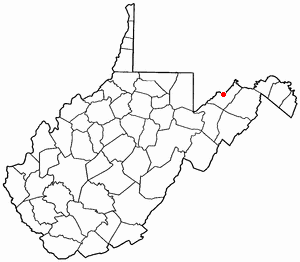
Keyser, West Virginia

Keyser, West Virginia

Frontier Communications’ West Virginia roadshow continued this week as company officials continue to sell the company’s plan to take over telephone service from Verizon across much of the state.  But have they stretched the truth to sell state officials on the deal?

Paul Espinosa, general manager of Frontier, told a West Virginia newspaper the company “prides ourselves in taking good care of our customers,” claiming 95 percent of their current residential customers have broadband Internet.

“In some areas it’s DSL. In other markets we do offer fiber,” he told the Mineral Daily News-Tribune in Keyser.

Keyser, a community of just over 5,000, considers broadband high on its list of concerns.  They want it, but they also want to know it is the kind of broadband that will keep Mineral County competitive, particularly for small businesses that depend on it to reach customers.  The county created a Communications Infrastructure Council (CIC) to review broadband communications options considered vital to the community’s economic development.

Rick Welch, who serves on the CIC,  said the economic future of Mineral County depends upon high speed or fiber-optic Internet and not DSL, or Internet service which utilizes existing telephone lines.

Verizon West Virginia has bypassed the state for FiOS development, which provides a fiber-optic connection to the home, claiming the infrastructure costs are too high at today’s prices to satisfy Return On Investment requirements.  Frontier has never had an ambitious broadband agenda centered on fiber optics.

Frontier traditionally offers 1-3Mbps DSL service in most of the smaller communities they serve.  Frontier’s claim that they are currently providing customers in “other markets” with fiber broadband brings these questions:

  • Exactly where?
  • Under what terms?
  • Is this true fiber-to-the-home service, or simply fiber connected central offices?
  • Are advanced levels of service are provided to these fiber customers, or are the plans, terms, and speeds identical to traditional DSL plans?

If the deal goes through, Frontier would assume ownership of pre-existing Verizon FiOS deployments, but those were proposed and planned by Verizon, not Frontier.

“DSL will not bring anything to Mineral County as far as economic development is concerned,” he said, noting that high technology businesses require far faster speeds than DSL traditionally provides.

A Verizon representative tasked with trying to sell the deal that gets the company out of the West Virginia’s phone business said that something is better than nothing.

“To hear you say that DSL is not the future is troubling,” Verizon’s John Golden said. “If you are without broadband, DSL would be the future.”

The Mineral County Commission was unimpressed with Golden’s statement.  Commission president Wayne Spiggle told the News-Tribune a lot of businesses and those who work from home would not consider coming to Mineral County when they discovered only low speed DSL service available, commonplace more than a decade ago in other areas. Spiggle said real broadband service was essential to attract the kind of businesses Mineral County needs to succeed.

“Our mission and responsibility to Mineral County is to create an entrepreneurial garden, and high-speed broadband is essential to that,” he said.

The Communications Workers of America are also been fighting to warn state and local officials about the gamble West Virginia will take with Frontier Communications.  Considering the last three deals resulted in bankruptcy for all three, it’s a risk the CWA doesn’t think is worth taking.

“Frontier will wind up taking on at least $3.4 billion in debt from Verizon,” said John Johnston, speaking on behalf of the CWA. “Frontier has said they’ll expand broadband, but will they? With $3.4 billion in debt, that’s a lot of money,” he said.

Chuck Fouts, who serves as local CWA president said bankruptcy brings job losses.  “If you go bankrupt, the first thing that goes is people,” he said.

The union says the state should join their efforts to force Verizon to “do what they said they were going to do” and provide a plan to upgrade the state’s telecommunications system to fiber optics.

As it stands, Verizon sees higher returns from cherry-picking more urban areas for its FiOS service, and isn’t willing to provide the kind of universal service throughout its service areas that phone companies have traditionally provided for decades.

“How can Frontier provide the fiber they claim to offer in “other markets” when Verizon’s deeper pockets have thus far been turned out empty for residents in West Virginia?” asks Stop the Cap! reader Hyatt.

Investment firm D.A. Davidson downgraded Frontier’s stock last week, reporting they felt the deal would be bad for Frontier shareholders.

Moving the stock rating back to “underperform,” the firm was skeptical Frontier would be able to pull off the cost-savings it promised as part of the deal.  They also anticipated Frontier will have to finance as much as $3.3 billion of the debt (at 8-9%) it will take on as part of the transaction.  Perhaps more revealing is their prediction that Verizon shareholders who receive distributed shares of Frontier stock will likely dump them as fast as possible, remembering earlier Verizon deals that quickly led to falling stock prices and eventual bankruptcy.  D.A. Davidson warned potential Frontier investors to “at least move to the sidelines” during the anticipated grand sell-off, moving back into the stock only when it bottoms-out.

Verizon’s ‘Blazing Fast’ DSL Speeds Will “Burn Your House Down” So Company Plays Rate Plan Shell Game Instead

Phillip Dampier December 14, 2009 Broadband Speed, Editorial & Site News, Verizon 5 Comments

housefireSometimes the marketing hype associated with broadband products goes just a tad too far.

Michael is a Verizon DSL customer living with Verizon’s $34.99 3Mbps DSL service.  He reported to The Consumerist that a nearby friend in the same zip code was able to get Verizon’s 7Mbps service for $42.99 a month, so he called Verizon to see if he could obtain the same service.

I was told that it wasn’t available at my address, which is in the same zip code, but they sure can offer me 5MB for $49.99. After the run around, I politely declined and left everything be.

[Upon further checking their website] 7MB is available for my address, and for $42.99 with contract! Call #1 ended up me being told that I can in fact get 7MB but for $49.99. I declined and said no thank you. Call #2 told me that 7MB was not available, only 5MB, and it also was $49.99. I declined and called back a third time. Call #3 told me I can upgrade to 7MB but only online as “they have different specials we don’t honor over the phone.” The problem? My address states it has 7MB available… as a NEW account. If I log in my account and choose to upgrade, I can only order 5MB. I call back again, and a couple calls routed me to either the Philippines or India, and I politely hung up in frustration even before I started a conversation.

[…]

At this point I was livid and called to cancel my service.  The woman told me 7MB is absolutely 100% definitely not available for my address. She couldn’t explain why I could order it as a new account but not as an existing customer. The next part takes the cake from every reply I’ve ever heard. I directly asked “why is it I can open a new account with 7MB but I cannot order it as an existing customer?” Her response: “Your home cannot handle the 7MB speed. If I put in the order for 7MB, it will burn your house down.”

Michael was, of course, flabbergasted.  Besides, it’s usually cable installers that set your house on fire.

Verizon’s rate plan shell game guarantees they are always the winner:

“Last night surprisingly I get an email about my Verizon account. My rates are being raised to $36.99 for my current 3MB service.”  Presumably Verizon needs to purchase fire insurance to protect customers from the blazing fast speeds.  Or is that red hot glow coming from customers?

The Consumerist recommends an e-mail carpet bombing of Verizon executives’ e-mail accounts to get someone to resolve his problems.  Here’s a better answer for unresolved complaints regarding Verizon: Call the Verizon Executive Customer Relations office at 1-800-483-7988 and press 3.

Search This Site:

Contributions:

Recent Comments:

Your Account:

Stop the Cap!