What’s In a Name: What is Network TV Branding Really Worth These Days?

Michael Chaney May 22, 2009 Issues 8 Comments

It’s not just the telephone and cable companies that must change and adapt to stay viable in this new era of online video, but the providers of all that great content as well.  Network TV has been engaged in its own battle over the last few of decades to try to maintain its relevance in the cable TV era.  In this time we’ve see the dilution of the network TV brands.  No longer is TV a network-centric market dominated by the big four of ABC, CBS, NBC and FOX, but as the adoption of cable television began to trump over-the-air broadcasting, networks have had to deal with the fact that they are now just one channel among hundreds that viewers have to choose from.

Today network TV has yet another paradigm shift it must adapt to: the convergence of video entertainment and the Internet.  This shift no doubt could further dilute their brand, but this problem didn’t begin with the advent of the Internet or the emergence of content providers such as Hulu and YouTube as some would have you believe.

Do you watch a TV network or a TV show?

Do you watch a TV network or a TV show?

Kevin Wassong contributing editor for paidContent.org wrote on Monday in Memo To Networks Re Hulu: You’re Making A Big Mistake, “the form and function of Hulu is great—but it may also represent the greatest destruction of media value in our lifetime.”  This is a pretty big claim considering the damage that has already been done by cable TV.  I argue that the greatest destruction of media value has come from, to quote Bruce Springsteen, “fifty-seven channels and nothin’ on”.  The problem is being forced to purchase packages of bland, uninteresting content to be able to watch the handful of shows that are worth watching.  Wassong goes on to elaborate:

So how might this represent a massive destruction of media value? Start with the premise that Hulu is creating the Uber-Brand of media, and the networks have simply relegated themselves to being content producers. In essence, the networks have quit. What happened to the value of a network brand?

It became irrelevant.  Back in the day of the big four, network branding was important, or at very least possible.  You gathered the family around the TV in the evening and you had to decide which channel to watch, and if two shows you liked equally came on at the same time, you had to choose one or the other.  In this situation it could very well be the network name that swayed your decision.  When Fox came on the scene it was touted as the “rogue” network, the underdog.  If you wanted to see something edgy that pushed the censorship limits, you watched Fox.  This was an era where network names still carried a connotation of the type of content you would find there.  This is the era Mr. Wassong is still living in:

The value of NBC is not in a show like Heroes or Friends. The value of NBC is the more than 70 years that it has taken the network to create expectations for generations. Expectations that a network will be a leader in comedy or drama or variety or reality programming. The years that it has taken the network to train consumers to expect a level of quality that can’t be matched. NBC has earned my respect. By joining Hulu, NBC is essentially saying there is no value to those three letters.

But in the cable TV era of multi-channel DVRs, a fundamental change occurred.  It DID become all about the show.  I like the shows Survivor and Lost, and honestly, I could care less what network airs them.  If one of those shows were to suddenly flip networks, two clicks and a quick change of my DVR settings and it’s a non-issue for me.  I also hate to burst Mr. Wassong’s bubble, but I’ll let him in on a little secret — all networks have good shows and bad shows, and I don’t have expectations of quality based on any particular network.  I take it on a show-by-show basis.  If I don’t like it, then the scheduled recording gets deleted from my DVR.  The era of network loyalty, if it ever existed, has long since passed.

As Wassong pointed out, some content producers are starting to get it, “…The NFL and MLB have both created their own networks.  The two premier sports leagues have said: We don’t need the networks anymore, and the networks have acquiesced.”  Content producers are now starting to strike out on their own to develop or regain their own branding.  Soon they’ll also discover they won’t need the cable TV companies either.  They’ll be able to offer subscription services that offer streaming HD content over the Internet directly to the consumer with nothing but their brand splattered all over it, without network or cable company dilution.

If networks want keep their brand and stay viable in the future, then relegating themselves to being just content producers is EXACTLY what they should do.  Focus on producing quality shows and explore every distribution channel available.  Broadcasting gave way to cablecasting which is giving way to webcasting. If you want to grow your business, then you also need to be aware of your public image. Online reputation management companies like www.internetreputation.com can also help you maintain a positive image at all times.

Stop the Cap! reader Michael Chaney takes on the issue of online video, an important component of the corporate struggle over who controls the programming and distribution of entertainment in this country.  The collateral damage from online distribution of video content is a driver of broadband usage caps, designed to limit challenges to the cable industry’s traditional video business model.
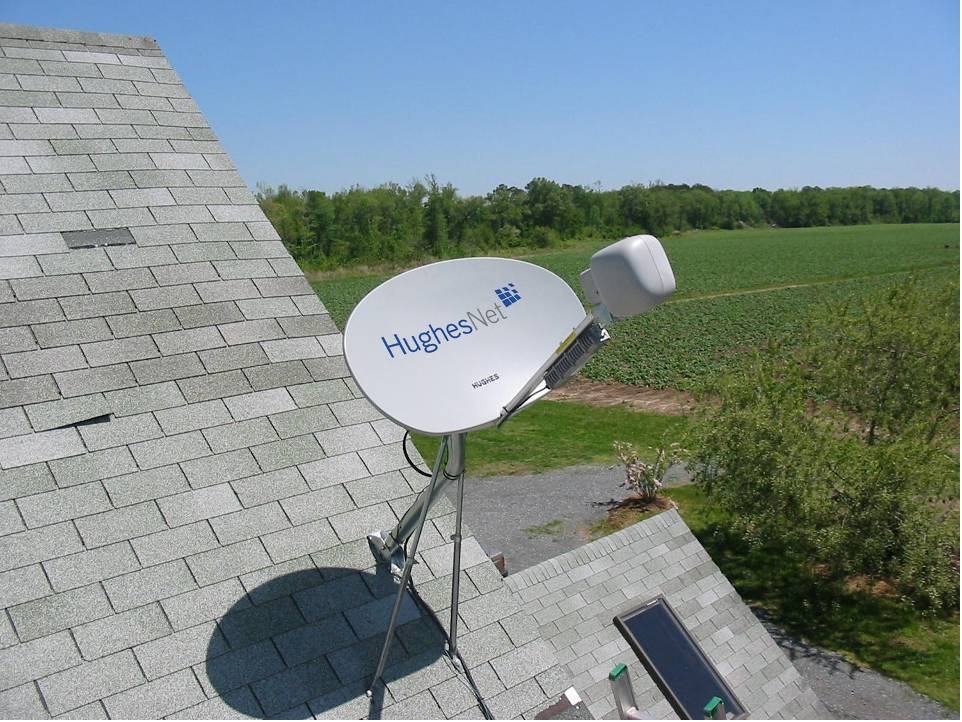

Californians Launch Class Action Lawsuit Against HughesNet for Slow, Capped Service

Phillip Dampier May 21, 2009 Issues 33 Comments

“Broadband is a highly competitive industry in the United States, with many options for customers.”

Despite that mantra from the cable and telephone industry, large sections of the country have two options for broadband service – satellite or nothing.  For an estimated 80,000 Californians, nothing may be a better option.  That number represents the estimated number of state residents locked into a contract with HughesNet for satellite-delivered “broadband” service.  For several years, many customers have been appalled at just how bad HughesNet is at delivering that service, and now several have had enough.

hughesFiled in the Northern District of California federal court in Oakland, a class action lawsuit alleges that HughesNet falsely advertises the quality of its service, particularly regarding speeds it promises but doesn’t deliver, and does not disclose the full extent of the company’s throttling and cap policies.

HughesNet limits customers to a daily limit starting at just 200MB of consumption, and then throttles speed to dial-up or slower for at least 24 hours for anyone who exceeds it.  Repeated instances of exceeding the cap extends a customer’s time in the throttled speed penalty box or can lead to service suspension.

Customers who find they no longer wish to live under this kind of “broadband regime” find escaping the two year service contract expensive, requiring a $400 early cancellation fee.

For millions of Americans, well beyond cable lines or too far away for DSL service, broadband under any terms is an extremely expensive proposition.  HughesNet requires customers to purchase equipment, costing around $300 up front (after a $100 mail-in rebate), including mandatory installation fees.  For just 1.0Mbps service, the monthly cost is around $60 with a 200MB daily limit.  If you want to attempt service at 5Mbps, that will cost $350 a month with a 500MB daily limit.

For HughesNet customers Tina Walker and Christoper Bayless, who instigated the class action suit, even pricing this high wasn’t the reason for filing the suit on behalf of California residents.  It is because speeds promised are speeds rarely delivered.  Many independent reviews of the service agree, with many finding download speeds at 200-300Kbps more typical.

Walker and Bayless also allege the company throttles more than the “few” customers HughesNet claims exceed the daily limits.

By the time customers decide they’ve had enough, they have to spend several hundred dollars to get away from the company, and many are also stuck with useless equipment they had to buy up front.

They are asking for a refund of any early cancellation fees paid in California, an end to the policy that charges them, and more truthful disclosure about the actual level of service HughesNet is capable of providing.

HughesNet defends their service, pointing to a 30 day window for customers to sample the service and decide whether it is right for them, and having the option to cancel during that window with no early termination fee.  Customers are still out the initial investment for equipment and installation, however.  The company does claim that many customers can return their HughesNet equipment and receive a $200 discount off their early termination fee, if they qualify.

But the company also charges an early termination fee for customers it throws off their network.  If you exceed their usage limits too often, they can cancel service and immediately charge your credit or debit card a $400 fee.  If you agree to return the equipment, they will refund $300 of that fee, charging you $100 for making them get rid of you as a customer.

Beyond that, HughesNet does not comment on the specific merits of any lawsuit filed against it.

For rural Americans, any concept of “broadband” service is slow and expensive, with long term contracts, usage caps, and in some cases, expensive overlimit fees.  The three satellite competitors in the United States all require term commitments, and sell their least expensive broadband service at prices urban and suburban residents pay for the fastest levels of service:

StarBand: $299 equipment fee/$50 installation  1Mbps service $69.99/mo – $79.99/mo (1-2 year commitment) — 1,600MB download/400MB upload 7-day rolling limit

Wildblue: $150 equipment fee/$50 installation  512kbps service $49.99/mo (1 year commitment) — 7,500MB download/2,300MB upload 30-day rolling limit

HughesNet: $299 equipment & installation fee, after rebate  1Mbps service $59.99/mo (2 year commitment) — 200MB daily download limit

Cable: ‘Let Us Experiment on You’ (And Your Wallet)

Phillip Dampier May 20, 2009 AT&T 11 Comments

Kyle McSlarrow, president of the National Cable & Telecommunications Association (NCTA), a cable industry trade group, wants cable companies to be able to continue experimenting with metered broadband service.

McSlarrow

McSlarrow

In an interview with Ars Technica, McSlarrow claims broadband pricing experiments aren’t about “gouging” customers or creating even fatter profit margins.  Instead, he claims the cable industry just wants to provide Internet access in a way “that’s best for the consumer.”

According to McSlarrow, there’s no particular rush to pick one business model, and the industry has no “grand plan” hashed out by cigar-smoking executives in clubby back rooms. In his view, though, cable needs to do the experiments to make sure that the Internet survives the coming bandwidth apocalypse.

“As demand goes in a certain direction,” he says, “someone’s going to have to build a network” to deal with “not just instantaneous peak but, more importantly, average peak usage. The whole point is to do it in a way, and to serve your customers in a way, that they have a great experience. If you fail on the network side to do that, particularly with our shared network, that’s a real problem.”

McSlarrow himself enjoys flat rate pricing from his Internet service provider, so he’s not a part of any experiment, nor is he willing to defend Time Warner Cable’s recent attempt to launch metered billing in several cities around the country.  But, he feels that broadband service doesn’t have to come with a single monthly price for everyone, claiming that the “majority” of broadband customers consume so little, they are basically overpaying to support heavier consumers of bandwidth.

McSlarrow, who has ties to the Republican party, having been the national chairman for Dan Quayle’s failed 2000 presidential bid, and has worked for two Senate Majority Leaders — Sens. Bob Dole and Trent Lott, is a firm believer in free markets, with no government regulation.  He also claims the broadband industry is highly competitive, which means market forces will protect consumers from gouging providers.

McSlarrow must have spoken to Ars Technica on Fantasy Island, because that must be where he is living these days.  He certainly doesn’t live in Reno, Beaumont, San Antonio, Rochester, Greensboro, or Austin, where AT&T and Time Warner Cable decided to test their paltry Cap ‘n Tier schemes.  It’s no surprise he wasn’t willing to defend Time Warner Cable, which tried to launch a Money Party at consumers’ expense.  McSlarrow should also know that free market competition without regulation only works when there are competitors — lots of them, offering similar levels of service.  That’s not the broadband industry the majority of America lives with today.

Nate Anderson, who penned the piece for Ars, took a skeptical aim at many of McSlarrow’s claims.  We’re willing to go further and say they don’t represent reality, period.

… Continue Reading

Example #165 of Time Warner Cable “Listening” to Customers

Phillip Dampier May 19, 2009 Issues 16 Comments

I had no idea.  Why was I not informed?  Did I miss the campaign?  Did I miss the protests?

Time Warner Cable has announced it is dropping HDNet and HDNet Movies from its HD lineups nationwide on May 31st.  Was there a clamor for these channels to be tossed off Time Warner Cable lineups?  Multichannel News printed the excuse:

Asked why the company was dropping HDNet’s services, Time Warner Cable director of corporate public relations Robyn Watson said, “There’s a limited appeal for the programming. In a world with more than 100 HD channels, being in HD is not enough. We are adding other channels in HD to give our customers more choice.”

danrather02Folks offended by Dan Rather in HD will be pleased, but those who watch HDNet for their mixed martial arts programming won’t.

Of course, customers really don’t have much choice either way.  The real reason TWC is dropping these networks is that there is a price dispute over what TWC is willing to pay for them.  Mark Cuban, who owns the two networks, apparently wants more than what the bean counters at the cable company are willing to pay, so the channels are gone whether you wanted them or not.

The delightful replacements, which you also didn’t clamor for (and probably never heard of) vary by system.  In Rochester, the Smithsonian Channel and RFD-HD will replace the two channels.  In some other areas, Mav TV will be forthcoming.  How many of you knew any of these channels even existed, much less in HD?

It’s ironic that two networks that were among the first to highlight and showcase high definition programming, and are routinely used in showrooms to show off HD picture quality, are now being banished for the likes of RFD-HD, which shows Hee Haw reruns and the chased-into-obscurity Don Imus.  My only question: who is more frightening to see in crystal clear high definition, Dan Rather or Don Imus?  If Hee Haw circa 1974 didn’t sell you, here are some of the other shows on RFD to consider:

  • cattleMachinery of the Past
  • Fiesta of the Spanish Horse
  • Classic Tractor Hour
  • Big Joe Polka Show
  • Brazil Ag Report
  • Superior Livestock Auction
  • Training Mules and Donkeys
  • Tractor Supply Company Live

Get the popcorn ready.  Get more if you are going to sit through the Livestock Auction.  That runs from 9am-5pm on Friday with no breaks.  That’s a whole lot of bull.

As far as Mav TV goes, it’s billed as “TV created by men for men” and seems to have a core programming requirement that bikini clad models parade across the screen every 15 minutes, and things need to get “blowed up real good.”  I suppose that might look better in HD, but it only reinforces the broader argument that at the same time a cable company wants to convince you to pay for only what you consume online, on the video side where the channels you didn’t care for and didn’t want come and go with little notice, you’re still forced to pay for all of it.

Monday May 18 Afternoon Update

Phillip Dampier May 18, 2009 Editorial & Site News Comments Off on Monday May 18 Afternoon Update

We have continued to make some adjustments to our new theme to accommodate readers and believe we have swatted most of the bugs, particularly those related to images and buttons not functioning properly on certain browsers.  We have also made some changes to help make the site look better for those using lower resolution settings.  Even most netbooks should be seeing some improvement.  We still have work to do on the mobile browsing side, and will be working on that behind the scenes during this week.

I believe the two column format is an improvement for Stop the Cap! and my writing style, so we will be sticking with it going forward.

Readers will notice the right column contains a new “donate” button.  I have been considering how to help defray the expenses of maintaining this site, and what expenses we are likely to have going forward, especially when the Cap ‘n Tier issue rears its ugly head once again.  I intend to begin preparing information for elected officials I can share with them offline, and build our infrastructure and organization to more effectively reach out to affected communities.  That takes some money, which I am spending out of pocket myself at the moment.  If you feel comfortable in helping to defray these kinds of expenses, you can use the donate link which will connect you through Paypal to a donation processing page where you can securely use a credit or debit card.  I will be updating our contact page this week as well with our contact details so one can contribute by mail as well.

The alternative was advertising, and while I don’t have a problem with programs like Google Adsense which don’t pollute the page with all sorts of screen junk, the fact is, I know for certain the contextual advertising programs would throw ads at you for Internet service providers, many on our “naughty list.”  There is no way I am going to promote any provider that is engaged in anti-consumer behavior.  I think it’s important for us to maintain credibility and integrity.  We are an all-consumer group, with no industry or political ties.  Anything that could color or shade that perception is a detriment to our goals.  Therefore, voluntary contributions seems to be the way to go for now.

The “cap” issue has been quiet for the last week or so, and the quantity of new content has dropped a bit here, but that does not mean the issue is at all dead.  I have been working on several projects behind the scenes and laying some additional groundwork to prepare us for the battles to come.  You will see a number of articles coming here which, at first glance, may seem to be slightly off point.  But trust me when I say they are not.  A lot of things written here will connect right back to our issues, and it has been effective to be able to explain to an elected official that we’ve got a track record of following these issues that we can later connect the dots on.

Starting this week, you will see a considerable amount of attention on two issues:

  1. The debacle of FairPoint Communications, an independent telephone company that took over telephone/broadband service for a large part of rural New Hampshire, Vermont, and Maine from Verizon.  They botched it, and are now receiving their own bailout.  FairPoint is a private company that promised wonderful things for a captive population in the upper northeast, and they’ve alienated three states.  The anti-municipal network crowd whines about taxpayer money going to what “should be” a private marketplace.  As we bring you the whole sordid story, we’ll show you why the private sector should never be given a monopoly or a free reign in an uncompetitive marketplace, especially in rural America. Many lessons may also apply to other Verizon customers about to become Frontier customers.
  2. Following the money.  Jay Ovittore is following who got what for what in North Carolina.  This is a lesson every reader here will find easy to learn.  When an elected official suddenly takes an active interest in proposing or supporting legislation against the best interests of voters, there is always a reason for it.  More often than not, that reason comes in the form of a check with a lot of zeros on it.  On our issues, for too long, names have not been named and elected officials have gotten away with it because they figured the voters back home wouldn’t find out.  Those days are over.  We will name names, list amounts, and remind voters come election time who did the right thing, and who didn’t. There are good Republicans, Democrats, and independents on our issues, and there are bad Republicans, Democrats, and independents.  Political parties make no difference — voting records do.

Municipal networks and broadband remains a powerful response for any municipality facing an abusive telephone or cable provider.  That’s why we support them.  Since the majority of them aren’t interested in the game of Cap ‘n Tier for big profits, they are a solution for capped broadband.

Finally, there are a few other story tips we’ve gotten in e-mail that we are also following.  If you are interested in writing something for Stop the Cap! please use the contact form and volunteer.  We welcome new authors here!

Have a great week.

Search This Site:

Contributions:

Recent Comments:

Your Account:

Stop the Cap!