The Series of Tubes Is Already Full/Full/Will Be Full Soon! Log Off… No, Too Late!

The same old fundamental misunderstandings about the Internet that got former Sen. Stevens into so much trouble with his pronouncement that the Internet was a “series of tubes” that were being filled up by commercial providers, which is somehow why we cannot be for net neutrality, comes back time and time again with alarmist rhetoric about exafloods, brownouts, global data slowdowns, and the risk of the collapse of the Internet itself.

Just you wait and see.

And folks have been waiting and seeing since 1996:

How can we be saved from the broadband collapse, drowning in exaflood tidal waves and zetaflood cataclysms when the funeral service was held more than a decade ago?

Using fear to advance a corporate or marketing agenda is hardly a new concept.  Unless we do “x,” “y” will happen and ruin your life has been used along with alarmist rhetoric to justify virtually everything.  For broadband usage capping and metered service, it’s front and center.  In fact, wherever service is lousy with limitations and someone has their hand out looking for more of your money, you can be sure the “clogged tubes” argument is going to be a big part of the snowjob.

Snow isn’t a big problem in Australia, but that doesn’t stop the blizzard of nonsense from showing up down under, where the Internet is a particularly lousy experience for Aussies forced to endure draconian caps from monopolistic providers.  Exceed your caps there and your connection slows to near-dial-up speeds.  Never trust a guy in a ludicrously loud shirt, nor someone who channels Sen. Stevens in calling the whole thing a series of “pipes.”  Maybe Pete Blasina got the shirt from Cisco, who he also conveniently notes is supplying switches to save us from impending doom.  They also happened to supply him with a lot of his talking points.  The bit about YouTube traffic in one month equaling Internet consumption in 2000 came from them.

Duncan Riley (who was the source for the history lesson on exaflood threats) does a fine job debunking the same nonsense we have to endure in North America.

The story is nearly always the same: telcos and infrastructure companies fund research that finds that the latest trend online at the time (audio, video, HD video, P2P, Sykpe and social networking are some previously used) is too much for the Internet to handle. The reasons behind the studies are usually variations on a theme: Government regulation or Government financial support. Which is where we start our story on how Sunrise played a role in the latest outbreak of industry astroturfing.

But how did a primarily American focused astroturfing campaign end up be served to Australians on breakfast television?

The outbreak of “Internet is full” stories this time was remarkably subdued. The last research paper was released in November 2008, which might account for part of the silence, although Sunrise says there’s a new report coming (the contents year to year ultimately deliver nearly the same doom and gloom message.) Given strong coverage of the 2007 outbreak as being an astroturfing campaign, news rooms may have been a little wiser this time round.

Duncan doesn’t realize the Internet is Full Crisis ’09 started last week with the latest Nemertes report we debunked a few days ago as a whole lot of industry-sponsored nonsense.  But it’s remarkable the astroturf campaigns have enough industry cash behind them to push this stuff worldwide.  Duncan’s piece links some other outbreaks of astroturfing so check it out.

Google & Other Big Firms Join Battle for Municipal Broadband

Phillip Dampier May 5, 2009 Community Networks, Public Policy & Gov't 8 Comments

In 2007, when Time Warner and their lobbying friends were up to no good trying to kill off municipal broadband, Google joined the battle to preserve freedom of choice and the powerful tool municipal broadband has to provide communities with advanced services incumbent providers refuse to offer.  The bill died two years ago due to a growing opposition.

In 2009, the cable lobby was back trying to sneak this same bad legislation through once again.  This time, they’ve found some new opposition they hadn’t counted on before:

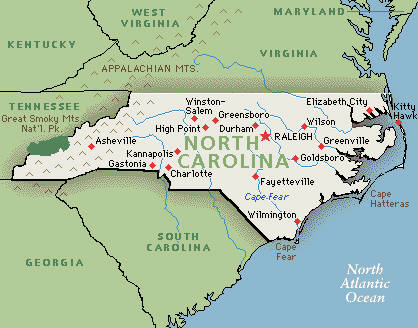
  1. Consumers!  It’s payback time for Time Warner Cable and other companies who sought to abuse their customers with ridiculous rate hikes, usage caps, and tiered access plans nobody wants.  Since they continue to refuse to completely abandon these profit grabbing schemes, ordinary citizens have organized and are willing to fight them on every front where their mischief stands to hurt consumers with higher pricing, reduced choice, and the creation on broadband backwaters.  In North Carolina, where the Triad was victimized with a Time Warner “experiment,” residents are joining forces and telling their elected officials to vote NO on HB 1252 and SB 1004, which are monopoly protection bills designed to thwart competition.  Consumers will remain vigilant until cable drops plans to gouge customers with tiered pricing and caps, in writing, and competes on merit, not on special favors.
  2. Google is back with a letter to the Speaker of the North Carolina House of Representatives, co-signed by consumer advocacy groups and high technology companies who see how much this legislation will stifle North Carolina’s economy and high tech recovery.

… Continue Reading

Truth Squad: Kansas City Star Drinks the Kool-Aid

kaidStoptheCap! must organize a Truth Squad of volunteers willing to confront sloppy journalism, lazy reporters, and Kool-Aid drinking consumers hoodwinked into actually believing that metered pricing is about saving them money instead of fattening broadband provider profits.

Your job: To find press accounts that might as well have been rewritten industry press releases, those that adopt the premise that the provider is pushing, and exposing industry talking points that go unchallenged in the media.  Then the call to action goes out to bombard the reporter with protest e-mail, confront the bias in the reporting in letters to the editor, and pro-consumer pushback in comment sections where the public can learn some facts for a change.

The Kansas City Star utterly failed in its report on Saturday, lapping up industry talking points and presenting them in a myopic view of the future of broadband.  Reporter Scott Canon quoted opposition from one public statement on the Free Press website, one sentence from a group called Knowledge Ecology International, and a sentence from a press release from Rep. Eric Massa (D-NY).  After that, he paddled around the pool with one industry talking point after another.

… Continue Reading

Call to Action – Act Now North Carolina Or Be Stuck With the Same Slow Choices You Have Now

This Wednesday morning, May 6th at 10:00am, the Public Utilities Committee is meeting in Room 1228 of the Legislative building on Jones St. in Raleigh to vote on HB 1252.  HB 1252 is the “Level Playing Field” bill, sponsored by Rep. Ty Harrell (D-Wake County), that would forever tie the hands of municipalities from ever offering better, faster and cheaper broadband Internet for their residents.  The city of Wilson already offers such a service called Greenlight.  After looking at what they offer for speeds and pricing, it will be understandable if you need a few moments for the anger over what you pay the “other guys” to dissipate and for your composure to return.

I am assembling a small army of outraged consumers across North Carolina to attend this critically important meeting and make our views known about HB 1252, which at its core screams anti-competition.  Everyone in North Carolina who cares about the cap issue, metered pricing, or municipal broadband needs to attend this meeting and show our feelings.  Municipal broadband is the safety valve we need to combat usage caps, price gouging, and rationed Internet.

Don’t be the hamster on the wheel spinning around and around in the cage current providers have constructed for our broadband service.  We deserve better, and we can make a difference!  Cable and telephone providers refuse to make the upgrades we demand and deserve.  Without competition, why spend the money to upgrade?  Let them get away with this, and you can be assured of slow speeds and bad service indefinitely.

Make an investment in yourself and your community and come to Raleigh this Wednesday morning.  Let’s demonstrate once again that organized consumers do not have to sit back and simply take what they give us.

When: Wednesday, May 6 10:00AM

Where: North Carolina Legislature Building, 16 West Jones Street, Raleigh (Here is a Google map of the area.)  Room 1228

Additional Information:  Be sure to follow any comments left on this article for last minute updates/information.  There is also a Facebook Group to oppose this bill and get late-breaking news and developments.

Jay Ovittore lives in North Carolina and is coordinating a pushback against corporate sponsored protection bills like HB 1252 and SB 1004 in the state legislature.

An Analysis of HB 1252: ‘The Entrenched Monopoly Protection Act’

j0189616The first fallacy of HB 1252 can be found in its name, Level Playing Field/Cities/Service Providers. Would a level playing field exist where companies like Time Warner Cable and Embarq are exempted from the rules enacted in the bill, because they are private providers? No. The bill states very clearly all of the restrictions are on municipalities, all of the freedom from the restrictions go to private industry. This bill does not create a level playing field – it empties it of municipal projects leaving Time Warner and Embarq exactly where they are today, enjoying the fruits of a duopoly.

What do you think Time Warner would do if they had to follow these rules and regulations? They would fight the bill as anti-competitive, which it is. HB 1252 does one thing very well – preserves the de-facto duopoly for the companies that already provide service.

Sure, you could argue that municipalities could still technically set up service under this bill. But, what taxpayer is going to allow their City Council or County Commission to borrow money like a private business? Prohibited from consideration are bond initiatives and grants from foundations, as well as access to the $4.7 billion in stimulus money from the American Reinvestment and Recovery Act (ARRA), to provide state of the art broadband to underserved parts of our country. So one could say that HB 1252 is prohibiting the Reinvestment and Recovery of North Carolina’s economy.

Congress’ own studies and research shows ARRA funding is critical to the deployment of rural broadband, which simply will exist in no other way. In this part of the country, outside of the largest cities we are are all underserved by cable and telephone broadband providers. What community wouldn’t if the incumbent providers capped and limited usage at radically higher prices.

… Continue Reading

Search This Site:

Contributions:

Recent Comments:

Your Account:

Stop the Cap!