Home » Eric Massa » Recent Articles:

Oregon Senator Introduces Bill Requiring ISPs to Justify Congestion-Related Usage Caps

Wyden

Wyden

Sen. Ron Wyden (D-Ore.) has introduced legislation that would force Internet Service Providers to prove usage caps are designed to manage network congestion instead of monetizing consumer data usage.

The Data Cap Integrity Act would require the Federal Communications Commission to enact new rules forcing providers to justify their usage cap programs, create standards by how ISPs measure usage and to provide useful measurement tools to customers before they incur overlimit fees.

“Internet use is central to our lives and to our economy,” said Wyden. “Future innovation will undoubtedly require consumers to use more and more data — data caps should not impede this innovation and the jobs it creates.  This bill is intended to help consumers manage their data more effectively and ensure that data caps are used only to serve the legitimate purpose of addressing congestion.”

Wyden’s bill is an attempt to force providers to prove their contention that usage limits improve the user experience by preventing so-called “data hogs” from slowing down connections of other paying customers.

Wyden is also concerned that without uniform standards of data measurement, consumers could be blindsided with overlimit fees or even have their service cut off. In the past, providers have stuck customers with a variety of often inaccurate measurement tools that have under or over-reported usage, which can sometimes lead to higher bills. At present, no government agency has authority over the veracity of provider measurement tools, and most ISPs impose terms requiring subscribers to accept their word as final for the purpose of usage measurement.

The Oregon senator’s bill is the first measure regulating usage caps introduced in the Senate. In 2009, Rep. Eric Massa (D-N.Y.) introduced a measure in the House that would have banned most usage caps and usage-based billing without first applying a means test. Massa introduced the bill after Time Warner Cable attempted to impose a usage-billing scheme on customers in his district, which includes parts of the Rochester area.

Among the provisions in Wyden’s bill the FCC must enact and enforce within one year of its passage:

  • A “truth in labeling requirement” that requires ISPs fully disclose the cost of their services, the true upload and download speed a customer will receive, and the presence of any speed throttles or usage limits;
  • A ban on usage caps for any provider that cannot prove they are needed to control congestion and not simply discourage Internet usage;
  • A penalty for providers that either do not provide suitable measurement tools or inaccurately measure usage leading to unjustified overlimit fees;
  • A provider may not exempt certain content from its usage cap while imposing it on others.
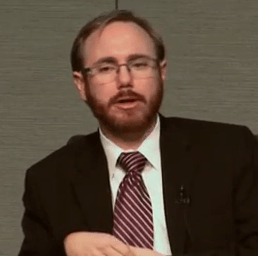
Lyons

Lyons

Wyden’s bill was introduced at the same time the nation’s largest cable lobbying group, the National Cable and Telecommunications Association, sponsored an event defending usage limits and consumption billing. Two of the three experts speaking at the event declared peak usage limits or congestion pricing ineffective.

In fact, Michael Weinberg from Public Knowledge took note of the fact the cable industry now seems to admit it does not have a congestion problem:

“The most refreshing section of the [NCTA’s] study is the one that is not there,” Weinberg wrote. “There is no meaningful discussion of usage-based pricing as a tool to reduce network congestion or a suggestion that monthly data limits are a reasonable way to impact congestion. There is also no invocation of the mythical ‘data hog,’ a sinful creature that can only be punished with data caps. Hopefully, the omission is NCTA’s tacit admission of two things: that cable networks are not congested and, if they become so in the future, monthly caps will do little to address that congestion.

”

“I don’t think congestion is as big a problem in fixed broadband,” said Professor David M. Lyons of Boston College Law School at the NCTA event. “The latest broadband speed surveys that the FCC has come out suggests that there is not a whole lot of slowdown at peak periods on the fixed side.”

Rep. Eric Massa Set to Resign Office Monday; Radio Appearance Answers Numerous Questions About Resignation

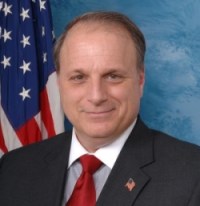
Rep. Eric Massa (D-NY) is expected to resign his seat Monday

Rep. Eric Massa (D-New York), author of the Broadband Internet Fairness Act (HR 2902) — legislation that would ban Internet Overcharging, announced he will resign his office Monday.

In a fast-moving series of events, Massa first announced he would not seek re-election because of health reasons — the congressman faces a renewed battle with cancer, but allegations of ethical violations also surfaced earlier this week which have gotten national news coverage.

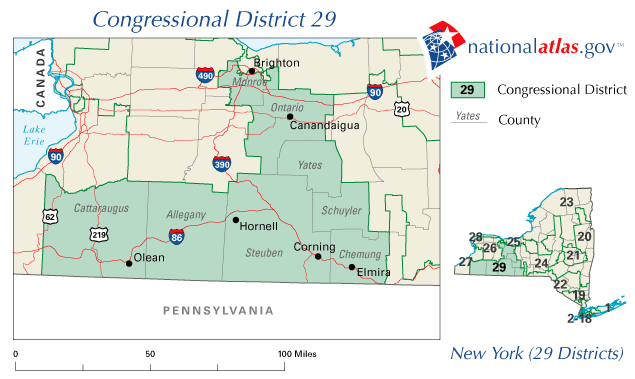
Massa is a first term congressman in New York’s 29th Congressional district, which has traditionally elected Republican candidates to office.  But as the national Republican party has trended further to the right, northeastern Republicans have become an endangered species in Congress.  Former Rep. Randy Kuhl only held onto the seat for two terms before being defeated by Massa in 2008.  Kuhl himself replaced retired congressman Amo Houghton, a long-serving moderate Republican whose voting record often split with the national Republican party on major issues.

Massa’s decision not to run for re-election surprised voters in his district, which runs from suburban Rochester to the Pennsylvania border along the southern tier.  Friday’s sudden announcement he’ll also resign his office effective Monday shocked voters and started a scramble for who might assume Massa’s seat upon his resignation.

The loss of Eric Massa to the Stop the Cap! cause is a concern for broadband consumers.  Massa stepped up to protect consumers from an Internet Overcharging experiment proposed last April by Time Warner Cable, which serves most of his district.  Massa immediately blasted the cable company’s plan to test usage-based billing on residential customers in the Rochester area, which is the only major city in New York State not served by Verizon and its expanding fiber to the home FiOS system.

Massa’s proposed legislation would have banned such schemes unless a company could demonstrate a clear financial need to adopt consumption billing and usage limits.

Thankfully, New York senator Chuck Schumer (D-NY) remains in office, and is the only senator to protest Time Warner Cable’s experiment, and helped end it, not just for residents of western New York, but for residents of Texas and North Carolina as well.

As to the swirling of allegations surrounding Massa, I have no interest in expanding on them here.  You can get a detailed review of the congressman’s views on these issues by listening to a 90-minute radio show aired today on a WKPQ-FM in Hornell, New York.  Today’s show will probably break news because Massa expands in great detail what’s behind the allegations and the reasons for his retirement.

Eric Massa’s regular Sunday show on WKPQ-FM Hornell, NY today discussed his decision to resign his office in great detail. (90 minutes)
You must remain on this page to hear the clip, or you can download the clip and listen later.

As for his replacement, a number of Democrats from both the southern tier and Monroe County/Rochester are considering entering the race.  Massa’s already-campaigning Republican opponent, former Corning Mayor Tom Reed remains in the race.  The Republican county supervisor for Monroe County, Maggie Brooks, is also considering a run.  But so is the former Congressman Randy Kuhl.  “Randy the Dandy” would be the worst possible option.  His undistinguished record and contempt for his constituents makes my skin crawl.  In his last term, Kuhl refused to hold open town hall meetings, instead shepherding constituents in for ‘five minutes with Randy’ where someone took notes and another escorted you out when your time was up.  Nobody should have bothered to take notes — his ongoing lack of concern about what voters in his district thought helped him lose his seat in the first place.  His lack-of-listening tour would fit perfectly with certain cable companies who don’t listen to their customers.  Hopefully, voters will not contemplate a return of Randy Kuhl.  Four years was more than enough.

We’ll be looking for other members of Congress to take up where Eric Massa left off.  I would like to thank Congressman Massa for his hard work on behalf of our cause, as well as helping make a difference on so many other matters important to the voters in his district.  I wish him good health and best wishes.

[flv]http://www.phillipdampier.com/video/Eric Massa Resigns Monday 3-6-10.flv[/flv]

Several television stations announced Rep. Massa’s decision to resign his office Friday in “breaking news” headlines.  This clip has three reports from WETM-TV Elmira, WHAM-TV Rochester, and WENY-TV Corning. (6 minutes)

[flv]http://www.phillipdampier.com/video/Eric Massa Reactions 3-6-10.flv[/flv]

Residents in the 29th congressional district react to Rep. Massa’s resignation announcement, and local politicians jockey for position to potentially run for Massa’s seat.  Three reports are included from WHAM-TV Rochester, WROC-TV Rochester, and WENY-TV Corning. (6 minutes)

A Challenge Providers Will Never Accept: Turn Over Usage Data to Justify Usage Cap Schemes

Phillip "No, I won't take your word for it" Dampier

Phillip "No, I won't take your word for it" Dampier

Did you realize if you are pro-Net Neutrality, you’re probably pro-piracy and a broadband hog?  That’s the new low achieved this past week by Net Neutrality opponents who are spending millions trying to protect their broadband fiefdoms from any regulation.  But even if they lose their fight to stop Net Neutrality when they find consumers won’t accept a throttled “network managed” broadband future, providers will be “forced” to control those dirty pirates and broadband hogs with usage limits and overlimit fees to help “pay for network expansion.”

It’s why Net Neutrality and Internet Overcharging schemes like usage caps and “consumption billing” go hand in hand.  What providers can’t profit from on one end they’ll try from another.

Longtime readers of Stop the Cap! already know how this scam works.  Canadian broadband users got stuck with both: speed throttles -and- usage caps and overlimit fees.  Assuming purposely throttled speeds are banned by Net Neutrality policies, simply under-investing in network expansion, despite the rampant profit-earning capacity broadband delivers, gets us to the same place — throttled speeds from overcongested networks and a convenient excuse to impose usage limits and other control measures to more “fairly” provide service to every customer.  Best of all, providers can pocket the overlimit fees charged to customers who exceed their allowance and train them to use less broadband with fears of more stinging penalty fees on their next bill.

Back in 2008, when Stop the Cap! launched, we challenged providers to provide the raw data to prove their assertions that they needed to impose formal limits and so-called “consumption-based billing” and abandon the lucrative flat rate pricing model that earns them billions in profits every year.  Of course, they have always refused, citing “competitive reasons,” “customer privacy,” or some combination of laws that supposedly prohibits any third party analysis.  Of course, they’re only too happy to characterize usage themselves, and we’re supposed to trust them — the same people that want to use that data to justify Internet Overcharging schemes.  Independent analysis?  When broadband pigs fly!

Now, telecom analyst Benoit Felten from the Yankee Group is asking the same questions on his Fiberevolution blog and issuing a challenge:

So here’s a challenge for them: in the next few days, I will specify on this blog a standard dataset that would enable me to do an in-depth data analysis into network usage by individual users. Any telco willing to actually understand what’s happening there and to answer the question on the existence of hogs once and for all can extract that data and send it over to me, I will analyse it for free, on my spare time. All I ask is that they let me publish the results of said research (even though their names need not be mentioned if they don’t wish it to be). Of course, if I find myself to be wrong and if indeed I manage to identify users that systematically degrade the experience for other users, I will say so publicly. If, as I suspect, there are no such users, I will also say so publicly. The data will back either of these assertions.

Felton’s co-author Herman offers his assessment:

Unfortunately, to the best of our knowledge, the way that telcos identify the Bandwidth Hogs is not by monitoring if they cause unfair traffic congestion for other users. No, they just measure the total data downloaded per user, list the top 5% and call them hogs.

For those service providers with data caps, these are usually set around 50 Gbyte and go up to 150 Gbyte a month. This is therefore a good indication of the level of bandwidth at which you start being considered a “hog”.  But wait: 50 Gbyte a month is… 150 kbps average (0,15 Mbps), 150 Gbyte a month is 450 kbps on average. If you have a 10 Mbps link, that’s only 1,5 % or 4,5 % of its maximum advertised speed!

And that would be “hogging”?

The fact is that what most telcos call hogs are simply people who overall and on average download more than others. Blaming them for network congestion is actually an admission that telcos are uncomfortable with the ‘all you can eat’ broadband schemes that they themselves introduced on the market to get people to subscribe. In other words, the marketing push to get people to subscribe to broadband worked, but now the telcos see a missed opportunity at price discrimination…

TCP/IP is by definition an egalitarian protocol. Implemented well, it should result in an equal distribution of available bandwidth in the operator’s network between end-users; so the concept of a bandwidth hog is by definition an impossibility. An end-user can download all his access line will sustain when the network is comparatively empty, but as soon as it fills up from other users’ traffic, his own download (or upload) rate will diminish until it’s no bigger than what anyone else gets.

Rep. Eric Massa (D-NY) has a better idea to stop Internet Overcharging: the Broadband Internet Fairness Act (HR 2902), which would ban unjustified billing schemes for broadband

Rep. Eric Massa (D-NY) has a better idea to stop Internet Overcharging: the Broadband Internet Fairness Act (HR 2902), which would ban unjustified billing schemes for broadband

The arbitrary nature of what constitutes a “hog” invalidates providers’ arguments at the outset.  Frontier defines a hog as someone who consumes more than 5GB.  Comcast sets their definition of a broadband piggy at 250GB.  The gap between the two is wide enough to allow a small planet to slip through unencumbered.

If a consumer does all of their downloading from midnight to six the following morning, are they as much of a hog on a shared cable modem network as the user watching Hulu during prime broadband usage time?  Probably not.  If a cable provider tries to force too many homes to share the same finite amount of bandwidth available in a designated area, service will slow for everyone during peak usage times.  But nobody will notice or care if customers are maxing out their connection in the middle of the night.  The appropriate answer, especially for an industry that enjoys enormous profits, is to expand their network to maintain basic quality of service at peak times.  DOCSIS 3 upgrades for cable are cost efficient, flexible and often profitable, because providers can market new, premium-priced speed tiers to those who want cutting edge service.

Instead, some providers see delaying upgrades as a better answer, enjoying the cost savings that follow implementation of usage caps, limits and other overcharging schemes which artificially limit demand and further monetize their broadband service offerings.

Unfortunately, even if Felten got responses from providers, he’ll be forced to trust the integrity of data he didn’t collect himself.  Rep. Eric Massa has a better idea.  His proposed Broadband Internet Fairness Act would ban such overcharging schemes unless providers could prove to the satisfaction of a federal agency that such pricing was warranted.  The big difference is that providing “massaged” data to Mr. Felton might be naughty, but would be downright criminal if tried with the federal government.

Shouldn’t the central lesson here be to “trust but verify?”

The Internet Overcharging Express: We Derail One Limited Service Logic Train-Wreck, They Railroad Us With Another

Phillip "He Who Shall Not Be Named" Dampier

Phillip "He Who Shall Not Be Named" Dampier

I’ve tangled with Todd Spangler, a columnist at cable industry trade magazine Multichannel News before.  This morning, I noticed Todd suddenly added me to the list of people he follows on Twitter.  Now I see why.

Todd is back with another one of his cheerleading sessions for Internet Overcharging schemes, promoting consumption-based billing schemes as inevitable, backed up by his industry friends who subscribe and help pay his salary and a guy from a company whose bread is buttered selling the equipment to “manage” the Money Party.

GigaOm’s Stacey Higginbotham and Broadband Reports’ Karl Bode don’t pay his salary, so it’s no surprise he disagrees them.  Oh, and I’m in the mix as well, but not by name.  Amusingly, I’m “the StoptheCap! guy, who’s making a career directing his bloggravation at The Man.”

Todd doesn’t consider himself “an edgy blogger type because, as everyone knows, I am The Man,” he writes.

Actually, Todd, you are Big Telecom’s Man, paid by an industry trade magazine to write industry-friendly cozy warm and fuzzies that don’t rock the boat too much and threaten those yearly subscription fees, as well as your paid position there.  I’ve yet to read a trade publication that succeeds by disagreeing with industry positions, and I still haven’t after today.

Unlike Todd, I am not paid one cent to write any of what appears here.  This site is entirely consumer-oriented and financed with no telecom industry involvement, no careers to make or break, and this fight is not about me.  I’m just a paying customer like most of our readers.

This site is about good players in the broadband industry who deserve to make good profits and enjoy success providing an important service to subscribers at a fair price, and about those bad players who increasingly seek to further monetize their broadband offerings by charging consumers more for the same service.  As one of the few telecom products nearly immune from the economic downturn, some providers are willing to leverage their barely-competitive marketplace position to cash in.

It’s about who has control over our broadband future – certain corporate entities and individuals who openly admit their desire to act as a controlling gatekeeper, or consumers who pay for the service.  It’s also about organizing consumers to push back when industry propaganda predominates in discussions about broadband issues, and we know where we can find plenty of that.  Finally it’s about evangelizing broadband, not in a religious sense, but promoting its availability even if it means finding alternatives to private providers who leave parts of urban and rural America unserved because it just doesn’t produce enough profit.

Let’s derail Todd’s latest choo-choo arguments.

“The idea of charging broadband customers based on what they use is still in play.” — That’s never been in play.  True consumption billing would mean consumers pay exactly for what they use.  If a consumer doesn’t turn on their computer that month, there would be no charge.  That’s not what is on offer.  Instead, providers want to overcharge consumers with speed –and– usage-based tiers that, in the case of Time Warner Cable, were priced enormously higher than current flat-rate plans.  Customers would be threatened with overlimit fees and penalties for exceeding a paltry tier proposed by the company last April.  The ‘Stop the Cap! guy’ didn’t generate thousands of calls and involvement by a congressman and United States senator writing blog entries.  Impacted consumers instinctively recognized a Money Party when they saw one, and drove the company back.  A certain someone at Multichannel News said Time Warner Cable was “taking one for the team.”  At least then you were open about whose side you were on.

“Verizon just wants to make more money by charging more for the same service. What an outrage! It’s not like the company spent billions and billions to build out their network and needs to recoup that investment.” — Recouping an investment is easily accomplished by providing customers with an attractive, competitively priced service that delivers better speed and more reliability than the competition.  Provide that in an era when fiber optic technology and bandwidth costs are declining, and not only does the phone company survive the coming copper-wire obsolescence, it also benefits from the positive press opinion leaders who clamor for your service will generate to attract even more business.  Stacey’s comments acknowledged the positive vibes consumers have towards Verizon’s fiber investment — positive vibes they are now willing to throw away.

Verizon FiOS already gets to recoup its investment from premium-priced speed tiers that are favored by those heavy broadband users.  Most will happily hand over the money and stay loyal, right up until you ask for too much.  Theoretically charging your best customers $140 a month for 50Mbps/20Mbps service and then limiting it to, say, 250GB of usage will be an example of asking for too much.  Verizon didn’t get into the fiber optics business believing their path to return on investment was through consumption billing for broadband.

“Today’s broadband networks — not even FiOS — are not constructed to deliver peak theoretical demand and adding more capacity to the home or farther upstream will require investment.” — Readers, today’s newest excuse for overcharging you for your broadband access is “peak theoretical demand.”  It used to be peer-to-peer, then online videos, and now this variation on the “exaflood” nonsense.  It sounds like Todd has been reading some vendor’s press release about network management.  Peak theoretical demand has never been the model by which residential broadband networks have been constructed.  The Bell System constructed a phone network that could withstand enormous call volumes during holidays or other occasional events.  Broadband networks were designed for “best effort” broadband.  If we’d been living under this the peak demand broadband model, cable modem service and middle mile DSL networks wouldn’t be constructed to force hundreds of households to share one fixed rate connection back to the provider.  It’s this design that causes those peak usage slowdowns on overloaded networks that work fine at other times.

No residential broadband provider is building or proposing constructing peak theoretical demand networks that are good enough to include a service and speed guarantee.  Instead, cable providers are moving to affordable DOCSIS 3 upgrades, which continue the “shared model” cable modems have always relied on, except the pipeline we all share can be exponentially larger and deliver faster speeds.  Will this model work for decades to come?  Perhaps not, but it’s generally the same principle Time Warner Cable is using to deliver HD channels quietly ‘on demand’ to video customers without completely upgrading their facilities.  You don’t hear them talk about consumption billing for viewing, yet similar network models are in place for both.

“Is it fairer to recover that necessary investment in additional capacity from the heaviest users, who are driving the most demand?” Apparently so, because providers already do that by charging premium pricing for faster service tiers attractive to the heaviest users.  But Todd, as usual, ignores the publicly-available financial reports which tell a very different tale – one where profits run in the billions of dollars for broadband service, where many providers Todd feels urgently need to upgrade their networks are, in reality, spending a lower percentage on their network infrastructure costs, all at the same time bandwidth costs are either dropping or fixed, making it largely irrelevant how much any particular user consumes. What matters is how much of a percentage of profits providers are willing to put back into their networks.

Do people like Todd really believe consumers aren’t capable of reading financial reports and watching executives speak with investors about the fact their networks are well-able to handle traffic growth (Glenn Britt, Time Warner Cable CEO), that consumption based billing represents potential increased revenue for companies that deny they even have a traffic management problem (Verizon), or that broadband is like a drug that company officials want to encourage consumers to keep using without unfriendly usage caps, limits, or consumption billing (Cablevision.)

“From 7 to 10 p.m., we’re all consumption kings,” Sandvine CEO David Caputo told Todd. “Bandwidth caps don’t do anything for you.” The implication of this finding is that “the Internet is really becoming like the electrical grid in the sense that it’s only peak that matters,” he added. — I would have been asking Todd to pick me up off the floor had Caputo said anything different.  His bread and butter, just like Todd’s, is based on pushing his business agenda.  Sandvine happens to be selling “network management” equipment that can throttle traffic, perhaps an endangered business should Net Neutrality become law in the United States.  His business depends on selling providers on the idea that sloppy usage caps don’t solve the problem — his equipment will.  Todd has no problem swallowing that argument because it helps him make his.  The rest of us who don’t work for a trade publication or a net throttler know otherwise.

What would actually be fair to consumers is to take some of those enormous profits and plow them back into the business to maintain, expand, and enhance services that deliver the gravy train of healthy revenue.  In fact, by providing even higher levels of service, they can rake in even larger profits.  You have to spend money to earn money, though.

Technology doesn’t sit still, which is why provider arguments about increased traffic leading to increased costs don’t quite ring true when financial reports to shareholders say exactly the opposite.  That’s because network engineers get access to new, faster, better networking technology, often at dramatically lower prices than what they paid for less-able technology just a few years earlier.  With new customers on the way, particularly for the cable industry picking up those dropping ADSL service from the phone company, there’s even more revenue to be had.

Or, do you think spreading the cost across all subscribers, thereby raising the flat-rate pricing for everyone, is the better option? Note that Comcast did this to an extent when it raised the monthly lease fee for cable modems by $2 (to $5), citing costs associated with its DOCSIS 3.0 buildout.

The industry already thinks so.  As we’ve documented, cable broadband providers like Time Warner Cable and Comcast (and Charter next year), are already raising prices across the board for broadband customers in many areas.  Does that mean the talk about Internet Overcharging schemes can be laid to rest?  Of course not.  They want their rate increases -and- consumption based billing for even fatter profits.

If, on the other hand, you want to pretend that all-you-can-eat plans are sustainable at today’s price tiers, you’d be kind of clueless.

Every ISP maintains an Acceptable Use Policy that provides appropriate sanctions for those users who are so far out of the consumption mainstream, they cannot even see the rest of us.  Slapping consumption based billing on consumers with steep overlimit fees and penalties punishes everyone, and the provider keeps the proceeds, and not necessarily for network upgrades.

If Todd believes consumers will sit still for profiteering by changing a model that has handsomely rewarded providers at today’s prices, with plenty of room to spare for appropriate upgrades, he’ll be the clueless one.  The cable industry’s ability to overreach never ceases to amaze me.  Every 15 years or so, legislative relief has to put them back in their place.  It’s what happens when just a handful of providers decide it is easier to hop on board the Internet Overcharging Express and cash those subscriber checks than actually engage in all-out competitive warfare with one another – keeping prices in check and onerous overcharges out of the picture.

Nobody needs to know my name to understand this.  But some of his provider friends already know the names of our readers, because PR disasters do not happen in a vacuum.  They are also acquainted with two other names: Rep. Eric Massa and Sen. Charles Schumer.  If they want to go hog wild with Internet Overcharging schemes, that list of names will get much, much longer.


CNN Mistakes Internet Overcharging for Net Neutrality

Phillip Dampier October 24, 2009 Data Caps, Net Neutrality, Public Policy & Gov't, Video 3 Comments

With all of the discussion about Net Neutrality recently, the mainstream media often has a difficult time absorbing what this concept means and ends up confusing it with Internet Overcharging schemes.  CNN is the latest to make the mistake — not once but twice in three days as Nicole Lapin and Tony Harris discuss how Net Neutrality policies will impact consumers.

Lapin suggests this week’s decision by the FCC to begin writing a formal Net Neutrality policy was a done deal, and that it would prevent Internet providers from charging higher prices for consumers who use their broadband accounts a lot.

Both statements are incorrect.

The FCC is only at the start of writing a formal Net Neutrality policy.  The basic tenets Chairman Julius Genachowski would like to see a part of a formal Net Neutrality rulemaking are on the table, but there is plenty of time between now and a final vote for telecommunications industry lobbyists to sweep several pages from Genachowski’s wish-list to the floor (and replace them with their own.)

Nothing in the proposed Net Neutrality policies would currently prohibit providers from moving to Internet Overcharging schemes like usage allowances, overlimit fees, and other pricing changes that are ultimately designed to reduce usage and extract higher pricing from consumers.

Rep. Eric Massa (D-NY) has a bill to put a stop the Internet Overcharging schemes that continues to need your support and advocacy with your member of Congress.  See the Take Action section for further details.

For the record:

Net Neutrality: A set of policies that prevents Internet providers from discriminating against certain broadband services or website content providers with speed throttles, blocks, or other impediments.  Providers would not be allowed to set up special premium traffic lanes with faster speed delivery of online web content for “preferred partners,” while leaving everyone else on a slower traffic lane.  It preserves the Internet we have today.

Internet Overcharging: Practices by broadband providers to limit usage of your broadband service and/or charge higher pricing based on arbitrary claims that consumers are “overusing” their unlimited broadband service.  These include usage caps or limits, usage allowances, consumption billing that includes usage allowances, overlimit fees/penalties for exceeding those limits, speed throttles that kick in when a user reaches their usage limit, and any accompanying services sold to consumers who think they might exceed their plan allowance (overlimit “insurance” policies, extra usage blocks sold at premium prices, etc.)

[flv width=”570″ height=”324″]http://www.phillipdampier.com/video/2009-10-21-CNN-FCC Net Neutrality.flv[/flv]

CNN’s Tony Harris talks with Nicole Lapin about Net Neutrality, and how the policy impacts small businesses that sell on the web.  (October 21 – 3 minutes)

Earlier today the two revisited the issue of Net Neutrality to explore the outcome of the FCC Net Neutrality decision:

[flv width=”570″ height=”324″]http://www.phillipdampier.com/video/2009-10-23-CNN-Net Neutrality Victory.flv[/flv]

CNN’s Tony Harris and Nicole Lapin discuss the “victory” for Net Neutrality proponents.  (October 23 – 2 minutes)

Search This Site:

Contributions:

Recent Comments:

Your Account:

Stop the Cap!