Cable Internet Providers: We Upgraded Speeds and Hate When Customers Use Them

Phillip "Try the Gouda" Dampier

Welcome to the Broadband Usage Whine & Cheese Festival

Midcontinent Communications earlier this month announced a big boost in broadband speeds for more than 250,000 customers in the Dakotas and Minnesota, bringing up to 100/15Mbps service to customers who wanted or needed that speed.

MidcoNet Xstream Wideband, made possible with a DOCSIS 3 upgrade, delivers 1/1Mbps ($30.95), 30/5Mbps ($44.95), 50/10Mbps ($64.95), or 100/15Mbps ($104.95) service.  Those are mighty fast speeds for an upper midwestern cable company, especially in states where 1-3Mbps DSL is much more common.

The cable provider was excited to introduce the speed upgrades earlier this month, telling customers:

At up to 100 Mbps, MidcoNet Xstream® Wideband is fast. But today’s online experience is about more than speed. It’s about the power and capacity to run every streaming, blogging, downloading, surfing, gaming, chatting, working, playing, connected device in the house. All at the same time. MidcoNet Xstream Wideband delivers…it’s everyone in your entire family online at once, doing the most intense online activities, no problem.

But now there is a problem.  Customers spending upwards of $105 a month for the fastest Internet speeds are actually using them to leverage the Internet’s most bandwidth-intensive services, and evidently Midco isn’t too happy about that.  Todd Spangler, a columnist for cable industry trade magazine Multichannel News, was given a usage chart by Midco, and used it to lecture readers about the need for usage caps: “One thing is clear: Broadband service providers will all need to do something to contain the rapidly rising flood of Internet data.”  The implication left with readers is that limiting broadband usage is the only way to stem the tide.
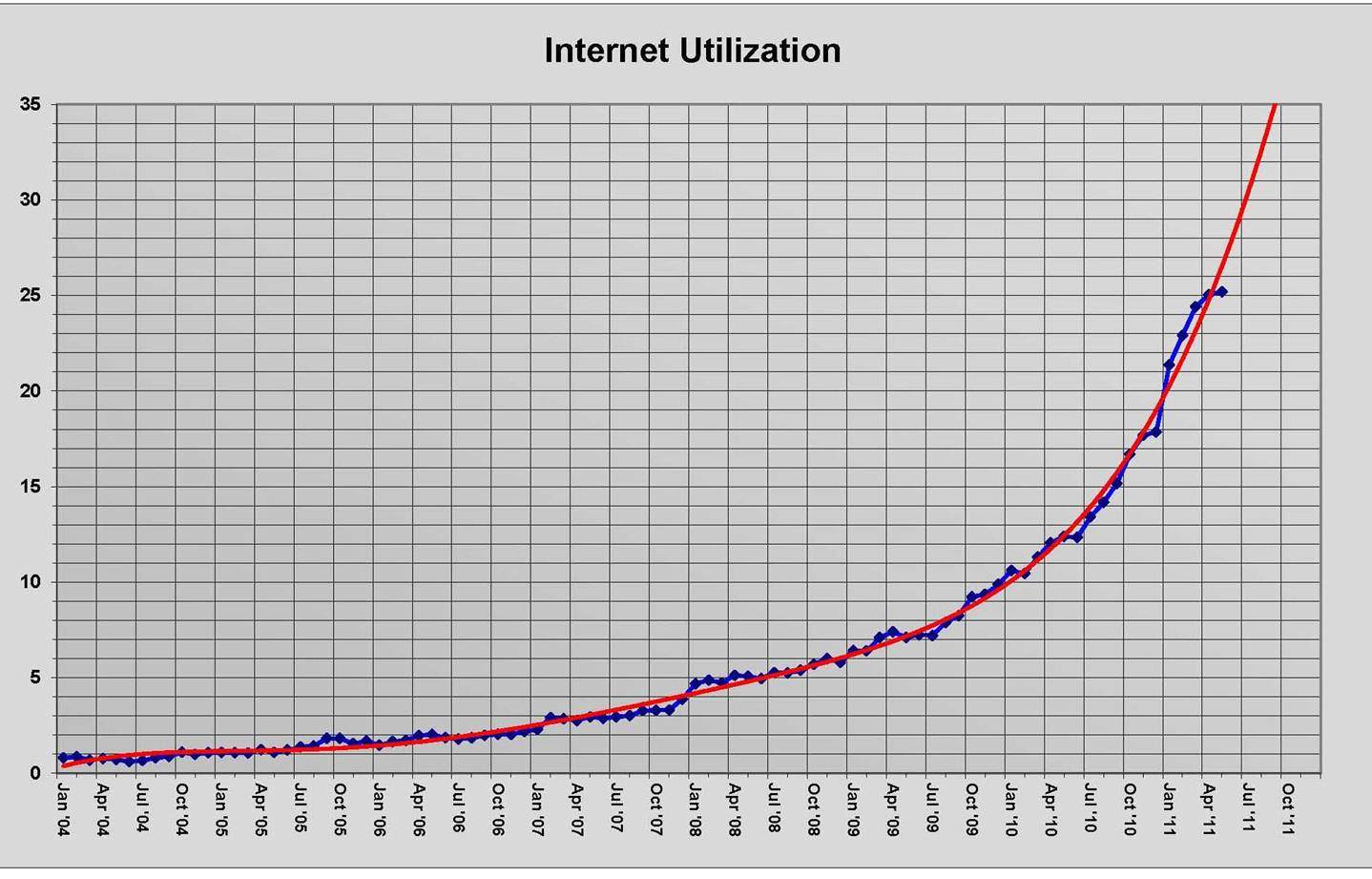
Midco's not-so-useful chart looks mighty scary, showing usage growth on their 100Gbps backbone network, but leaves an enormous amount of information out of the equation. (Source: Midcontinent Communications via Multichannel News)

Spangler quotes Midco’s vice president of technology Jon Pederson: “Like most network providers we have evaluated this possibility, but have no immediate plans to implement bandwidth-usage caps,” he said.

So Midco is more than happy to pocket up to $105 a month from their customers, so long as they don’t actually use the broadband service they are paying top dollar to receive.  It’s an ironic case of a provider desiring to improve service, but then getting upset when customers actually use it.

We say ironic because, from all outward appearances, Midco is well-aware of the transformational usage of broadband service in the United States these days:

If you have ever once said “my Internet is too slow,” then you need MidcoNet Xstream Wideband. With it, you can do all the cool things you’ve heard people are doing online. Explore all the great stuff your online world has to offer. Play the most intense games. Try things you could never do before, from entertainment to finance, video chat or video streaming. Like we said, MidcoNet Xstream Wideband is all about speed, capacity, choice and control.

What this means for you is that you’ll be able to do things like:

  • Download and start enjoying entire HD movies in seconds, not minutes.
  • Stream video and music without a hitch while you simultaneously perform other intense online tasks.
  • Choose from three different pipelines, from 3.0 to 1.0, for the capacity and price your family needs.
  • Monitor your bandwidth use to determine if you need more capacity or can do what you want with less.
  • Upload files or signals, such as webcam footage, faster than ever before possible for a better online experience.
  • Watch ESPN3.com. Your Favorite Sports. Live. Online.

Just don’t do any of these things too much.  Indeed, when providers start toying with usage caps, it’s clear they want you to use your service the same way you did in 2004 — reading your e-mail and browsing web pages.  Real Audio stream anyone?

Let’s ponder the facts Mr. Spangler didn’t entertain in his piece.

Midco upgraded their network to DOCSIS 3 technology to deliver faster speeds and provide more broadband capacity to customers who are using the Internet much differently than a decade ago, when cable modems first became common.  Some providers and their trade press friends seem to think it’s perfectly reasonable to collect the proceeds of premium-priced broadband service while claiming shock over the reality that someone prepared to spend $100 a month for that product will use it far more than the average user.

Part of the price premium charged for faster service is supposed to cover whatever broadband usage growth comes as a result.  That’s why Comcast’s 250GB usage cap never made any sense.  Why would someone pay the company a premium for 50Mbps service that has precisely the same limit someone paying for standard service has to endure?

Cringely

Midcontinent Communications is a private company so we do not have access to their financial reports, but among larger providers the trend is quite clear: revenues from premium speed accounts are being pocketed without a corresponding increase in investment to upgrade their networks to meet demand.  Inevitably that brings the kind of complaining about usage that leads to calls for usage caps or speed throttles to control the growth.

We’re uncertain if Midco is making the case for usage caps, or simply Mr. Spangler.  We’ll explain that in a moment.  But if we are to fully grasp Midco’s broadband challenges, we need much more than a single usage growth chart.  A “shocking” usage graph is no more impressive than those showing an exponential increase in hard drive capacity over the same period.  The only difference is consumers are paying about the same for hard drives today and getting a lot more capacity, while broadband users are paying much more and now being told to use less.  Here is what we’d like to see to assemble a true picture of Midco’s usage “dilemma:”

  1. How much average revenue per customer does Midco collect from broadband customers.  Traditional evidence shows ARPU for broadband is growing at a rapid rate, as consumers upgrade to faster speeds at higher prices.  We’d like to compare numbers over the last five years;
  2. How much does Midco spend on capital improvements to their network, and plot that spending over the last 10 years to see whether it has increased, remained level, or decreased.  The latter is most common for cable operators, as the percentage spent in relation to revenue is dropping fast;
  3. How many subscribers have adopted broadband service over the period their usage chart illustrates, and at what rate of growth?
  4. What does Midco pay for upstream connectivity and has that amount gone up, down, or stayed the same over the past few years.  Traditionally, those costs are plummeting.
  5. If the expenses for broadband upgrades and connectivity have decreased, what has Midco done with the savings and why are they not prepared to spend that money now to improve their network?

While Midco expresses concern about the costs of connectivity and ponders usage caps, there was plenty of money available for their recent purchase of U.S. Cable, a state-of-the-art fiber system serving 33,000 customers — a significant addition for a cable company that serves around 250,000 customers.

A journey through Midco’s own website seems to tell a very different story from the one Mr. Spangler is promoting.  The aforementioned Mr. Pederson is all over the website with YouTube videos which cast doubt on all of Spangler’s arguments.  Midco has plentiful bandwidth, Mr. Pederson declares — both to neighborhoods and to the Internet backbone.  Their network upgrades were designed precisely to handle today’s realistic use of the Internet.  They are marketing content add-ons that include bandwidth-heavy multimedia.  Why would a provider sell customers on using their broadband service for high-bandwidth applications and then ponder limiting their use?  Mr. Pederson seems well-aware of the implications of an increasingly connected world, and higher usage comes along with that.

That’s why we’d prefer to attack Mr. Spangler’s “evidence” used to favor usage caps instead of simply vilifying Midco — they have so far rejected usage limits for their customers, and should be applauded for that.

Robert X. Cringely approached Midco’s usage chart from a different angle on his blog, delivering facts our readers already know: Americans are overpaying for their broadband service, and the threat of usage caps simply disguises a big fat rate hike.  He found Midco’s chart the same place we did — on Multichannel News’ website.  He dismisses its relevance in the usage cap debate.  Cringley’s article explores the costs of broadband connectivity, which we have repeatedly documented are dropping, and he has several charts to illustrate that fact.

You’ll notice for example that backbone costs in Tokyo, where broadband connections typically run at 100 megabits-per-second, are about four times higher than they are in New York or London. Yet broadband connections in Tokyo cost halfwhat they do in New York, and that’s for a connection at least four times a fast!

So Softbank BB in Tokyo pays four times as much per megabit for backbone capacity and offers four times the speed for half the price of Verizon in New York. Yet Softbank BB is profitable.

No matter what your ISP says, their backbone costs are inconsequential and to argue otherwise is probably a lie.

Cue up Time Warner Cable CEO Glenn Britt, who said precisely as much Thursday morning when he admitted bandwidth costs are not terribly relevant to broadband pricing.

We knew that, but it’s great to hear him say it.

Cringely’s excellent analysis puts a price tag on what ISP’s want to cap for their own benefit — their maximum cost to deliver the service:

That 250 gigabytes-per-month works out to about one megabit-per-second, which costs $8 in New York. So your American ISP, who has been spending $0.40 per month to buy the bandwidth they’ve been selling to you for $30, wants to cap their maximum backbone cost per-subscriber at $8.

[...] IP Transit costs will continue to drop. That $8 price will most likely continue to fall at the historical annual rate of 22 percent. So what’s presented as an ISP insurance policy is really a guaranteed profit increase of 22 percent that will be compounded over time because consumption will continue to rise and customers will be for the first time charged for that increased consumption.

This isn’t about capping ISP losses, but are about increasing ISP profits. The caps are a built-in revenue bump that will kick-in 2-3 years from now, circumventing any existing regulatory structure for setting rates. The regulators just haven’t realized it yet. By the time they do it may be too late.

Unfortunately, even if they knew, we have legislators in Washington who are well-paid in campaign money to look the other way unless consumers launch a revolution against duopoly broadband pricing.

Cringely believes usage caps will be the form of your provider’s next rate increase for broadband, but he need not wait that long.  As the aforementioned CEO of Time Warner Cable has already admitted, the pricing power of broadband is such that the cable and phone companies are already increasing rates — repeatedly — for a service many still want to cap.  Why?  Because they can.

Consumers who have educated themselves with actual facts instead of succumbing to ISP “re-education” efforts designed to sell usage limits under the guise of “fairness” are well-equipped to answer Mr. Spangler’s question about whether bandwidth caps are necessary.

The answer was no, is no, and will always be no.

http://www.phillipdampier.com/video/Midco D3 Upgrade Promo 7-11.flv

Jon Pederson’s comments on Midcontinent’s own website promoting its new faster broadband speeds can’t be missed.  He counts the number of devices in his own home that connect to the Internet, explains how our use of the Internet has been transformed in the past several years, and declares Midco well-prepared to deliver customers the capacity they need.  Perhaps Mr. Spangler used the wrong company to promote his desire for Internet usage caps.  Pederson handily, albeit indirectly, obliterates Spangler’s own talking points, which makes us wonder why this company even pondered Internet Overcharging schemes like usage caps in the first place.  (10 minutes)
Share

Digging Deeper Into Time Warner Cable’s Latest Quarterly Report: They Aren’t Hurting for Money

Despite the loss of more than 128,000 video subscribers, Time Warner Cable more than made up the difference with rate increases on equipment, programming, and broadband to score a 23 percent increase in earnings in the second quarter of 2011.  For the period of April-June, Time Warner earned a profit of $420 million, nearly $80 million more than the same quarter last year.

Cable Television

Time Warner CEO Glenn Britt continued to blame the loss of video subscribers on the housing crisis and economy, suggesting the cable operator’s prices have gotten too high for some customers to handle, and they’ve disconnected cable television service as a result.  Britt also continues to downplay the impact of online video allowing for consumer cord-cutting, suggesting instead that increased competition from phone companies and satellite providers are creating a problem online video isn’t.

As a result, Time Warner is refocusing its efforts on marketing packages to three segments it particularly wants to attract — the very well-to-do, the Latino community, and the income-challenged.

Time Warner officials noted that many of their customers have continued to pare back their packages to cushion against the company’s rate increases.  For the last few years, consumers have cut premium movie channels and extra tier add-ons.  Now customers are targeting Time Warner’s DVR service as a route to a lower cable bill.  Many are returning their DVR boxes to save money, or are not keeping the service as a promotion expires.  Time Warner often bundles DVR service into new customer promotions for no additional charge.

For these income-challenged consumers, Time Warner is promising to develop new packages of services at reduced prices.  That likely means the expansion of the company’s “budget tier” — a package of selected basic cable networks, excluding expensive sports programming, currently testing in two markets for around $50 a month.

But the company is also reporting success with its wealthier customers, many who are adopting Time Warner’s super premium Signature Home service, from which the company collects an average of $220 per month per customer.  Time Warner is also ramping up promotion of its cable services to Spanish-speaking audiences in the Latino community — customers it may have under-served in the past.

The company also reported declines in video-on-demand revenue, principally adult pornography pay-per-view content consumers are now watching on the Internet for free.

Broadband

Among the brightest stars for Time Warner Cable continues to be broadband service, which is increasingly important… and profitable for the nation’s second largest cable operator.  With “pricing strength,” Time Warner has successfully adopted a series of rate increases for Road Runner service, increasing revenues along the way.  The company also reports success with its DOCSIS 3 rollouts, now reaching 60 percent of its cable subscribers.  CEO Britt says the cable company expects to complete DOCSIS 3 upgrades nationwide by the end of 2012.  A noticeable percentage of customers are upgrading to premium-priced, faster speed tiers as a result.

Despite the investment in DOCSIS 3, Time Warner Cable continues to slash the amount of capital it is investing in its network.  So far this year, capital expenditures are down 7.4 percent to $1.36 billion.  Chief Operating Officer Rob Marcus predicts Time Warner will spend no more than $3 billion on its systems in 2011, despite plans to continue broadband upgrades and convert their cable systems to all-digital operations.  So far this year, Time Warner has earned over $2.2 billion from its broadband division alone, up 9 percent from last year.  The company attributes most of that growth to rate increases and customers upgrading their service.

Other facts:

  • Time Warner’s wireless mobile broadband has failed to spark much interest from consumers, perhaps because they realize it comes from Clearwire, a company Time Warner CEO Glenn Britt seemed unimpressed with in today’s conference call.  He made a point of telling investors the cable company is under no obligation to invest anything else in the venture;
  • Time Warner Cable is taking a new interest in Wi-Fi, deploying networks in New York and Los Angeles, in the hope the company can boost interest in a “quad-play” of cable, phone, Internet, and wireless broadband/Wi-Fi that consumers have taken a pass on thus far;
  • The company’s new super data center in Charlotte, N.C., will provide a national “head-end” for IPTV video, currently supplied from a facility in Denver.  This will principally benefit iPad users using the company’s app to stream online video.  The company hopes to eliminate regional and local distribution efforts as a cost-savings measure, consolidating national distribution through Colorado and North Carolina;
  • The company’s next version of TWCable TV — the aforementioned iPad app, is due out in a few weeks and will include text searching for individual shows.  Whether it corrects the ludicrous inability for the app to consistently stream video is another question;
  • Competition for new customers has been responsible for a number of disconnects.  One satellite provider is pitching Time Warner customers on a $30 a month video package that includes the NFL Sunday Ticket for free.  Verizon FiOS has increased its marketing of Time Warner customers, offering its own triple-play package for $99 a month.  AT&T U-verse has their own triple play packages as low as $89 a month, with a substantial mail-in rebate offer good for over $100.  But Britt warns the lack of change in the “average revenue per subscriber”-numbers from competitors probably means consumers are paying substantially more thanks to fine print-surcharges and fees;
  • Time Warner is still trying to sign agreements for its TV Everywhere project, particularly for HBO Go, but the terms are evidently still not acceptable to the cable company.

Our earlier coverage, seen below, covers Britt’s remarkable comments about usage-based pricing.  He was certainly off the usual industry playbook today, even going as far as telling investors what we knew all along: bandwidth costs bear almost no relationship to the prices charged for broadband service.  That’s one we’ll tuck away and remember.

Time Warner Cable CEO Glenn Britt highlights the results from the second quarter, covering cable-TV, broadband, and other products. July 28, 2011. (6 minutes)
You must remain on this page to hear the clip, or you can download the clip and listen later.

Share

Time Warner CEO: “Bandwidth Costs Are Not Terribly Relevant to Broadband Pricing”

Another remarkable admission from Time Warner CEO Glenn Britt came at the end of today’s investor conference call.  In response to claims by some cable companies of incremental bandwidth costs running 40-50 cents per gigabyte (a number we strongly dispute at Stop the Cap! for being at least ten times too high), Britt made the debate over bandwidth costs moot by saying they really don’t have anything to do with how Time Warner Cable prices its broadband service.

“I think that the conversation about usage based pricing should not be tied to a conversation about costs,” Britt said.  “This is not a rate of return regulated monopoly industry like AT&T was before 1984.  We have a lot of different products, a lot of different offerings and we’re aiming at different segments and different combinations and the pricing will relate to that.  This is not a strict cost-base thing so those facts are interesting but not terribly relevant to pricing.”

That clears that up quite nicely.  We’ll be sure to remember that should the cable company revisit its customers with another Internet Overcharging scheme blamed on bandwidth hogs.

Time Warner Cable CEO Glenn Britt is asked what Time Warner Cable is paying for bandwidth costs. Britt said the question is largely irrelevant, because those costs have almost nothing to do with how the company prices its broadband service. July 28, 2011. (1 minute)
You must remain on this page to hear the clip, or you can download the clip and listen later.

Share

Time Warner Cable’s Glenn Britt: “There Should Remain an Unlimited Use Plan” for Internet

Britt

On this morning’s conference call for investors, Wall Street continued to pound Time Warner Cable CEO Glenn Britt about when the company would introduce an Internet Overcharging scheme for broadband customers in the form of so-called “usage based billing.”

This quarter, the pressure came from Deutsche Bank’s Doug Mitchelson, who used the occasion to remind Britt he called usage pricing “inevitable” and wanted to know when the company was going to get the ball rolling on the pricing scheme.

Britt was unprepared to answer, other than to make comparisons about his “inevitable” remark with wireless carriers, who have said the same thing about the end of unlimited use plans in wireless, a different technology.

After following Britt’s public statements for more than two years about this subject, we detected a moderating view.  Britt told investors he believes “there should remain an unlimited plan for those who want to buy that,” and suggested Time Warner Cable might not be interested in applying usage pricing on every level of its broadband service.  That could be good news, so long as Britt doesn’t believe the price of “unlimited” should be the $150 a month the company proposed in 2009.

“We’re more focused on affordability and lower income people who might be light users and might seek to pay less because they use less,” Britt said. “That’s a much better context than the usual ‘oh those people using all the bandwidth’ and caps and all that stuff.”

Britt added he doesn’t anticipate having caps across the board.

Mitchelson explained in a follow-up question why Wall Street is interested in the adoption of usage pricing – an increase in “ARPU growth” — the average revenue earned from each broadband customer in the form of more expensive usage plans.

Britt acknowledges what Stop the Cap! has predicted all along — ARPU growth can be realized instead from subscribers upgrading to faster speed tiers, which carry higher costs.  Britt told Mitchelson he, and other investors, can get the ARPU growth they crave by looking at those numbers instead of earnings from usage based pricing.

How long before Wall Street demands both speed-related ARPU growth and extra earnings from usage pricing is an open question, but Britt’s latest remarks represent a significant shift in attitude about pricing broadband, potentially because the company has a new found appreciation for the limited capability of customers to keep opening their wallets to pay higher and higher cable bills.  That was clearly in evidence as the company tried to explain another quarter of declining cable TV customers, many forced out of the service because of its high cost.

Time Warner Cable CEO Glenn Britt answers a question about usage-based pricing from Deutsche Bank’s Doug Mitchelson, just one of a parade of Wall Street banks pushing broadband providers to adopt Internet Overcharging to increase profits. July 28, 2011. (2 minutes)
You must remain on this page to hear the clip, or you can download the clip and listen later.

Share

Time Warner Cable Will Abandon Analog Cable Within 5 Years – Converting to All-Digital Systems

Phillip Dampier July 28, 2011 Consumer News, Time Warner Cable 9 Comments

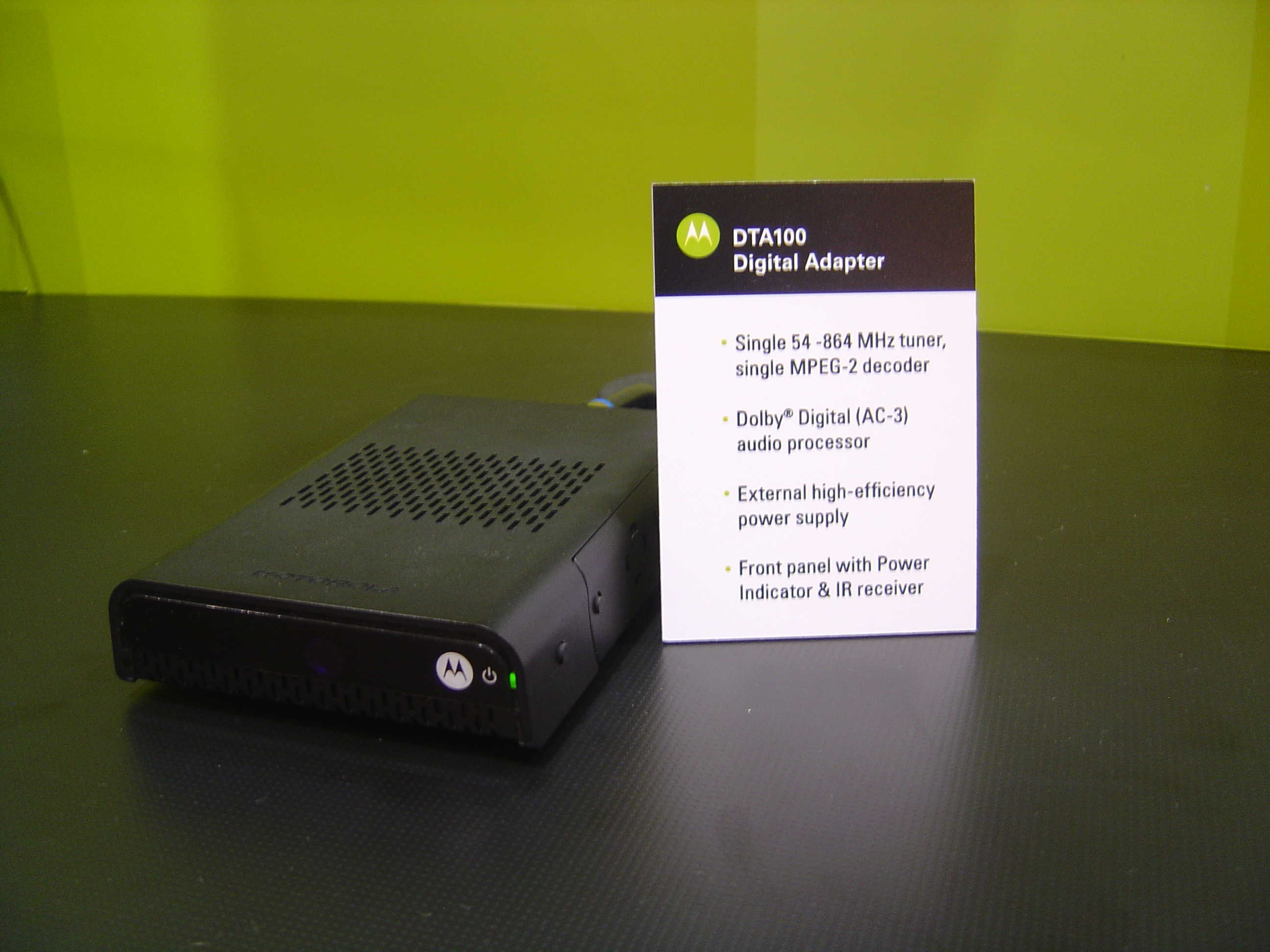
This digital transport adapter from Motorola is commonly installed on secondary television sets, such as those found in bedrooms, offices, or the kitchen to ensure reception of digital cable television channels without the size and expense of a traditional cable set top box.

Time Warner Cable has announced it will cease analog cable television service within five years, as the cable company embarks on a wholesale transition to all-digital cable.

The announcement came from CEO Glenn Britt during this morning’s investor conference call, and represents a major transition for the cable operator and its customers.

While Time Warner Cable already runs older digital cable systems in New York City and parts of Los Angeles, today’s announcement represents the company’s de-emphasis on Switched Digital Video (SDV), the technology the cable operator initially supported to free up channel space on its systems.  SDV allowed Time Warner Cable to maintain analog cable lineups for consumers who detest cable set top boxes.  Instead of converting the entire lineup to digital, Time Warner changed the way it delivered certain digital cable channels, only sending their signals to viewers in neighborhoods actually watching them at the time.

“We always said we would supplement switched digital video with going all-digital,” Britt said. “Our plan is to migrate all systems to all-digital over the next five years.”

The decision means Time Warner Cable has opted to follow Comcast’s lead towards all-digital systems, instead of trying to support both analog and digital video.

Britt said the company’s first target city for the all-digital switch is Augusta, Maine.  Customers there will be given the choice of taking the cable company’s traditional set top box or new Digital Transport Adapters (DTAs), devices which convert digital signals into standard definition analog video, suitable for televisions where customers may not need or want a full-powered cable box.  DTAs have traditionally been given away in small numbers or rented for a nominal fee (usually under $2 a month) by other cable operators like Comcast.  But Time Warner has not made any specific announcements about pricing for impacted subscribers just yet.

When complete, every Time Warner cable subscriber will need to have either a cable box, a DTA, or CableCARD for every cable-connected television in the home.

Share

Verizon’s Home Control System Looks Better Than the Actors Used to Promote It

Phillip Dampier July 28, 2011 Consumer News, Verizon, Video 1 Comment
http://www.phillipdampier.com/video/WPXI Pittsburgh Verizon Unveils New Home Control Service 7-25-11.flv

Verizon’s home control and automation system is set to debut in Pittsburgh where Verizon FiOS is available.  WPXI-TV was invited to a training session for Verizon employees, where they were taught about the new service with the help of Verizon-hired actors.  Suffice to say, the new technology was more impressive than the actors hired to promote it.  (2 minutes)

Share

Shaw’s Online Movie Club: Bargain or Bust?

While Netflix has grown like wildfire across Canada, providing unlimited streamed video entertainment for $8 a month, a few cable operators at risk of premium channel cord-cutting have responded with their own movie streaming services, at least one that temporarily found itself the subject of controversy when it was introduced a few weeks ago.

Shaw Communications’ Movie Club is that cable company’s answer to Netflix — offering a flat rate streaming service available over broadband or through your Shaw set top cable box for $17 a month ($12 if you forgo HD movies).  For that, Shaw promises unlimited viewing, without any usage caps so long as you stream movies from your cable box and not from your home computer.

But is it worth it?

With the assistance of one of our readers in Calgary, we were able to give Shaw’s Movie Club a trial run.

Availability

Evidently, Shaw Movie Club works best if you live in Calgary or Edmonton, where Shaw has been testing their new “Gateway” system, which is a combination home video terminal/DVR designed to compete with phone company DVR boxes which can record 4-6 shows simultaneously and deliver recordings to multiple sets in the home.  A number of Shaw customers on less-advanced, older cable systems may find the service a lot less convenient to use.  Outside of urban Alberta and in British Columbia, we found instances where customers could request to view Shaw Movie Club titles, but they had to be watched on your cable set top box.  For now, the most aggressive marketing for the service seems to be in Calgary and Edmonton, perhaps for this reason.

The Selection

When we sampled the service, we found about 150 titles available for viewing — hardly a wide selection.  Although many popular, semi-recent movies were available for viewing, the selection was comparable to what one would find from one or two premium movie channels.  Existing premium subscribers may find more than enough to watch from Super Channel or Movie Central On Demand, which are included with your subscription to one or both networks.  In the States, HBO, Cinemax, and Showtime all offer their own virtual “on-demand” channels that let viewers select most of the titles shown on each respective network for instant, on-demand viewing.  Shaw Movie Club felt very much like one of these channels, based on the limited selection.

In comparison, Netflix does not make it easy to count the actual number of streamed movies they have on offer at any one time, but the selection was clearly more substantial on Netflix, with a much deeper catalog.  But Canadians are also punished by Netflix because the service does not yet have agreements in place with studios to stream the same titles to both American and Canadian audiences.  Americans have a much larger selection of titles to stream.  Shaw’s agreements with studios clearly emphasize more current titles, and there are titles available on Shaw’s service that are not available from Netflix.

Winner: Netflix – You have a better chance of finding something to watch on Netflix.

Loser: Shaw Movie Club – But the service may have access to movies you wish Netflix provided.

Shaw's biggest competitor

The Value

At up to $17 a month, Shaw Movie Club is expensive.  In fact, it’s a lot more expensive if you do not subscribe to Shaw’s cable television.  It’s required to sign up for the streaming service.  That seems counter-intuitive to provide video streaming but deny broadband-only customers the opportunity to buy, but not when you consider such services are designed to prevent cable-TV cord cutting, not enable it.  Shaw charges nearly $40 in Alberta for basic cable service, so that’s a steep entry fee to pay before handing over another $12-17 just to stream movies.

For those uncomfortable video streaming on home computers, Shaw’s set top box solution lets you watch shows on-demand directly on your television.

Shaw initially found itself mired in controversy when it appeared they would exempt their video streaming service from their own usage caps — a clear anti-competitive move against Netflix, which does count against your cap.  But Shaw quickly clarified their position to state only set top box viewing was exempt from their caps.  We’re not certain exactly what distinction Shaw is trying to make beyond the political, because data is data — it all arrives on the same cable.  Shaw would argue their video may travel over their “television” bandwidth when delivered to set top boxes and their broadband network when delivered over the Internet.  But Time Warner Cable has shown it can deliver video over its Apple iPad app to cable subscribers over Time Warner’s internal network, which means it costs next to nothing to provide.  We suspect there is nothing technically precluding Shaw from exempting all of its Movie Club viewing from usage caps, beyond the political implications of doing so.

Winner: Netflix – $7.99 a month is an afterthought when you consider how much you can watch.

Loser: Shaw Movie Club – Up to $17 a month is a very steep price to pay for fewer than 200 movie titles to watch.

Video Quality

Both services delivered high quality video, even over a remote connection we used to sample Shaw Movie Club.  Shaw’s HD streaming performed with absolutely no technical flaws, evidence they are paying careful attention to deliver video from networks as close to their customers as possible.  Shaw’s HD streaming was often better than Netflix’s online streaming, but Netflix’s network consumes a lot less bandwidth, an important distinction if you have a large family piling on your broadband connection at the same time.  Shaw’s video is a bandwidth piggy, and will eat into your usage allowance fast if you use it over the Internet.

We recommend watching Shaw’s service over your existing set top box whenever possible.  It’s convenient and won’t count against your usage allowance.

A Tie: Netflix and Shaw Movie Club both deliver excellent quality video with no technical flaws experienced.  Shaw Movie Club has a larger selection of HD movies, but that is tempered by the fact watching them will rapidly erode your usage allowance if watching online.

Share

Wireless Plan Could Force TV Stations Off the Air in Upstate NY, Detroit, and Seattle for Verizon & AT&T

Over the air television in Detroit if the NAB is correct.

The National Association of Broadcasters is warning a Congressional plan proposed on behalf of the wireless industry could force every broadcast station in Detroit off the air, and drive at least one network affiliate in many northern U.S. cities along the Canadian border to “go dark” if the plan is adopted.

The FCC’s National Broadband Plan contains provisions now on Capitol Hill to recapture spectrum currently used by free over-the-air television stations and provide it to wireless providers to bolster mobile broadband and cell phone networks.  Lawmakers expect the wireless industry will pay up to $33 billion for the lucrative spectrum, to be shared with vacating broadcasters and the U.S. Treasury.

But the NAB says the FCC plan goes too far, forcing stations to vacate UHF channels 31-51 to crowd into the remaining channel space of 11 VHF channels (2-13) and 17 UHF channels (14-31).  According to a study conducted by the broadcasting lobby, there is simply not enough remaining channel space to accommodate 1,735 U.S. stations, forcing at least 210 to sign off, permanently.

Because of agreements with the Canadian government to protect American and Canadian stations from mutual interference, the results could be devastating for northern cities along the U.S.-Canadian border.  The worst impact would be in Detroit, Michigan where the NAB predicts every local station would have to leave the airwaves.

The cities of Buffalo, Seattle, Syracuse, Cleveland, Spokane, Rochester and Watertown, NY and Flint, Mich. would likely lose at least one major network affiliated-full power station each.  At least 73 stations in the top-10 largest television markets would be forced off the air, unable to find appropriate channel space in the remaining available spectrum.  Hundreds of stations would be forced to change channels and potentially reduce power and coverage areas to protect stations sharing the same channel number in adjacent cities.

“If the FCC’s National Broadband Plan to recapture 20 more TV channels is implemented, service disruption, confusion and inconvenience for local television viewers will make the 2009 DTV transition seem like child’s play,” said NAB President Gordon Smith. “NAB endorses truly voluntary spectrum auctions. Our concern is that the FCC plan will morph into involuntary, because it is impossible for the FCC to meet spectrum reclamation goals without this becoming a government mandate.”

Broadcasters are feeling a bit peeved at the federal government for repeatedly returning to sell off a dwindling number of channels for other uses.  The original UHF dial included channels 14-83, but over the years the highest channel number has dropped to 51, mostly for the benefit of the cell phone industry.  Now they’re back for more, seeking channels 31-51 for wireless broadband and mobile telephony.

The cell phone industry wants broadcasters to “voluntarily” give up their channel space and reduce transmitter power so more stations can share the same dial position in nearby cities.  But that could leave fringe reception areas in rural communities between cities without over-the-air television reception, and make free television more difficult to watch without a rooftop antenna.

The NAB called on the FCC to immediately make public its analyses of the broadband plan’s potential negative impact on viewers of free and local television.

“We’ve waited patiently for over a year for FCC data on how the Broadband Plan impacts broadcasters, and more importantly, the tens of millions of viewers who rely every day on local TV for news, entertainment, sports and lifeline emergency weather information,” said the NAB’s Smith. “Even Congress can’t get information from the FCC. All we are seeking is more transparency. We have but one chance to get this right if we are to preserve future innovation for broadcasters and our viewers.”

http://www.phillipdampier.com/video/NAB Free TV Spot.f4v

The National Association of Broadcasters is distributing this ad to local broadcasters to air on their stations to inform viewers about the spectrum controversy.  (1 minute)

The consumer wireless handset lobby does not deny the plan will leave Americans with fewer channel choices, but they believe that will come from corporate station owners voluntarily shutting down stations for profit.

“The study presumes an unrealistic scenario in which every single existing TV station continues to operate over-the-air. However in the event of incentive spectrum auctions, it is highly likely numerous stations will capitalize on their spectrum assets by exiting the business or sharing resources,” said Consumer Electronics Association senior vice president for government affairs Michael Petricone.

Petricone believes the number of Americans spending time with broadcast television is dwindling, and less important than the wireless industry’s spectrum woes.

“Our nation faces a crisis as demand for wireless spectrum will soon outstrip supply,” said Petricone. “Meanwhile, the number of Americans relying purely on over-the-air TV is less than 10 percent, according to both CEA and Nielsen market research. Incentive auctions would be a financial windfall for broadcasters, free up the spectrum necessary for the next generation of American innovation to move forward and bring in $33 billion to the U.S. Treasury.”

The cellular industry’s top lobbying group CTIA was more plain: it’s survival of the fittest.

“Since spectrum is a finite resource, it is vital that the U.S. government ensures the highest and best use of it,” said CTIA vice president Chris Guttman-McCabe.

http://www.phillipdampier.com/video/NAB Explains Spectrum.flv

The NAB explains the concept of “spectrum” — or ‘the airwaves’ to consumers and what a major reduction in UHF channel space would mean for “free television.”  (3 minutes)

Share

Fox: You’ll Have to Wait 8-Days to Watch Our Shows Online, Unless You Are a Pay TV Subscriber

Phillip Dampier July 27, 2011 Consumer News, Online Video 9 Comments

News Corp.’s Fox television network has announced it will erect a pay wall that will delay access to popular Fox shows for eight days after airing… unless you are an authenticated cable-TV or other pay television subscriber.

The announcement is the first among the major broadcast networks to keep cord-cutters and those who don’t pay for their television entertainment from conveniently watching shows online.  With most Fox shows formerly available for free on Hulu one day after airing, many viewers simply watch programs online, enjoying a reduced number of commercials along the way.

Now, viewers will have to wait a week before those shows become accessible.  Or, they can pay Hulu $7.99 a month for a Hulu+ subscription and watch right away.  Or sign up for cable television.

The pay wall will be introduced Aug. 15 and was constructed at the behest of the nation’s largest cable, phone, and satellite companies to stop consumers from watching shows online for free.  Local Fox stations don’t mind the change either, if it means you will watch your favorite shows on local stations instead of a national website.

Michael Hopkins, Fox’s president of affiliate sales released a statement explaining the change was designed to “enhance the value” of cable, satellite, and telco-TV subscriptions.  Cable companies have been upset about paying retransmission rights fees for Fox’s local affiliate stations, only to see the network give away programming, for free, online.

Hopkins

“We’re concerned that cord-cutting is going to be a problem,” Mike Hopkins, Fox’s president of affiliate sales, said in an interview with the Wall Street Journal. “The more you enable it by putting content out there for free without any tether to a pay-TV subscription, the bigger that danger becomes.”

If Fox is the first broadcast network to erect a pay wall, it likely won’t be the last.  Disney’s ABC is exploring adopting a similar strategy, and CBS had withheld much of its programming from online ventures precisely because it believes it dilutes the value of its shows.  It will likely favor a similar pay television approach.

For consumers, the details of how the pay wall will work could become problematic depending on their pay television provider.  DirecTV is quickly working to keep free access to Fox shows for its subscribers after the pay wall takes effect.  But some cable companies like Time Warner Cable have dragged their feet on TV Everywhere online projects, and subscribers, even with cable TV packages, could still find themselves locked out behind the wall, unless they also have a Hulu+ subscription.

The risk of annoying viewers by keeping them away from their favorite shows could easily spark a renewed interest in piracy.  With a commercial newsgroup account, access to peer-to-peer software or file storage sites like Rapidshare or Megavideo, bypassing the industry’s pay-walls is as easy as finding the shows viewers want to watch, legally or otherwise.

Share

T-Mobile Introduces Family Plan Savings AT&T Merger Would Crush

While T-Mobile isn’t bashing AT&T in advertising as badly as it did before the announced proposition of a merger between the two companies, T-Mobile is still calling out AT&T’s high mobile prices with innovative new service plans that can deliver substantial savings for consumers — savings that will evaporate if AT&T swallows the company whole.

Take this week’s introduction of T-Mobile’s new Family Mobile Unlimited Plans, which deliver unlimited texting, calling, and 2GB of throttle-free “4G” (HSPA+/HSPA+42) data for as low as $69.99 per line (two-line minimum), which is just shy of $140 a month before taxes and fees.  Comparable plans from AT&T run $99.99 per line — a $30 difference.  A two year contract is required.

Although T-Mobile is pitching these plans as delivering “unlimited data,” in reality their speed throttle kicks in on some of them after 2GB of usage per month.  While customers will not experience bill shock from overlimit fees common with AT&T and Verizon Wireless, they won’t actually get an unlimited data experience like the one Sprint still delivers on its unlimited data plans.

Additional lines are available for $20 a month with 500 calling minutes and 200MB of data usage, or $40 a month each to upgrade to unlimited talk (but keep the same 200MB usage allowance for data.)

T-Mobile is pitching these plans to value-conscious families who live on their phones.  While other providers let you pool calling minutes on Family Plans, each phone usually has to also select any additional added-cost features like data and texting.  T-Mobile is bundling some of these features into the sale price.

AT&T told investors the merger would bring about higher revenue and cost savings.  Not having to respond to T-Mobile’s aggressive price competition by lowering its own prices is one great way to achieve this.

That means higher prices for everyone.

Share

Search This Site:

Contributions:

Recent Comments:

  • txpatriot: I agree that a bad POTS line will be less likely to support DSL than a good POTS line....
  • john h: the FM radio band is not used in broadcasting for anything other than FM radio. With outside interference a problem for cable plants the free up bandw...
  • Jeremy: Keep it up Crime Warner, Google will soon be a competitor of yours here in KC and then I can dump your internet and atrocious cable/cable box....
  • Mileena: Welp, just let us know when we have to start protesting......
  • Phillip Dampier: I love the industry argument that network builds in rural area just don't make sense. But they still manage to fund lobbying campaigns to keep munici...
  • Phillip Dampier: Verizon FiOS is deregulated. In fact, both Verizon and AT&T have fought for the ultimate in "hands off" telecom regulation: the statewide franchise f...
  • Phillip Dampier: I am more convinced than ever Genachowski is not going to stay as chairman during a second Obama administration. He was angling for a position at the ...
  • Phillip Dampier: You are evidently a new reader here. Service complaints, outages, and policy changes for TV, broadband, and phone service have all been covered here f...
  • Phillip Dampier: I think I answered your question. I don't have any problem with customers being able to roam on cable Wi-Fi networks. You are the one using the wor...
  • Scott: Last I checked Marriott and Cadillac dealerships weren't essential services that affect citizens access to public online services, education, and gene...
  • Jordan Kratz: Genachowski is just as Corrupt as the rest of this Government.Within 5 - 20 years i am more and more believing a real revolution or a complete falling...
  • Jeremy: "It just depends on who has his ear the most." It's definitely not us little American consumers....

Your Account: