Saginaw, Mich.: Another Wireless ISP Faces Down Usage Growth By Implementing 5GB Usage Limit

A wireless ISP (WISP) serving parts of Michigan and eastern Iowa has informed customers that due to their enthusiastic use of the Internet, the company was slapping a 5GB monthly usage limit on customers effective Feb. 1.

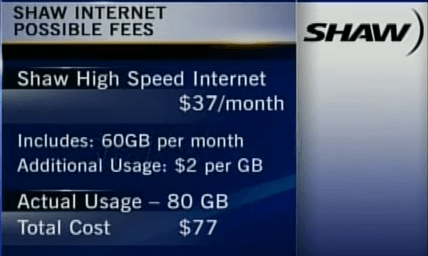
SpeedConnect, based in Saginaw, Mich., informed customers in a letter that those who exceed the company’s new usage limit face a penalty overlimit rate of $2.00 per gigabyte.  An alternative 200GB “Platinum” monthly usage plan, including phone service, was also announced for $69.99 per month.

That’s a steep rate increase for customers accustomed to receiving around 3Mbps download x 384Kbps upload speeds for $39.95 per month.

Too much for our reader Greg, who says he has been a SpeedConnect customer for the last decade.

“Ouch,” Greg writes.  “I’m changing ISPs over this.”

Company officials blame the usage limits on usage growth.  The company’s letter states, “[growth] is forcing us to make substantial upgrades to our networks and to rethink the way we provide service to our customers.”

Now customers will rethink using SpeedConnect for their Internet access.

SpeedConnect's letter to customers.

SpeedConnect’s attempt to collect upgrade funds from their customers, which the company admits are increasingly turning to broadband for home entertainment and information, comes at the same time the company had no trouble dipping into the kitty to buyout CommSpeed of Arizona’s 2.5GHz spectrum holdings and customers based in Eastern Iowa.

Saginaw, Mich.

AT&T DSL is one alternative.

The same CEO that signed the letter telling customers to use less of their service or pay dramatically more was thrilled about “the exciting new chapter” its merger/acquisition would open.

“The completion of this acquisition is a significant event for our customers, communities, investors, and employees,” said John A. Ogren, President and Chief Executive Officer.

Saginaw residents are not well-served by AT&T, which has left major gaps in the economically-stressed region’s broadband coverage options.  We had a hard time finding landlines in Saginaw and nearby townships pre-qualified for AT&T DSL to offer a price comparison.  After much searching, we discovered AT&T heavily markets DSL Pro ($35/$19.95 new customer promo price for one year) which delivers 3Mbps/512kbps service, or Elite ($40/$24.95 new customer promo price for one year) which offers 6Mbps/768kbps service to those who -can- get the service.

AT&T’s Pro plan delivers comparable speeds at lower prices than SpeedConnect charges, all with no usage limits.  Users seeking higher speeds can use them without fear of overlimit penalties or a $70 broadband bill using AT&T’s Elite DSL plan.

SkyWeb is the other.

Greg also notes he has another wireless option, as do many residents and business across central Michigan’s Tri City area, from SkyWeb, which delivers wireless access at speeds ranging from 3-10Mbps.  The company does not limit usage and offers new customers a month of free service.  A comparable package of services from SkyWeb at 3Mbps is priced $10 less than what SpeedConnect charges.

Wireless ISPs have unique problems trying to keep up with usage demands:

  1. Many are individually owned and operated and lack sufficient capital to invest in required upgrades to meet today’s Internet multimedia reality;
  2. Many WISPs serve rural areas where growth opportunities are often limited;
  3. A few very heavy users could create significant strains on a wireless network that is not infinitely expandable;
  4. The arrival of competition from telephone, cable, or even cell-phone wireless data plans can present a major threat to the business plans of some providers.
http://www.phillipdampier.com/video/WNEM Saginaw Air Advantage Broadband Grant 9-2010.flv

WNEM-TV covered Air Advantage, another regional WISP that won a broadband stimulus grant last fall to expand wireless access in mid-Michigan.  (2 minutes)

Share

Time Warner’s Telephone Tragedies Continue in NY/Mass. – 3rd Problem This Month (Get Credit!)

Phillip Dampier January 19, 2011 Consumer News, Time Warner Cable, Video Comments Off

If you are a Time Warner Cable “digital phone” customer living in New York or western Massachusetts, you can get a few dollars of your money back thanks to serious outages that have plagued the cable company for the past two weeks.

The worst problems occurred yesterday, when customers across the entire region couldn’t make or receive calls in many instances.

“My wife said it was like the whole system crashed,” reports Stop the Cap! reader Marcus, who lives near Syracuse.  “A lot of people here are very upset.”

Marcus reports he couldn’t even work around the outage by trying to set up call forwarding to send calls to his cell phone or another Voice Over IP provider.

“I tried to forward my Time Warner calls to a Vonage number I have and that didn’t work either,” Marcus writes.

We heard from several readers in Rochester, Albany, Syracuse, and even into western parts of Massachusetts that calling a Time Warner Cable customer from a cell phone or a landline from Verizon or Frontier was nearly impossible without getting a recording or busy signal.

Small business customers using Time Warner’s phone service were also impacted in some cases.

Lakeview Deli in Saranac Lake posted a message on its Facebook page just before noon, advising its customers to call in their lunch orders using a cell phone number because of the problems with its main phone line. Owner John Van Anden said he normally gets 30 to 40 calls around the lunch hour; he got only four on Tuesday.

“It hurt (business) quite a bit just because you can’t get phone calls from customers,” he said.

The outage, which lasted more than 12 hours, was reportedly finally fixed by the cable company last evening at around 11pm.  No explanation for the outage was given by Time Warner Cable.

This is the third major service problem for Time Warner’s phone service this month:

  1. Time Warner misdirected 911 emergency service calls to a call center in Colorado;
  2. Time Warner underestimated call volumes, leaving customers in central New York with “all circuits are busy” recordings or busy signals;
  3. Yesterday’s collapse of Time Warner’s phone network.

“Wow, this is starting to make Frontier look good again,” says our Rochester reader Kevin.  “I’ll be dropping my phone service with the cable company when my promotion ends and sticking with my Verizon cell phone.”

With all of these service outages, you know what that means — it’s time to go grab those service credits.  Customers in central New York can apply for at least a week of service credits because of the ongoing problems the company faces handling call volumes.  Everyone else in the region with “Digital Phone” service qualifies for a day’s worth of credit.  But you won’t get it unless you ask.  We’ve made asking simple, with our cut and paste process:

Stop the Cap! Presents Your Easy Service Credit Request Menu

Customers in the northeast can request one day of credit for yesterday’s phone outage.  Residents in central New York, including Syracuse — can ask for one week of credit for ongoing call congestion problems.

Sample Request You Can Cut and Paste:

I am writing to request one day service credit for the phone service outage that occurred in my area yesterday, Tuesday Jan. 18th. Please credit my account.

[Central NY Residents ONLY]: I am writing to request a credit for one week of telephone service to cover the company’s ongoing intermittent call connection problems in our area as well as yesterday’s (Jan. 18) more widespread service disruption.  I am concerned about the repeated problems Time Warner seems to be having in correctly servicing my telephone needs.  Please credit my account.

Use the Online E-Mail form, select Billing Inquiry, and send a message requesting credit.

http://www.phillipdampier.com/video/WSYR Syracuse Another Phone Outage 1-18-11.flv

WSYR-TV in Syracuse is spending plenty of time covering Time Warner’s phone outages and other problems.  Here’s the fourth report this month, covering yesterday’s widespread problem. (Warning: Loud Volume) (2 minutes)

Share

FiOS TV Rate Hike in Indiana: “It’s Not Just a Price Increase, It’s an Offer,” Says Frontier Exec

Talk. Watch. Surf. Cancel. -- Major price increases on the way for Frontier FiOS customers in Indiana.

When is a rate increase not just a rate increase?  When it’s also “an attractive offer.”

Frontier Communications is getting heat from consumers in Fort Wayne, Ind., with news their Frontier FiOS TV bill will skyrocket $12-30 higher in the coming month.

To distract from the disaster-in-the-making, Frontier representatives are waving shiny keys to customers preparing to depart, trying to “upgrade” Indiana residents back to satellite TV.

Don Banowetz, president of Frontier’s Midwest division, told Fort Wayne customers he was personally excited by the satellite offer, because customers can get free programming services for the remainder of 2011, a $700 value according to Banowetz.

“It’s not just a price increase, it’s an offer — a quite attractive offer,” Banowetz told INC Now.

Frontier is also pitching a free 32-inch “web-capable” digital television for customers signing an extended length contract.

Frontier says these televisions are going to revolutionize the way Americans watch TV over the next five years, and they believe their offer will be well-received by customers.

Not so much.

"It's not just a price increase, it's an offer!"

“I’ll bet their letter will leave out the part about how Frontier rations the Internet to their customers,” writes Fort Wayne resident Irv, who has been closely following Frontier’s Internet Overcharging antics in the Sacramento area.  “Will the coin slot be on the top or side of their television, because after you start watching, you’ll have to start paying.”

Frontier has sent letters to customers in Minnesota and California demanding up to $250 a month for residential broadband access because they used the company’s DSL service “too much.”

“Who wants to sign a two or three contract with Frontier, raise your hands,” Irv asks.  “They have just destroyed their FiOS TV service in Indiana — my fingers couldn’t dial the cable company fast enough as I take my business somewhere else.”

Another Fort Wayne resident — Nick Behm, has been following Stop the Cap! ever since Verizon announced it was selling Ft. Wayne’s phone lines to Frontier.

“You guys had this company nailed — Indiana’s regulators should hire you folks and some other actual consumers to review these deals before they get rubber-stamped, because Frontier is going to put themselves out of business and risk landline service throughout our area,” Behm writes.  “How can you ruin a fiber service that sells itself?  Let Frontier run it.”

Neither Behm or Irv will be taking up Frontier’s offer, although Behm still has a term contract of his own — with Verizon.

“I am protected from Frontier’s cash grab for several more months, so at least I have time to prepare for the forthcoming cancellation — bye, bye Frontier.”

http://www.phillipdampier.com/video/INC Now Ft Wayne New Charges for Frontier Customers 1-18-11.mp4

INC Now delivers the bad (and according to Frontier – good) news to Fort Wayne, Ind., FiOS TV customers — your rates are going up as much as $30 a month.  (1 minute)

Share

Calling All ‘Test My ISP’ Participants (And Those Who Want to Be)

Phillip Dampier January 18, 2011 Broadband Speed, Editorial & Site News 12 Comments

Netgear's N300 Router

Test My ISP is a project underway in cooperation with the Federal Communications Commission and SamKnows, a broadband testing firm that has an excellent record in the United Kingdom, where it has been testing ISP claims vs. actual performance for a few years now.

Some of our readers decided to enroll in the ongoing speed test after reading an earlier article about the project, and it appears some of our readers have started receiving their test equipment — a Netgear N300 (WNR3500L) Gigabit Wireless Router — this week.

They are still accepting volunteers, and getting approved to participate appears to be easier than one might think (although it may be several weeks before you hear back).  All they ask is that you install their equipment in place of, or in tandem with your existing router, and allow it to “call home” occasional speed measurement results (which you can also monitor yourself) from time to time.  At the end of the three-year program, participants get to keep the wireless N router.

If you are a participant, we’d love to hear about your experiences in our comment section.  Have you been able to see the results of your own tests?  How do they compare with the speeds ISPs claim you will get in their marketing?

By the way, some reviews on the router are spotty, with the most frequent problems being:

  • Limited range wireless
  • Wireless connection drops frequently, requiring reset
  • Auto-configuration does not work well
  • Support comes from an Indian call center that never deviates from a script

Share your thoughts in the comment section.

Share

Michael Copps: Why I Voted “No” on Comcast-NBC’s Merger Deal

Copps

A Statement from FCC Commissioner Michael Copps: The Lone Dissenter in Today’s 4-1 Decision Approving the Merger of Comcast and NBC-Universal:

Comcast’s acquisition of NBC Universal is a transaction like no other that has come before this Commission—ever. It reaches into virtually every corner of our media and digital landscapes and will affect every citizen in the land. It is new media as well as old; it is news and information as well as sports and entertainment; it is distribution as well as content. And it confers too much power in one company’s hands.

For any transaction that comes before this Commission, our statutory obligation is to weigh the promised benefits against the potential harms so as to determine whether the public interest is being served. There are many potential harms attending this transaction—even the majority recognizes them. But all the majority’s efforts—diligent though they were—to ameliorate these harms cannot mask the truth that this Comcast-NBCU joint venture grievously fails the public interest. I searched in vain for the benefits. I could find little more than such touted gains as “the elimination of double marginalization.” Pardon me, but a deal of this size should be expected to yield more than the limited benefits cited. I understand that economies and efficiencies could accrue to the combined Comcast-NBCU venture, but look a little further into the decision and you will find that any such savings will not necessarily be passed on to consumers. When they tell you that at the outset, don’t look for lower cable or Internet access bills. As companies combine and consolidate, consumers have seen their cable bills out-strip the Consumer Price Index by orders of magnitude.

Many of the new commitments that have been added aim no higher than maintaining the status quo. The status quo is not serving the public interest.

It is also claimed that the duration of the commitments made by Comcast-NBCU are longer than any that have been attached to previously-approved mergers. That may be true—but it is also true that power is patient and that big businesses can bide their time when they have to in order to reap the fullest harvest.

While approval of this transaction was from its announcement the steepest of climbs for me, given my long-standing opposition to the outrageous media consolidation this country has experienced over the past few decades, I did meet with stakeholders on all sides to make sure I understood their perspectives on the matter. And I worked to develop ideas to minimize the harms and to advance at least some positive public interest benefits. I know my colleagues worked assiduously on this proceeding, too.

Commissioner Clyburn, for example, worked successfully to achieve commitments from Comcast-NBCU to improve diversity, expand broadband deployment in unserved areas and increase broadband adoption by low-income households. The Chairman and his team, led by John Flynn, and many, many other members of the FCC team put more effort into this transaction than I have seen put into any transaction during my nearly ten years here at the Commission. I also salute the unprecedented cooperation between the agency and the Department of Justice.

Comcast's Online Toll Plaza

But at the end of the day, the public interest requires more—much more—than it is receiving. The Comcast-NBCU joint venture opens the door to the cable-ization of the open Internet. The potential for walled gardens, toll booths, content prioritization, access fees to reach end users, and a stake in the heart of independent content production is now very real.

As for the future of America’s news and journalism, I see nothing in this deal to address the fundamental damage that has been inflicted by years of outrageous consolidation and newsroom cuts. Investigative journalism is not even a shell of its former self. All of this means it’s more difficult for citizens to hold the powerful accountable. It means thousands of stories go unwritten. It means we never hear about untold instances of business corruption, political graft and other chicanery; it also means we don’t hear enough about all the good things taking place in our country every day.

The slight tip of the hat that the applicants have made toward some very limited support of local media projects does not even begin to address the core of the problem. Given that this merger will make the joint venture a steward of the public’s airwaves as a broadcast licensee, I asked for a major commitment of its resources to beef up the news operation at NBC. That request was not taken seriously. Increasing the quantity of news by adding hours of programming is no substitute for improving the quality of news by devoting the necessary resources. Make no mistake: what is at stake here is the infrastructure for our national conversation—the very lifeblood of American democracy.

We should be moving in precisely the opposite direction of what this Commission approves today.

There are many other facets of the joint venture that trouble me. I worry, for example, about the future of our public broadcast stations. Comcast-NBCU has committed to carry the signals of any of those stations that agree to relinquish the spectrum they are presently using. Will public television no longer be available to over-the-air viewers? And, what happens when the duration of this commitment has run its course? Might the public station be dropped to make room for yet more infotainment programming? In too many communities, the public television station is the last locally owned and operated media outlet left. Public television is miles ahead of everyone else in making productive, public interest use of the digital multi-cast spectrum licensed to it.

Why in the world would we gamble with its future?

While the item before the Commission improves measurably on the program access, program carriage and online video provisions originally offered by the applicants, I believe loopholes remain that will allow Comcast-NBCU to unduly pressure both distributors, especially small cable companies, and content producers who sit across the table from the newly-consolidated company during high-stakes business negotiations for programming and carriage. Even when negotiations are successful between the companies, consumers can still expect to see high prices get passed along to them, as Comcast-NBCU remains free to bundle less popular programming with must-have marquee programming. Given the market power that Comcast-NBCU will have at the close of this deal over both programming content and the means of distribution, consumers should be rightfully worried.

In sum, this is simply too much, too big, too powerful, too lacking in benefits for American consumers and citizens. I have respect for the business acumen of the applicants, and have no doubts that they will strive to make Comcast-NBCU a financial success. But simply blessing business deals is not the FCC’s statutorily-mandated job.  Our job is to determine whether the record here demonstrates that this new media giant will serve the public interest. While I welcome the improvements made to the original terms, at the end of the day this transaction is a huge boost for media industry (and digital industry) consolidation. It puts new media on a road traditional media should never have taken. It further erodes diversity, localism and competition—the three essential pillars of the public interest standard mandated by law. I would be true to neither the statute nor to everything I have fought for here at the Commission over the past decade if I did not dissent from what I consider to be a damaging and potentially dangerous deal.

Share

Analysis: Comcast-NBC Wins FCC/Justice Dept. Approval; Will Own 1 Out Of Every 7 TV Channels

Does today's decision assure the birth of Comzilla, ready to destroy anything or anyone in its path, or is it the next colossal big media deal flop worthy of AOL-Time Warner?

The wedding of Comcast and NBC-Universal was given the blessings of two federal agencies today that all but seals the multi-billion dollar deal.

In a 4-1 decision, the Federal Communications Commission approved the merger.  It’s chairman, Julius Genachowski, claimed it would ultimately be good for consumers as the company promised to add at least 1,000 hours of news and information programming and a new ultra-budget “lifeline” broadband tier priced at $9.95 per month for low-income families.

The lone dissenter, Democratic commissioner Michael Copps, rejected notions that a combined company the size of Comcast, which controls more than a quarter of all cable subscribers, and NBC-Universal, a major media company, would deliver anything to consumers.

“It’s too big. It’s too powerful. It’s too lacking in benefits for American consumers,” Copps said after the FCC vote to approve the merger. “And it continues us down a road of consolidation we’ve been on for a couple of decades now.  And the most threatening part about it is that this is not just traditional media, but it’s new media, too. It touches just about every aspect of our media environment.”

National Public Radio’s ‘All Things Considered’ gave measured coverage to today’s Comcast-NBC merger developments, and how it will impact consumers. (3 minutes)
You must remain on this page to hear the clip, or you can download the clip and listen later.

Indeed the combined Comcast-NBC will own or control one of every seven television channels and networks seen by Americans.  Copps worries that kind of media concentration is sure to reduce diversity in programming and on-air voices.

Even worse, some analysts predict the merger could trigger a new wave of media consolidation as other players try to maintain their positions in the media marketplace.  Second-place Time Warner Cable could begin looking for merger opportunities with smaller cable companies, such as Cox, for example.

Just about an hour after the FCC gave approval, the Justice Department and five states’ Attorney General announced a tentative settlement that could resolve concerns that the transaction was anti-competitive.

http://www.phillipdampier.com/video/WNYW New York Comcast FCC Approval 1-18-11.flv

WNYW-TV in New York reported on today’s merger decision and explained how Comcast customers, and online video fans, could be impacted.  (3 minutes)

The Terms & Conditions

Two different federal agencies insisted on Comcast’s agreement to several terms and conditions before agreeing to the deal.  Many of them presented no problem for Comcast, who had voluntarily agreed to several of them early on in negotiations.  But the Justice Department delivered one of the strongest conditions, and a first for online video protection — it insisted the new combined entity of Comcast-NBC bow out of its voting rights in Hulu, the online video service.

No Playing Favorites: Comcast has to agree that if it carries its own news and business channels, it has to include competitors on the same tier.

Since Comcast-NBC has ownership interests in so many news, sports, and weather channels, making space for the competition was considered crucial by federal regulators.  The cable company can’t bury its competitors in Channel Siberia, or stick them on “digital tiers” that are priced higher than standard cable service.  Who wins?  Bloomberg News, rarely found even by cable viewers who go looking, and the very low-rated Fox Business Channel, which can’t attract 30,000 viewers on a good day.  Both will find prominent positions on Comcast Cable going forward, even if nobody watches.

Cheap Internet Access for Qualified Families: Comcast has agreed to provide a “lifeline” broadband service, but only for families pre-qualified by federal eligibility for free school lunches.

No word on what speeds these customers will receive, and Comcast estimates the program will barely make a dent in its bottom line.  It is expected to reach only around 400,000 homes nationwide, and only as long as those subscribers remain eligible under federal guidelines.  No free lunch for broadband.

Standalone Internet Service Must Be Provided: Comcast must sell at least a 6Mbps broadband plan without cable or telephone service for $49.99 a month for three years.

Since Comcast already routinely sells standalone broadband service to customers at around this price, this was hardly a concession.  Comcast can still pile on extra fees, such as their overpriced cable modem rental, and any other charges that could be mandated by federal, state, or local government in the future.  They can also keep their usage caps.

Comcast must agree to the FCC’s Homeopathic Net Neutrality Rules:  Comcast has to agree to the FCC’s heavily-watered down definition of Net Neutrality… the ones Comcast itself suggested.

Since the FCC largely caved-in to Big Telecom’s lobbying against Net Neutrality, Comcast’s agreement to adhere to what the FCC calls Net Neutrality won’t present any problems, because those terms were similar to what Comcast had asked for all along.  Their “digital phone” service is exempted, which means Comcast can “manage” competing Voice Over IP services at its pleasure.

Evidence That PBS Has A Lobbyist, Too — Special Favors for Public Broadcasting: Public television stations win carriage protection from Comcast “for several years.”

In an effort to free spectrum, PBS stations could be pressured to give back some channels or reduce their transmitter power to free up UHF frequencies for more wireless broadband.  Should this happen, Comcast has agreed to keep those stations on their cable systems as if nothing changed at all.  It assures stations that even if their broadcast coverage areas are reduced, their cable carriage will stay the same.

Binding Arbitration Comes to Buyers of Comcast-owned Networks:  If a cable system or other provider runs into trouble getting an agreement with Comcast, the FCC offers help.

To protect other cable systems, telco-TV, and satellite companies from uncompetitive pricing or access blockades to Comcast-controlled networks, the cable company agrees to come to the table and submit to binding arbitration over carriage disputes.  Unfortunately for Comcast subscribers, the cable giant can’t force broadcasters or other cable networks to the same table to settle their own carriage wars.

Online Access to Programming Comes to Existing Players, Unless Something Big Changes: Everyone loves the status-quo, and this agreement assures it.

The Department of Justice provisions protecting access to online video programming were carefully crafted by lawyers with one eye on Washington and the other on Wall Street.  It effectively provides “stability” in the marketplace and avoids the kinds of competitive surprises Wall Street hates.  Effectively, the agreement grants access to Comcast-owned programming to ventures that existed prior to the agreement reached today.  Existing players have the government’s assurance carriage contracts are secure.  Those with a pre-existing relationship to Comcast can also purchase the entire bouquet of Comcast-controlled programming (no a-la-carte) at prices similar to those charged to other cable and satellite customers.

But brand new players that threaten to turn existing business models on their heads?  Forget it.  The agreement says nothing that would require access to Comcast programming for upstart services like ivi, or even Google TV for that matter.  The only potential, real-world competitive scenario comes if an existing player (say Time Warner Cable, Verizon FiOS, or AT&T U-verse) decided to start a national virtual online cable company open to any American, anywhere.  What are the chances of that happening?  How many of you can choose Time Warner -or- Comcast? Verizon FiOS -or- AT&T U-verse?  Would AT&T risk its U-verse revenue selling Time Warner Cable customers the same channel lineup, knowing it can’t also easily bundle broadband and phone packages with it?

No Voting Rights for Hulu: Comcast agrees to limit its role in one of the biggest potential reasons some consumers are prepared to cut cable’s cord.

The Justice Department’s requirement that Comcast effectively butt-out of the day to day decisions affecting Hulu may protect consumers, but Hulu’s partners don’t want to devalue their programming by giving it away for free forever, either.  Nothing prohibits the birds-of-a-feather-partners in Hulu to put the service under a full ad load or behind a pay wall, reducing its value and interest to consumers.  Or, the whole project could be terminated at the behest of News Corp. and Disney.

Phillip Dampier: The real answer to this question is "both."

Whatever consumer protections the FCC and Justice have included, they won’t last forever.  Virtually all expire within three to seven years, at which point Comcast might be humbled by the culmination of a bad business decision the likes of AOL-Time Warner, or become Comzilla, ready to trample its competition (and consumers) into the dirt.

Was This a Commission Cave-In or a Foregone Conclusion?

Although Commissioner Copps calls today’s decision a “dangerous” deal, some ex-regulators suggest the package presented to federal regulators was effectively a foregone conclusion.

Bruce Gottlieb was formerly Chief Counsel of the Federal Communications Commission, and offered his take on today’s developments for The Atlantic:

How mergers at the FCC will play out is notoriously hard to predict, but the ultimate result is not. The historical truth is that, in virtually every instance, the commission will approve any major proposed transaction. The only time in recent memory that the commission declined to do so was the proposed merger of the two leading satellite-TV providers (Echostar and DirecTV) — and that marriage was running into problems with other agencies long before the FCC put the final nail in the coffin.

(Yes, then-Chairman Reed Hundt also famously ended rumors of an AT&T and Southwestern Bell merger in 1997 by preemptively declaring it “unthinkable.” But those companies simply had to wait until 2005, when a different FCC chairman let it go through.)

The real action at the FCC involves what “conditions” the agency will put on a merger. These are supposed to be narrowly tailored to address specific harms raised by the merger at issue. But, regardless of who is in charge at the agency, it’s all relative.

Often, the conditions applied to a particular merger have more to do with what the chairman and commissioners at the time want to achieve on an industrywide basis. It’s just easier to get these things done when you have the extraordinary leverage of controlling the timing of a multibillion-dollar transaction that the parties are desperate to consummate.

[...]  The FCC’s rules, as described in the press release announcing the merger, appear to be aimed at ensuring that “over the top” providers have fair access to programming (which the NBCU part of Comcast-NBCU will provide), as well as to consumers (which the Comcast part of Comcast-NBCU will provide).

This is, by far, the strongest statement yet from the commission about the importance of over the top video competition. But the business and regulatory stakes in this fight are only going to increase over time. Indeed, the two Republican commissioners (Robert McDowell and Meredith Attwell Baker) issued separate statements saying they have concerns over whether the FCC should be writing rules to encourage over the top video. So this is likely to be the first skirmish in what will surely be a long and bloody war.

In the weeks ahead, the lawyers will be able to parse the specific provisions to see where the loopholes are and how it will all play out in practice. The details surely matter. But years from now, the specifics of what was decided in this merger may mean a lot less than the fact that the FCC is now deeply involved in the multifront war to decide who will win online video.

http://www.phillipdampier.com/video/PBS Newshour Comcast Merger Announced 12-3-09.mp4

More than a year ago, PBS’ ‘The Newshour’ explored the reasons why Comcast and NBC-Universal would want to join forces.  Now, after millions of dollars of Comcast subscribers’ money has been spent lobbying for approval, will consumers ultimately pay an even higher price later on?  (12/3/2009 — 11 minutes)

Share

Sprint Hiking Unlimited Smartphone Data Plans $10 Later This Month

Phillip Dampier January 18, 2011 Clearwire, Competition, Consumer News, Internet Overcharging, Sprint, Video, Wireless Broadband Comments Off

Unless you own Sprint’s premiere smartphones — the Evo 4G and the Epic, get out your wallet — Sprint is increasing the price on its unlimited data plan by $10, effective later this month.

Evo and Epic owners already pay the $10 “premium data” fee that will be extended to all smartphone customers Jan. 30 (customers on existing contracts will not be affected).

The reason for the price increase?  Heavy usage on its wireless network, which partly includes Virgin Mobile (ending its unlimited service Feb. 14) and Clearwire, which heavily throttles speeds of customers deemed to be “using too much.”

Chief executive Dan Hesse says Sprint will retain its unlimited service plans, which the company calls the best value in the wireless industry.  But the pricing change will present minor challenges as Sprint markets themselves as the least costly.

Sprint's marketing focuses on its unlimited use offers, some of which are about to get more expensive.

Sprint’s “Everything Data” plan, which also includes unlimited cell-to-cell calls will now cost $79.99 per month.  Comparable plans from T-Mobile are priced at $99.99 for that company’s 4G network and $119.98 on Verizon Wireless’ slower, but more ubiquitous 3G network.

“Sprint has been the price leader in the market,” said Jennifer Fritzsche, a Wells Fargo & Co. analyst in Chicago who has an “outperform” rating on the stock. “Sprint may be more confident in the pricing power it has with customers.”

The Wall Street Journal also shares positive views of the price increase from Wall Street:

Wall Street applauded the move, with many seeing it as a sign of pricing power returning to the wireless industry. “It is more likely that Sprint believes that consumers value unlimited and that they can get away with higher pricing,” said Jonathan Chaplin, an analyst at Credit Suisse.

The price hike also suggests that Sprint has seen stronger smartphone growth over the past three months, he added, noting that the carrier likely wouldn’t have made the change if it were still concerned about stabilizing its base on contract customers.

But some other analysts are less impressed with Sprint, especially because of challenges the company faces with its Clearwire partnership.

Patrick Comack from Zachary Investment Research has downgraded Sprint stock, particularly because of technology issues Clearwire faces.

Comack told CNBC Clearwire is stuck with defective spectrum for much of its wireless broadband service.

“It can’t penetrate walls,” Comack said, noting most Clearwire customers are trying to use wireless broadband in the 2GHz range, which presents plenty of problems from obstacles between the tower and the customer.

Comack also believes Sprint’s network simply cannot compete with Verizon Wireless, which he suspects could pick up a number of Sprint customers once it fully activates its 4G network nationwide.

Verizon Wireless network delivers significantly better coverage than Sprint, which focuses on urban and suburban markets, and the major highways that connect them.

http://www.phillipdampier.com/video/CNBC Sprint 1-12-11.flv

CNBC: Debating Sprint and Clearwire, with Todd Rethemeier, Hudson Square Research and Patrick Comack Zachary Investment Research.  (6 minutes)

(Thanks to Stop the Cap! reader PreventCAPS for sharing the news.)

Share

Belgian Mobile Provider’s Call Center Gets Punk’d By Flemish Television

Phillip Dampier January 17, 2011 Consumer News, Video, Wireless Broadband Comments Off

Vlaamse Radio-en Televisieomroep, Belgium’s largest Dutch-language network, turns the table on Mobistar, one of Belgium’s mobile phone companies that frustrates customers with long hold times, endless call transfers, call agents that don’t listen, and when all else fails — hangs up on you in mid-sentence. VRT’s elaborate prank will satisfy any customer who has been less than satisfied with a mobile company’s customer service.  [Subtitled -- 10 minutes]

(Thanks to Chris Mitchell at Community Broadband Networks who found the video.)

Share

Big Media Worries About Comcast-NBC Stipulations: They May Provoke… Competition

Some of America’s largest media companies are starting to get nervous over reported stipulations Comcast and NBC-Universal must meet in order to win FCC approval of their merger deal.

The Wall Street Journal reports ‘all-lobbyists-on-deck’ as companies fear collateral damage to their own nascent online video businesses.

At issue is the FCC-proposed condition that would require Comcast to offer NBC programming to any online video service that has reached a similar deal for content from at least one of NBC’s competitors, such as Walt Disney Co. or News Corp.

That could create a highly competitive online video marketplace, with open access to video programming — content many companies want to tightly control.

Last week, lobbyists from Disney, News Corp., and Time Warner pelted the FCC with filings fearing Comcast-NBC deal stipulations could also impact their businesses, potentially risking exclusivity deals with firms like Netflix or Apple.  At the worst, such rules could permit the development of virtual ‘online cable systems,’ delivering hundreds of hours of programming daily — more than enough to potentially invite customers to turn away from traditional cable-TV or satellite packages.

Perish the thought, suggest some Wall Street analysts who are prepared to downgrade companies that cannot maximize revenue from a controlled online video marketplace.

The three companies, among others, have suggested language that limits any stipulations exclusively to the Comcast-NBC deal, or changing the terms to impact their own operations less.

Public interest groups continue to press their views that the proposed deal delivers nothing to consumers but higher bills and fewer programming choices.

Consumers Union, publisher of Consumer Reports, joined with more than two dozen public interest groups urging a more careful review of the deal:

“We believe that a merger of this size and scope will have a devastating effect on the media marketplace,” a letter to President Barack Obama and Congress says. “It will result in less competition, higher consumer costs and fewer content choices. It also will give one company unprecedented control over innovative new media that offer news, information, entertainment and cultural programming through emerging technologies.”

Joel Kelsey, policy analyst for Consumers Union, said this proposed merger could have major consequences for consumers: “This merger would combine a major television network and film studio with the nation’s largest cable company and residential broadband provider, which could be a recipe for disaster. This merged giant has great potential to lead to higher cable and broadband rates for consumers, less competition in online video, and less diversity among the programming choices for viewers. There are no clear benefits to consumers from this merger.”

Comcast has agreed to several stipulations that are supposed to protect consumers.  Among them, a three-year requirement Comcast provide standalone Internet service to consumers for $49.95 a month.  But the deal says nothing about Comcast’s Internet Overcharging scheme — an arbitrary usage cap on their broadband service.

Comcast would also agree to adhere to Net Neutrality rules (as defined by the FCC) for up to seven years.  Since those rules are closely aligned to what Comcast volunteered to follow earlier, there was little reservation agreeing to them going forward.

http://www.phillipdampier.com/video/Bloomberg Comcast Deal May Hang on Showing Rivals Online Video 12-23-10.flv

Bloomberg News’ Todd Shields explains the proposed conditions the FCC seeks to impose on the Comcast-NBC merger deal.  (12/23/2010 — 4 minutes)

Share

Sinclair-Time Warner Cable Reach Non-Aggression Pact; No More Boorish Screen Crawls

Phillip Dampier January 17, 2011 Consumer News, Time Warner Cable 2 Comments

Hours before a two-week extension on contract talks was set to expire, Time Warner Cable and Sinclair Broadcasting announced they had a deal to avert the loss of dozens of Sinclair-owned stations on Time Warner Cable.

No terms were disclosed, but industry watchers predicted Sinclair held the weaker hand and probably made some concessions to the cable company, especially on issues related to Time Warner’s focus on expanding cable programming to portable devices and allowing more shows to be “started over” or made available on-demand.

The length of the new agreement was also not disclosed, but many believe a 12-24 month extension was likely.

Time Warner Cable also negotiates programming deals on behalf of Bright House Networks, and a separate, similar agreement was anticipated to be reached sometime this week.

Despite hours of threatening video crawls on several Sinclair-owned stations and full page ads purchased in local newspapers by the cable company, no programming was ultimately impacted by the threatened blackout.

This most recent retransmission consent battle could be among the last if the Federal Communications Commission manages to write new rules to keep customers out of the middle of such disputes.

The FCC plans to consider drafting reforms to current regulations as early as next month.  The Commission seems to be leaning towards the cable, satellite, and phone companies’ view that would leave stations and networks on the cable dial while negotiations are underway, preventing the kinds of blackouts that left suburban New York Cablevision subscribers without access to Fox programming for two weeks in 2010.

Share

Search This Site:

Contributions:

Recent Comments:

  • Smith6612: I always avoid the hype about super antennas. They don't do much besides induce more noise which really puts you back at square one anyways with digit...
  • Smith6612: Do you have any proof that they are in fact messing with VPN connections and what not? I'd like to see that myself, personally. If you don't use VP...
  • Smith6612: It seems there is still some work to be done to the comment editor, unfortunately. For some reason I can edit others' comments and I'm not even an adm...
  • James R Bivins: I live on a budget and cable is in that budget,but if you don't have cable or the speeds for the these sevices.You are out of luck when is comes to ru...
  • James R Bivins: People in rural area are not been offered the better option for true broadband.Cable is faster,cheaper,and has the GB's.They offer 1 to 3 services an...
  • Fred: Bruce Edward Walker and Dr. Joseph P. Fuhr, Jr are two frauds who no one needs to listen to....
  • nolan: antenna did not work, i have a outside antenna with a digital converter box that pulled in 31 channels.and clear cast only got 12, also have 2nd tv w...
  • David Smith: AT&T's bandwidth capping is akin, in my opinion, to trampling on free speech. The Internet and today's technology makes us realize that there is ...
  • Michelle: How can I file a lawsuit against Cricket broad spying on my service. Every time I connect to the internet, I am bombard with a VPN connection of a rou...
  • Theresa Reid: I just got my Clear Cast today I was able to get only 4 channels. It WILL be going back....
  • Alex Perrier: Ultra-Lite discontinued! :|...
  • Greg: Sonic.net will do 1Gbps for $70/month in their limited FTTH service area. They are a private company too. Admittedly they are a very awesome priva...

Your Account: