Life on the Frontier: Ex-Verizon Customers Cope With Minor Problems As Frontier Stock Price Plummets

Phillip Dampier July 8, 2010 Consumer News, Editorial & Site News, Frontier, Rural Broadband Comments Off

Week one of the transition for millions of ex-Verizon landline customers didn’t exactly go off without a hitch.  A few problems with support issues for certain business customers in West Virginia, a major multi-state DSL outage from a fiber cable cut in Virginia, and long hold times of 30 minutes or longer have afflicted the all-new, super-sized Frontier.  Also not inspiring confidence: a plummeting Frontier stock price as Verizon shareholders, which now own 68 percent of Frontier Communications are hurrying to dump their stock and get out.  It has gotten so bad, TradersHuddle declared Frontier Communications the worst performing stock on the S&P 500.

Not much of this comes as a surprise, particularly the fleeing of Verizon shareholders who received 0.24 shares of Frontier, worth about $1.75 on July 1st (but now dropping fast), for every Verizon share they owned on June 7.  They’ve learned from prior experience that holding onto spun-off stock from similar deals with companies like FairPoint Communications and Hawaiian Telcom ended in financial disaster — bankruptcy.  As we predicted last Halloween in our true-to-life telecom horror story, once this deal was completed, Verizon shareholders would rush for the exits, selling their Frontier stock even as the share price plummets.

Shanthi Venkataraman, a reporter for The Street, noted the selloff in progress after the 4th of July holidays.  On Tuesday the stock was down 4.5% to $7.02. More than 30 million shares have changed hands, five times its average trading volume of 6.3 million.  Analysts believe the “turbulence” in Frontier stock is likely to continue for another week as new shareholders from Verizon complete their sell-off.

Zack’s Analyst Blog notes shareholders should be concerned with the future of Frontier’s business model — focusing on a decaying landline business.  Frontier’s revenue is particularly in peril in their biggest service area, Rochester, N.Y., which represents 25 percent of the company’s total access lines.  Customers in the Flower City continue to dump Frontier’s phone and broadband services, preferring Time Warner Cable’s less expensive “digital phone” and far faster Road Runner Internet service.  Time Warner Cable has consistently reported much of their growth in new customers has come from departing landline and DSL broadband customers disconnecting service.

While shareholders have the power to cut ties with Frontier, rural telephone customers in 14 states now confronted with a shotgun wedding to Frontier are not so lucky.  For millions of rural customers, there is no other choice for telephone and broadband service.

Stop the Cap! has reviewed dozens of local news accounts regarding the transition Verizon customers are now confronting as they are introduced to Frontier Communications.  Overall, most of the rural communities are taking a “wait and see” approach, hoping Frontier’s near-universal promises of better broadband and improved customer service will come true.  Verizon effectively slashed spending at least a year or two ago in many of these communities knowing in advance they were not going to be around for much longer.  In states like West Virginia, the results have been devastating for broadband penetration statistics.  While Verizon prepared for a sale, it kept nearly the entire state waiting for better broadband that would never come from the telecom giant.  Now with news Frontier plans to spend millions to improve broadband in the state, residents are hoping that will actually bring a broadband breakthrough in West Virginia.  Time will tell.

Many communities who have long felt ignored as “too small to matter” in Verizon’s larger plans also hope Frontier will manage better customer relationships with residents. After all, Frontier is promoting itself as the phone company with the small-town feel.  But after week one, some customers are feeling Frontier is giving them the big city runaround.  We’ll explore that, and the reactions from community leaders, consumers and businesses to the promises Frontier is making in our multi-part series exploring their transition to Frontier.

Share

Verizon Upset About NY Bill Requiring Phone Deals Share 40 Percent of Proceeds With Ratepayers

When phone companies like Verizon decide to throw their rural customers under the bus by selling them off, shareholders and executives rake in windfall bonuses, sometimes in the millions.  Now a New York assemblyman and a state senator want ratepayers to get a 40 percent cut of the action.

Assemblyman Richard Brodsky (D-Westchester), is the primary sponsor of Assembly Bill A02208 — An Act Requiring the Public Service Commission to Conduct an In-Depth Public Interest Analysis of Proposed Mergers by Telephone Corporations and Other Telecommunications Services Providers.  A companion New York Senate Bill, S7263, was introduced by Sen. Brian X. Foley (D-Blue Point/Long Island).

The legislation would compel phone companies engaged in the practice of mergers, acquisitions, and sales to share 40 percent of the proceeds with New York’s landline phone customers.

The legislation came as a result of watching Verizon systematically sell off parts of its phone empire to third party companies like FairPoint Communications, Hawaiian Telcom, and Frontier Communications.  More than five million customers have been switched away from Verizon to other companies, most of which have gone bankrupt as a direct result of the sales.

Brodsky

Both Brodsky and Foley don’t want to see New York residents face similar consequences.  They are particularly concerned about Verizon’s upstate operations, particularly in rural areas outside of cities like Buffalo, Binghamton, Rochester, Syracuse, Albany, and northern New York.  In the upstate region, Verizon has constructed fiber to the home service under its FiOS brand in urban and suburban regions where it operates, but has made few changes in the countryside.  As Verizon customers from Washington to North Carolina suddenly find themselves served by Frontier, why couldn’t the same thing happen in communities like Sodus in Wayne County, Penn Yan in Yates County, or just about anywhere in northern New York?

Verizon’s business plan has evolved over the last ten years.  Company president Ivan Seidenberg previously declared the landline business dead, and the company has turned its attention to delivering fiber-based video, phone and broadband services to the major population centers within its service areas.  Because rural customers cost too much to serve with similar packages of services, Verizon has begun selling them off to independent phone companies that still see revenue from copper wire landline service.

Verizon claims it has no plans to sell any of its operations in New York, but Brodsky and Foley want insurance that if they change their mind, no ratepayers in New York will face what happened in northern New England or Hawaii when the companies taking control ended up in Bankruptcy Court.

“It’s a ratepayer protection bill for upstate New York,” Brodsky said.

Brodsky said if Verizon were to sell operations, consumers will not be left with inferior service.

Forcing companies to share proceeds of sales to ratepayers who ultimately indirectly bankroll most of these deals is not unprecedented in New York.  Electric and gas utilities are often required to send refunds or issue credits when they sell assets.  Ratepayers of Rochester Gas & Electric received several compensation checks after the sale of the Ginna nuclear power plant in Ontario, New York to Constellation Energy Group in 2004.

Verizon could also be compelled to reinvest proceeds earmarked for consumers in the company’s infrastructure, such as paying for broadband improvements or upgrading lines.

The legislation would only impact companies earning more than $200 million in gross annual revenue from New Yorkers.  Currently, that means the legislation would only impact Verizon and Frontier Communications.

Not surprisingly, Verizon is vehemently against the proposed legislation and is fighting tooth and nail to kill it in Albany.

Foley

Jim Gerace, president of Verizon’s New York region, told the Albany Times-Union the Brodsky legislation was bad for Verizon and anti-business in general.  Gerace predicted companies would not want to do business in New York because they’d fear similar profit-sharing legislation could eventually target them.

“I’m convinced this is going to have a chilling effect on all businesses,” Gerace said. “They’re sending a very dangerous message to all businesses. It just compounds the state’s woes.”

But the Public Service Commission is intrigued by the legislation and is reviewing it.  If enacted, it could make a mass sell-off of rural landlines untenable in New York.

A02208 passed the Assembly by a wide margin — 103-34 and is now awaiting final action in the Senate.  It narrowly passed the Senate Rules Committee June 16th by a 13-10 vote.

If you want to see the bill passed, consider contacting your New York State senator and asking them to support the immediate passage of S7263.  Let them know you do not want phone deals to be cut at your expense, leaving you with a second-class provider.  If Verizon wants to sell off your community, they owe consumers a piece of the action.  It’s time that phone mergers, acquisitions and sell-offs actually benefit the consumers that ultimately pay for them and live with the results.

Share

Those Who Control Broadband Maps Get to Control the Debate: The Texas Broadband Two-Step

For more than a year, Stop the Cap! has been covering the issue of broadband mapping, warning against allowing incumbent telecommunications companies from being able to control or influence statewide maps that show who has broadband, and who does not.  A perfect example of why we repeatedly call out telecom-connected groups like Connected Nation being granted a piece of the mapping action can be found this weekend in a guest editorial published in the Fort Worth Star-Telegram written by Todd Baxter, vice president of government affairs and general counsel for the Austin-based Texas Cable Association — the Texas cable lobby:

Newly released maps show that broadband — high-speed Internet — is widely available in Texas. They also underscore that the broadband stimulus program has been ill-conceived and poorly executed by the federal government.

That’s because the federal government put the cart before the horse.

It gave out more than $270 million of your money to a dozen projects in Texas before actually determining where current broadband operators provide service. Common sense would say to find out where broadband is, or isn’t, available before spending the money.

The feds also should better define “underserved,” since the money is intended to help both unserved and underserved areas. It sounds like a riddle — how many broadband providers have to serve a household before it isn’t considered “underserved”? So far that riddle has no answer, and it is costing you, the taxpayer, a lot of money.

Without the data or the definition, how can the federal government make sure it is spending taxpayer money wisely and where it is really needed?

Now that we have the maps, we can see that more than 99 percent of all Texans can access some form of broadband, whether wired, wireless or mobile, from more than 123 providers. Yet — without this information — the federal government awarded hundreds of millions in grants and loans to the Texas projects, with possibly more to come before the broadband stimulus program wraps up in September.

The Texas Cable Association formally objected to seven of the dozen Texas projects when in the application stage, because the areas addressed are already covered by existing broadband providers. We don’t believe the areas are unserved or underserved.

Just a few weeks ago, the Texas Agriculture Commissioner Todd Staples, with great fanfare, unveiled the current state of broadband in Texas.  Connected Texas, a subsidiary of Connected Nation joined forces with the state government to perform a broadband census across the state, based on voluntary information provided confidentially by existing service providers.  The result was the stunning “achievement” that 97 percent of Texas already had broadband access, quite a revelation to the scores of consumers who aren’t served by cable companies and cannot get DSL service from the phone company, even if the Broadband Map of Texas says they can.

Texas Broadband Map (click to enlarge)

Kelly from Childress, located in the Texas panhandle, is a perfect example.  She writes Stop the Cap! to tell us how thrilled she was to see the phone company had finally brought DSL service to her street just on the outskirts of town.  She had nagged everyone she could for more than three years about her lack of broadband.  The cable company offered service, if she paid $9,300 for installation of an extended cable line to reach her.  The phone company, despite serving her neighbors less than 1/2 mile away, said she was not “qualified” to receive DSL service.  Today, her husband and two kids do access broadband service, albeit from the equivalent of the broadband black market.  Her nearest neighbor has rigged a souped up Wi-Fi system that allows her family to share the neighbor’s DSL account.  A directional antenna mounted on the roof of each home provides line-of-sight access.  They split the cost of the account and Kelly, an accomplished baker, keeps her neighbors well-supplied with some great pies in gratitude.

Connected Texas collected the information about where broadband service was supposedly available in Texas

Texas has a well-deserved reputation for neighbors helping neighbors to solve problems they’ve long since decided the government can’t, won’t, or shouldn’t solve for them.  Now that neighborly spirit has taken a high-tech approach to share broadband.

With the release of the new broadband map, Kelly thought the days of sharing accounts was over, and she called the phone company to sign up for service.  But, in no surprise to us, broadband availability to her home changed only on paper, not in reality.  No, she was told, she could not sign up for DSL service today or tomorrow for that matter — the company had no plans to extend service her way… indefinitely.

For others, the map is inaccurate because it shows service from dominant cable and phone companies, but ignores the competition.  Regular Stop the Cap! reader Michael Chaney noted, “I know for a fact this map is inaccurate. They show no fiber to the home coverage in Cedar Park, Williamson County, even though I’ve had residential fiber service for almost two years.”

In 2009, Public Knowledge released a report highly critical of Connected Nation, the group responsible for broadband mapping across many states.  Among the findings:

In order to be effective, a national broadband data-collection and mapping exercise should be conducted by a government agency, on behalf of the public, with as granular a degree of information as possible and be totally transparent so that underlying information can be evaluated.

Connected Nation is none of those and represents none of those characteristics. It is an organization sponsored by the telephone and cable companies and represents their interests in deciding what data to collect and how information should be displayed. They are quite up front about their company sponsorship and, in fact, believe it is an asset, if in a way counter to solid public policy.

It would be a setback for our broadband policy if Connected Nation were to take a prominent role in broadband mapping and data collection if it continues on its present policy course because the organization does not represent wise public policy and because it distorts its results.

Kentucky Gov. Steve Beshear (D) was correct in April, 2008, when he vetoed a $2.4 million appropriation for Connect Kentucky, which until then had received almost $7 million from the commonwealth. Beshear said that the program was being rejected for state financing because it had asked for funds “without specifically identifying any services to be rendered to the state or providing for any oversight, control or performance measures relative to the services being rendered.”

The group’s close association to incumbent cable and telephone company interests were easily apparent just from the national organization’s board which has 12 outside directors, eight of whom are well known cable and phone company lobbyists or those with direct interests in the industry:

  • James W. Cicconi – AT&T senior executive vice president-external and legislative affairs
  • Steve Largent – CTIA – The Wireless Association president and CEO
  • Joseph W. Waz – Comcast senior vice president, external affairs and public policy counsel
  • Larry Cohen – Communications Workers of America president. CWA is in frequent agreement with telecom companies on policy issues.
  • Thomas J. Tauke – Verizon executive vice president for public affairs, policy and communication
  • Walter B. McCormick – United States Telecom Association president
  • Kyle E. McSlarrow – National Cable and Telecommunications Association president
  • Grant Seiffert – Telecommunications Industry Association president. (The members are the equipment makers who sell their gear to the telecom industry.)

These individuals, and others, are listed as “national advisors” on the Connected Nation Web site. They are listed as “directors” in their filing with the Kentucky Secretary of State.

The implications of allowing incumbent service providers to influence broadband mapping can be seen in Baxter’s editorial.  If Texas cable and phone companies can declare broadband service available even in areas where it is not, they can then argue against broadband stimulus projects to expand availability as an unnecessary waste of taxpayer money.  The answer to Baxter’s riddle is, unfortunately, too often “none.”  Areas that declare access to wireless broadband, cable and DSL often have access to none of these options.  The cable company doesn’t wire that Texas ranch located too far away from the phone company for DSL and is in an area that just can’t get a good wireless signal.

In smaller communities in rural Texas, efforts by local entrepreneurs to launch needed local broadband services often meet fierce opposition from incumbent interests who declare communities already served, backed up with a map that shows coverage, and therefore should not be allowed to receive stimulus funding.  Often, objections from existing providers effectively disqualifies stimulus applicants and the result is a continued blockade for rural broadband.

The dividend Connected Nation hands to the Texas Cable Association is the political argument that there is no broadband problem in Texas — nearly 100 percent of homes can already access it.  That means broadband stimulus is, in the eyes of the cable lobby, just another federal government giveaway — wasteful spending of tax dollars.  Just look at the Texas Broadband Map and see for yourself.

The Texas Department of Agriculture failed the people of Texas by relying on a group with a vested interest in not finding a broadband availability problem.  And even worse — taxpayers nationwide effectively picked up the $3 million dollars in grant money given to Connected Nation for its map.  That’s a waste of tax dollars that Baxter didn’t bother to bring up.  Somehow I knew he wouldn’t.

KOSA-TV in Odessa delves into the challenges west Texans face getting broadband service.  (2 minutes)
Share

AT&T Blames Technical Fault for Slow Uploads Affecting Under “Two Percent” of Customers

We have received a copy of AT&T’s statement in response to yesterday’s report about slowed upload speeds impacting customers in several cities around the United States:

AT&T and Alcatel-Lucent jointly identified a software defect — triggered under certain conditions – that impacted uplink performance for Laptop Connect and smartphone customers using 3G HSUPA-capable wireless devices in markets with Alcatel-Lucent equipment. This impacts less than two percent of our wireless customer base. While Alcatel-Lucent develops the appropriate software fix, we are providing normal 3G uplink speeds and consistent performance for affected customers with HSUPA-capable devices.

That two percent figure seems low considering the sheer number of reports received, but it’s not unprecedented.  Equipment and software glitches can create major slowdowns and outages.  While the problem is being fixed, affected customers are falling back to older and slower upload protocols.  AT&T didn’t apologize for the slowed upload speed, nor provide an estimate for when repairs would be complete.  As of the time of writing (3pm ET), problems are still being noted by some customers.

Customers annoyed by the glitch might be able to obtain some credit for the reduced level of service by contacting AT&T customer service and asking for it.

Share

Apple’s Explanation for iPhone’s Performance Issues on AT&T Loses More Bars in More Places

A full page ad from Verizon mocks Apple's iPhone reception problems (click to enlarge)

Apple wants customers to believe it’s not a head-slapping design flaw that is bringing iPhone reception to its knees when holding the phone, it’s the software that is telling you AT&T’s reception quality is better than it really is. Change the formula to calculate how many bars of signal strength AT&T is not delivering to its customers, problem solved.

But just how will Apple make its fan base believe those dropped calls and lousy data transmission rates, made worse when holding the phone “the wrong way” are just the result of some software bug?

In a statement released Friday, Apple told worried customers the latest version of the phone remained the best it had ever produced, and the lack of signal shown on the display is a software problem (inferring AT&T’s usual network issues), not a fundamental design flaw:

Upon investigation, we were stunned to find that the formula we use to calculate how many bars of signal strength to display is totally wrong. Our formula, in many instances, mistakenly displays 2 more bars than it should for a given signal strength. For example, we sometimes display 4 bars when we should be displaying as few as 2 bars. Users observing a drop of several bars when they grip their iPhone in a certain way are most likely in an area with very weak signal strength, but they don’t know it because we are erroneously displaying 4 or 5 bars. Their big drop in bars is because their high bars were never real in the first place.

To fix this, we are adopting AT&T’s recently recommended formula for calculating how many bars to display for a given signal strength. The real signal strength remains the same, but the iPhone’s bars will report it far more accurately, providing users a much better indication of the reception they will get in a given area. We are also making bars 1, 2 and 3 a bit taller so they will be easier to see.

We will issue a free software update within a few weeks that incorporates the corrected formula. Since this mistake has been present since the original iPhone, this software update will also be available for the iPhone 3GS and iPhone 3G.

In other words, Apple is banking that its fans are so enamored with the company and its products that just making a software change will convince customers the phone isn’t the problem. Will AT&T’s already lousy customer rating take an even bigger hit when Apple passes the buck for its design flaws to the cell phone provider?

The ongoing revelations of the flaws in the latest iteration of the Apple iPhone are stunning, if only because they were completely missed during beta testing by company employees. As we learned several weeks ago from the Apple employee who left his phone behind in a California bar, some prototype phones didn’t use the “innovative” case design now implicated in the “grip of death.”  Perhaps other Bay Area testers just assumed the bouncing signal strength meter was simply AT&T-as-usual.

Now that the signal issue, among others, has been made the star of the iPhone show on YouTube, Apple has launched into damage control mode.  What Apple does to regain your trust depends on what type of customer you are:

Tech-minded, Informed Consumers: Apple will have the most trouble convincing these customers to sign-on the iPhone bandwagon, especially now.  Many have refused to hop on board all-along, unwilling to sacrifice their wireless phone service to AT&T.  While many of these customers would happily buy an iPhone… from Verizon, news of technical defects and design faults will not inspire confidence.

Tech-minded Early-Adopters: Apple will need to fix its problems with the iPhone to keep these customers happy.  They are the first to buy new products and are more forgiving of early manufacturing faults (and are among those who probably first documented and reported them), but they won’t forgive intransigence and PR nonsense.  These customers want honest answers, a schedule for a solution, and mitigation — a few free iPhone case bumpers as a consolation would probably make many of these customers happy.

Non-technical Apple Devotees: If it’s from Apple, these people will buy it.  They don’t have the first clue about the technical mumbo-jumbo that explains the design flawed antenna on the newest phone, and probably don’t care.  They are loyal Apple customers, but they’ll happily slam AT&T for dropping their calls.  Most of these customers are probably blaming any reception issues exclusively on AT&T already.

The Fanboys & Fashion-Minded: These are the folks who perennially set up the lawn chairs in front of Apple stores 15 hours before the launch of every version of the iPhone.  A criticism of Apple is a personal affront, and they’ve probably already bought the company explanation for the issue.  The fashion-minded treat the iPhone as a must-have personal accessory.  Nothing short of a total failure of the phone will pry them loose from grabbing the latest version of the phone they need to be seen with.

For those without (or who don’t care about) iPhones, watching customers wait in long lines, proclaiming all things from Apple to be good — quickly followed by torch-bearing complaints when they are not so good brings  rolling eyes and mutterings about why someone would punish themselves over a phone.

Potentially the most irritating of all is the fact Apple could make money from its design failure — by advocating consumers spend a ludicrous $30 on what is little more than a rubber band to protect the rim of the phone from your hand.  Apple is selling their “bumper” case one to a package in multiple colors.  For that amount of money, consumers should get one of every color.  A company memo underscored the fact Apple was not about to give these out for free to aggravated customers.  Why lose an opportunity to extract even more cash from devoted customers?

http://www.phillipdampier.com/video/MSNBC iPhone Troubles 7-6-2010.flv

MSNBC’s ‘Morning Joe’ was unimpressed with customers who first lauded and then “whined” about their iPhone purchases, after revelations of inherent design flaws and other quality control issues threaten to turn the product sensation into the Toyota of telephones. (3 minutes)

Class action law firms are salivating at the prospects, and attorneys claim no “software fix” is going to suddenly make the iPhone’s antenna design issues go away:

  • One suit filed on behalf of Steve Tietze and others in the U.S. District Court for the Northern District of California seeks class action status. Tietze accuses Apple of unfair competition, false and misleading advertising, breach of warranty, and violation of the Consumer Legal Remedies Act.
  • A second was filed in the U.S. District Court for the District of Maryland on behalf of Kevin McCaffrey, Linda Wrinn, and others accusing Apple and AT&T of knowingly distributing a phone with a malfunctioning antenna. The suit charges general negligence, defect in design, manufacture, and assembly, breach of warranty, deceptive trade practices, intentional and negligent misrepresentation, and fraud by concealment.
  • Two others: Alan Benvenisty v. Apple, 10-2885, and Christopher Dydyk v. Apple, 10-2897, U.S. District Court, Northern District of California (San Francisco).  “Apple’s sale of the iPhone with this unannounced defect, assuming Apple’s prior knowledge of the defect, constitutes misrepresentation and fraud,” said Christopher Dydyk of Cambridge, Massachusetts in his complaint. “In omitting to disclose the defect in the iPhone 4, Apple perpetrated a massive fraud upon hundreds of thousands of unsuspecting customers.”  Dydyk wants Apple to hand out free “bumper” cases that cover the antenna in rubber to prevent signal issues.
http://www.phillipdampier.com/video/WJZ Baltimore Lawsuits Filed Over New iPhone 4 7-2-10.flv

WJZ-TV in Baltimore covers the Maryland lawsuit seeking class action status.  Baltimore area residents filed the suit against both AT&T and Apple.  (1 minute)

Other phone manufacturers are laughing themselves silly at Apple’s declaration that all smartphones lose reception and drop calls based on how you hold the phone. Nokia is having a field day at Apple’s expense, promoting the fact you can hold their phones anyway you like and won’t suffer signal degradation:

One of the main things we’ve found about the 1 billion plus Nokia devices that are in use today is that when making a phone call, people generally tend to hold their phone like a…. well, like a phone. Providing a wide range of methods and grips for people to hold their phones, without interfering with the antennae, has been an essential feature of every device Nokia has built.

Of course, feel free to ignore all of the above because realistically, you’re free to hold your Nokia device any way you like. And you won’t suffer any signal loss. Cool, huh?

http://www.phillipdampier.com/video/WTTG Washington iPhone Signal Strength Can Drop 7-5-10.flv

WTTG-TV in Washington spoke with Washington Post Tech Reporter Rob Pegoraro who discussed the signal ‘death grip’ and characterized AT&T’s service quality: “we have terrible coverage and we were lying to you [about it] all along.” The report also seriously questions Apple’s claims of a “software glitch” asking why a software problem would cause calls to drop when holding the phone “the wrong way.”  (4 minutes)

Apple’s public relations problem continued to grow this week when it declared earlier reports of terse e-mails purporting to be from Steve Jobs as fakes.  Boy Genius Report, who compensated one recipient of the e-mails, posted e-mail headers that they represent proves the messages did, in fact, come from Apple.

Apple also was caught in a case of bad timing when blogs discovered the company posting help wanted ads seeking antenna engineers, which seemed ironic coming after the release of the much-anticipated iPhone 4.

One biochemist offered his advice for free:

Subject: HowToFix for minimal cost — hydrophobic organic thin film layer

Hi,

In truth, Apple’s explanation for iPhone 4 signal reception problem is inaccurate at best and disingenuous at worst. iPhone users are in some of the hottest and most humid parts of the country this summer and have salty, damp hands especially at events such as baseball games, barbecues, or other outdoor activities. having bare metal antennae purposely handled will absolutely short the signal. This problem will be difficult to reproduce in Apple’s labs because the engineers are required to wash their hands before touching devices, which also strips off the natural hand electrolytes that are ever-present in the field on a hot day.

Anyway, the solution is not a redesign of the phone, but rather an electrically insulating organic hydrophobic layer atop the bare metal. a variety of plastics will work, such as polyethers, polystyrenes, or nylons. you could even use the plastic labels ever-present on aluminum soda cans, which likewise have an electrically insulating effect when holding said cans. these plastic coatings can be very very thin films which do not ruin the aesthetics of the device, and would require a minimal change of your production line. More importantly, this coating in no way affects the ability to recycle the aluminum — the organic thin film layer will burn away cleanly during the aluminum remelt process. Phones that have already shipped could easily be coated with this new layer at any Apple retail store or with a simple kit you could send to your customers.

In summary, this is a problem of electrochemistry, and certainly NOT a problem of software design, nor one that can possibly be solved by a software update.

Apple needs to hire some chemists.

Best regards,
XXXXXXXXXX, Ph.D.

KWGN-TV in Denver noted job postings from Apple seeking the help of experienced antenna engineers to help with their iPhone product line.  (3 minutes)

Several additional videos detailing the saga of the iPhone 4′s bugs are included below the jump.

… Continue Reading

Share

AT&T Caps and Now Throttles Many of Its Wireless Broadband Customers to 100kbps Uploads

The classic one-two punch of Internet Overcharging is to limit your broadband usage -and- throttle speeds downwards.  AT&T wireless customers in several major cities across the United States are experiencing that for themselves over the long holiday weekend, reporting upload speeds have been throttled down to 100kbps or less (one-tenth of the speed most customers enjoyed as late as last week).

Speedtest.net has shown AT&T network throttling in many parts of Baltimore, Boston, Cincinnati, Cleveland, Columbus, Denver, Des Moines, Detroit, Fairfax, Houston, Kansas City, Las Vegas, New York, Orlando, Phoenix, St. Paul,  Salt Lake City, and Washington, D.C.

The speeds are so noticeably slow, it has become a national story as irate customers find their wireless broadband service first usage capped at just 2GB per month, and now upload speed throttled to the point of unusability.  AT&T promised a statement explaining the issue, but one has not yet been forthcoming.  Some speculated the throttles were designed to reduce congestion on AT&T’s network over the holiday, while others suspect a technical fault.

Reducing your wireless speed reduces the impact on AT&T’s backhaul network, which in turn reduces congestion and the number of dropped wireless calls.

The introduction of speed throttles for “heavy users” is a favorite in countries where overcharging schemes predominate.  Most permit a preset amount of traffic to pass at normal speeds, but once customers exceed an arbitrary allowance, a temporary speed throttle gets applied to dramatically reduce speeds and discourage further use.  Some limit customers to a selected amount of traffic per day, others per month.  Once the window expires, the throttle is automatically removed.

While there is no indication AT&T is applying such a throttle at this point, the company has strongly opposed efforts to ban such schemes.  AT&T has a history of antagonizing its wireless customers with poor network performance, and has been judged the least favorite provider by Consumer Reports.

Share

Republicans Tell Rural Caswell County, NC They Don’t Deserve Better Broadband

Although not too far from Winston-Salem and Greensboro, Caswell County has a population of just over 23,000 people

In a painful display of callous disregard for the broadband needs of rural North Carolina, where half the state’s population lives, nine Republicans and two Democrats on the House Public Utilities committee voted down a bill to deliver service to 60 percent of Caswell County that currently goes without.

HB2067, introduced by Rep. Bill Faison (D-Orange/Caswell) would have allowed the rural county to provide broadband service to unserved residents and businesses.  What Rep. Faison did manage to put in HB2067 was initiative towards 21st Century technology.  The bill would have authorized Caswell County to install better technology, both up and down, where Centurylink offers slow DSL as the only option.  In introducing the bill, Faison explained that recent broadband data showed only 40 percent of Caswell County had access to broadband.

Already suffering from the exodus of textile jobs that used to provide an economic base for the area, the failure to obtain broadband has proven disastrous to the work of the county’s 21st Century Group, trying to restore Caswell County’s economy with a higher-tech future.  Six years of work was blocked by CenturyLink — the local phone company and 11 legislators, who told residents they don’t deserve anything better than they already have (which is often nothing.)

Without HB2067, Caswell County cannot even apply for federal stimulus broadband grant funds because the state law doesn’t provide specific authority to deliver the service.  Faison’s bill would correct that oversight and encourage public/private partnerships to get busy bringing broadband to the region.

CenturyLink and its top lobbyist Steve Brewer would hear none of it — Goliath was afraid that David would install better technology and force Centurylink to upgrade or hit the road.

Brewer was given more than half the available time for discussion about the proposed bill to fill the ears of committee members with half-truths.

CenturyLink, Brewer claimed, was more than willing to work with the county to provide the kind of speed its business park needed, yet failed to mention its long history of refusing to expand service to unserved areas.  Brewer’s claim that 70 percent of Caswell County is served by CenturyLink doesn’t mean the company offers broadband to all of those customers.  His further claim that 90 percent of those areas include equipment that is “DSL capable” also doesn’t mean those areas are providing the service today, just that they could… someday.  Many factors can disqualify a potential customer from getting DSL service, especially in rural areas where line quality is not always the best.

Bartlett Yancey House Restaurant and Gallery, a famous landmark in Caswell County.

Faison sought to explore exactly what Brewer defined as “broadband” service.  Brewer claimed DSL service offered anywhere from “1.5 to 6Mbps,” admitting speeds decline with distance and is untenable more than three miles from the telephone company switch facility.

Of course, Caswell County’s large rural expanse puts many of the unserved beyond the maximum distance DSL can work without additional equipment.  Many rural areas that can get DSL are typically offered between 768kbps-3Mbps service.  Caswell County is so rural, it met the Rural Utility Service’s (RUS) classic definition of an underserved community.  That allowed the county to technically qualify for first round federal broadband grant funding.

Unfortunately, legislators are not always as informed as they need to be to recognize statements riddled with loopholes and asterisks.

For instance, Rep. Daniel McComas (R-New Hanover) asked whether he could get high speed Internet over a phone line.  Although Brewer answered yes, what qualifies as “high speed” was left unanswered, as was exactly how many Caswell County residents requested DSL service, only to be refused by CenturyLink.  Yes, you can get DSL broadband over a phone line — but that doesn’t mean you will in Caswell County.

“The only definition of high speed Internet in North Carolina is from a statute from 10 years ago,” Faison noted. “You would have to admit that what was high speed Internet 10 years ago is not high speed Internet today.”

Just as the call for a vote was made, Brewer delivered an uninvited closing argument — probably unnecessary since no consumers were invited to speak on the issue.  If you don’t have broadband in Caswell County, 11 legislators on that committee weren’t interested in hearing from you anyway.

Brewer said the bill was completely unnecessary, because “federal broadband grants were no longer available,” and besides, it was unfair competition for the county to deliver broadband service better than what CenturyLink provides.  Of course, broadband grants -are- still available from the RUS, and few on the committee probably understood the irony of a phone company demanding that Caswell County not be allowed to deliver quality broadband service CenturyLink refuses to provide.

The substitute Committee bill would have protected CenturyLink from their fears of "unfair" competition by not allowing the county to build out broadband service where CenturyLink already provides it if it was not better service, but the company remained adamantly opposed to the county providing broadband service even in areas where they refuse to deliver it themselves for fear they would have to offer real broadband to Caswell County.

CenturyLink also claimed the county would have ‘secret insider information’ about CenturyLink’s every move through the permit process.  The glacial pace of the phone company’s broadband expansion is hardly a secret to the residents who live there.  Besides, permits are not required for the phone company to work in their own right-of-way.  Unlike cities who control the rights of way in their corporate limits, the state owns and controls the rights of way going through the unincorporated parts of the County.  Brewer’s comments were intended to scare legislators, not inform them.  It was a flat out lie.

The vote illustrates the disconnect many in the state legislature have about broadband.  Most of those in favor of the of the bill were Democrats mostly from rural sections of the state.  Two of the “no” votes came from Democrats in urban Mecklenburg County, which includes the city of Charlotte.  Representatives Beverly Earle and Becky Carney already have several choices for broadband service where they live.  Shame on them for condemning their rural neighbors in the north to a broadband backwater.

Mecklenburg County legislators were sure in a big hurry a few years back to do the bidding of AT&T, opening the doors to their kind of competition with statewide video franchising.  U-verse, which is available in parts of Charlotte, was supposed to put a stop the relentless rate increases and deliver competition.  So far, they’ve managed to sign up around 13,000 residents out of a potential 4 million plus in North Carolina, and the rate hikes just keep on coming.

The Republicans on the committee voted lock-step against the bill, even those from rural regions of the state.  Most of them are grateful recipients of big telecom money or are not running for re-election.  None of them can be bothered to ponder better broadband for their constituents unless it comes from a company cutting them a campaign contribution check.

When the vote was over, AT&T’s lobbyist Herb Crenshaw warmly shook McComas’ hand and congratulated him for a job well done. AT&T’s next check to McComas’ campaign fund will likely be bigger than the $500 he collected during the first quarter of this year.

The hit job on the broadband needs of rural Caswell County was complete.

The Members of the House Public Utilities Committee Voting Against Better Broadband for Caswell County & The Reasons Why
…and these amounts are just from the 1st quarter of 2010!

Rep. Harold J. Brubaker (R-Randolph) — Big Bucks Brubaker ran to the bank with $4,000 from AT&T, $4,000 from CenturyLink, $2,000 from Time Warner Cable, and $2,000 from Verizon.

Rep. Hugh Blackwell (R-Burke) — Blackwell accepted $500 from AT&T and $250 from Time Warner Cable.

Rep. Becky Carney (D–Mecklenburg) — AT&T and Time Warner Cable both cut checks for $500 each for Ms. Carney.

Rep. Beverly Earle (D-Mecklenburg) — She’s nice at half the price, with a grateful CenturyLink cutting a check for $250.

Rep. W. Robert Grady (R-Onslow) — Zippo.  He’s not running for re-election.

Rep. Jim Gulley (R-Mecklenburg) — Nada.  He’s not running again either.

Rep. Julia Howard (R–Davie/Iredell) — She gets around.  AT&T found her $500, CenturyLink provided a cool $2,000, and Time Warner Cable did even better with $2,500.

Rep. Linda Johnson (R-Cabarrus) — A double mint.  AT&T $500, Time Warner Cable $500.

Rep. Daniel McComas (R-New Hanover) — AT&T gave him $500, Time Warner Cable doubled that with $1,000.

Rep. Tim Moore (R-Cleveland) — Walking around money — AT&T $500, Time Warner Cable $500.

Rep. Wil Neumann (R-Gaston) — AT&T $500, but thanks to this year’s hefty rate hike, Time Warner Cable could afford $1,000 for Mr. Neumann.

Representatives Who Supported Rural North Carolina’s Need for Better Broadband, Voting For HB2067

Rep. Bill Faison (D-Orange, Caswell)

Rep. Kelly Alexander, Jr. (D–Mecklenburg)

Rep. Angela Bryant (D–Nash, Halifax)

Rep. Pricey Harrison (D-Guilford)

Rep. Marvin Lucas (D-Cumberland)

Rep. Nelson Cole (D-Rockingham)

Totals for 2010 (so far) for Telecom Contributions in the North Carolina General Assembly

AT&T $72,740

CenturyLink $51,750

Time Warner Cable $20,450

Verizon $10,500

(All figures are from the North Carolina State Board of Elections website, from candidates filings.)

Share

Another Guilty Plea in Rural West Virginia Wireless Broadband Caper – $2.4 Million Ripoff

Phillip Dampier July 1, 2010 Public Policy & Gov't, Rural Broadband, Video, Wireless Broadband Comments Off

The sequel to this story could be written from a jail cell.

The guilty pleas just keep on coming in a two-year old prosecution of a wireless broadband scheme that never delivered much service, but ripped off taxpayers to the tune of more than two million dollars.  This week, the president of Mountain State College, who has been employed there for more than 35 years, owned up to hiding facts from prosecutors in his role as chairman of the board of the now-defunct Sequelle Communications Alliance, Inc.

Alan Michael McPeek of Parkersburg, 63, plead guilty Wednesday to obstruction of justice charges in federal court, admitting he misled a criminal investigation reviewing fraud allegations against the company.

Sequelle, a publicly funded project to establish wireless Internet service in the mid-Ohio Valley region, received a $3.295 million loan in 2002 from the U.S. Department of Agriculture, a $600,000 grant from West Virginia’s Development Office and another $400,000 in loans from the Mid-Ohio Valley Regional Council and a bank.

For that funding windfall, the mid-Ohio Valley got several towers ready for wireless antennas, a website that didn’t get updated much beyond the fall of 2000, some software to administer the project, and nothing else.

Instead, federal prosecutors charged some of Sequelle’s officers and several Ohio-based subcontractors of laundering loan and grant funds as seed money and salaries for a new for-profit venture designed to market an “Internet in a box” concept to other rural areas seeking wireless Internet service.

Prosecutors particularly focused on the USDA loan, which required the money “to be used solely for the project specifically described in the application to furnish or improve broadband services in rural areas … in the states of Ohio and West Virginia.”

Like many federal grants and loans, this one prohibited using the money to pay salaries, utilities, and basic office expenses.  Prosecutors would later learn Sequelle’s principal founder and former CEO Heidi Ditchendorf Caroline Laughery laundered loan money through a sub-contractor who kicked back at least $250,000 she used as a salary. McPeek’s guilty plea came in part because he knew about it.

Another grant from Ohio was paid on the promise Sequelle would provide at least 45 high paying jobs within three years.  That never happened.

Laughery

Worst of all, many of the grant and loan applications asked whether any officer in the company had been convicted of a felony or was a defendant in any criminal case.  Laughery answered no to both.  Had government officials verified that information they would have discovered Laughery was previously convicted in 1987 on two counts of felony wire fraud — based on her embezzlement of more than $130,000 of customer funds and securities during her employment at Merrill Lynch.

Laughery didn’t want to bring up those bad memories, so she left her Merrill Lynch years off Sequelle’s website documenting her prior experience.

Prosecutors have been successful in bringing those responsible for this caper to justice:

  • Laughery was sentenced in April to 18 months in prison and ordered to pay $850,000 in restitution.
  • Sub-contractor R. Scott Truslow plead guilty to conspiring to commit money laundering and is now spending six months under home confinement and ordered to pay nearly $550,000 in restitution.
  • Charges are still pending against a second sub-contractor.

McPeek faces up to five years in prison when sentenced in October.  He was released on a $10,000 unsecured bond pending sentencing.

Laughery’s attorney, Michael Callaghan, claimed in 2008 that the project failed because technology marched ahead of the project.

“All the money that the government is alleging was stolen actually went into the development of Internet (infrastructure),” he told a West Virginia reporter. “My client worked for a year-and-a-half without pay because she believed in this project. The concept was great, but the technology developed faster than the project did. Technology moves fast. Technology businesses fail every day.”

Tapdancing your way around money laundering charges can move fast as well.

http://www.phillipdampier.com/video/WTAP Parkersburg McPeek Enters Plea in Sequelle Investigation 6-30-10.flv

WTAP-TV Parkersburg has this report on McPeek’s plea.  (1 minute)

Share

[Updated] Clearwire Launches 4G Service in Rochester & Syracuse, Road Runner Mobile Also Forthcoming

[The article was updated at 10:30am to include promotional and coverage information not available when the article was published late last night]

Clearwire today announced the launch of its 4G mobile broadband service for businesses and consumers in Rochester and Syracuse, New York.  Designed to deliver the Internet at speeds four times faster than 3G, CLEAR is priced comparably to many wireless broadband plans, but has no usage caps.

Pricing from their website offers customers stay-at-home and mobile service plans (or both).  Customers choosing month-to-month service have to buy the equipment up front, starting at $70 and pay a $35 activation fee.  Those who commit to a two-year service contract can lease the equipment for $4-6 a month and skip start-up fees.  Packages start at $40 a month for 6/1Mbps service.  At $55 a month, they take the speed limit off, providing occasional bursts of wireless speed up to 10Mbps.  Another $15 on top of that buys you nationwide 3G roaming.  Sales tax is not included.  Customers get a 14 day trial period to evaluate the service and can cancel within that window with no obligation, although our Jay Ovittore reports they’ll drag you through the cancellation process.

At $40 for unlimited use, CLEAR’s 4G service beats Cricket, which charges the same price for 3G speeds, but limits consumption to 5GB per month before they start throttling your speed to dial-up.  Other mobile broadband services typically charge up to $60 for 5GB of usage at 3G speeds.  Ironically, while 4G service from Clearwire is unlimited, the slower 3G speed service is not — there is a usage limit of 5GB per month on the 3G network, and then overlimit fees of five cents per megabyte kick in.

A statement from the company released early this morning talks up the fact CLEAR does not burden their 4G customers with Internet Overcharging schemes like other wireless broadband providers.

“Our residents now have a fast Internet connection that’s as mobile as they are,” said Jerry Brown, regional general manager for CLEAR. “And we’re thrilled to offer affordable rate plans with no limits on the amount of data customers use. No caps on usage, no penalties – our customers just use the Web as much as they want wherever they go – it’s that simple.”

Clearwire's coverage area in Rochester & Syracuse

In Rochester, CLEAR covers approximately 560 square miles and more than 600,000 people with service extending as far north as Lake Ontario, as far south as Canandaigua and Geneva (Ontario County), as far west as Spencerport, and as far east as Webster.

In Syracuse, CLEAR covers nearly 230 square miles and more than 265,000 people with service extending as far north as Brewerton, as far south as Nedrow, Auburn, and Cortland; as far west as Village Green, and as far east as Fayetteville and Manlius.

However, the company’s 4G coverage area is spotty in many areas in both cities.  Verifying coverage from their website is essential before considering CLEAR.  Anecdotal reports from some of our readers and others suggest 4G service from Clearwire is not nearly as robust as 3G service from some other providers, and dead zones and slow speeds have caused some to cancel service.  Here’s an example of their coverage in my part of the town of Brighton, just southeast of Rochester:

Clearwire's coverage of the 12 Corners/Elmwood Avenue area of Brighton, N.Y.

Some minor gaps in coverage are apparent near Commonwealth Drive, and if you were getting gas at the 12 Corners Mobil station or visiting Citizens Bank behind it, you’d be out of luck, but otherwise coverage looks fairly good to the west of Interstate 590.  However, a very strange gap pops up between Valley Road and South Grosvenor Road, also impacting a few apartment buildings at Elmwood Court Apartments, 3100 Elmwood Avenue.  That’s odd because although that part of Elmwood slopes slightly downwards, it’s still much higher than the homes on Valley Road or the apartments further back in the complex.  A major service gap opens up on Elmwood at Clovercrest Drive and extends into the very tony neighborhoods around Ambassador Drive and Clover Street.  But the country club set will do fine browsing away on the golf course at the Rochester Country Club further east.

In short, service can vary dramatically street by street, block by block, from nothing at all to full speed ahead.  Be sure to check your area before you commit to keeping the service, much less sign a two year contract for it.

For the rest of Rochester, if you live in the city or an inner-ring suburb, coverage is generally available.  Those further out in towns like Henrietta, North Chili, southern Pittsford, Honeoye Falls, Avon, Scottsville, Churchville, Brockport, Penfield and Perinton face significant gaps or no coverage at all.  Things improve dramatically in Ontario County in towns like Farmington and Victor and the cities of Canandaigua and Geneva.

For the greater Syracuse area, coverage pops up in Auburn and then disappears eastward until reaching Camillus.  Generally, coverage in Syracuse is not nearly as dense as in Rochester, with large gaps opening between suburbs and the city itself.  Mattydale is solidly covered, for instance, while Minoa isn’t.

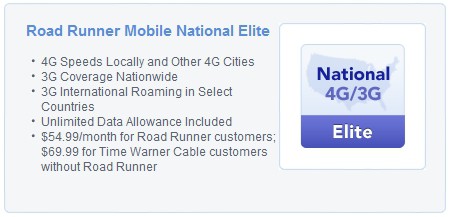
Now that CLEAR has launched 4G service in Rochester and Syracuse, Road Runner Mobile, which is simply CLEAR rebranded as a Time Warner Cable service (they partly own Clearwire) will also soon be on the way.  Pricing in other Time Warner Cable cities wasn’t much different than from Clearwire direct, and some cable plans really push service contracts, which you really do not want on a service this new.  Do not commit to one unless you are satisfied with the service where you plan on using it.

Clearwire’s 4G Network in 2010

CLEAR 4G service is currently available in 44 markets across the United States, including: Syracuse and Rochester, N.Y.; Atlanta and Milledgeville, Ga.; Baltimore, Md.; Boise, Idaho; Chicago, Ill.; Las Vegas, Nev.; St. Louis and Kansas City, Mo.; Philadelphia, Harrisburg, Reading, Lancaster and York, Pa.; Charlotte, Raleigh, and Greensboro, NC; Honolulu and Maui, Hawaii; Seattle, Tri-Cities, Yakima and Bellingham, Wash.; Salem, Portland and Eugene, Ore.; Merced and Visalia; Calif.; Dallas/Ft. Worth, Houston, San Antonio, Austin, Abilene, Amarillo, Corpus Christi, Killeen/Temple, Lubbock, Midland/Odessa, Waco and Wichita Falls, Texas; central Washington, D.C.; Richmond, Va.; and Salt Lake City, Utah.

In the summer of 2010, CLEAR 4G will launch in Tampa, Orlando and Daytona, Fla.; Nashville, Tenn.; Modesto and Stockton, Calif.; Wilmington, Del.; and Grand Rapids, Mich. By the end of 2010, CLEAR 4G will also be available in major metropolitan areas such as New York City, Los Angeles, the San Francisco Bay Area, Boston, Denver, Minneapolis, Miami, Cincinnati, Cleveland and Pittsburgh.

You can read a company-provided tutorial about the service below the jump.

… Continue Reading

Share

Search This Site:

Contributions:

Recent Comments:

  • Phillip Dampier: Wow... what a great feature. We can all correct each other now. Obviously, I'll have to take this back offline and mess around with it. I was con...
  • Smith6612: I always avoid the hype about super antennas. They don't do much besides induce more noise which really puts you back at square one anyways with digit...
  • Smith6612: Do you have any proof that they are in fact messing with VPN connections and what not? I'd like to see that myself, personally. If you don't use VP...
  • Smith6612: It seems there is still some work to be done to the comment editor, unfortunately. For some reason I can edit others' comments and I'm not even an adm...
  • James R Bivins: I live on a budget and cable is in that budget,but if you don't have cable or the speeds for the these sevices.You are out of luck when is comes to ru...
  • James R Bivins: People in rural area are not been offered the better option for true broadband.Cable is faster,cheaper,and has the GB's.They offer 1 to 3 services an...
  • Fred: Bruce Edward Walker and Dr. Joseph P. Fuhr, Jr are two frauds who no one needs to listen to....
  • nolan: antenna did not work, i have a outside antenna with a digital converter box that pulled in 31 channels.and clear cast only got 12, also have 2nd tv w...
  • David Smith: AT&T's bandwidth capping is akin, in my opinion, to trampling on free speech. The Internet and today's technology makes us realize that there is ...
  • Michelle: How can I file a lawsuit against Cricket broad spying on my service. Every time I connect to the internet, I am bombard with a VPN connection of a rou...
  • Theresa Reid: I just got my Clear Cast today I was able to get only 4 channels. It WILL be going back....
  • Alex Perrier: Ultra-Lite discontinued! :|...

Your Account: