

 Subscribe
Despite hundreds of consumer complaints from residents in and around Baton Rouge, the Louisiana Public Service Commission has refused to vote itself the authority to threaten AT&T with a fine up to $175,000 for poor service.
Ignoring an agreement by AT&T to adhere to minimum service standards in return for permission to acquire BellSouth Corporation in 2006, the Commission oddly decided not to enforce those conditions for the protection of AT&T customers. On Wednesday, in a 3-2 vote, the PSC instead decided to “study” the matter and to further consider whether or not it should impose the same minimum service standards on all of Louisiana’s phone companies.
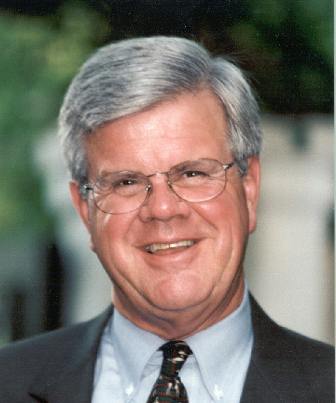
Campbell voted for the authority to fine AT&T. He serves District 5 in northern Louisiana
Commissioner Foster Campbell, of Bossier Parish in northern Louisiana, was stunned by the vote’s results.
“You’re telling AT&T that no matter what they do, no matter how bad their service, we’re not going to do anything?” he asked.
Campbell told his fellow Commissioners he’s worn out after taking large numbers of calls from upset residents in northern Louisiana.

Field also voted for the measure. He serves District 2 in southern-central Louisiana
This is the second time the PSC refused to fine AT&T and instead “study” the matter. Meanwhile, customer complaints from the Baton Rouge area continue to pour into the PSC offices.
Commissioner Jimmy Field, who represents the Baton Rouge area, told AP his office had been swarmed with consumers complaining about the length of time to get service installed and outages lasting more than 24 hours. Field wanted the PSC to hang the fine over AT&T’s head again.
Complaints against AT&T in Louisiana also involve lengthy waits for repair call appointments, delays in getting new lines installed, missed appointments, and extended service outages.
In just four months last summer, the Commission confirmed 435 of the 778 complaints lodged across the state against AT&T.
Apparently if the problems don’t impact the residents you represent, there isn’t a problem.
The three commissioners that voted against the proposal to potentially fine AT&T said as much.
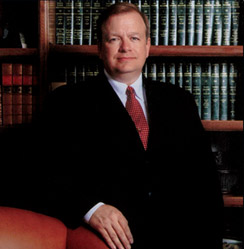
Skrmetta was the ringleader of the three opposed to potentially fining AT&T. He serves District 1 in east Louisiana
PSC Commissioners Eric Skrmetta, of Metairie, Lambert Boissiere III, of New Orleans, and Clyde Holloway, of Forest Hill said it wasn’t fair to single out just one company.
Skrmetta went further and said he hadn’t seen many complaints in his district, north of Lake Pontchartrain. But he had received complaints about some of AT&T’s competitors.
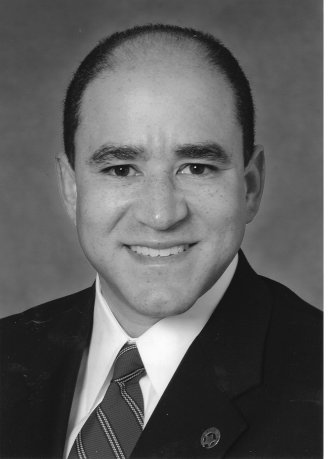
Boissiere voted against the measure. He represents District 3 in central Louisiana
Boissiere, despite voting against the proposal, delivered a verbal spanking to the AT&T representative on hand.
“I don’t like your methods. I don’t like your style. I understand where my fellow commissioners are coming from,” Boissiere said.
Debbie Canale, the executive director for regulation for AT&T Louisiana, wasn’t much impressed with Boissiere’s comments.
“Our customers vote with their money and would do business with competitors, if they were unhappy with AT&T,” Canale offered.
Our Take
The three commissioners who voted against giving themselves the power to make their regulatory authority count don’t belong on any Public Service Commission. Any member of a review board should be concerned first and foremost with the interests of the residents they represent. The three Louisiana commissioners who voted against the proposal failed to do that. They should be removed immediately.
The only way to impress telecommunications companies under your review is to have the power to make them pay attention to your rulings. Stiff fines for repeated violations (and 435 in just four months is an incredible number) will make any company sit up, take notice and fix problems.
Without it, verbal scoldings are little more than lip service to a provider that can afford to be arrogant, especially in rural Louisiana where competitive choice is hardly bountiful.
Canale’s response to the Commission boils down to, “if you don’t like our service, leave.” If only every Louisiana resident could choose another landline provider if they wanted.
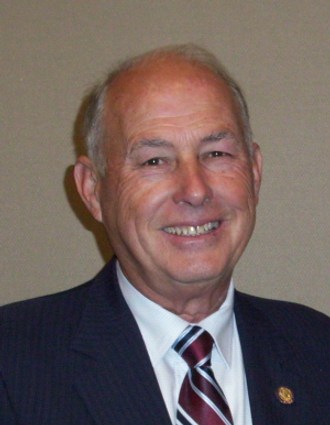
Holloway, the third "no" vote, represents District 4 in western Louisiana
Ignoring a company’s problems in one region of the state virtually guarantees those problems will eventually visit another. It is short-sighted and inexcusable to ignore hundreds of valid complaints, condemning residents to more of the same in the future. Voting (for a second time) to “study” the issue is an insult to residents and little more than a stall tactic.
The Commission’s suggestion it wants to impose regulatory fairness comes despite a clear agreement, less than four years old, that AT&T signed onto as part of its buyout of BellSouth. It says AT&T will commit to certain standards of service in return for regulatory approval of the merger. AT&T already sought to renege on that agreement in mid-2009 when it asked the Commission to suspend fines as part of their “study” about regulatory policies across the state.
So much for that hard-fought consumer protection deal. Evidently, what AT&T agrees to one year is fodder for their lobbyists the next. If AT&T wants changes, can consumers demand some changes of their own that assure this company will provide quality service?
As usual, AT&T’s regulatory affairs never give consumers a good deal. For 435 residents of Louisiana, it also gave them no dial tone and a lengthy wait to get it back.
At for Commissioners Skrmetta, Boissiere and Holloway, the only question that should be on the table is whether they represent residents or AT&T Louisiana.
That is something worthy of careful study.
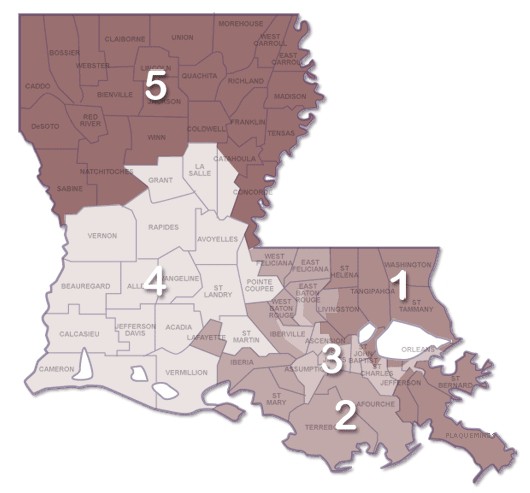
Louisiana's Public Service Commission is made up of five commissioners, each with their own district to represent.

In LA, consumers are sinners and corporations are saints
What a load of propagandistic crap by Commissioner Campbell. I have been a customer of South Central Bell, BellSouth, and now AT&T for over 30 years. I only wish government worked as well as my phone service. I can’t stand it when a blow hard, like Commissioner Campbell, tries to make a name for himself by attacking “evil corporations”. Corporations that are among the largest employers in our state; who invest millions in infrastructure and our communities. If I didn’t like AT&T, I would have left years ago for my cable company’s phone service, Vonage or just use my cell.… Read more »
I don’t think this is an issue of punishing corporations that deliver good service and jobs to Louisiana. This is an issue of holding companies accountable to a minimal level of service. In your area, it sounds like you have several options for service. Where most of the complaints about AT&T are coming from are in northern, more rural areas of Louisiana where that competition barely exists, if at all. Most rural parts of the state have no cable alternative, and wireless cell service may or may not provide an alternative for voice calling. What is clear from our coverage… Read more »
Better to say Stop the Crap by Campbell!
phillip. I appreciate what you are saying, but in most areas, including rural there are multiple choices for communication including wireless service. In fact, you know as well as I do that landline service is losing market share at ar ate of 10-20% annually in some areas. This share is going to wireless and competitive cable offerings. If you are so intent on punishing companies for what is a dying business, then you destroy any and all investment incentive. Rural areas lose. Stop focusing on penalties and focus on incentives that help phone companies improve service. I’m convinced that broadband… Read more »
Last year, we took a drive into northern Pennsylvania, just one of many areas where no cell phone service exists and broadband is a telephone company product — no cable service whatsoever. In these rural areas, customers aren’t going anywhere because there are no alternatives. I agree that where sufficient competition exists, landline losses are ongoing unless providers retool to provide broadband and other value-added services. AT&T and companies like it have spent millions in state and federal legislatures to secure precisely the “incentives” you wrote about — statewide franchising, deregulation, discarding universal service requirements… even printing a phone book.… Read more »
AT&T will not provide DSL outside the cities. We have no unlimited option for home broadband in Rual Louisiana. My AT&T service is only good because I have a business line and they take care of business customers better. AT&T should be forced to sell off the land line service if they will not give good service to all La residents. I also think they should be forced to provide some form of unlimited Broadband to all land line customers who request it. In N LA AT&T has installed remote CO boxes everywhere but did not install the digital switches… Read more »