

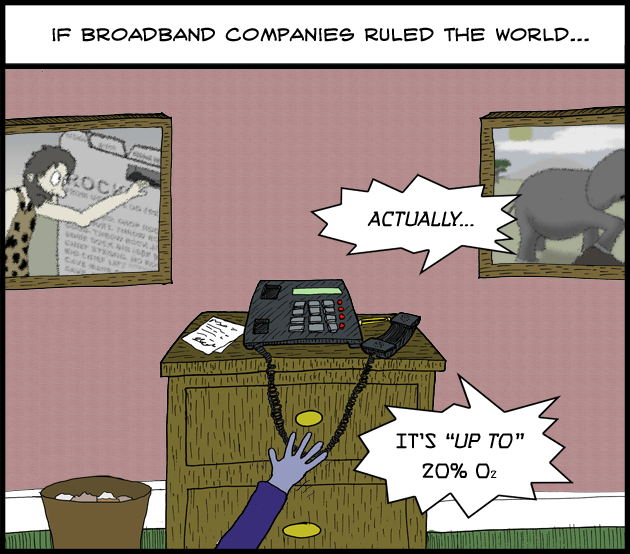
Courtesy: LukeSurl.com and thanks to Stop the Cap! reader Nathan for passing it along....
 Subscribe
Courtesy: LukeSurl.com and thanks to Stop the Cap! reader Nathan for passing it along....
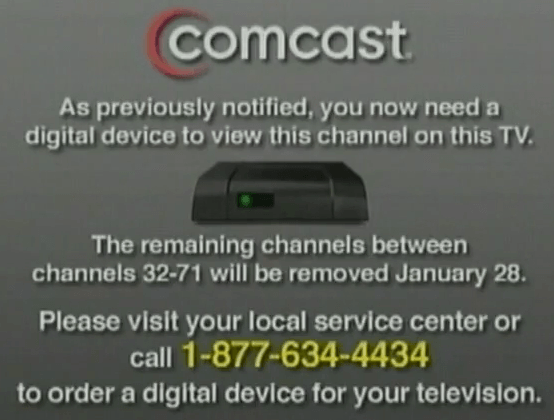 City by city, Comcast is continuing its quest to make the switch to digital cable for an increasing portion of its cable programming lineup. Although the majority of subscribers will encounter letters from Comcast switching only a portion of the analog cable lineup, it’s a safe bet Comcast is looking to an all-digital future sooner or later.
Coming less than a year after the switch to digital broadcast television, the march to digital cable is causing confusion for subscribers who don’t understand the difference.
Analog cable television has been around for more than 20 years in most American cities. It’s the kind of cable television that doesn’t usually need a converter box on top of the TV. Just plug the cable line into the back of your television set, let the TV find and map available channels, and you can use your standard TV remote to enjoy basic or enhanced basic cable television. Of course, if you subscribe to premium channels like HBO or Showtime, a box is required to descramble the encrypted signal.
Cable operators began launching “digital cable” in the 1990s, expanding the lineup of programming with hundreds of new channels that are compressed into a digital format, with a half dozen or more digital channels fitting in the same space used by just one analog channel. Space on the cable line is getting increasingly crowded as cable systems launch new HD channels, support telephone service, and expand broadband service and speeds.
To make room, several of those old school analog channels have to go… digital. If you already have a set top cable box — you probably won’t even notice the changeover. But if you don’t have one of those boxes in your home, and your television doesn’t support CableCARD technology, Comcast has some bad news for you. Sooner or later, you’ll either have to get a set top box or lose an increasing number of channels on your cable dial.
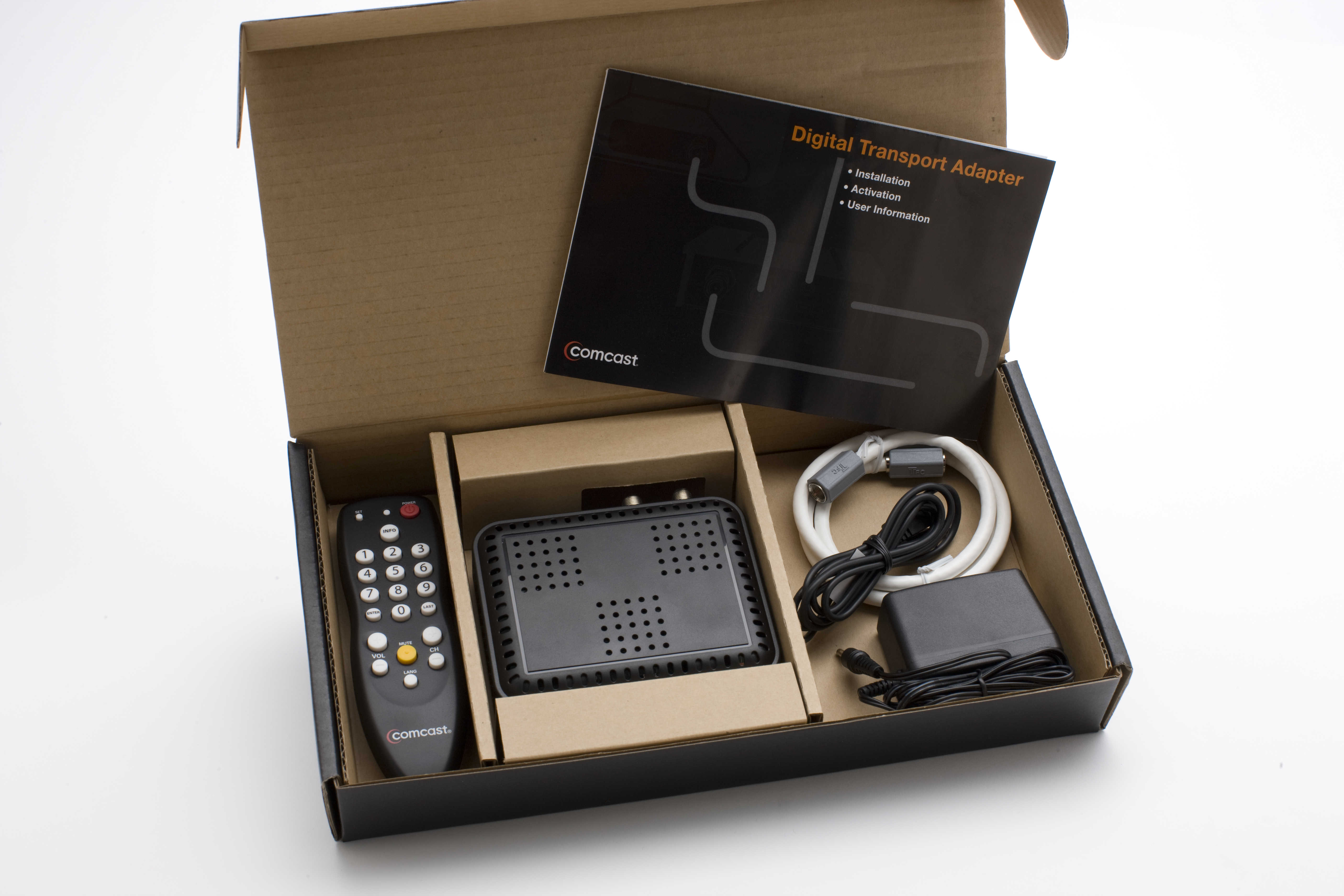
Comcast's digital adapter doesn't support HD channels
Comcast’s digital cable expansion is their solution to the traffic jam on their cable lines. Some other cable companies take a different approach. Knowing that many customers hate cable boxes, they’ve left analog channels alone, instead transmitting digital channels only to those homes actually watching them. If nobody in your neighborhood is watching Current or Fox Business News, why waste the space to send those signals down the line to… nobody. Time Warner Cable doesn’t for many of their digital channels. If one lives in an eclectic viewing neighborhood, there are problems with this approach. Potentially, if enough homes want to watch these lesser-viewed networks, and Time Warner runs out of the space it sets aside to carry a certain number of these channels, the subscriber will see a video busy signal — a message stating the channel is temporarily not available, at least until someone nearby changes channels, making room for the network you want to watch.
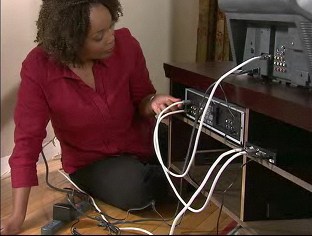
Comcast's digital solution is a problem for those who hate "the box" for weaving a rat's nest of cables behind one's television.
In most communities, Comcast will provide up to three digital adapter boxes at no charge, if you install them yourself on each television in your home. Additional boxes are usually $1.99 per month. That’s fine if you are still using an older television set and don’t care about HDTV programming — the digital adapters Comcast provides don’t support HD. If you do want HD channels, you’ll need Comcast’s traditional converter box, which runs about $7 a month per television, or a CableCARD, if your television supports it. Comcast also has elaborate instructions for customers with multiple TV inputs to support both standard and high definition signals, some through the digital adapter, others not, but it requires a lot of cables.
Customers who loathe boxes and don’t want to pay for them are upset by all of the changes, and either must cope with the new box, or gradually lose more and more analog channels as the conversion continues. Broadcast basic customers getting only local channels from Comcast are unaffected by all of this, at least for now. Owners of modern HD television sets aren’t impressed either — their sets, capable of receiving QAM digital cable channels without a box are no help because Comcast encrypts its digital cable lineup in many areas.
But the company still thinks of the project as a service upgrade for its customers, even dubbing it Project Cavalry on their company blog. When one customer wondered why the new equipment wasn’t available in his area yet, a company blogger responded, “We will not be “cherry picking” … all our systems will get the benefits. The Comcast Cavalry just hasn’t swept through your area yet, stay tuned.”
When asked why the devices don’t support HD channels, the response:
The DTA was designed as a low-end, basic device to do one thing and one thing only … convert digital signals back to analog for display on an analog TV. That’s all, no higher end outputs, no VOD, no HD, no interactive guide. Keeping the device simple as described is what kept the price down enough that we can provide so much free equipment to our customers. Also, the RF output makes it compatible with the absolute maximum number of TVs, which is critical to the program. As a digital device, however, it does offer dramatically-improved picture quality over analog even through the RF output.
[flv]http://www.phillipdampier.com/video/Comcast DTA Tutorial.flv[/flv]
Watch Comcast’s tutorial on installing their Digital Adapter. (4 minutes)
[flv width=”640″ height=”500″]http://www.phillipdampier.com/video/Comcast Digital Migration.flv[/flv]
Watch a coast-to-coast series of news reports detailing the Comcast transition to digital, starting with the message customers see on their now-missing favorite channels. (15 minutes)

The elusive Dell 10v Netbook promised to new Comcast customers back in August is MIA for hundreds who took advantage of the promotion
Five months after Comcast ran a promotion for new customers including a free Dell 10v netbook, many customers across the country are still waiting to receive the computer.
Back in August, Comcast matched a Verizon FiOS promotion promising a netbook to new customers signing a two-year service contract for a $99 monthly “triple play” package of telephone, broadband, and cable programming.
Visitors to Comcast’s website were offered:
HD Starter Triple Play
NEW SUBSCRIBERS: Get a free Dell 10v Netbook with the HD Starter Triple Play for only $99 a month for 12 months and a 2-year minimum term agreement. Plus, you’ll continue the savings the following year with a price of just $10 more per month.
- Free HD – no HD access fees or equipment fees.
- Over 80 digital cable channels.
- Thousands of On Demand movies and shows.
- Internet downloads up to 15 Mbps, uploads up to 3 Mbps with PowerBoost®.
- Unlimited local and long-distance nationwide calling – rated #1 in call clarity.
- Voice Mail and 12 popular calling features including Caller ID, Call Waiting and more.
 The campaign apparently shared something else in common with Verizon’s promotions — customers left high and dry wondering when the promised bonus will arrive.
Customer attempts to contact Comcast have met with a wall of excuses and broken promises, and often still no netbook. Other customers were told they failed to “qualify” for the promotion for not precisely following the terms and conditions that were never explained to them.
Comcast representatives have told customers they lost out because:
Although some customers began receiving the promised promotion more than 120 days after signing up for Comcast, hundreds more are still waiting, and complaining. A few managed to obtain service credits up to $299 (the retail cost of the Dell 10v) and told to “go buy your own.” One Seattle television station intervened to help a Kenmore resident finally secure one in January, despite hopes it would have arrived before Christmas for re-gifting.
Escalating the matter to executive customer service is usually the best way to cut through Comcast’s red tape and secure the promotion customers are entitled to receive.
Darren, a Comcast customer who waited months for the cable company to make good on their offer gave some advice:
I started posting on Facebook and Twitter and immediately received a twitter from @ComcastMelissa and @ComcastBonnie. They told me to email: [email protected] and provide my account information so they can get me my netbook. I received an email from Sherri Carson, ([email protected]) at the corporate office – national customer service. On January 7th, 2010 she said “This is going to take about 2 weeks at the most. Sorry, I know you should have received some follow up, but I’m on it.”
The kicker: I emailed her yesterday to say hey, two weeks is almost up and I haven’t heard anything. Here is her response: “You should be receiving your netbook no later than 2/19 at the latest. I will get you a tracking number as soon as I get one. You can check this site in about two weeks.
Just don’t get your hopes too high for a Dell netbook. Many finally receiving their promotional gift report an Asus Eee PC arrived instead. Comcast put that in the fine print as well — it reserved the right to make substitutions.
[flv width=”480″ height=”290″]http://www.phillipdampier.com/video/KING Seattle Comcast called out in Triple Play promotion 1-7-10.mp4[/flv]
KING-TV Seattle helped this Kenmore, Washington viewer finally get her promised netbook after signing up for service in August, 2009. A Comcast executive personally pleaded for her to stay with Comcast, despite the promotion problem, in this report. (2 minutes)
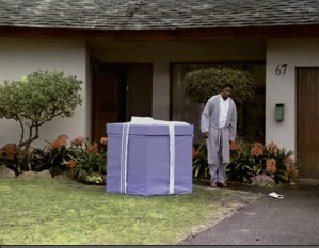
Your Bill from MTN - Internet Overcharging Gift Wrapped
South Africans using the wireless services of MTN may be in for quite a shock in the coming weeks as the company attempts to collect for customer data usage charges it forgot to bill last fall. Some customers have discovered the company automatically debited their checking accounts for thousands of dollars of “back usage” customers deny using. Once again, when choosing whether to believe a faulty usage meter and billing system or the customer, Internet Overchargers believe the meter that fills their pockets with customer cash.
Benzi Kornizer is one customer impacted by the data discrepancy. Despite using MTN’s data service for several months without incident, the company is trying to withdraw R10000 ($1,321 US Dollars) from Benzi’s checking account. Kornizer pays R600 ($79) per month for 3GB of wireless data usage. MTN’s usage meter, after the installation of a new billing system, claims he used more – more than $1,000 more.
“I received a letter from MTN, with no reference number, no date, no details of the problem and now I am having trouble getting my problem resolved,” Kornizer told ITWeb.
MTN believes in their usage meter, which it is using as justification to back-bill customers, despite admissions of ongoing billing problems. Affected customers are receiving letters signed by customer relations executive Eddie Moyce admitting prior under-billing.
“MTN is in the process of re-processing the used data and customer call data records and will debit the affected customers’ accounts accordingly,” the letter states.
 MTN’s billing practices, now a story in the South African media, resulted in a statement released by the company.
“We are extremely sensitive to the fact that billing errors have had an impact on the pockets of our subscribers. We will not suspend any voice or data contracts as a result of this error, and MTN will credit the accounts where double-billing errors occurred. MTN subscribers will also retain their loyalty points accrued over this period. MTN will investigate and evaluate every query on a case-by-case basis,” says Moyce.
He explains that the trouble stems from an upgrade of the billing system the company is using. “We have invested millions in a new billing system, which went live at the end of 2009 and is proving to be successful. However, we are still working hard to rectify the fallout from the previous system.”
The company admits the complete transition to the new billing system may take years to complete. That leaves customers like Kornizer playing broadband usage roulette, never certain what the company’s meter will finally read, even months after the billing cycle ends. Although MTN claims their meter is “proving to be successful,” customer complaints are pouring into consumer protection agencies and websites.
Kornizer is threatening to sue MTN in court.
Eddie Moyce, customer relations executive, spoke with MoneyWeb about the billing problems experienced by MTN. (5 minutes)
You must remain on this page to hear the clip, or you can download the clip and listen later.
<
p style=”text-align: center;”>
A sampling of the complaints from just the last 48 hours about MTN’s Usage Meter on consumer site HelloPeter, which has logged more than 9,000 customer complaints thus far against MTN:
“My December bill for my MTN Data Contract suddenly hits R3000 despite an normal usage of +-R320. I call the Autopage Accounts only to be told that there is a billing problem. However, any reply from MTN that this is a backbilling issue can be refuted. On my itemised billing, it shows that on Christmas day I used 1.2GB of data in 2 sessions a few minutes apart! Now, my modem is a 1.8Mbps but downloading 600MB in seconds is absolutely incredible!”
“Last month I received a data usage bill for R1901 which I thought was insane as it has always been R249 per month. I queried it and a itemised bill was sent though, which showed the ‘usage’, so I could not argue, then on the 23rd I received an SMS saying MTN incorrectly billed customers for that period and we would get a full credit for the incorrect amount. Then I check my account and another R2693 was debited from my account.”
“My average monthly MTN bill for internet access via a modem is R271.27 which was boosted by a November bill for R521.20. I paid this amount even though it looked very high. I was astounded by my December bill for R 5395.48! I spoke to [customer service] who tells me that I must wait 25 working days for my query to be assessed! In the meantime I must pay the R5394.48 or else my [service] will be suspended! MTN insists I must pay before they audit my account.”
 “I migrated my internet from a 500 meg to a 3 gig package, completed the paperwork and was assured that everything is in place and will be faxed through for the migration. After receiving an account for over R11000, I was informed that the migration was never made. I do not have the forms, but the personnel remembered the transaction and called the accounts department. Answer, ‘Sorry, we made a mistake and did not do the migration for you, but you did use the data so you must pay the account’.”
“Since October 2009 I’ve been billed R 16000 mostly for data use. My account was suspended three times without notice…. [The company won’t send me] proof of the amount used.”
“My bill from MTN ranges between R1200 and R1400 a month – In October, November and December 2009, I received bills between R11 000 and R14 000 a month! When I queried these bills the answer was always the same: These are amounts that were not billed ‘forgot’ to bill me this amount and ‘there was an error’ on their system and this usage was not billed for. When asked for proof of some kind – seeing as I have not been using the account in December 2009, they told us they could not provide this. Nor would the call centre agent put me through to a Manager to discuss or sort it out. The last time we spoke to someone, they told us to ‘just pay it’ or make a payment plan to pay it off. I have no intention on paying any amounts due to their system faults and without proof of how I could use between R11 000 to R14 000 a month. Inconsistent billing, no service, no response to messages left, no responses to emails and faxes. I had no choice but to change service providers.”
“I am presently on the 500MB package for internet service, cost; R239/Mth. Yet my bill arrives stating just over R1400. I know I have not exceeded my allowance as I check it before and after each session and I only use it to Skype family back home, plus some VERY minor surfing on the odd occasion. This has been raised twice now with MTN, both times I have been greeted by a ‘it happens often’ mentality, told they can not find a reason why the bill is so high and the billing dept will get back to me in 21 days. This is going to be AFTER the money is taken out of my account. Evidence on this website indicates that grossly overcharging their clients is hardly an isolated occurrence here and there, but a standard procedure. This they seem to find an acceptable way to treat their customers. I wonder how they would feel if their clients all decided to settle bills in 21 days or at their leisure, through no fault of their own. To the present time this problem remains unresolved and not taken seriously by MTN. TOTALLY UNACCEPTABLE.”
Just a quick note for those who dislike getting through the longer pieces here — thanks to a broken collarbone received last Friday, I’ll be writing considerably shorter pieces for awhile as I cope with one arm in a sling. Thankfully, it appears things should heal on their own without a cast or pins, but physical therapy in about a month will likely be in the cards. Thanks for being a regular reader and for your understanding.
The "Massive News" theme by: Press75.com
