Special Report: The Lessons of FairPoint – A Tragedy in New England – Part Four

Phillip Dampier May 31, 2009 FairPoint 5 Comments

Promises, promises.  The one thing you can always count on with mergers and acquisitions: the promise what they’ll bring you tomorrow is better than what you have today, but only if you approve the deal.  The concept of forward momentum from change is very compelling when it comes to technology.  The lesson people have to learn is that not all change is good, and not all promises are always kept.  For New Englanders drawn into the transfer of their telephone service from Verizon to FairPoint Communications, the allure of faster broadband certainly sounded good, with promises made in July 2008 that 75% of Vermont would have access to FairPoint DSL service by the end of that year.

[flv width=”320″ height=”240″]http://www.phillipdampier.com/video/WPTZ Fairpoint Announces Huge Expansion 9-30-08.flv[/flv]

This report, aired on September 30, 2008 on WPTZ Plattsburgh (viewable in Vermont) also displayed a company-made sign promising that 100% of Vermont would have broadband service available from FairPoint by 2010.  But the numbers were already in dispute when another station serving Vermont, WCAX in Burlington, reported that same day that just 80% of customers would have access by that time:

[flv width=”368″ height=”208″]http://www.phillipdampier.com/video/WCAX Burlington FairPoint Promises Internet Expansions 9-30-08.flv[/flv]

Why the discrepancy?  After all, the visual material on display at the town hall meeting covered by both stations clearly showed a map claiming 100% coverage.

With the benefit of time, the answer turns out to be that promises made by one company official were not always repeated by others.  Indeed, FairPoint has a history of tempering enthusiasm.  Enthusiasm that sometimes originated from the company itself.

Watch in amazement as the numbers drop and the excuses mount.  As the Bennington Banner quoted a FairPoint spokesman in 2008, the numbers and scope of the actual rollout was considerably smaller than the sweeping improvements being promised:

“By 2010, we hope to have at least 80 percent of households in the state with DSL access,” Fastiggi said. “We hope to have every customer in half of our exchanges to have access by 2010 as well.” According to Fastiggi, though, the expansion does not mean that every house in these towns will receive access to the service. “We’re doing certain areas in each town — nothing we’re doing encompasses the entire town,” Fastiggi said. “I don’t want to say we’re expanding bit by bit, but we are moving neighborhood by neighborhood.

New Englanders, at the time of these announcements, were hopeful, but skeptical whether or not the company would meet its goals.  They were right to be.

As for those wireless connections promised to the most rural areas of the state, the company did sign a contract with Nortel Networks and Airspan Networks to construct a network based on the aging fixed wireless 802.16d standard. Known as “fixed WiMAX,” the technology is largely being abandoned by many providers in favor of the newer mobile WiMAX standard IEEE 802.16e, which has a lot more bells and whistles.  But the technology FairPoint wants to deploy will function for a basic wireless fixed “broadband” service, albeit a comparatively slow one, operating at 1-3Mbps.

So how is the company doing with its DSL “improvements?”  Not so good.  Since these announcements, the company has fallen behind schedule on virtually everything, and was one of the few providers to actually lose broadband DSL customers during the second half of 2008 as many switched to another provider or simply gave up.  They are set to lose MANY more in 2009, for reasons that will become obvious soon enough.
The Day Before the Storm

Phillip Dampier May 31, 2009 Editorial & Site News 4 Comments

Relax today because the work begins again tomorrow.

Starting this week, we will begin some carefully coordinated pushback against Time Warner Cable’s changes to their Subscriber Agreement, because despite company claims that they’ve not implemented any Cap ‘n Tier system at this time, the writing is on the wall in 1000pt type, readable from space.  No company changes their legalese “just because,” and CEO Glenn Britt’s public statements late last week make it patently obvious which way this road is heading.

Here are the things YOU need to do today so you are prepared to act when we need you:

  1. Bookmark this site and check it daily.  A Call to Action is most effective when everyone starts moving on it around the same time.  It’s less helpful to arrive here a week after the fact.  Everytime an article is posted here, our Twitter channel sends out a tweet.  You can follow us on Twitter from the stopthecap channel.  Just insert the text stopthecap in the box on that link and you’ll find us.  I am still working on finding a good e-mail notification system that will let you subscribe and be notified in e-mail when new items are published.
  2. You will be asked to write, phone, and e-mail elected officials.  In all such communications, remember the three P’s rule: Be polite. Be persistent.  Be persuasive. I will, when time allows, provide you with sample letters or talking points to use.  Elected officials are wise to pre-formatted, automated contact campaigns, so I do not use them here.  You will always be expected to communicate in your own words, because elected officials will pay attention to those.  They toss out those online petitions, automated pre-written letters, and other communications that look automated.  It will literally take less than five minutes to follow through on most Calls to Action.  If you leave it to someone else, and they leave it to you, nobody picks up the phone or writes the letter.
  3. Get educated.  A great deal of information and background material is already here.  You can follow specific company actions, cities, or policies from the menu options along the top of the screen, as well as in the search box.  If you have a question about an article, write it in the comment section.  I try and read and reply to many of them, along with others here.
  4. Continue to pass along news tips, suggestions, or other pertinent material through our Contact form.  I try and credit people as often as possible, and some story ideas may appear later on, so don’t be discouraged if yours doesn’t turn up as an article in short order.
  5. If you find value in what we do, consider making a contribution.  I am going to begin crediting our contributors (first names by default) here to thank them.  Your contributions pay for server expenses, a post office box, software expenses (this WordPress theme for example), and will also go towards mailing and printing expenses as we start educating elected officials on our issues.  Telecom companies just spent nearly a half million dollars in North Carolina alone to stop municipal broadband there through campaign contributions.  We have to rely on actual facts and a substantially lower budget to fight back!

City of Greensboro Officially Opposes HB1252/S1004

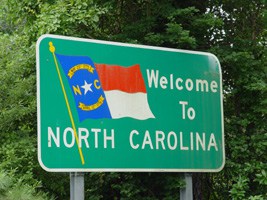
welcomencBack on April 28th, I e-mailed the Mayor of Greensboro, Yvonne Johnson, requesting that the City of Greensboro look at the resolution that Raleigh passed opposing HB1252/S1004 and pass a similar resolution.  I am quite aware of what goes on in my city, but this slipped past me.  At the  May 5th City Council meeting the following transpired:

Assistant City Manager Denise Turner reviewed the resolution of the City of Greensboro opposing SB1004/HB 1252, inaccurately captioned “The Level Playing Field Act” with Council.  Councilmember Perkins moved adoption of the resolution. The motion was seconded by Councilmember Bellamy-Small.

Assistant Manager Turner provided an explanation for the basis of the bill, the incentives of the bill, affects on the City on offering broadband usage throughout the City, the funding utilized, restrictions of the bill and stated that the bill would prevent municipalities from offering and providing broadband services as an incentive to incoming businesses. Assistant Manager Turner provided information as to Economic Stimulus funding for broadband usage and access for a municipality to provide.

The resolution was adopted on the following roll call vote: Ayes: Barber, Bellamy-Small, Groat, Johnson, Matheny, Perkins, Rakestraw, Wade and Wells. Noes: None.

133-09 RESOLUTION OF THE CITY OF GREENSBORO OPPOSING SB 1004/HB 1252, INACCURATELY CAPTIONED “THE LEVEL PLAYING FIELD ACT

WHEREAS, Senate Bill 1004 and House Bill 1252, both captioned The Level Playing Field Act, have been introduced in the 2009 Session of the General Assembly of North Carolina, and referred to the Senate Commerce Committee and House Committee on Science and Technology, respectively; and

WHEREAS, broadband is communications infrastructure that is as important to the City of Greensboro’s economy as are the interstate and state road systems; and

WHEREAS, high-speed broadband is an indispensable part of competition both between businesses and between global, state and local jurisdictions to attract businesses; and

WHEREAS, high-speed broadband is vital to the future economic development, educational outreach, and community growth necessary to replace lost textile, tobacco, furniture and manufacturing jobs in Greensboro and in North Carolina; and

WHEREAS, cities are organized to provide public services in the local community and their governing boards generally decide what and what level of services the city will provide; and

WHEREAS, the courts in North Carolina have already determined that local governments are authorized by the General Assembly to provide the communications services addressed in the playing field bills; and

WHEREAS, if the City of Greensboro should at any time in the future decide that it needs to provide or encourage the development of broadband communications systems to meet unmet needs, these proposed bills would greatly hinder the City’s ability to provide such needed services, especially advanced high-speed broadband services; and

WHEREAS, the bills do not in actuality require a “level playing field” with regard to provision of broadband and information services but instead seek to saddle cities and towns with several onerous duties, proscriptions and mandates that do not apply to private providers and that cities have never had to meet with respect to other enterprise businesses; and

WHEREAS, there is no justification for treating public communications enterprises differently from other public enterprises that are essential for a sound economy; and

WHEREAS, government dollars were used to fund much of the current corporate telecommunications infrastructure in the United States and to develop the Internet; and

WHEREAS, private providers have made the business decision not to provide and offer broadband to residents and businesses in North Carolina at the high speeds that are readily available in competing locations such as Poland, Canada, South Korea, Japan, and Wilson, North Carolina, despite having received favorable regulatory and tax treatment from government to enable them to make upgrades and investment to broadband; and

WHEREAS, while private broadband providers declare that it is cost prohibitive to provide top quality service in the United States, Japan and other countries (many of which traditionally have been considered to be third world nations) continue to outpace our country in broadband access, cost, and growth in the number of users—Japan has lower cost internet access that is at least 500 times faster than what is defined as high-speed in the United States; and

WHEREAS, the United States Congress has provided funds in the American Recovery and Reinvestment Act (federal stimulus) to reverse our country’s broadband decline by making local and state governments, directly eligible for $4.7 billion in federal grants to provide affordable access to high capacity broadband services where needed; and

WHEREAS, because the proposed playing field bills would prohibit government from using funds other than those generated by the enterprise broadband communications systems themselves, NORTH CAROLINA AND ITS POLITICAL SUBDIVISIONS WOULD NOT BE ABLE TO USE THE BILLIONS OF FEDERAL STIMULUS GRANT FUNDS SET ASIDE FOR BROADBAND INFRASTRUCTURE IMPROVEMENTS, while cities in other states would have access to these funds and gain a competitive economic advantage over North Carolina cities—job opportunities for local residents would be negatively impacted by the funding restrictions in the proposed bills; and

WHEREAS, local businesses and suppliers will create jobs and spur the local economy with federal stimulus dollars used to build and improve broadband infrastructure, but will lose such opportunities if the legislature adopts the proposed bills depriving North Carolina of the opportunity to bring broadband stimulus dollars to our economy; and

WHEREAS, the bills are counter to the North Carolina Local Development Act of 1925 which allows local governments to aid and encourage economic development in communities throughout North Carolina.

NOW, THEREFORE, BE IT RESOLVED THAT THE CITY COUNCIL OF THE CITY OF GREENSBORO opposes Senate Bill 1004 and House Bill 1252 and urges all members of the North Carolina General Assembly to vote “no” in committee and, if necessary, on the floor of the General Assembly.

(Signed) Robert V. Perkins

The City of Greensboro joins several other cities in NC that have passed resolutions opposing HB1252/S1004, including Chapel Hill and the state capital of Raleigh.  City staff really did their homework from the content of the resolution, pointing out places with higher speeds like Poland, Canada, Japan and South Korea.

I am proud to live in this city.  Our people won’t take the garbage that Time Warner throws at us and our council listens to it’s people on this issue.  More good news on broadband in Greensboro will be coming in the next few weeks.

Time Warner Cable CEO Still Loves Cap ‘n Tier Approach to Internet Billing

Phillip Dampier May 29, 2009 Issues 18 Comments

greedyguy50Time Warner Cable CEO Glenn Britt, attending a conference sponsored by Sanford “He Who Loves Cable & Fat Profits” Bernstein, made it be known he still loves the concept of consumption based billing for the Internet, and what he sees as potentially fat profits that come from it.

“Clearly, we didn’t handle the public relations very well and had a bit of debacle to be honest,” said Britt.  “I still think the use-less-pay-less and use-more-pay-more model can work.”

At their prices?  Wasn’t one backlash enough for them?

Britt also repeated that their experiment in Beaumont, Texas, which they have apparently considered an appropriate test for the entire Time Warner Cable service area nationwide, was “successful.”

Meanwhile, investors don’t think the company performance has been all that successful.

Shares of TWC are declining after company Britt admitted that the company is seeing a continued slowdown in subscriber growth.

Perhaps their antagonistic policies and abusive behavior against their customers might be part of the reason.

Britt is convinced that 40GB per month, as delivered in Beaumont, was more than enough for the average user, and those who consume more should pay more.  Indeed, up to 300% more for the exact same level of service customers get today.

He dismissed notions that speed-based pricing is appropriate, claiming most customers find speeds meaningless.  Britt feels all the action, and the big profits, will come from turning a meter loose on customers and billing them for consumption of online video and other high bandwidth applications.

While Britt continues to claim that heavy users should bear the expense of upgrading Time Warner’s network, he also announced they would not be making any significant upgrades to that network, because what they have now is good enough for the next 10 years.

“I’m very comfortable with our plant,” he said. “I don’t see a need for a massive upgrade.”

In fact, the company is seeking ways to reduce their infrastructure spending further.  They plan to explore utilizing less powerful set top boxes to cut their costs, for example.

Time Warner Cable is finding the broadband component of their service offerings more and more important to customers as time passes.  For a growing number, it is the key component.  Leveraging that value, particularly in markets that aren’t as competitive, could bring massive new profits to the company.  Time Warner Cable acknowledges it has just two big competitors for broadband – Verizon FiOS and AT&T U-Verse.  Everyone else, wireless or copper wire DSL, just don’t have that great of an impact.  Cities that have or will have fiber or AT&T’s hybrid network, will force the company to keep service levels high and prices competitive.  In markets where those competitors don’t exist, it could become a profit free-for-all, as customers will find few, if any alternatives.

Special Report: The Lessons of FairPoint – A Tragedy in New England – Part Three

Phillip Dampier May 28, 2009 FairPoint, Issues 1 Comment

In yesterday’s story, FairPoint Communications learned that the state utility commissions in Vermont, New Hampshire, and Maine, were underwhelmed by their proposal to take control of telephone service formerly provided by Verizon.  The regulatory authorities in all three states felt state residents would bear most of the risk, and too few rewards in return for approving the deal.  New Hampshire was among the most skeptical.

[flv width=”320″ height=”240″]http://www.phillipdampier.com/video/WMUR Manchester FairPoint and Verizon Plan to Refile Proposal 12-21-07.flv[/flv]

Vermont wasn’t overwhelmed with what it saw either:

[flv width=”320″ height=”240″]http://www.phillipdampier.com/video/WCAX Burlington FairPoint’s New Plan.flv[/flv]

But FairPoint returned to the negotiating table to make additional promises and concessions.  But would they ultimately keep them?

… Continue Reading

Search This Site:

Contributions:

Recent Comments:

Your Account:

Stop the Cap!